When To Shift Motorcycle – Timeline & Facts
You shift your motorcycle when engine speed, throttle load, and road conditions match your goal.
For fuel economy, upshift early at light throttle. Keep the engine above idle without lugging.
For hard acceleration, hold each gear near peak horsepower. Shift before the limiter.
On braking or corner entry, downshift under control. Rev-match as you slow down.
On hills, gravel, or flats, adjust your shift points to stay in the right power band. There’s more to tune from there.
When to Shift for Better Fuel Economy

For best fuel economy, upshift early at light throttle. Do it before the engine climbs into higher rpm where power output and fuel use rise unnecessarily.
Keep rpm low. Make each shift drop only a modest amount so the engine stays in its efficient range.
Don’t let revs fall near or below idle after your next upshift. That invites lugging, wastes fuel, and can cause stalling.
Shift when the bike stops lunging forward under light load. Then hold a taller gear at steady cruise to reduce consumption.
On flat roads and gentle inclines, favor early, frequent upshifts. Avoid unnecessary downshifts for speed control, because braking is usually more efficient.
Apply this method consistently.
When to Shift for Maximum Acceleration
When you want maximum acceleration, shift at or very near the engine’s peak horsepower rpm. On many sportbikes, that’s usually around 7,000 to 11,000 rpm, depending on the dyno curve or owner’s manual.
Use full throttle and upshift before the rev limiter. Contact with the limiter wastes time and can shock the drivetrain.
Keep each shift quick and clean so the next gear drops the engine back into its powerband. On many bikes, that means accepting a 1,500 to 3,000 rpm drop depending on gearing.
Practice precise clutch and throttle coordination. Heel/toe or a quick throttle blip, if your setup calls for it, helps cut throttle-off time and keeps acceleration strong through every gear change.
Read RPM Drop to Time Your Shifts
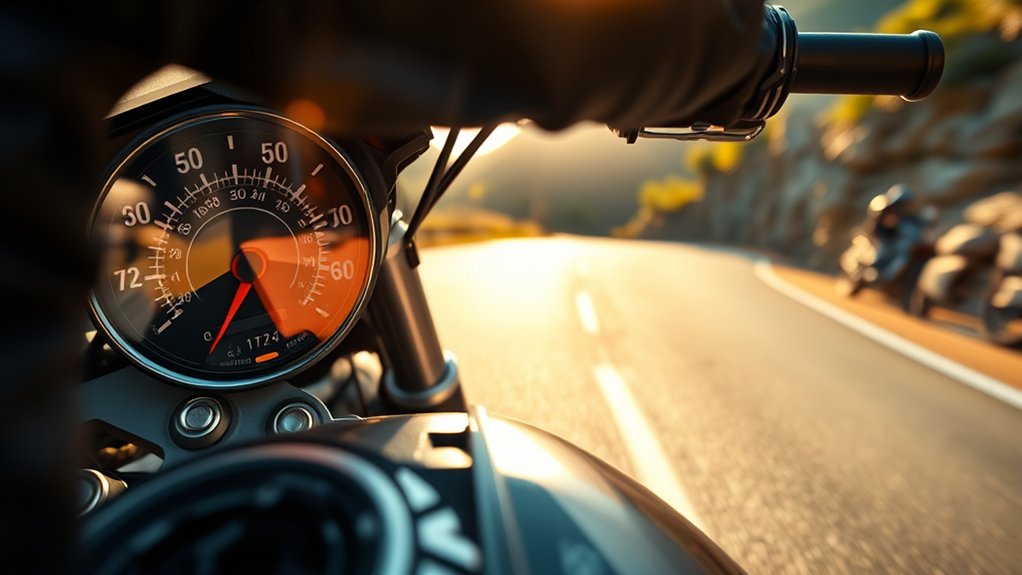
Once you’ve chosen your shift point, watch what the tach does after each upshift. The rpm drop tells you whether you shifted at the right point. Count the engine speed before and after each shift.
If the drop is several thousand rpm, you shifted too early and left power on the table. Shift later next time to stay in the powerband.
If the post-shift rpm nearly hits idle, you’re overgearing the next gear and risking a stall. For smooth acceleration, aim for the same rpm-drop pattern each time.
That way, the bike stops lunging at a predictable point. For maximum acceleration, shift near peak horsepower and accept a smaller drop.
For economy, shift earlier so rpm stays low. Fine-tune with the tach, not guesswork.
When to Downshift for Braking and Corner Entry
As you slow for a corner, begin downshifting while you’re still on the brakes and before turn-in. This lets the brakes do most of the speed reduction and keeps the engine from upsetting the chassis.
Pick the gear you’ll need at exit, not the one that simply matches entry speed. Downshift only enough to land in the rpm range where you can roll on steady throttle without bogging or hitting the limiter.
Choose the gear for corner exit, not entry speed, so you can roll on cleanly without bogging.
Blip the throttle on each shift to rev-match and keep the chassis settled, especially if traction is limited. Don’t use the gearbox to do the braking job, and let the brakes scrub most of the speed to avoid unnecessary wear.
Choose a gear that keeps revs above idle when you drive out. That way, throttle response stays immediate and clean.
How Terrain Changes When You Should Shift

Terrain changes should shift your timing more than speed alone. On long uphill stretches, hold a lower gear longer to keep the engine in its power band and avoid lugging.
On long downhill runs, use a gear that gives useful engine braking. Don’t choose one that forces excessive downshifts or over-revving.
On loose dirt or gravel, keep one gear through technical sections. This helps you avoid spiking torque and upsetting traction.
When you approach a corner sequence, downshift early under braking. Then release the clutch as braking fades so you exit in the right gear.
On mixed terrain with elevation changes, watch rpm drop between shifts. Keep it above idle to avoid stalling.
On flats, shift earlier for economy. Uphill, shift later for drive.
Frequently Asked Questions
Does Clutchless Shifting Damage the Motorcycle?
Yes, clutchless shifting can damage your motorcycle if you do it poorly or too often.
You’ll usually be fine with controlled upshifts on a compatible bike.
Aggressive high-rpm shifts can wear shift dogs and gears.
Downshifts without the clutch are riskier because mismatched revs can shock the gearbox.
Use the clutch for uncertain, low-speed, or downshifting situations.
Follow your bike’s manufacturer guidance for the safest approach.
Should I Shift Differently in Rain or Wet Conditions?
Yes—you should shift more gently in rain, like you’re feathering a live wire.
You’ll upshift a little earlier, at lighter throttle, to keep revs down and soften torque.
You’ll downshift smoothly, using brakes first, so you don’t spike engine braking and upset traction.
You’ll also hold a slightly higher gear when cruising and complete shifts before corners, not mid-turn, where grip’s limited.
How Do I Shift on a Motorcycle With a Quickshifter?
You shift by easing off the throttle slightly, then giving the lever a firm, quick upward press.
The quickshifter cuts ignition or fuel for a split second, so the gear changes without the clutch.
Keep your throttle partly open.
Don’t jab the lever, and let the system finish the shift.
Use the clutch for downshifts unless you’ve got auto-blip.
Check sensitivity and free play regularly.
When Should I Use the Slipstream to Delay Shifting?
You should use the slipstream to delay upshifts when you’re following closely at speed on a straight or highway.
The draft cuts drag, so your engine holds rpm longer and you can stay in a lower gear for stronger acceleration.
Shift once the wind increases, the lead rider pulls out, or rpm nears redline.
Don’t use drafting to delay downshifts. Brake first, then choose the right gear before entering traffic or corners.
Can Engine Break-In Change My Shift Points?
Yes, engine break-in can change your shift points. During the first 500–1,000 miles, you’ll usually shift earlier to stay below the RPM ceiling.
Often you’ll stay about 500–1,000 rpm under redline so rings and bearings can seat properly. After break-in, torque may feel a bit stronger.
You might be able to shift slightly higher for better acceleration. Just recheck your RPM drop so you don’t lug the engine or hit the rev limiter.
Conclusion
You now know when to shift to save fuel, when to hold gears for hard acceleration, how to read RPM drop, and when to downshift for braking and corner entry.
Watch your engine speed, road speed, and terrain together, and you’ll make cleaner, faster, safer shifts.
As the saying goes, “don’t shift by guesswork.” On a steep climb, you may need to hold a gear longer. On a downhill, you’ll often downshift sooner.