Are Kawasaki Motorcycles Reliable – Myth or Fact
You can trust Kawasaki motorcycles to be reliable if you stay on top of regular maintenance. They may face occasional quality control issues and mechanical recalls, though.
Compared to Honda and Yamaha, Kawasaki bikes focus more on high performance, which might mean you’ll need to be a bit more attentive with upkeep. Owners often praise models like the Ninja and Vulcan for their durability when properly cared for.
If you want to understand how Kawasaki’s strengths, weaknesses, and upkeep needs shape reliability, there are more detailed insights waiting for you.
Understanding Kawasaki Motorcycle Reliability
Although Kawasaki motorcycles generally perform well with proper maintenance, they tend to be slightly less reliable than some other Japanese brands like Honda and Yamaha.
When evaluating Kawasaki motorcycles’ reliability, you’ll find owner experiences vary widely. Some report occasional quality control issues, such as inconsistent build quality and fit/finish problems, which can affect long-term dependability.
Specific recalls, like the ZX6 engine bearing recall, highlight that certain models have faced reliability concerns Kawasaki actively addressed.
Compared to European brands, Kawasaki offers a more affordable, performance-focused option.
Despite some perceptions that Japanese brands are more dependable overall, many riders prove that Kawasaki motorcycles can be reliable if you maintain them properly.
Understanding these nuances helps you appraise Kawasaki motorcycles’ reliability without generalizing based on brand reputation alone.
Common Kawasaki Motorcycle Reliability Issues
When you look closer at Kawasaki motorcycles, certain reliability issues tend to surface more frequently than others. While many riders enjoy long-lasting performance, some common reliability issues have been reported across different models.
You might encounter quality control problems, such as inconsistent build quality and fit/finish concerns. There are also recalls like the ZX6 engine bearing recall, which address specific mechanical flaws.
Plus, some owners have reported electrical and transmission issues.
These problems don’t affect every bike but highlight areas where Kawasaki has faced challenges. Staying on top of recall notices and maintaining your motorcycle properly helps mitigate these concerns.
Understanding these common issues gives you a clearer picture of what to expect and how to ensure your Kawasaki remains reliable over time.
How Kawasaki Compares to Other Japanese Brands
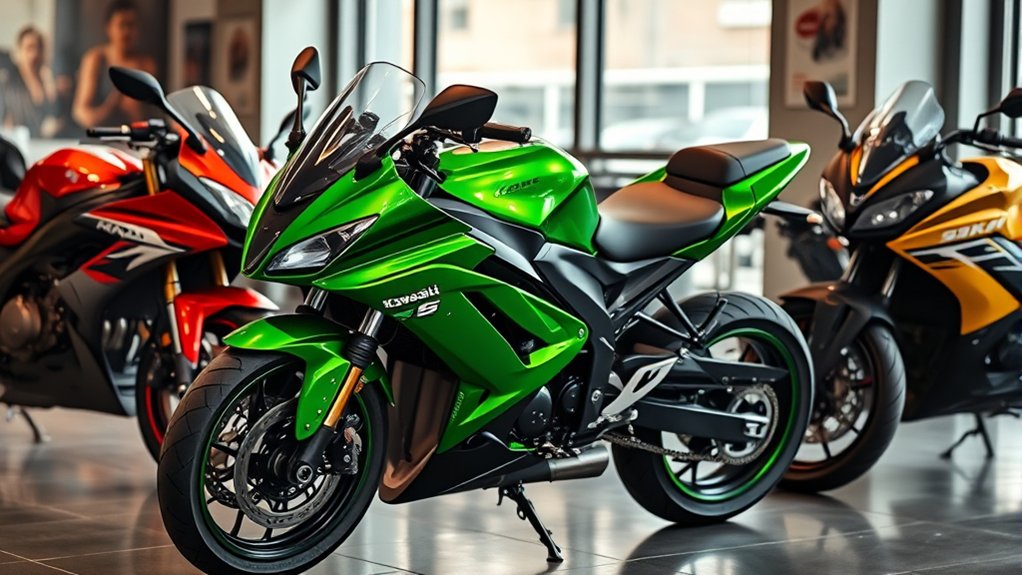
When you compare Kawasaki to other Japanese brands like Honda and Yamaha, you’ll notice a few differences in reliability. Kawasaki often trails just a bit behind.
But here’s the thing—Kawasaki really shines when it comes to performance and handling.
That said, it might need more frequent maintenance and repairs than some of the others.
Reliability Among Japanese Brands
Even though Kawasaki motorcycles are known for their performance and innovation, they generally rank slightly below other Japanese brands like Honda, Yamaha, and Suzuki when it comes to dependability.
When you look at reliability among Japanese brands, Kawasaki often runs into more quality control issues, especially with build consistency, compared to its peers.
You’ll find that Honda and Yamaha typically need fewer repairs and have fewer electrical or mechanical problems.
Kawasaki’s reliability is still solid but a bit less consistent because of occasional quality control lapses.
Proper maintenance is super important to make sure all Japanese motorcycles, including Kawasaki, keep performing reliably over time.
Performance Versus Durability
Although Kawasaki motorcycles emphasize high performance and racing-inspired technology, this focus can sometimes come at the expense of long-term durability compared to other Japanese brands like Honda and Yamaha. Kawasaki owners enjoy powerful engines and agile handling, but the mechanical complexity may affect longevity.
In contrast, Honda and Yamaha prioritize durability, leading to fewer quality control issues and more reliable long-term performance.
| Brand | Performance | Durability |
|---|---|---|
| Kawasaki | High, racing-tuned | Moderate, variable |
| Honda | Balanced | High, consistent |
| Yamaha | Strong | High, reliable |
If you value peak performance with some trade-offs in durability, Kawasaki fits well. But if you want greater long-term reliability, Honda or Yamaha might suit you better.
Maintenance And Repair Costs
Kawasaki’s focus on high performance influences not only durability but also maintenance and repair costs. When comparing Kawasaki to other Japanese manufacturers like Yamaha and Suzuki, you’ll find their maintenance costs generally align, offering a balance between affordability and quality.
Repair expenses remain moderate, thanks in part to widespread parts availability. Consider these factors: routine maintenance, including oil changes and brake replacements, typically ranges from $200 to $400 annually.
Sportbike models, such as the ZX series, may lead to higher repair expenses due to advanced components. Kawasaki’s parts accessibility helps keep repair costs reasonable compared to European brands.
Are Kawasaki Bikes Less Reliable Than European Models?
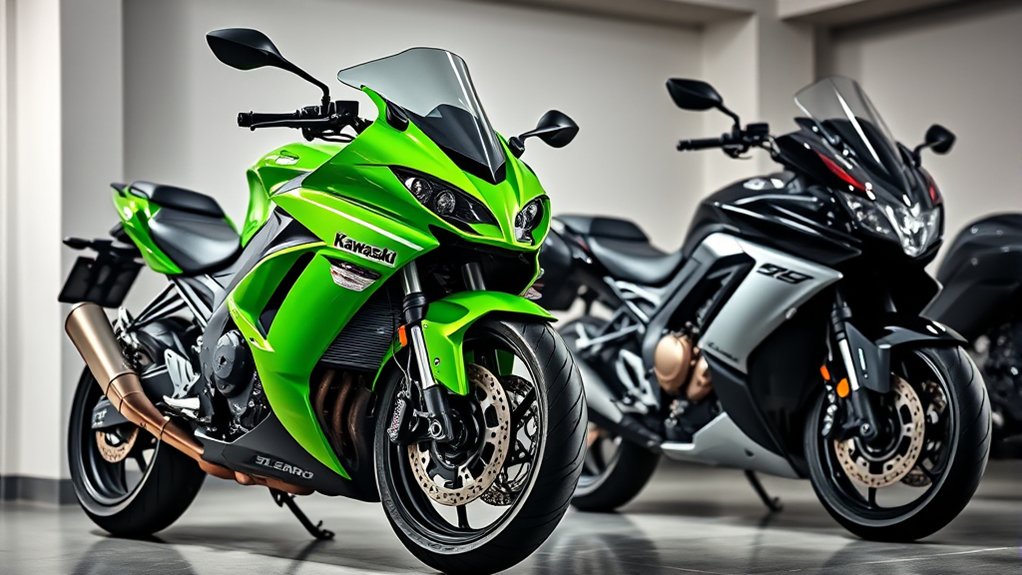
You might notice that Kawasaki bikes often rank higher in reliability compared to many European models. This is mostly because they’ve a simpler design and consistent manufacturing standards.
On the other hand, European brands tend to use more advanced technology and premium materials. That can make maintenance a bit more complex.
Reliability Comparison Overview
When comparing Kawasaki motorcycles to European models like Ducati and BMW, you’ll find that Kawasaki generally stands out for its reliability.
In a reliability comparison, Japanese motorcycles, including Kawasaki, often lead industry rankings for durability and fewer mechanical issues.
European bikes do boast advanced technology and premium materials. But this can sometimes mean higher repair costs and a perception of lower reliability.
Here’s something to consider: Kawasaki riders report thousands of miles of dependable riding with routine maintenance.
European models may need more frequent or specialized repairs because of their complex components.
Industry rankings consistently place Japanese brands ahead when it comes to straightforward durability.
Maintenance Complexity Effects
Though Kawasaki motorcycles earn praise for reliability compared to European brands, their maintenance complexity can influence long-term dependability. You’ll notice Kawasaki bikes often feature more parts, plastics, and intricate motor components than some European models like Ducati or BMW.
This added complexity can make maintenance more challenging and time-consuming, especially if you’re not familiar with detailed disassembly.
Some riders argue that these complexities increase the risk of mechanical issues. But with proper and regular maintenance, Kawasaki motorcycles generally stay reliable.
European bikes, with their simpler or more refined designs, may offer easier upkeep, which can boost reliability through straightforward maintenance.
At the end of the day, the complexity Kawasaki introduces means you need to be more attentive with care. That said, it doesn’t automatically mean these bikes are less reliable than their European counterparts.
Owner Reliability Experiences
While Kawasaki motorcycles may not carry the same premium reputation as European brands like Ducati or BMW, many owners report strong reliability when they keep up with proper maintenance. Your owner experiences might confirm that Kawasaki offers solid reliability, though some models have faced quality control issues.
Compared to European bikes, Kawasaki’s reliability often stands out in industry reviews, but individual experiences vary. Some riders find their Kawasakis hold up better over time, while others recall specific problems like early production engine bearing failures.
Consider these points about Kawasaki owner reliability experiences:
- Consistent maintenance boosts long-term reliability
- Certain models have faced quality control recalls
- Some riders report better durability than European counterparts
This balanced perspective helps you gauge Kawasaki’s true reliability.
How Maintenance Affects Kawasaki Reliability and Longevity
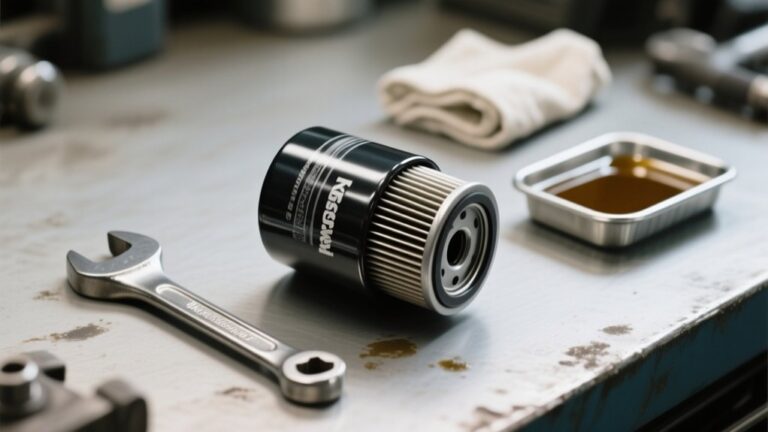
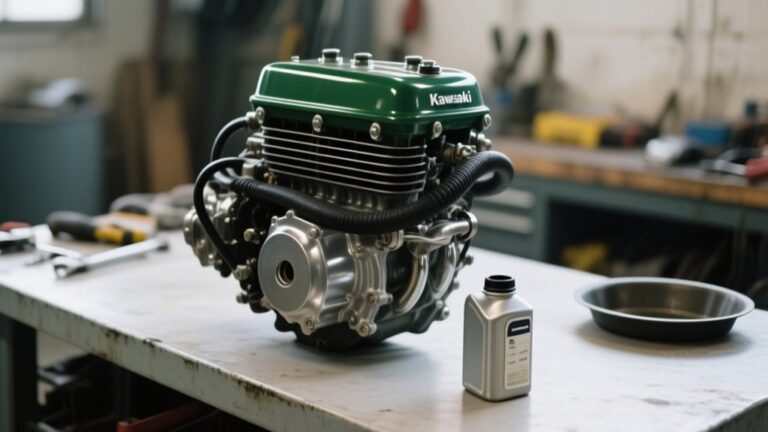
Because regular maintenance directly influences a Kawasaki motorcycle’s performance, you’ll find that sticking to scheduled oil changes and inspections considerably boosts its reliability and lifespan.
Maintenance plays a critical role in preventing increased wear and mechanical failures. When you follow the manufacturer’s recommended service schedules consistently, Kawasaki bikes tend to perform well in longevity tests.
Neglecting routine upkeep often results in reduced reliability and potential breakdowns. Although maintenance complexity varies by model, the key is consistent care regardless of design.
Using genuine parts and addressing recalls promptly also contribute to maintaining your motorcycle’s reliability and safety.
Ultimately, your commitment to proper maintenance directly determines how long and reliably your Kawasaki will serve you. So, keeping up with the basics really pays off in the long run.
Model-Specific Recalls and Their Impact on Reliability
You might come across recalls on certain Kawasaki models, like the ZX-6, which are often related to specific issues such as engine bearings. These recalls can sometimes make the bike seem less reliable for a little while.
But don’t worry—once the necessary repairs are done, the bike’s performance and safety usually go right back to normal. So, if you want to keep your Kawasaki dependable, it’s a good idea to stay updated on any recall notices and take care of them as soon as you can.
Notable Kawasaki Recalls
How do recalls affect the reliability of Kawasaki motorcycles? Notable Kawasaki recalls, such as the ZX-6R’s April 2025 engine bearing issue, show how the manufacturer stays on top of specific mechanical concerns. These recalls don’t necessarily mean Kawasaki bikes are unreliable. Instead, they highlight the company’s commitment to safety and quality.
When you think about these recalls, keep in mind a few things. Model-specific recalls often focus on electrical faults or engine issues in Ninja and Z series bikes.
Kawasaki usually responds quickly to make sure affected owners get the repairs they need.
It’s also a good idea to check for recall notices before buying a Kawasaki. Doing this helps you avoid any potential safety risks and ride with peace of mind.
Recall Impact On Reliability
What effect do model-specific recalls have on the reliability of Kawasaki motorcycles? Recalls, like the ZX6 engine bearing issue in April 2025, target safety and reliability concerns in specific models. They don’t mean the whole brand is unreliable.
Kawasaki’s proactive recall approach shows it’s committed to safety and improvement. When you address recall repairs promptly, your bike’s reliability gets restored and potential failures are minimized.
Overall, recalls have a minimal impact on Kawasaki’s reliability if handled correctly.
| Recall Type | Affected Model | Impact on Reliability |
|---|---|---|
| Engine Bearing Recall | ZX6 (2025) | Restores reliability after repair |
| Brake System Recall | Ninja 400 | Ensures safety and function |
| Electrical Recall | Versys-X 300 | Prevents failures, maintains reliability |
Your timely action ensures safety and keeps your Kawasaki running reliably.
Ensuring Recall Compliance
Although recalls target specific models, making sure your Kawasaki has completed all relevant recall repairs is essential for keeping it safe and reliable. Recall compliance isn’t just about fixing known issues. It also directly affects your bike’s long-term performance and your riding safety.
Kawasaki’s recall campaigns, like the ZX-6R engine bearing recall, show how committed they’re to addressing critical concerns.
To verify your Kawasaki meets recall compliance, you should:
- Check official Kawasaki websites or dealer records for recall status
- Schedule necessary repairs promptly to avoid performance risks
- Combine recall repairs with routine maintenance for the best reliability
What Kawasaki Owners Say About Their Bikes’ Durability
When you consider Kawasaki motorcycles, many owners attest to their bikes’ durability over long distances, provided regular maintenance is followed.
Owner reviews frequently praise models like the Ninja and Vulcan series for their lasting performance and solid build quality.
Models like the Ninja and Vulcan are often celebrated for their enduring performance and robust construction.
However, some riders report occasional issues with fit and finish. These reflect minor quality control inconsistencies rather than widespread problems.
Kawasaki’s proactive approach to recalls, such as the ZX6 engine bearing recall, also highlights their commitment to addressing durability concerns promptly.
Overall, you’ll find that while Kawasaki motorcycles generally offer reliable durability, your experience may vary depending on the specific model and how diligently you maintain it.
Careful upkeep remains essential to preserving your bike’s long-term reliability and performance.
How Kawasaki’s Performance Emphasis Affects Reliability
Because Kawasaki prioritizes high performance and speed, you might notice some trade-offs in build quality and long-term reliability. Their racing-inspired technology boosts power and handling but can increase mechanical complexity. That means you’ll need to be more attentive with maintenance.
This focus sometimes leads to quality control inconsistencies, which can affect overall reliability. When you ride a Kawasaki, keep in mind that this performance emphasis may also impact rider comfort and bike longevity.
Key points to contemplate include:
- Increased maintenance needs due to complex, high-performance components
- Occasional quality control issues like inconsistent fit and finish
- Aggressive ergonomics that might affect comfort and durability
Ultimately, Kawasaki’s performance-first approach means you’ll get thrilling rides. Just be sure to stay on top of maintenance to keep your bike reliable over time.
Checking and Addressing Kawasaki Safety Recalls
Managing the high-performance components in Kawasaki motorcycles means staying vigilant about safety recalls that may come up. Kawasaki has issued recalls for models like the ZX-6R, specifically for engine bearing issues.
To keep your bike reliable, it’s a good idea to regularly check if your motorcycle is part of any active safety recalls. You can easily do this through Kawasaki’s official recall database or by stopping by a dealership.
Most Kawasaki owners don’t report major safety incidents, but addressing recalls promptly is super important for your safety and your bike’s performance.
Kawasaki’s proactive approach to recalls shows how committed they’re to reliability.
Staying informed and acting quickly helps you avoid unnecessary rumors and makes sure your Kawasaki stays safe and dependable on the road.
Testing Kawasaki Reliability Yourself With a Rental
If you want to truly understand a Kawasaki motorcycle’s reliability, renting one offers an invaluable opportunity to test its performance and handling firsthand. Rental testing lets you experience various Kawasaki models, evaluating their engine response, ergonomics, and build quality in real-world conditions.
This hands-on approach reveals how well a bike holds up during extended rides and diverse terrains. It gives you insights beyond owner reviews or reputation. When you rent, focus on how smoothly the bike accelerates and brakes, comfort and control over long distances, and signs of mechanical stress or unusual noises.
This practical evaluation clarifies motorcycle reliability. It helps you confirm or dispel myths based on your direct experience with Kawasaki models before committing to a purchase.
Frequently asked questions
What Is the Average Resale Value of Kawasaki Motorcycles?
You can expect Kawasaki motorcycles to retain about 70-80% of their original value after 2-3 years. Typically, their resale value drops around 20-30% within the first year.
Models like the Ninja series hold value better because they’re popular and perform well.
Of course, factors like the bike’s age, condition, and market demand also influence resale prices.
Do Kawasaki Motorcycles Have Better Fuel Efficiency Than Other Brands?
Kawasaki motorcycles generally offer competitive fuel efficiency compared to many other brands. You’ll find models like the Ninja 400 achieving around 60-70 miles per gallon, which is often better than heavier European or American bikes.
However, fuel efficiency varies across Kawasaki’s lineup, with smaller models performing better.
While Kawasaki doesn’t always top every brand in mileage, you can expect solid, reliable fuel economy in most of their motorcycles.
How Do Kawasaki Motorcycles Perform in Extreme Weather Conditions?
Kawasaki motorcycles perform well in extreme weather if you maintain them properly.
In cold conditions, you’ll need to prepare for potential fuel flow and traction issues.
Heat can challenge high-performance models like the Ninja ZX-10R, so monitoring cooling systems is vital.
Rain and humidity usually don’t affect performance much, thanks to good sealing.
Still, you should use protective gear and conduct regular maintenance to keep your Kawasaki reliable and safe.
It really pays off to stay on top of things, especially when the weather gets tough.
Are Kawasaki Motorcycles Suitable for Beginner Riders?
Yes, Kawasaki motorcycles are suitable for beginner riders. You’ll find models like the Ninja 400 designed with manageable power and lightweight frames, making them easier to handle.
Kawasaki prioritizes comfort and control through ergonomic designs, helping you build confidence.
While some bikes have aggressive riding positions, many options offer a relaxed stance.
Just remember, maintaining your bike properly and getting proper training are key to a safe and enjoyable start.
What Warranty Options Are Available for Kawasaki Motorcycles?
You can expect a standard 12-month limited warranty on Kawasaki motorcycles. This covers parts and labor for manufacturing defects.
Some dealers also offer extended warranties for extra protection, which you can purchase separately.
In certain cases, transferable warranties are available, which can boost your bike’s resale value.
Keep in mind that warranty terms vary by model, country, and the condition of the bike.
To stay eligible, make sure to register your motorcycle promptly.
It’s also important to maintain detailed service records. That way, you’ll be covered if anything comes up.
Final Thought
You might think Kawasaki’s focus on performance could mean more frequent repairs, but surprisingly, many riders find these bikes reliably thrilling. Just as you wouldn’t judge a book by its cover, don’t dismiss Kawasaki’s durability based on myths.
With proper maintenance and attention to recalls, you can enjoy a dependable ride. So, if you’re weighing options, consider renting one. You might just find reliability and excitement riding hand in hand.