Can You Store A Motorcycle In A Storage Unit – What to Know
Yes, you can store a motorcycle in a storage unit.
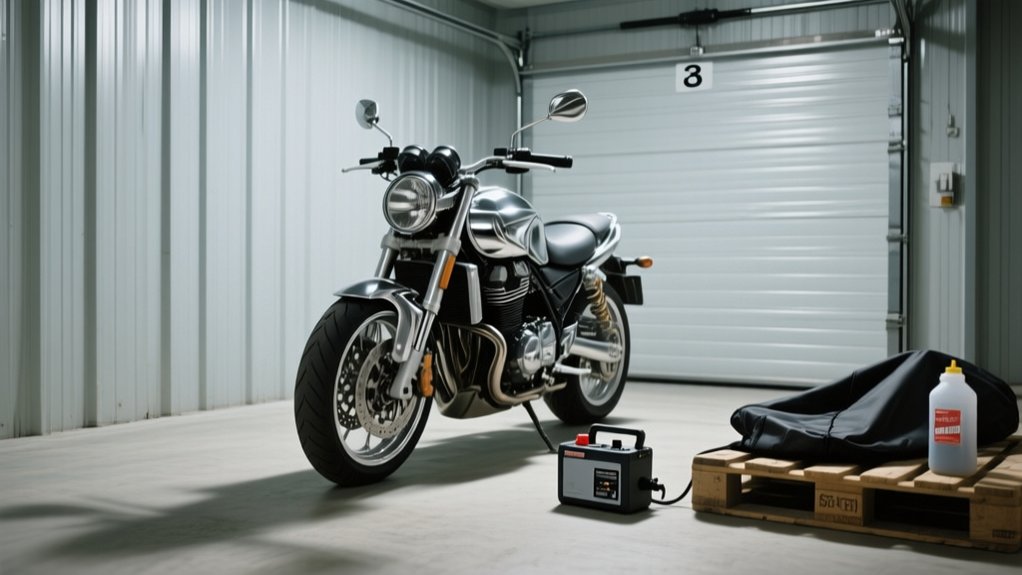
But you should confirm the facility allows motorcycle storage and ask about fuel, battery, and leak rules first.
A drive-up 5×10 usually fits one bike.
Larger units can work for gear or multiple bikes.
Prep it by cleaning the motorcycle, changing the oil, and checking fluids.
If allowed, use a battery maintainer.
Also verify access hours, security, fees, and any promotions.
That way, you know exactly what you’re getting.
Can You Store a Motorcycle in a Storage Unit?
Yes, you can usually store a motorcycle in a storage unit.
But you’ll need to choose a facility that allows vehicle storage and confirm the rules first, since policies vary by location.
For motorcycle storage, ask about proof of ownership and insurance.
Also, check fuel stabilization and battery requirements before you rent.
A drive-up storage unit makes loading and access easier.
And climate control can help protect metal, rubber, and leather during long-term storage.
Check the unit size the facility offers.
Just avoid overfilling it with gear.
Before you store the bike, clean it and remove or disconnect the battery if required.
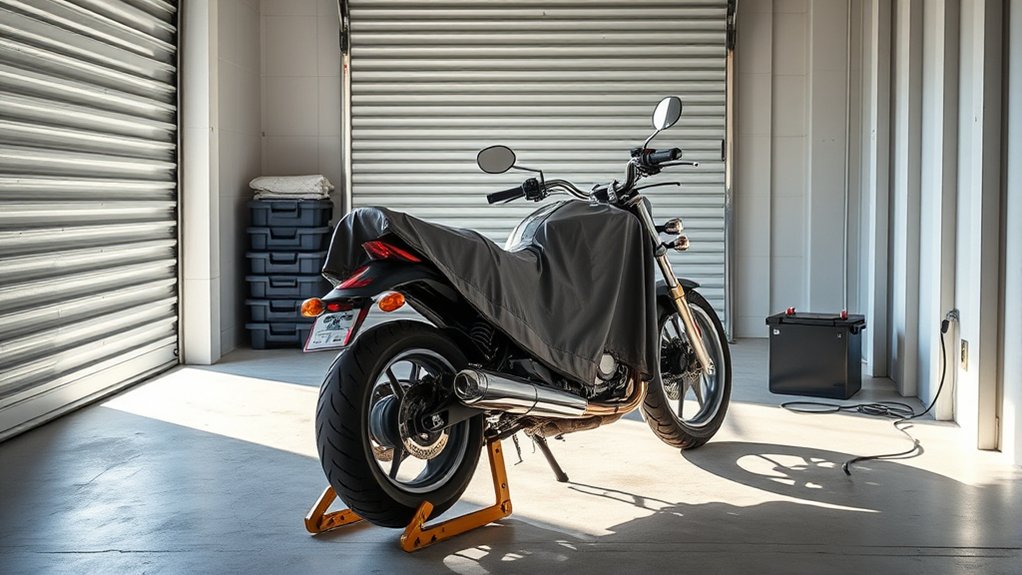
Use a breathable cover indoors for better air circulation.
If you’re parking outside or in a covered space, choose a weatherproof cover.
Follow all fuel limits to stay compliant.
Best Motorcycle Storage Unit Size
A 5×10 drive-up storage unit fits most motorcycles and makes loading and unloading easy without wasting space or money. For basic motorcycle storage, this is usually the best fit, especially in drive-up self-storage where you can roll in and out quickly.
A 5×10 drive-up storage unit fits most motorcycles and keeps loading and unloading quick and easy.
If you need extra room for gear, tools, or a work area, step up to 10×10 storage. It’s also a smart choice for two bikes or wider three-wheelers.
A 10×20 unit works better when you’re storing multiple bikes plus a trailer, car, or bulky accessories.
Climate-controlled storage follows the same storage unit sizes, but it’s worth considering if you’re storing long term. It can offer added protection from humidity and temperature swings.
Always measure your bike and confirm the unit’s inside dimensions before you rent.
Which Motorcycle Storage Type Is Best?
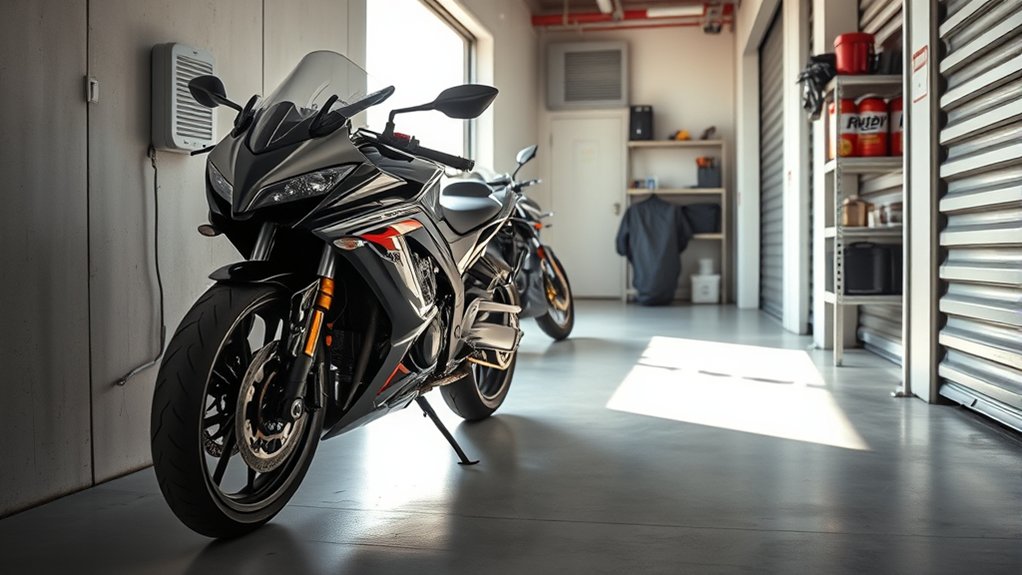
Choosing the right motorcycle storage type depends on how often you ride, how much protection you need, and what you’re storing.
For most riders, a 5×10 unit with drive-up access gives you the best balance of cost, convenience, and security.
Use a climate-controlled unit if you’re storing a classic, expensive, or long-term bike.
It helps limit moisture and heat damage.
Outdoor storage is the cheapest choice for quick, everyday parking, but it leaves your bike more exposed.
Covered parking sits in the middle, offering partial shelter and easier access.
- Best value: 5×10 unit
- Best protection: climate-controlled unit
- Best budget option: outdoor storage
If you need room for gear or a second bike, step up to a larger unit.
How to Prep Your Motorcycle for Storage
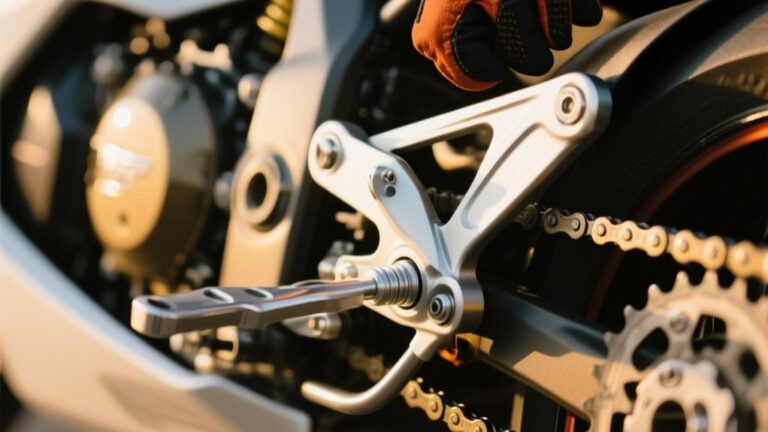
Before you park your motorcycle for storage, give it a full prep so it stays clean, protected, and ready to ride later. Start by cleaning the bike thoroughly, including the chain, then wax painted surfaces to help block grime and corrosion.
Clean your motorcycle thoroughly, including the chain, then wax painted surfaces to help prevent grime and corrosion.
Next, change the oil and oil filter. Check the coolant and brake fluid, and top them off if needed.
If your storage rules allow it, add a fuel stabilizer to the tank. If not, follow the facility’s fuel requirements.
Remove the battery and store it in a cool, dry spot on a maintenance charger. If you can’t remove it, disconnect it at minimum.
Inflate the tires to the recommended pressure, and use a paddock stand or blocks if you can. Finish by covering the bike with a breathable cover and placing a drip pan underneath if leaks are possible.
What Fuel, Battery, and Fluid Rules Apply?
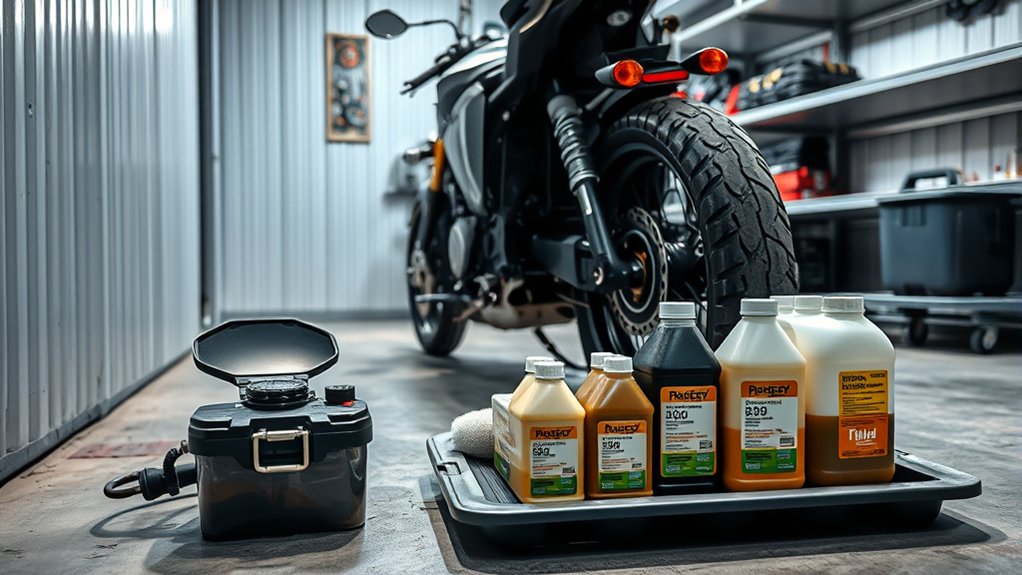
Fuel, battery, and fluid rules can vary by storage facility. Check your rental agreement before move-in. Many places want the fuel tank at a quarter tank or less. If you keep gas in the bike, they may require you to use fuel stabilizer.
Don’t store extra fuel or fuel containers in the unit unless the rules allow it. If you drain fuel, move it off-site in approved containers.
- Disconnect the battery.
- Consider removing the battery for long-term storage.
- Keep the bike leak-free, and use a drip pan if required.
Facilities often reject motorcycles with active leaks or hazardous fluids on the floor. Some also want batteries stored in a cool, dry place. Others require a trickle charger. Follow the rental agreement closely so you don’t get turned away at move-in.
Which Security Features Should You Look For?
When you’re comparing storage units, focus on security features that make theft and vandalism harder. Choose a place with gated access and electronic keypad entry so only approved people can get in.
Ask for 24/7 video surveillance that covers aisles, doors, and parking areas. Make sure there’s bright lighting around the perimeter as well.
Check for perimeter fencing, since it adds another barrier against trespassers. If possible, pick a facility with on-site security or regular patrols, because visible staff usually discourage break-ins.
You should still use a high-quality lock on your motorcycle, since your own lock adds another layer of protection. Also, verify access hours and any ownership or insurance paperwork, because tighter procedures can help keep your bike safer.
How Much Motorcycle Storage Costs
You’ll usually pay a monthly rate that depends on where you live. In many areas, a 5×10 unit often costs less than larger options, and it tends to fit most motorcycles comfortably.
If you want climate control, expect to pay more. That said, it can be worth it since it helps protect your bike from humidity and temperature swings.
Also, keep an eye out for promo rates and any extra fees—like admin charges, taxes, required locks, or insurance—because the advertised price isn’t always what you’ll pay in the end.
Monthly Rate Basics
Monthly motorcycle storage rates usually start lowest for outdoor parking and covered stalls. Drive-up indoor units cost more. Climate-controlled units sit at the top end for added protection.
In motorcycle storage, you’ll often find monthly rates that fit your budget. You’ll also see pricing based on how often you ride. A drive-up unit gives you easy access, while climate-controlled space helps guard against humidity and heat damage.
Outdoor parking saves money, but it offers less protection.
- Check online specials first. Some locations advertise 50% off for select unit sizes.
- Ask about taxes, admin fees, and move-in restrictions before you book.
- Compare nearby facilities. Advertised unit sizes and rates can change by location.
Unit Size Pricing
Unit size plays a big role in what you’ll pay for motorcycle storage. A basic motorcycle often fits in a 5×10 unit, especially with drive-up access, which usually keeps costs in the mid-range. If you need room for riding gear or a second bike, a 10×10 unit gives you more flexibility.
A 10×20 unit costs more, but it works better for multiple bikes or extra workspace. Your unit size also affects whether climate-controlled storage is worth the added price. It usually runs 10–40% higher than standard options, so reserve it for long-term protection or valuable bikes.
For short-term storage, drive-up storage can be the more affordable choice. Always compare local rates before you book.
Promo And Extra Fees
Promo rates can make motorcycle storage look cheaper at first, but they often apply only to new customers who reserve online. They may also exclude taxes, insurance, and other facility fees. Your unit’s monthly rate can vary by location and type, so compare the real total before you sign. Smaller drive-up spaces usually cost less, while climate-controlled units raise the price but help protect a valuable bike.
Ask if promotions end after one or three months.
Check for additional fees like setup charges, deposits, and required insurance.
Confirm the exact monthly amount, because pricing can change without notice.
Outdoor or covered parking may save money, but it offers less protection.
How to Choose a Motorcycle Storage Facility
When you’re choosing a motorcycle storage facility, confirm that it explicitly allows bike storage. Then ask about any rules on fuel levels, battery removal, and proof of ownership or insurance.
Next, match the storage unit to your bike. A drive-up unit in a 5×10 space works for one motorcycle, while a 10×10 or 10×20 can fit multiple bikes or extra gear.
Measure your bike first and compare it to the exact unit dimensions. This helps ensure the bike fits comfortably with room to move.
If you’ll store your bike long term, choose climate-controlled motorcycle storage. It helps limit humidity, corrosion, and damage to plastics and leather.
Then check security features like gated access, fencing, cameras, and lighting. Add your own heavy-duty lock for extra protection.
Finally, confirm access hours and ask about move-in deals. Inspect the unit in person before you sign.
Frequently Asked Questions
Can I Store a Motorcycle With Other Household Items?
Yes, you can store a motorcycle with other household items if the facility allows it and you pack smart.
Choose a unit large enough for both, and keep fuel, batteries, and solvents out.
Use shelves or pallets to lift boxes off the floor.
Clean the bike, cover it with a breathable cover, and place dirty gear near the door.
This helps protect your belongings and reduce moisture risks.
Do I Need Motorcycle Insurance While It’s in Storage?
Yes, you should keep motorcycle insurance while it’s in storage. At minimum, maintain full coverage to protect against theft, fire, vandalism, and other non-riding damage.
Check your storage facility’s contract, since some require proof of insurance. If you switch to storage-only coverage, tell your insurer first.
Confirm the limits and security requirements, and whether off-premises damage is covered. Keep photos and your VIN for claims, just in case.
Can I Access My Bike After Hours?
Yes, you can access it after hours at some facilities, but not all.
Like a locked toolbox, your access depends on the unit’s rules.
You’ll need to check gate hours, office policies, and your rental agreement before you sign.
Some drive-up lots allow 24/7 entry, while climate-controlled buildings often don’t.
If late-night access matters, choose a site with keypad entry, cameras, and written approval for any exceptions.
Should I Use a Motorcycle Cover Inside the Unit?
Yes, you should use a motorcycle cover inside the unit.
Choose a breathable cotton or a motorcycle-specific cover to keep dust off while letting moisture escape.
Don’t use plastic tarps, since they trap humidity and can cause rust or mold.
Make sure the cover fits loosely for airflow.
Remove or disconnect the battery, cover openings, and check the bike every few weeks.
That way, you can catch moisture or pests early.
Can I Store a Scooter or Moped in the Same Unit?
Yes, you can usually store a scooter or moped in the same unit if the space fits and the facility allows it.
Be sure to check any size limits and rules about fuel or batteries.
A 5×10 drive-up unit often works, and a 10×10 gives you extra room for gear.
Bring proof of ownership, use a breathable cover, and lock the unit securely.
Conclusion
Storing your motorcycle in a unit can be a smart move, but the right setup matters.
Think of storage like a helmet for your bike—it protects what matters most when you’re not riding.
Choose a clean, secure space.
Prep the fuel and battery correctly, and check the facility’s rules before you park.
If you pick the right unit and protect your bike well, you’ll keep it ready for the road.