How Much Oil Does A Kawasaki Fr730v Take – Facts & Figures
You’ll need exactly 2.2 quarts (2.1 liters) of oil with the filter installed to properly fill your Kawasaki FR730V. If you don’t install the filter, the capacity drops to about 1.8 liters (1.9 quarts).
Using SAE 10W-40 or 10W-30 oil rated SJ or higher guarantees peak performance. Avoid overfilling or underfilling to prevent engine damage.
Keeping the oil at the right level and quality is essential. You can discover more on maintaining your FR730V’s engine efficiently.
How Much Oil Does the Kawasaki FR730V Need?
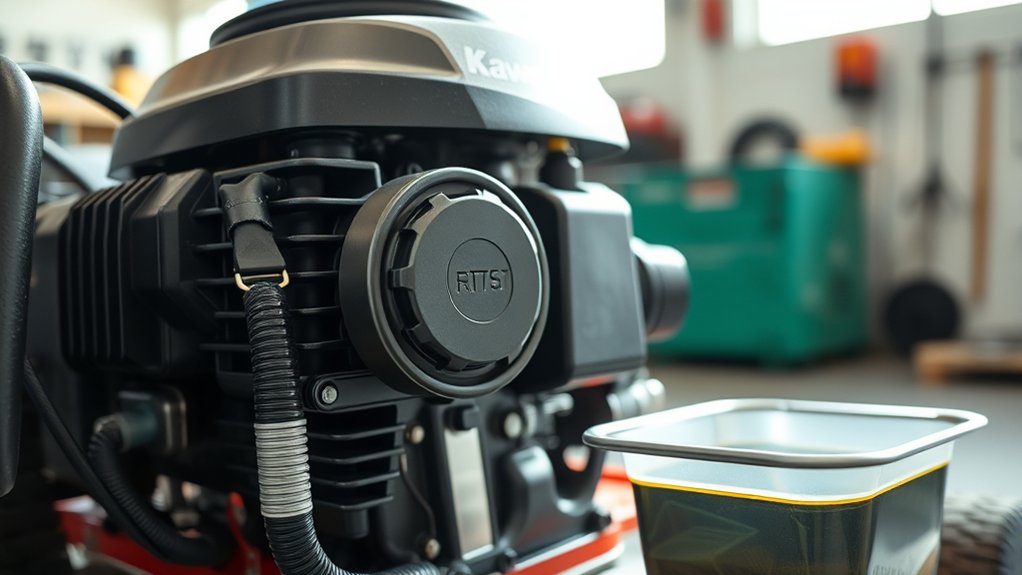
When maintaining your Kawasaki FR730V, you’ll need about 2.2 quarts (2.1 liters) of oil with the filter installed.
Without the filter, the capacity drops to roughly 1.8 liters (1.9 quarts). This oil capacity is critical for ideal engine performance and longevity.
Without the oil filter, the Kawasaki FR730V holds about 1.8 liters, essential for optimal engine health.
You should always replace or clean the oil filter during oil changes to maintain proper filtration.
After filling, run the engine briefly and use the dipstick to verify the engine oil level. Make sure it’s neither overfilled nor underfilled.
Incorrect oil levels can lead to poor lubrication, overheating, and engine damage.
Staying precise with the Kawasaki FR730V’s oil capacity and oil filter maintenance helps keep your engine running smoothly and efficiently.
Always follow the manufacturer’s guidelines for best results.
What’s the Best Oil Type for the FR730V?
Although you can use conventional oils, choosing SAE 10W-40 or 10W-30 with an API classification of SJ or higher guarantees ideal performance for your Kawasaki FR730V. The right oil type ensures your engine runs smoothly and lasts longer. Consider these points:
Use oil meeting API SJ, SL, SM, SN, or higher to maintain engine compatibility. Synthetic oils provide enhanced protection and efficiency, especially under tough mowing conditions.
Always use fresh, uncontaminated oil to avoid engine wear and maintain optimal lubrication.
Stick to the recommended oil capacity of 2.2 quarts (2.1 liters) to prevent performance issues.
Selecting the proper oil type directly affects your FR730V engine’s reliability and efficiency, so prioritize quality synthetic or high-grade conventional oils. It really makes a difference in the long run!
What Happens If You Use Too Little or Too Much Oil?
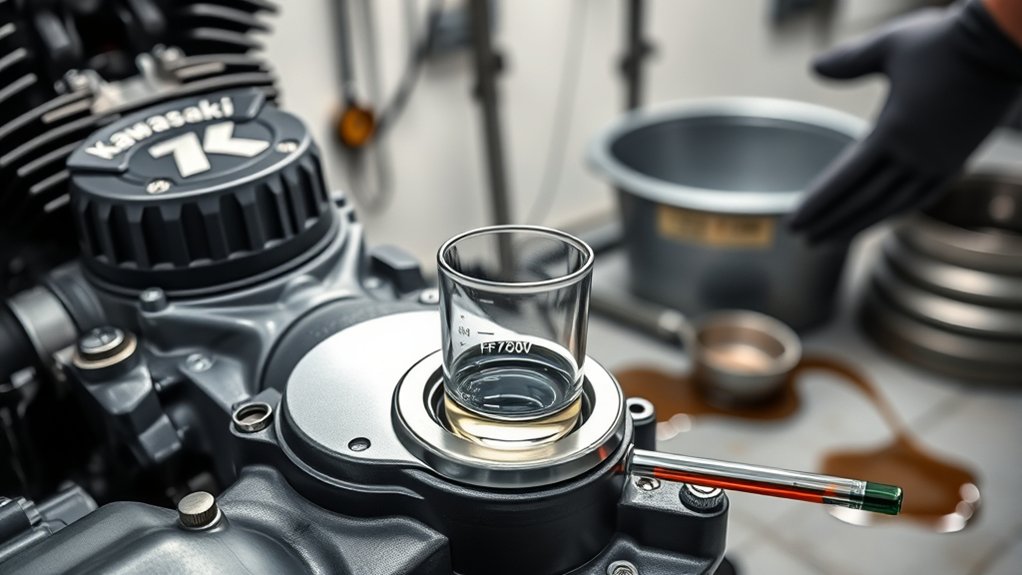
If you don’t maintain the proper oil level in your Kawasaki FR730V, you risk serious engine problems. Using too little oil leads to insufficient lubrication, which increases engine wear and the chance of overheating. This can trigger warning lights or even cause the engine to shut down to prevent further damage.
On the other hand, overfilling the oil creates excessive pressure that causes oil leaks and foaming. Foaming reduces lubrication effectiveness, which impairs engine efficiency and can lead to misfires or oil fouling.
The FR730V requires precisely 2.2 quarts (2.1 liters) with a filter to operate at its best.
Deviating from this oil level compromises engine performance and longevity. So, always maintain the correct oil level to guarantee proper lubrication and avoid costly engine repairs caused by either underfilling or overfilling.
It’s worth the effort to keep your engine running smoothly!
How to Check and Maintain FR730V Engine Oil Level
To accurately check the oil level in your Kawasaki FR730V, start by placing the engine on a level surface and making sure it’s cool or has been off for a few minutes.
First, remove the dipstick and wipe it clean to avoid false readings. Then, reinsert the dipstick fully and pull it out again to check the oil level.
Make sure the oil level is between the upper and lower marks on the dipstick.
If the level is low, add the recommended SAE 10W-40 or 10W-30 oil, but don’t go over the maximum mark.
Regularly checking and maintaining the oil level helps prevent engine damage and keeps your FR730V running smoothly.
Doing this simple maintenance is key for the engine’s longevity and reliable performance.
Oil Change Tips to Keep Your FR730V Running Smoothly
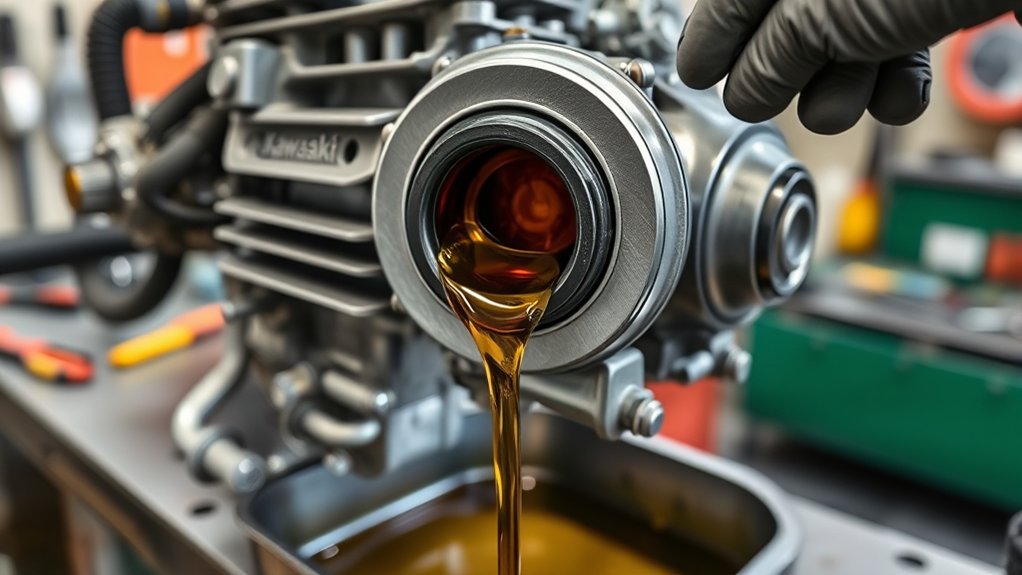
Maintaining the correct oil level is just one part of keeping your Kawasaki FR730V in top condition. When performing an oil change, use a high-quality SAE 10W-40 or 10W-30 oil rated SJ or higher to guarantee peak engine performance.
The engine’s oil capacity is 2.2 quarts (2.1 liters) including the oil filter, so replace both at the same time to maintain proper filtration and extend engine life. After filling, always check the oil level with the dipstick to make sure it’s within the recommended range.
Be sure to regularly inspect the oil level before each use and top it up as needed to prevent engine damage.
Following these oil change tips will help preserve your FR730V’s reliability and keep its engine running smoothly under various operating conditions.
Frequently asked questions
How Often Should I Change the Oil in the FR730V?
You should change the oil in your Kawasaki FR730V after the first 50 hours of operation.
After that, change it every 100 hours or at least once a year, whichever comes first. Regular oil changes keep your engine running smoothly and prevent wear.
Always use the recommended oil type and check the level frequently to maintain proper lubrication and extend engine life.
Staying on schedule helps avoid costly repairs. It’s a simple step that really pays off in the long run.
Can Synthetic Oil Be Used in the Kawasaki FR730V?
You can absolutely use synthetic oil in your Kawasaki FR730V. It’s like giving your engine a high-performance suit of armor.
Just make sure the oil meets Kawasaki’s recommended viscosity grades, such as SAE 10W-30 or 10W-40, and holds an API service classification of SJ or higher.
Synthetic oil improves lubrication, reduces wear, and handles heat better. This helps your engine run smoothly and efficiently under tough conditions.
Always double-check your owner’s manual to stay on the safe side.
What Is the Oil Filter Replacement Interval for This Engine?
You should replace the oil filter on your Kawasaki FR730V every 100 hours of operation or annually, whichever comes first. Always change the oil filter during oil changes to keep your engine running smoothly and prevent contaminants from circulating.
Following the owner’s manual schedule is the best way to make sure your engine gets the proper maintenance it needs.
Using a genuine Kawasaki oil filter is a smart choice because it guarantees the correct fit and filtration efficiency.
This helps your engine run smoothly and last longer.
How Do Temperature Changes Affect Oil Viscosity in the FR730V?
You should know that oil viscosity can drop by up to 50% as temperature rises from 0°C to 100°C in the FR730V.
When temperatures climb, oil thins, which helps it flow better. But if it gets too thin, it mightn’t protect the engine as well.
In cold conditions, oil thickens. This makes startup lubrication harder and can increase the risk of wear.
So, it’s important to always use oils like 10W-30 or 10W-40 that match your ambient temperature.
That way, you keep the viscosity just right for good engine protection.
Are There Any Signs of Oil Leaks Specific to the FR730V?
You’ll notice oil leaks on the FR730V mainly as spots or puddles under the engine, often near the valve cover gasket or oil drain plug.
If you smell burning oil or see smoke, oil might be leaking onto hot components.
Watch for low oil levels during checks—that often signals gasket or seal leaks.
Also, inspect the oil pan and upper engine parts for cracks or damage, which can cause visible leaks.
Keep an eye out for these signs, and you’ll catch any issues early before they turn into bigger problems.
Final Thought
To keep your Kawasaki FR730V running smoothly, use the recommended oil capacity of about 1.1 quarts and choose the right oil type, like SAE 10W-30. Imagine you skipped checking the oil level and ended up with too little oil. That could cause overheating and engine damage.
Regularly check and maintain the oil level, and perform timely oil changes. Doing this guarantees your FR730V stays reliable and performs at its best. It’s really all about staying on top of maintenance to avoid problems down the road.