What Is Cvt On A Kawasaki – Simple Breakdown
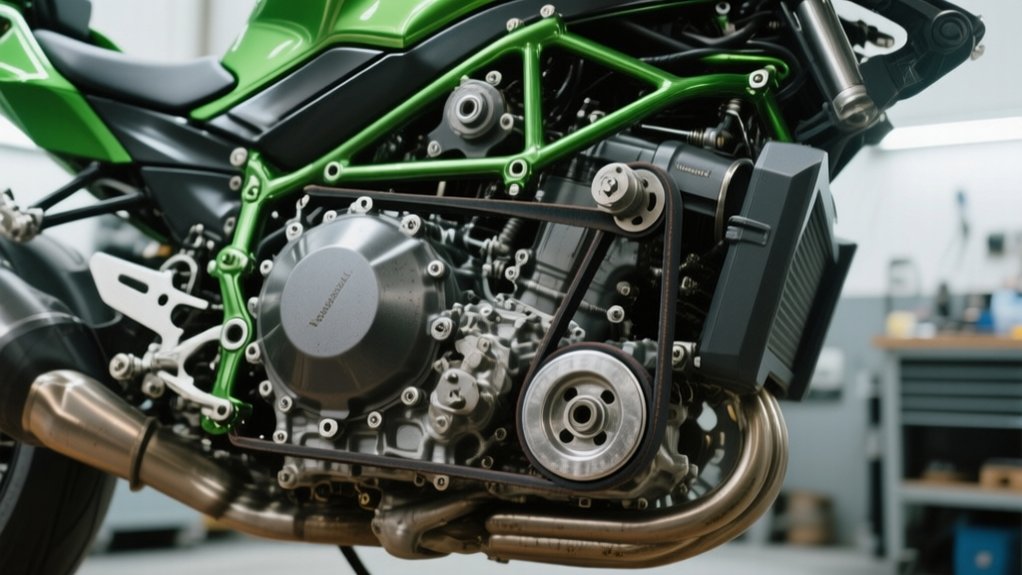
A CVT on your Kawasaki is a continuously variable transmission that smoothly adjusts gear ratios without manual shifting. It uses a belt and pulley system to keep the engine running at ideal RPMs, ensuring efficient power delivery and seamless acceleration.
This design reduces wear, simplifies operation, and enhances off-road performance by adapting to terrain conditions automatically. If you want to understand its types, maintenance tips, and how it boosts ride comfort and fuel efficiency, there’s more to explore.
What Is Kawasaki CVT and How Does It Work
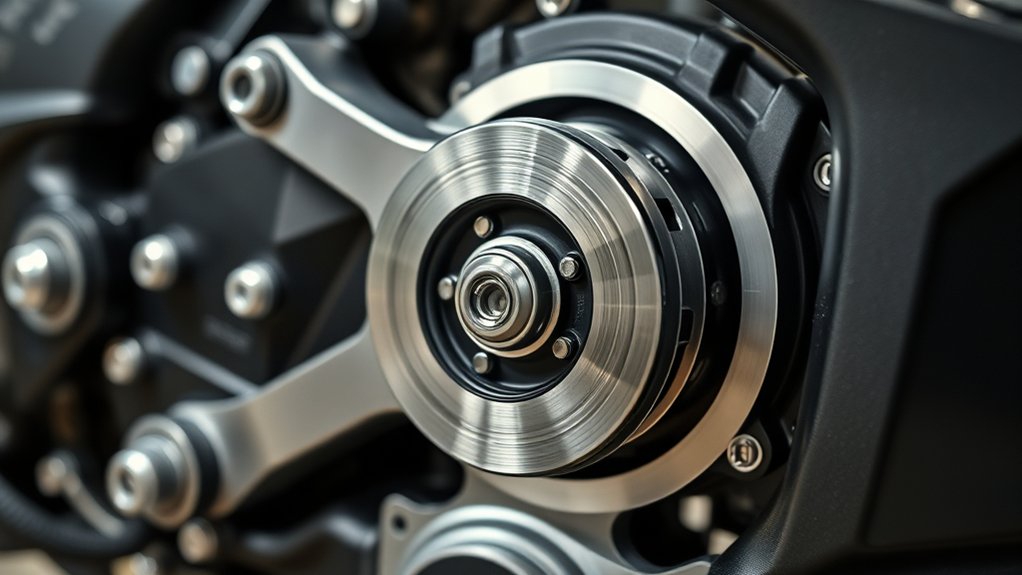
Although you mightn’t see traditional gears in action, Kawasaki’s CVT uses a belt-driven pulley system that continuously adjusts gear ratios by moving conical pulley halves.
This pulley mechanism changes the effective diameter on which the belt rides, allowing a seamless shift between gear ratios without discrete steps.
As the conical halves shift, the belt’s position varies, optimizing engine RPM for both power and efficiency.
Kawasaki’s CVT also integrates a centrifugal clutch that engages the belt smoothly at higher engine speeds, ensuring consistent power delivery.
By automatically adjusting the pulley mechanism, the CVT provides step-less acceleration, simplifying riding and enhancing performance in powersports vehicles.
This precise belt-driven design eliminates the need for manual gear changes, delivering smooth, efficient operation tailored to varying conditions.
How CVT Differs From Traditional Transmissions on Kawasaki
When you compare Kawasaki’s CVT to traditional transmissions, you’ll notice it relies on a belt and pulley system that continuously varies gear ratios instead of fixed gears. Traditional transmissions use set gear steps and clutches, requiring manual shifts or relying on complex planetary gearsets in automatics.
In contrast, the CVT automatically adjusts gear ratios seamlessly, eliminating shift shocks and maintaining ideal engine RPM for efficiency and performance. This dynamic variation in gear ratios allows the engine to operate within its optimal power band consistently.
Mechanically, CVTs have fewer moving parts than traditional transmissions, which reduces maintenance needs and enhances reliability.
Kawasaki CVT Types Used in Off-Road Vehicles
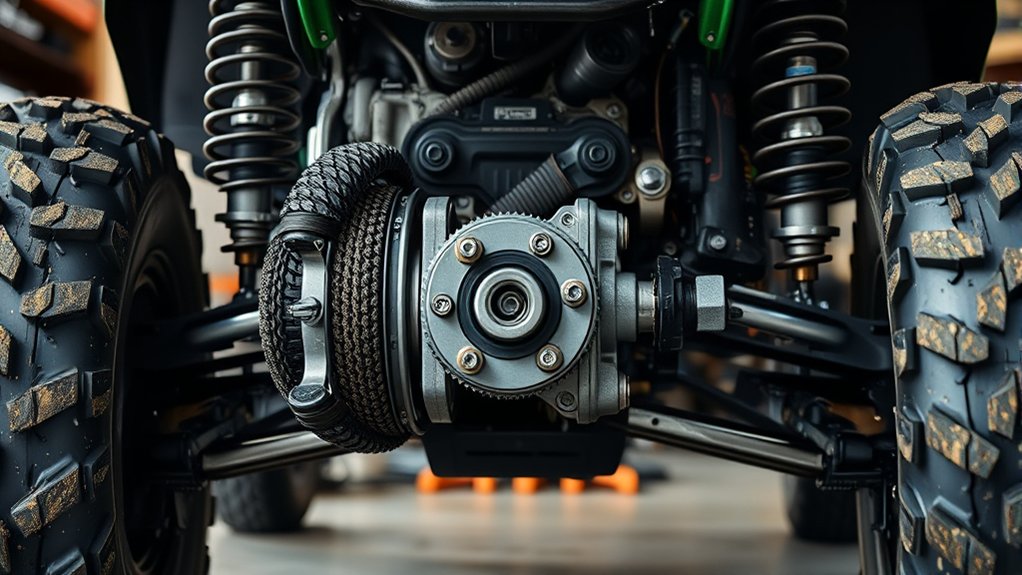
You’ll find that Kawasaki off-road vehicles mainly use pulley-based CVT systems. These work by adjusting variable-diameter pulleys to optimize torque and acceleration, which is pretty neat.
Some models also come with hydrostatic CVTs, offering smooth, hydraulic-driven power delivery.
To keep everything running smoothly, it’s important to regularly maintain the CVT belt and clutch components. Doing this helps prevent slipping and overheating, so your ride stays reliable out on the trails.
Pulley-Based CVT Systems
A key feature of Kawasaki off-road vehicles is their pulley-based CVT systems, which use two adjustable conical pulleys connected by a belt or chain to vary the gear ratio continuously.
As the pulley sheaves move closer or farther apart, the belt’s effective diameter changes, allowing seamless adjustment of gear ratios in real time.
This design optimizes torque transfer and acceleration, especially on rugged terrain, by continuously adapting the drive ratio to riding conditions.
You benefit from smooth power delivery and automatic gear shifting without manual input, enhancing your off-road experience.
Regular maintenance, including belt inspection and replacement, ensures reliable performance.
Hydrostatic CVT Applications
How does Kawasaki achieve smooth, continuous power delivery in its off-road vehicles? Kawasaki uses hydrostatic CVTs in side-by-sides and ATVs to seamlessly vary gear ratios through a hydraulic pump and motor system. This setup provides infinite gear ratios, allowing precise control of vehicle speed across diverse terrains and loads.
The variable-displacement pump and hydraulic motor adjust automatically, ensuring smooth acceleration and preventing stalling at low speeds. By continuously adapting engine output, the hydrostatic CVT enhances operational ease and efficiency.
This technology lets you handle challenging off-road conditions without manual shifting, maintaining ideal power delivery and speed control. Kawasaki’s hydrostatic CVT system exemplifies advanced engineering designed for reliability and performance in demanding off-road environments.
Maintenance Tips For Kawasaki
Since Kawasaki CVTs play a critical role in off-road vehicle performance, maintaining them properly is essential for reliability and longevity. Start by regularly checking and replacing the CVT belt per the manufacturer’s intervals to prevent slipping and wear.
Use the exact CVT fluid type and quantity specified for your Kawasaki model to guarantee ideal operation and extend component life.
During maintenance, inspect the CVT pulley and clutch for damage, corrosion, or excessive wear. Keep the CVT housing clean and free from debris, as dirt and mud can cause premature failures.
Finally, verify proper belt tension and alignment. Incorrect tension can lead to inefficient power transfer and costly repairs.
Consistent maintenance safeguards your Kawasaki’s CVT system, ensuring smooth, reliable performance in rugged off-road conditions. It’s really worth the effort to keep everything running smoothly out there.
Common Kawasaki Models Equipped With CVT
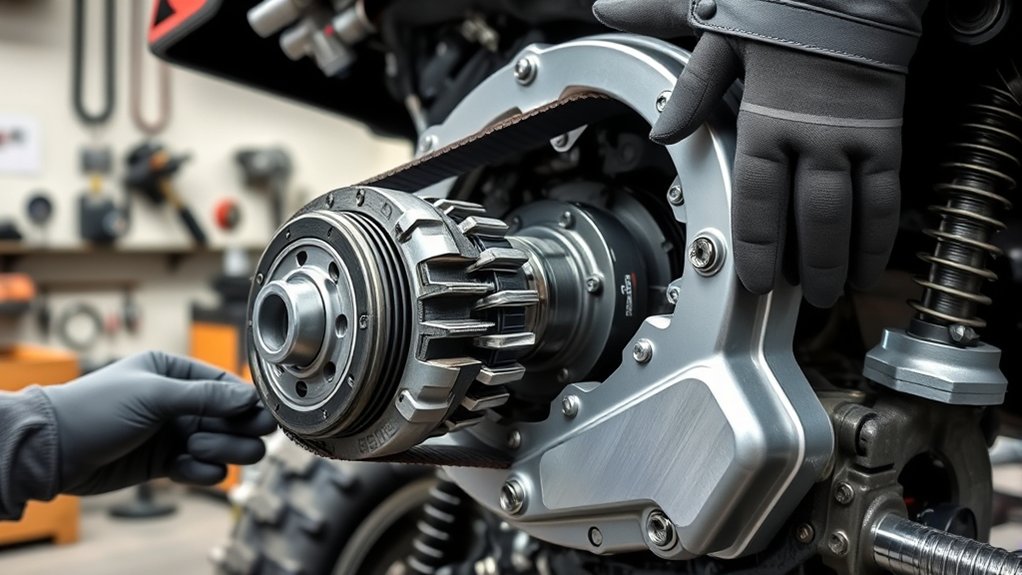
While exploring Kawasaki’s lineup, you’ll notice that several models come equipped with continuously variable transmissions (CVTs) to optimize performance across diverse conditions. Kawasaki models like the Mule, KFX series, and Teryx utilize belt-driven CVTs with variable gear ratios, guaranteeing smooth and automatic power delivery.
These systems incorporate centrifugal clutches to enhance low-speed control, which is especially useful in off-road and utility scenarios. Below is a snapshot of common Kawasaki models equipped with CVT technology:
| Model | Vehicle Type | CVT Feature |
|---|---|---|
| Kawasaki Mule | Utility Vehicle | Belt-driven CVT |
| Kawasaki KFX | Off-Road ATV | Variable gear ratios |
| Kawasaki Teryx | Side-by-Side UTV | Seamless acceleration |
| Kawasaki Brute | Utility ATV | Centrifugal clutch system |
| Kawasaki Bayou | Trail ATV | Automatic transmission |
These CVT-equipped Kawasaki models ensure efficient drivability across varied terrains. It’s pretty cool how they adapt to different riding needs effortlessly.
Top Benefits of CVT for Kawasaki Off-Road Riding
Because off-road conditions demand constant adaptation, Kawasaki’s CVT technology delivers seamless acceleration and smooth power transfer that directly enhances your control and comfort.
The CVT automatically adjusts gear ratios to maintain optimal engine torque across varying terrains, eliminating the need for manual shifting.
This continuous variation in gear ratios prevents sudden jerks or momentum loss when maneuvering obstacles or steep inclines, ensuring stable, consistent power delivery.
By providing smooth transitions, the CVT improves traction and stability, which are critical for challenging off-road riding.
As a result, you experience easier handling and enhanced responsiveness, allowing you to focus on the terrain rather than shifting gears.
How Kawasaki CVT Boosts Performance on Terrains
You’ll notice that Kawasaki’s CVT gives you a boost in torque exactly when you need it, making sure power flows smoothly no matter the terrain. It’s pretty clever—its adaptive gear ratio is always adjusting to keep the engine running just right.
This means better traction and control, especially when you’re tackling steep hills or loose ground.
Enhanced Torque Delivery
When maneuvering tough terrains, Kawasaki’s CVT constantly adjusts gear ratios to match engine power with the demands of the surface, ensuring consistent torque delivery. This CVT transmission maintains optimal engine RPM by continuously varying the gear ratios, which results in enhanced torque output tailored for off-road challenges.
You’ll notice smoother, more responsive acceleration as the CVT instantly adapts torque delivery to traction conditions. This improves control on muddy, rocky, or inclined surfaces. The seamless power transfer boosts climbing ability and traction by preventing torque dips or spikes.
This lets you focus on steering challenging terrain without hesitation. Ultimately, Kawasaki’s enhanced torque through its CVT transmission guarantees reliable performance and precise power management in demanding environments.
Adaptive Gear Ratio
Although terrain conditions constantly change, Kawasaki’s CVT adapts gear ratios automatically to optimize power delivery for every situation. Its adaptive gear ratio system continuously adjusts the variable transmissions to match terrain demands, increasing gear ratios on steep inclines and lowering them on flat surfaces.
This dynamic adjustment maintains consistent engine speed, ensuring smooth acceleration and ideal torque output.
By monitoring load and speed in real time, the system fine-tunes gear ratios to enhance off-road handling and fuel efficiency. This technology reduces the need for manual input, allowing you to focus on navigation while the CVT manages engine performance precisely.
Ultimately, Kawasaki’s adaptive gear ratio system elevates your vehicle’s capability across diverse terrains, delivering efficient power and improved control with minimal driver effort. It’s all about making your ride smoother and more responsive, no matter where you’re headed.
How to Maintain Your Kawasaki CVT for Best Performance
Maintaining your Kawasaki CVT requires regular inspection and timely replacement of key components like the CVT belt. This helps prevent slipping and guarantees efficient power transfer. Make sure to prioritize belt maintenance by checking for wear and replacing it according to Kawasaki’s recommended intervals.
Use the specified CVT fluid and change it as directed. This ensures smooth operation and reduces friction inside the system.
Also, perform a thorough pulley inspection to detect any signs of wear or damage on the CVT pulley and clutch components. Replace parts as necessary to avoid any performance loss.
Don’t forget to keep the CVT housing clean and free from debris. This helps prevent overheating and contamination.
Always follow the Kawasaki service manual for precise adjustments. Doing so will help your CVT operate at peak efficiency and reliability.
Troubleshooting Common Kawasaki CVT Problems
Since Kawasaki CVT systems rely heavily on belt condition and clutch function, you’ll often encounter issues like belt slippage, improper tension, or clutch wear. These problems can cause power loss, jerky acceleration, or delayed engagement.
To troubleshoot clutch problems, listen for squealing noises and check for inconsistent shifting during operation. Inspect the drive belt regularly for signs of wear such as fraying or glazing. These issues compromise performance and can lead to sudden failure.
Listen for squeals and watch for shifting issues; regularly inspect belts for wear to prevent sudden failure.
Overheating often results from inadequate cooling or excessive load. This causes reduced CVT efficiency and premature component damage.
Address these issues promptly by replacing worn belts and servicing clutch components. Monitoring abnormal noises and difficulty shifting will help you spot faults early. That way, you can keep your Kawasaki CVT running smoothly with ideal power transmission and durability.
How Kawasaki CVT Affects Fuel Efficiency and Ride Comfort
When you rely on Kawasaki’s CVT system, you benefit from seamless gear ratio adjustments that optimize engine performance and enhance fuel efficiency. The CVT system keeps the engine running at its most efficient RPM range, which helps reduce fuel consumption by preventing unnecessary revving.
Its ability to eliminate abrupt gear shifts directly improves ride comfort. You get consistent power without those jolts during acceleration, which makes for a much smoother ride.
By continuously adapting to riding conditions, the Kawasaki CVT system ensures efficient operation across various speeds, especially in stop-and-go city driving. This precise control not only conserves fuel but also smooths out power delivery. That means fewer vibrations and harsh progressions.
In the end, Kawasaki’s CVT system strikes a great balance between fuel efficiency and ride comfort. It makes your ride smoother and more economical without giving up performance.
When to Service or Replace Your Kawasaki CVT Components
Although Kawasaki’s CVT system is designed for durability, you should examine and service its components regularly, typically every 1,000 to 2,000 miles, to keep it performing at its best.
Key parts like the drive belt usually need replacement every 10,000 to 15,000 miles or whenever you notice signs of wear.
Also, be sure to check the CVT rollers and sliders for any damage during service. Replace them if they’re excessively worn or chipped.
Don’t forget to change the CVT oil every 50 to 100 hours to prevent overheating and keep everything running smoothly.
Keep an eye out for warning signs that mean you need urgent service or replacement. For example, slipping or loss of power that affects control is a red flag.
Unusual noises can also point to worn components, and overheating or reduced efficiency can compromise safety.
Sticking to regular maintenance will help keep your Kawasaki’s CVT reliable and responsive for the long haul.
Frequently asked questions
Can I Manually Override the CVT on My Kawasaki Vehicle?
You generally can’t manually override the CVT on your Kawasaki vehicle because it’s designed for automatic operation to guarantee peak performance and safety.
Some models may offer limited control like drive mode selection or paddle shifters, but these don’t fully override the CVT.
Trying to force a manual override could damage your transmission or void your warranty. So, it’s really best to avoid that.
Always check your owner’s manual or contact Kawasaki support for model-specific guidance.
Does Kawasaki CVT Require Special Transmission Fluid?
Think of your Kawasaki CVT as a finely tuned orchestra. Each component must harmonize perfectly.
Yes, you do need special transmission fluid designed specifically for CVTs.
This fluid acts like the conductor, making sure shifts are smooth and preventing wear on belts and pulleys.
Using the right synthetic or mineral-based fluid keeps your transmission from slipping or overheating.
Stick to Kawasaki’s recommendations and maintenance schedule.
That’s the best way to keep your CVT performing flawlessly.
How Long Does a Typical Kawasaki CVT Last Under Normal Use?
A typical Kawasaki CVT lasts about 3,000 to 5,000 miles under normal use. But with proper maintenance like regular belt inspections and fluid changes, you can extend its life up to 10,000 miles or more.
If you ride routinely and keep up with scheduled service, the CVT can perform reliably for 2 to 4 years.
Just keep in mind that heavy-duty or off-road use will reduce this lifespan because of increased wear on components.
Are Kawasaki CVTS Compatible With Aftermarket Performance Upgrades?
You’re in luck. Kawasaki CVTs generally welcome aftermarket performance upgrades. You can enhance acceleration and power transfer by swapping in high-performance belts, rollers, and clutch components like springs and weights.
Some tunable clutches even handle increased power smoothly. Just remember, compatibility depends on your Kawasaki model and year. So, always consult specs before making any changes.
Proper tuning and installation are essential to maintain your CVT’s durability and reliability while boosting performance. Taking the time to get these right can really pay off in the long run.
Can CVT Technology Be Used in Kawasaki Street Motorcycles?
You typically won’t see CVT technology used in Kawasaki street motorcycles because these bikes demand precise gear ratios and high performance that CVTs can’t efficiently provide. Kawasaki prefers manual or standard automatic transmissions for better control and power delivery.
While CVTs offer smooth acceleration and simplicity, their design isn’t suited for the dynamic requirements of street motorcycles. This limits their application mainly to scooters or small urban vehicles within Kawasaki’s lineup.
Final Thought
Understanding Kawasaki’s CVT not only improves your ride but also highlights how technology enhances both efficiency and comfort at the same time.
As you maintain your CVT, you’ll notice it helps extend the life of your vehicle while optimizing fuel use. Those are two benefits that don’t often come together so smoothly.
Make sure to keep an eye on servicing schedules to avoid common issues. This way, your Kawasaki will deliver consistent performance and reliability every time you hit the trail.