What Years Did Kawasaki Make The 636 – Everything to Know
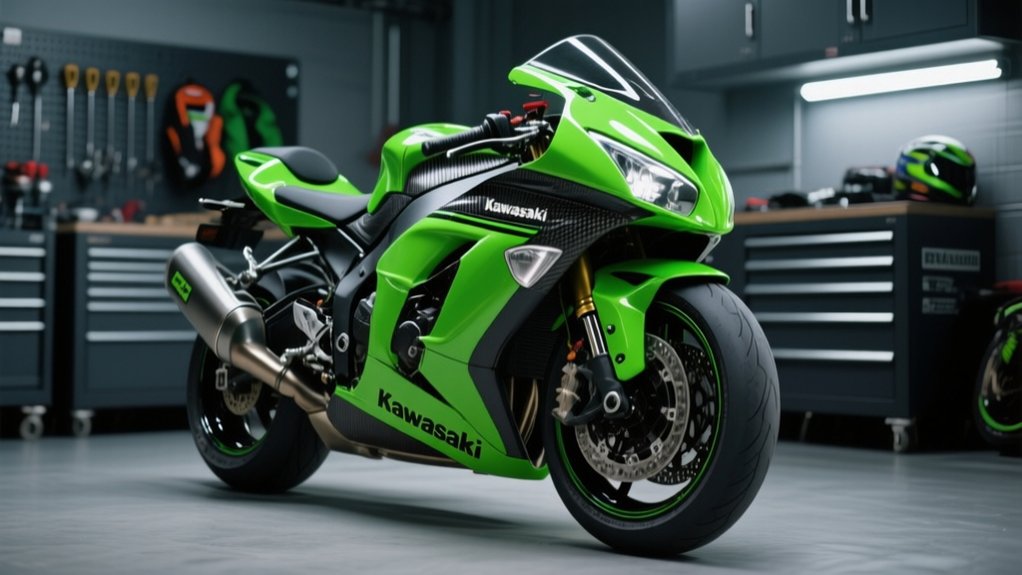
Kawasaki made the ZX-6R 636 primarily from 2003 to 2012 and brought it back from 2013 through 2023. This engine became a core part of their middleweight sportbikes.
Over the years, you’ll find notable improvements like fuel injection, traction control, and TFT displays. Stricter emissions regulations eventually ended production after 2023.
If you’re curious about what set each era apart and why the 636 engine became so influential, there’s plenty more to explore.
ZX-6R 636 Production Years
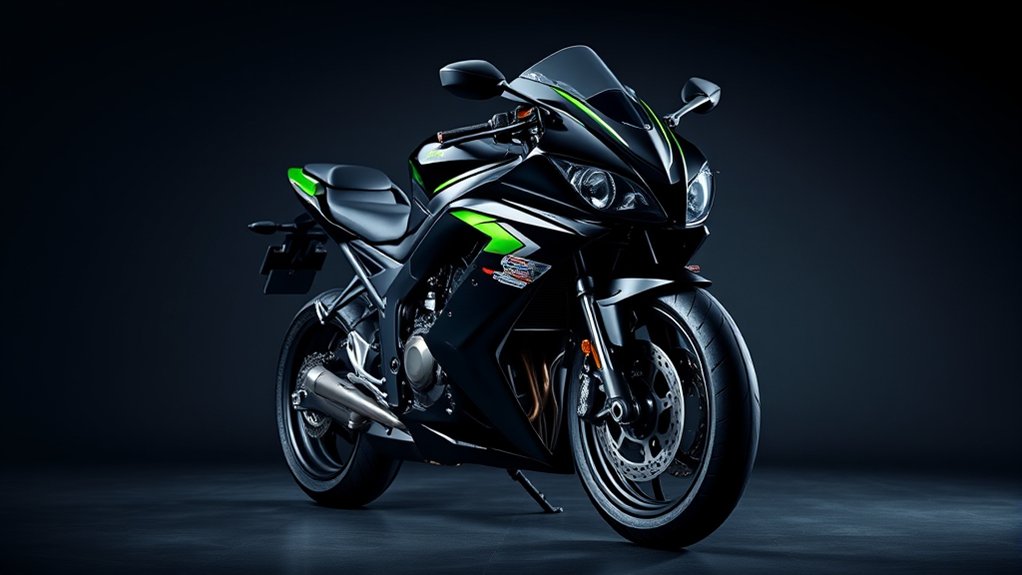
Although Kawasaki initially offered the ZX-6R with a 599cc engine, they switched to the more powerful 636cc version starting in 2003. This change has defined the model ever since.
You’ll find that the Kawasaki ZX-6R 636cc engine dominated the production years from 2003 to 2012, marking a clear shift in engine capacity for this supersport bike.
After a brief return to smaller engines, Kawasaki reintroduced the 636cc engine in 2013, continuing it through the present models.
This engine capacity became a staple in the ZX-6R model lineup. It really reflects Kawasaki’s dedication to balancing mid-range power and emissions compliance.
Understanding these production years gives you a clearer view of the ZX-6R’s pivotal role in motorcycle history.
What Got Better With Each ZX-6R 636 Update
As Kawasaki refined the ZX-6R 636 over the years, each update brought meaningful enhancements that elevated its performance, technology, and design. You’ll notice the 2003 model introduced fuel injection and digital displays, improving throttle response and rider info.
By 2005, engine updates like larger cams and a redesigned head boosted RPM and horsepower, sharpening performance. The 2013 redesign reintroduced the 636 cc engine, adding modern electronics such as Kawasaki Traction Control, ride modes, and a stiffer chassis to enhance handling.
In 2019, shorter final gearing, fresh bodywork styling, a quickshifter, and a high-resolution TFT display refined the riding experience. Recent models from 2024 to 2027 focused on exhaust tuning and engine revisions to meet emissions standards while maintaining the ZX-6R’s dynamic character.
Why Kawasaki Stopped Making the ZX-6R 636
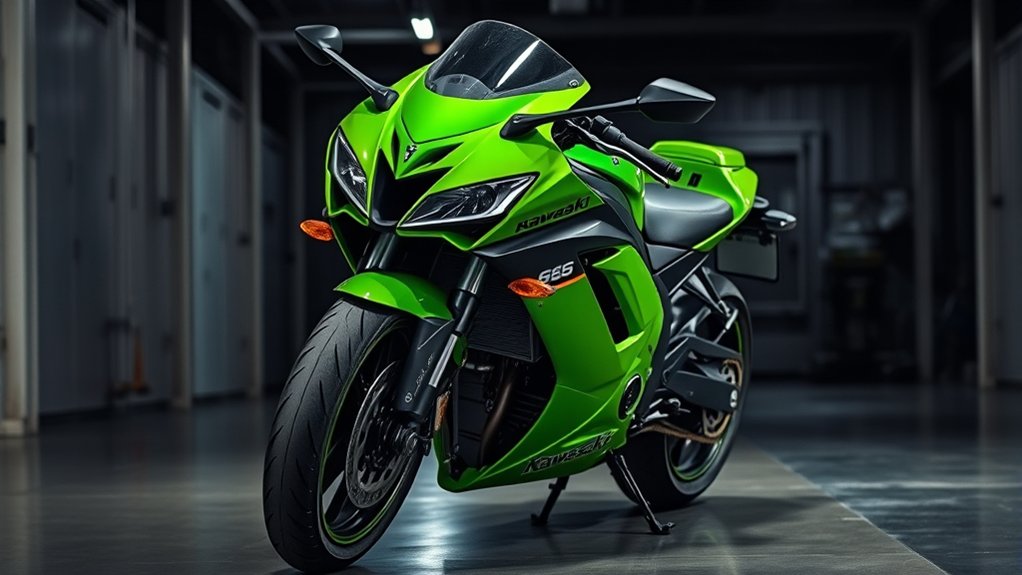
Kawasaki’s continuous improvements to the ZX-6R 636 kept the bike competitive and exciting for riders, but changing regulations and market demands eventually caught up with the model.
The ZX-6R 636, with its distinctive 636cc engine capacity from 2003 to 2023, faced challenges adapting to stricter emission regulations, especially Euro 5 compliance. These standards required significant engine modifications and a thorough redesign that conflicted with the existing configuration.
Plus, shifting market demand favored bikes with advanced electronics and different performance profiles. Kawasaki found it increasingly difficult to justify continuing production without compromising the model’s core appeal.
So, after the 2023 model year, Kawasaki announced the production cessation of the ZX-6R 636.
This decision reflected a necessary pivot toward new technologies and regulatory compliance. It really marked the end of an era for the iconic 636cc sportbike.
What to Know Before Buying a Used ZX-6R 636
Before buying a used ZX-6R 636, you should carefully consider several key factors to guarantee you get the best value and performance. Kawasaki’s 636 model years vary widely in engine updates and electronics, which affect ride quality.
Early models (2003–2012) may lack advanced electronics but offer solid brakes and suspension. From 2013 onward, expect traction control, ride modes, and KIBS ABS. The 2019+ models feature refined bodywork and TFT displays. Just be sure to check mileage and maintenance on any second-hand bike.
Understanding model history helps you spot well-maintained examples with minimal modifications.
| Aspect | What to Check |
|---|---|
| Engine Updates | 636cc reintroduced in 2013, smooth power delivery |
| Electronics | Traction control and ABS on newer models |
| Brakes & Suspension | Condition critical, especially on older bikes |
How the 636 Engine Shaped Kawasaki’s Middleweight Bikes
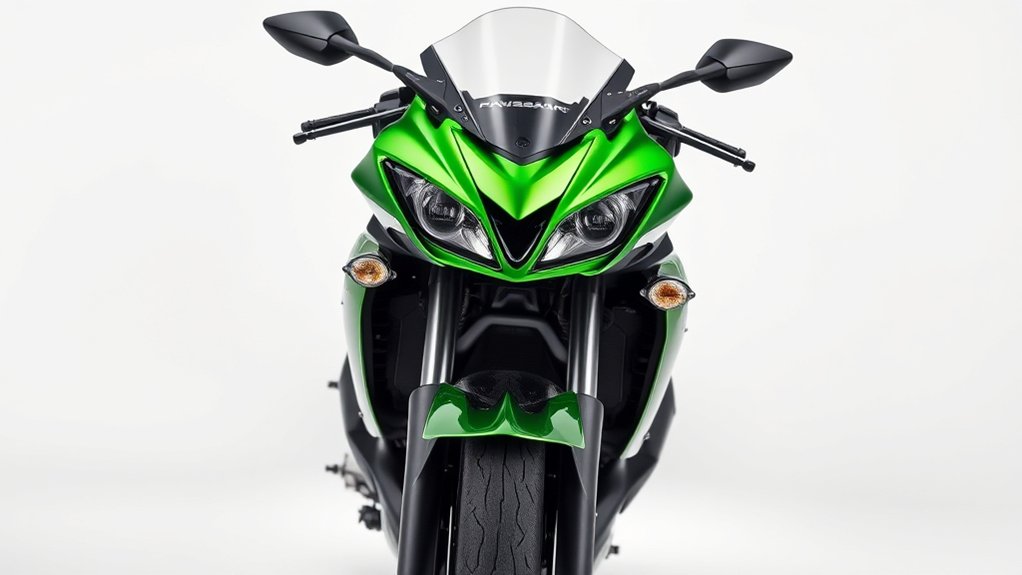
Understanding the engine’s evolution helps you appreciate how the 636 cc powerplant reshaped Kawasaki’s middleweight lineup. Introduced with the 2003 model ZX-6R, the 636 cc engine brought key performance improvements that set Kawasaki apart in the middleweight sportbike segment.
This engine development focused on broadening the power band and boosting mid-range torque without sacrificing high-revving capabilities.
Here’s how the 636 cc engine shaped Kawasaki’s bikes:
- It enhanced mid-range torque, improving everyday rideability and track performance.
- It enabled performance upgrades from 2013 onward, integrating modern electronics for sharper response.
- It maintained lightweight design, keeping the ZX-6R competitive against rivals.
Frequently asked questions
What Is the Top Speed of the Kawasaki Ninja ZX-6R 636?
The Kawasaki Ninja ZX-6R 636 can reach a top speed of about 164 mph, especially in models from 2013 onward due to electronic limits.
However, with some tuning and ideal conditions, like on the 2019 version, you might push it close to 170 mph.
Keep in mind, factors like your weight, modifications, and the environment will affect how fast it really goes.
It’s built for thrilling, high-revving performance.
How Fuel-Efficient Is the ZX-6R 636 Compared to Other Sportbikes?
You might think the ZX-6R 636 drinks fuel like a thirsty beast, but it’s actually pretty efficient! It averages around 42 mpg, matching or even outpacing many middleweight sportbikes like the Yamaha R6.
If you ride aggressively, expect higher consumption, but with smart throttle control and power modes, you can squeeze every drop of fuel.
Compared to bigger sport-tourers, you’ll enjoy better mileage thanks to the 636’s smaller engine size. So, if fuel efficiency is on your mind, the ZX-6R 636 holds its own quite well.
It’s a solid choice for riders who want performance without guzzling gas.
What Colors Were Available for the ZX-6R 636 During Its Production?
You’ll find the ZX-6R 636 in iconic Kawasaki Green, KRT racing liveries, and sleek metallic blacks and grays. From 2013 to 2020, Lime Green, Metallic Spark Black, and Moondust Gray dominated, often with sharp KRT graphics.
Special editions flaunted matte finishes and unique accents.
Post-2021 models introduced Candy Lime Green and contrasting metallic blacks, giving you plenty of eye-catching options tailored for both enthusiasts and collectors. There’s really something for everyone when it comes to color choices on this bike.
Are Aftermarket Parts Widely Available for the ZX-6R 636?
Yes, you’ll find aftermarket parts widely available for the ZX-6R 636. Thanks to its popularity and a huge enthusiast community, manufacturers offer everything from exhaust systems and levers to windshields and ECU remaps.
You can easily upgrade or customize your bike, especially with parts compatible across multiple model years. Whether you want performance upgrades or cosmetic enhancements, plenty of options are ready to boost your ride.
What Is the Typical Maintenance Cost for the ZX-6R 636?
You can expect to spend between $300 and $600 annually maintaining the ZX-6R 636. Regular upkeep like oil changes and chain adjustments typically costs $100 to $200 per visit.
Every 16,000 to 24,000 miles, major services such as valve checks might push costs up to $1,000. Staying on top of these keeps your bike running smoothly and helps you avoid expensive repairs later on.
Final Thought
If you’re hunting for the perfect middleweight beast, the ZX-6R 636 is nothing short of legendary. You’d be hard-pressed to find a bike that blends power, precision, and innovation so flawlessly.
Kawasaki’s tweaks over the years turned it into a masterpiece. Its discontinuation only adds to its mystique.
Before you buy, know this: owning a 636 means embracing a slice of motorcycle history. It still dominates the streets and tracks with unrivaled fury.