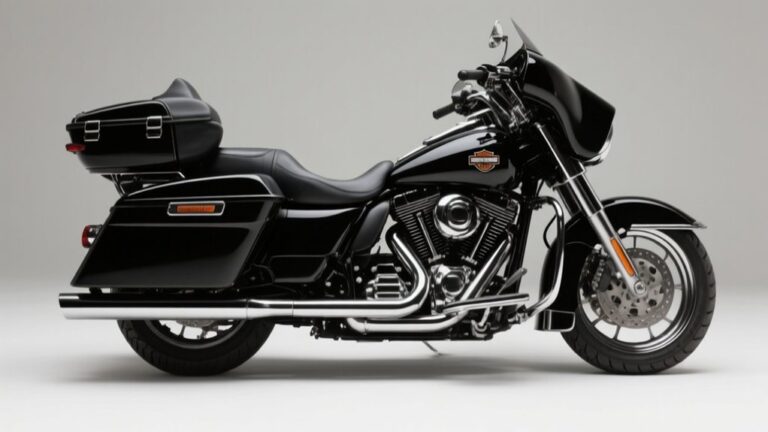
When Was Harley Davidson Founded And Who Funded It? – Guide
Harley-Davidson was founded in 1903 by William Harley and Arthur Davidson in Milwaukee, Wisconsin. You’ll find that early funding came from their personal savings and a vital $170 loan from William Davidson’s uncle, James McLay, which helped build their first motorcycle prototype.
This initial support, combined with local dealer partnerships, set the stage for growth despite early mechanical challenges. Keep exploring to understand how these beginnings shaped Harley-Davidson’s lasting legacy and expansion.
When Was Harley-Davidson Founded?
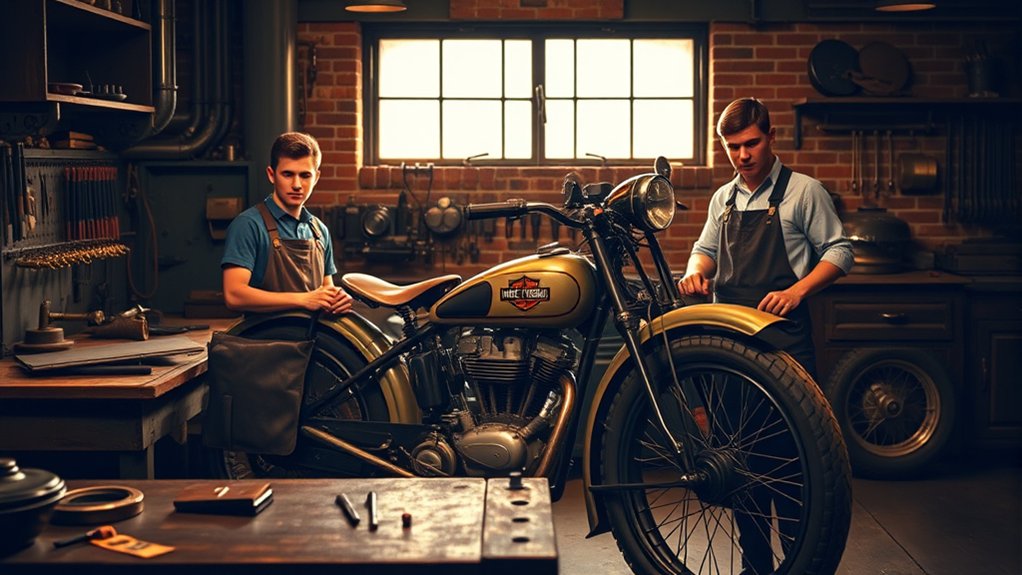
When exactly did Harley-Davidson come into existence? Harley-Davidson was founded in 1903 in Milwaukee, Wisconsin, marking a pivotal moment in motorcycle history. That year, the company built its first prototype motorcycle, laying the foundation for what would become an iconic brand.
You should know that the initial operations were humble. By 1906, the first Harley-Davidson factory was a small wooden shed located on William Davidson’s family property in Milwaukee.
The company’s formal incorporation followed on September 17, 1907, solidifying its business status.
Understanding these milestones helps you appreciate how Harley-Davidson evolved from a simple workshop in Milwaukee to a legendary name in motorcycling, all starting back in 1903. It’s pretty amazing to see how far they’ve come since those early days.
Who Were the Founders Behind Harley-Davidson?
Behind the iconic Harley-Davidson motorcycles stand a small group of talented individuals who combined their skills and vision to create something extraordinary. The founders, William Harley and Arthur Davidson, started the company in Milwaukee in 1903.
William Harley brought his experience as a draftsman and bicycle manufacturer, focusing on engineering the motorcycle’s design.
Arthur Davidson, a skilled pattern maker, contributed substantially to developing the early motorcycles. Alongside them, Arthur’s brother Walter Davidson played a vital role in refining the designs.
Together, these Milwaukee-based founders laid the groundwork for Harley-Davidson’s success. Their collaboration blended technical expertise with practical craftsmanship, setting the stage for a legendary motorcycle brand that remains influential today.
What Inspired the Creation of Harley-Davidson Motorcycles?
Although the idea of motorized transportation was still in its infancy, a vaudeville show in 1901 featuring a prop motorcycle sparked the imaginations of William S. Harley and Arthur Davidson. This prop motorcycle was a three-wheeler powered by a single-cylinder engine, revealing the potential of motorized vehicles.
Their fascination with mechanics pushed them to experiment with engine-bicycle designs. Here’s what inspired the creation of Harley-Davidson motorcycles:
- The theatrical prop motorcycle showcased practical motorized transport potential.
- William S. Harley’s passion for engineering and design fueled innovation.
- Early engine-bicycles highlighted the need for improved power and reliability.
- Collaborative experimentation led to the 1903 redesign, boosting performance.
This blend of vaudeville spectacle and mechanical curiosity ultimately ignited the Harley-Davidson legacy. It’s pretty cool how a simple stage prop could lead to something so iconic.
How Did Harley-Davidson Get Its Early Funding?
How did Harley-Davidson secure the funds to turn their vision into reality? In its early days, Harley-Davidson relied on a modest $170 loan from William Davidson’s uncle, James McLay. This loan proved essential for building the first motorcycle prototype in a small shed.
Alongside this loan, the founders used their personal savings to cover initial expenses. This early funding allowed them to develop their design and begin small-scale production.
The founders combined personal savings with a key loan to kickstart design and small-scale production.
As the business grew, Harley-Davidson reinvested profits and obtained additional small loans to finance factory expansion.
Early sales, supported by local dealerships, further fueled growth. This combination of personal investment, strategic loans, and reinvestment established a solid financial foundation that allowed Harley-Davidson to evolve from a simple workshop idea to a pioneering motorcycle manufacturer.
Who Helped Fund Harley-Davidson in the Beginning?
You’ll find that Harley-Davidson’s early funding came from a mix of personal investments and family support. One key part was a vital loan from William Davidson’s uncle, James McLay.
And it wasn’t just money—key founders like Walter Davidson also contributed financially and joined the company to help refine the motorcycle designs.
On top of that, technical experts such as Henry Melk and Ole Evinrude played important roles in shaping the company’s initial success.
It really was a team effort in those early days.
Early Financial Support
While William Harley and Arthur Davidson initially relied on their personal savings and small investments to fund their motorcycle experiments, they soon gained essential financial backing from family and close associates. This early financial support was critical for the company’s growth and expansion.
Key contributors included William Davidson’s uncle, James McLay, who provided a $170 loan in 1913 to support company expansion. Walter Davidson offered ongoing financial and operational assistance during the formative years.
Local dealer Carl H. Lang helped promote and sell Harley-Davidson motorcycles, boosting early sales. Friends Henry Melk and Ole Evinrude contributed technical expertise to refine early models.
This network of funding and support enabled Harley-Davidson to move beyond early investments and scale effectively. It really set the foundation for what the company would become.
Key Founders’ Contributions
Three key figures fueled Harley-Davidson’s early development beyond the founders themselves: William S. Harley, Arthur Davidson, and their close family members. While William and Arthur laid the technical foundation, the Davidson family markedly contributed to funding and managing growth.
Walter Davidson and William A. Davidson, Arthur’s brothers, stepped in to help expand the business and secure essential resources. William Harley’s father also played a pivotal role by advising the founders to build a small factory on their property, which proved indispensable for production.
This combined effort from the founders and their families guaranteed Harley-Davidson’s survival and early expansion. Their collaborative funding and operational contributions set the stage for the company’s lasting success, highlighting the importance of family support alongside William and Arthur’s visionary leadership.
Initial Funding Sources
Although Harley-Davidson didn’t attract large external investors at its inception, the company’s initial funding came primarily from William S. Harley and Arthur Davidson themselves. They relied on their own savings and investments, supported by close family and friends. This family support was essential in building the first factory and expanding operations.
Here’s how their initial funding came together: William S. Harley and Arthur Davidson used personal funds to start development. A $170 loan from Uncle James McLay helped finance factory expansion. Advice and backing from William Davidson’s father enabled the factory setup.
Early sales revenue fueled ongoing growth without outside investors.
This initial funding approach kept Harley-Davidson bootstrapped and tightly managed by its founders and their close associates.
Where Was Harley-Davidson’s First Factory Located?
If you want to understand where Harley-Davidson’s journey began, you need to look at a small wooden shed built in William Davidson’s backyard. This shed, measuring just 10×15 feet, served as Harley-Davidson’s first factory. It stood on Milwaukee’s Chestnut Street, which was later renamed Juneau Avenue.
Built on the advice of William Davidson’s father, the factory used personal funds and space within the family yard. This humble workshop marked the start of Harley-Davidson’s motorcycle production in 1906. After that, the company expanded into larger facilities.
| Feature | Detail | Significance |
|---|---|---|
| Location | Milwaukee, Chestnut St | Birthplace of Harley-Davidson’s legacy |
| Size | 10×15 feet | Reflects humble beginnings |
| Builder | William Davidson | Family-funded and supported |
How Did Harley-Davidson Grow After Early Funding?
How exactly did Harley-Davidson scale up after its initial funding? The company’s growth accelerated rapidly, driven by rising demand and strategic factory expansion. You’ll find four key factors behind this growth:
- Harley-Davidson built a larger factory in 1913 to meet increasing production needs.
- They expanded factory facilities multiple times, boosting output from 50 to 150 motorcycles within a year.
- Early partnerships with dealerships like Chicago’s Carl H. Lang helped widen market reach and sales.
- A $170 loan from Uncle James McLay financed a third factory, supporting continued growth.
Additionally, Harley-Davidson’s racing successes and factory-backed teams enhanced its reputation, fueling global recognition and sustained expansion. This combination of factory scale-up and strategic alliances laid the foundation for Harley-Davidson’s long-term growth.
What Challenges Did Harley-Davidson Face Early On?
You’ll see that Harley-Davidson struggled with some early mechanical flaws. Their engines were often underpowered, and overheating was a common problem. These issues really slowed down their progress.
On top of that, they’d financial constraints that made it tough to expand production. After all, they started out in a small wooden shed.
All these challenges tested their resilience before they could finally establish a foothold in the motorcycle market.
Early Mechanical Issues
Although Harley-Davidson’s early designs showed promise, the company faced significant mechanical challenges that hindered performance and reliability. You’d notice early engine issues in their bicycle-motorcycle hybrids, which were underpowered and required a redesign in 1903. Their first prototypes struggled with durability and engine reliability, demanding constant refinement.
Manufacturing challenges also played a role, as limited factory space and equipment led to occasional quality control problems. These mechanical setbacks slowed production and sales but pushed the company toward innovation.
Key early challenges included:
- Underpowered, overheating small single-cylinder engines
- Engine reliability and durability problems in prototypes
- Manufacturing limitations causing quality inconsistencies
- Mechanical setbacks that delayed performance improvements
Understanding these issues helps you appreciate Harley-Davidson’s growth from rough beginnings.
Financial Constraints
Mechanical setbacks weren’t the only obstacles Harley-Davidson faced in its early days. Financial limitations also posed serious challenges. You’d find that financial constraints heavily impacted the company’s ability to expand and develop during its early years.
Funding was scarce, forcing them to rely on personal loans, like the vital $170 loan from Uncle James McLay, to finance factory growth. Initially, demand for motorcycles remained low, making it tough to sustain production and cover costs.
Their manufacturing facilities started in a small wooden shed in Milwaukee, which was underfunded and limited in capacity.
These financial struggles threatened Harley-Davidson’s survival until strategic investments and community support provided the necessary resources for steady expansion and stability. Understanding these financial hurdles highlights how funding shaped the company’s formative period.
How Did Harley-Davidson Secure Funding for Expansion?
Because Harley-Davidson aimed to expand rapidly, it secured initial funding through a $170 loan from Uncle James McLay. This helped finance the construction of a third factory. That early financial boost really set the stage for their growth.
You’ll find their expansion strategy relied on multiple funding sources. Sales from local dealerships, like Chicago’s first Harley dealer, Carl H. Lang, fueled early profits. Reinvested profits from increasing motorcycle sales supported ongoing factory expansions.
In 1913, they built a six-floor brick factory to boost production capacity.
Later, public stock offerings, starting with the 1965 IPO, provided capital for continued growth and innovation. These efforts combined helped Harley-Davidson grow steadily over time.
Why Does Harley-Davidson’s Founding Story Still Matter?
You can really see how Harley-Davidson’s heritage fuels strong brand loyalty. It connects customers to its rich history in a way that feels personal.
The founders’ commitment to innovation? That’s still shaping the company’s identity and how they develop products today.
Their clear vision keeps driving a legacy that inspires not just riders, but the entire motorcycle industry worldwide.
Heritage Inspires Brand Loyalty
Although many motorcycle brands compete fiercely today, Harley-Davidson’s founding story continues to set it apart by creating a powerful emotional bond with its customers. This heritage fuels loyalty, connecting you to the founders’ passion and the tradition they established over a century ago.
The story of William Harley and Arthur Davidson’s early struggles and innovation instills pride and authenticity. It makes you more than a rider; you become part of a legacy.
Here’s why this heritage inspires loyalty:
- It highlights the founders’ resilience and vision.
- It reinforces a tradition of craftsmanship and quality.
- It creates a cultural identity shared across generations.
- It fosters emotional connections beyond the motorcycle itself.
This tradition keeps Harley-Davidson’s spirit alive and loyal customers engaged. It’s more than just a brand — it’s a community and a way of life.
Innovation Roots Brand Identity
How does Harley-Davidson’s founding story continue to shape its brand identity today? It all begins with William S. Harley’s 1901 engine design, a groundbreaking innovation that fused mechanics and creativity. This founding moment set the stage for Harley-Davidson’s reputation, rooted in engineering excellence and performance.
You’ll see how early experimentation with engine-bicycle combinations and racing success forged a brand identity focused on durability and ruggedness. The story highlights more than machines. It emphasizes resilience and craftsmanship, values that remain central to Harley’s community appeal.
Understanding this innovation-driven founding helps you appreciate why Harley-Davidson’s motorcycles aren’t just vehicles. They’re symbols of authentic tradition and engineering prowess that continue to define the brand’s identity today.
Founders’ Vision Drives Legacy
The innovative spirit that defined Harley-Davidson from its earliest days still fuels the brand’s enduring legacy. When you explore the founders’ vision, you see why Harley-Davidson’s story matters beyond its origin.
- William S. Harley and Arthur Davidson’s passion for mechanics shaped a powerful, reliable motorcycle.
- Their craftsmanship emphasized engineering excellence, setting quality standards.
- Early racing and community-building efforts promoted a riding lifestyle, not just a product.
- The rebellious spirit embedded in the founders’ vision continues to inspire brand loyalty.
You can really appreciate how this legacy influences Harley-Davidson today. The founders’ vision wasn’t just about creating motorcycles; it was about cultivating a culture that values innovation and craftsmanship.
That’s what ensures Harley-Davidson remains iconic in a competitive world.
Frequently asked questions
What Are Harley-Davidson’s Most Popular Motorcycle Models Today?
You’ll find Harley-Davidson’s most popular models include the Softail series, known for its classic look and hidden rear suspension, and the Fat Boy, famous for its muscular build.
The Street Glide appeals if you want touring comfort and tech features.
While the Iron 883 and Forty-Eight attract younger, urban riders with their compact size.
Don’t overlook the electric LiveWire, which leads Harley’s push into modern electric motorcycles.
It’s a cool option if you’re looking to go electric with some serious style.
How Has Harley-Davidson Influenced Motorcycle Culture Globally?
You might think motorcycles are just about getting from A to B, but Harley-Davidson flipped that idea on its head. They’ve shaped a global culture, turning riding into a symbol of freedom and rebellion.
Their iconic designs, racing heritage, and customization scene created a worldwide community where you find identity and camaraderie.
Harley’s marketing and events didn’t just sell bikes. They sold a lifestyle that millions embrace passionately.
What Environmental Initiatives Does Harley-Davidson Support?
Harley-Davidson supports several environmental initiatives you’ll find impressive. They’re investing heavily in electric motorcycles like the LiveWire to cut emissions.
You can expect a 20% greenhouse gas reduction by 2030 through energy efficiency and renewable energy.
They use recycled materials, minimize manufacturing waste, and promote eco-friendly apparel.
Plus, they partner with conservation groups to protect habitats and reduce pollution, showing real commitment to sustainability.
Are There Any Famous Celebrities Associated With Harley-Davidson?
Yes, you’ll find many famous celebrities linked to Harley-Davidson. Marlon Brando boosted its rebellious image in “The Wild One.” Elvis Presley was passionate about riding and owning several models.
Steve McQueen, a motorcycle enthusiast, often rode Harleys.
Jimi Hendrix added rock-and-roll flair, and Evel Knievel made Harley-Davidson famous through his daring stunts. These icons helped shape Harley’s legendary status you recognize today.
How Does Harley-Davidson Maintain Product Quality and Innovation?
You’ll see Harley-Davidson maintains quality by using cutting-edge manufacturing like CNC machines and robotic welding. They invest heavily in R&D, creating innovations like the electric LiveWire™.
Their rigorous testing guarantees durability and safety.
Plus, their partnership with UTI trains technicians with the latest tech skills. They also update classic models with modern features, blending tradition and innovation.
Final Thought
You’ve seen how Harley-Davidson’s journey began with visionaries and early backers fueling its rise. Like a finely tuned engine, its success relied on passion, funding, and overcoming hurdles.
Remember, every twist in Harley’s story fuels the roar of its legacy today. So, next time you see that iconic logo, you’re not just witnessing a brand. You’re experiencing a symbol of determination, innovation, and the power of believing in a dream.