Was Harley Davidson A Real Person – Fact Check
You might wonder if Harley Davidson was one real person, but it actually isn’t. The name honors the combined efforts of William Harley, an engineer, and the Davidson brothers who managed sales, manufacturing, and operations.
Together, they founded the company, each playing a vital role in its success. Their partnership sparked iconic engineering innovations and a lasting cultural legacy.
Keep exploring to discover how this collaboration turned Harley-Davidson into an American icon.
Was There an Actual Person Named Harley-Davidson?
Have you ever wondered if there was a single person named Harley-Davidson behind the famous motorcycle brand? The truth is, there wasn’t. Harley-Davidson is actually the name of a company that honors its founders: William Harley and the Davidson brothers, Arthur, Walter, and William Davidson.
William Harley, an engineer, designed the first internal combustion engine for their motorcycles. Meanwhile, the Davidson brothers played essential roles in building the business.
The brand name combines William Harley’s surname with the Davidson family name, reflecting their partnership rather than a single individual.
Founders Behind Harley-Davidson and Their Roles
Although the name Harley-Davidson represents the brand as a whole, it’s important to recognize the distinct contributions of its founders, William S. Harley, Arthur Davidson, Walter Davidson, and William A. Davidson.
William S. Harley served as chief engineer, focusing on motorcycle design and engineering innovations that shaped the company’s early models.
William S. Harley led engineering innovations, designing the early motorcycles that defined the Harley-Davidson legacy.
Arthur Davidson took on the role of first general sales manager, establishing Harley’s presence within the motorcycle industry through strategic sales efforts.
Meanwhile, William Davidson worked in manufacturing and factory operations, ensuring efficient production and development.
Walter Davidson managed overall operations and became the company’s first president, guiding its growth and stability.
Each founder played a specialized role, and together, they built the foundation for Harley-Davidson’s enduring success.
Why the Company Is Named After Harley and Davidson
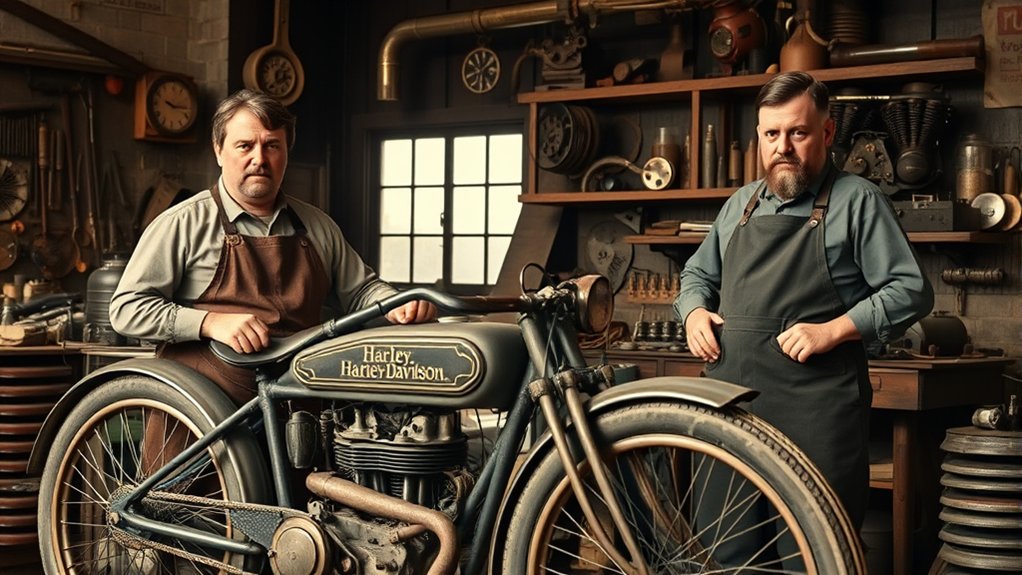
Since the company was built on the combined efforts of William S. Harley and the Davidson brothers, Arthur, Walter, and William, you’ll find the name Harley-Davidson reflects their joint contributions.
Harley designed the first engine and led key engineering innovations, which justified including his name in the brand.
Meanwhile, the Davidson brothers managed manufacturing, sales, and operations, securing their place in the company’s identity.
The name Harley-Davidson isn’t about a single person but honors these co-founders who established the company together.
What Each Founder Brought to Harley-Davidson
You’ll see that each Harley-Davidson founder played a distinct role in shaping the company’s early success. William Harley was all about engineering and innovation.
On the other hand, Arthur Davidson took charge of sales and helped grow the market.
Meanwhile, Walter and William Davidson handled operations and production, making sure everything ran smoothly and met high-quality standards.
Founders’ Unique Contributions
Five key founders each played a distinct role in shaping Harley-Davidson’s early success. William Harley led motorcycle design and engineering, creating the first internal combustion engine for the company. This was a critical technical foundation.
Arthur Davidson, as the first general sales manager, built industry alliances and expanded Harley’s market presence. He made sure the brand reached riders nationwide.
Walter Davidson managed operations and served as the first President, overseeing manufacturing growth during the company’s infancy.
William Davidson, the works manager, directed factory activities and maintained efficient production processes.
Each founder combined mechanical skills with entrepreneurial drive. They contributed uniquely yet collaboratively.
Together, they transformed Harley-Davidson into an iconic American motorcycle manufacturer. William Harley’s engineering and Arthur Davidson’s sales leadership really stood out. Those efforts were pivotal in establishing the company’s enduring legacy.
Leadership and Innovation Roles
Building on the distinct contributions each founder made, it’s clear their leadership and innovation shaped Harley-Davidson’s early direction and growth. William Harley led as chief engineer and treasurer, driving motorcycle design and engineering breakthroughs.
William Davidson, as works manager, ensured smooth factory operations and efficient equipment procurement, underpinning production quality.
Arthur Davidson, the first general sales manager and secretary, developed sales strategies and fostered industry alliances to expand the market.
Meanwhile, Walter Davidson, the company’s first president, managed overall operations and guided company growth.
Each founder’s focused leadership in engineering, sales, and operations combined to build a strong, innovative foundation.
When you examine their roles, it becomes evident how William Harley and William Davidson’s technical expertise, alongside strategic management, guaranteed Harley-Davidson’s early success.
It was really the blend of skills and leadership that set the company on the path to greatness.
Early Innovations That Defined Harley-Davidson’s Identity
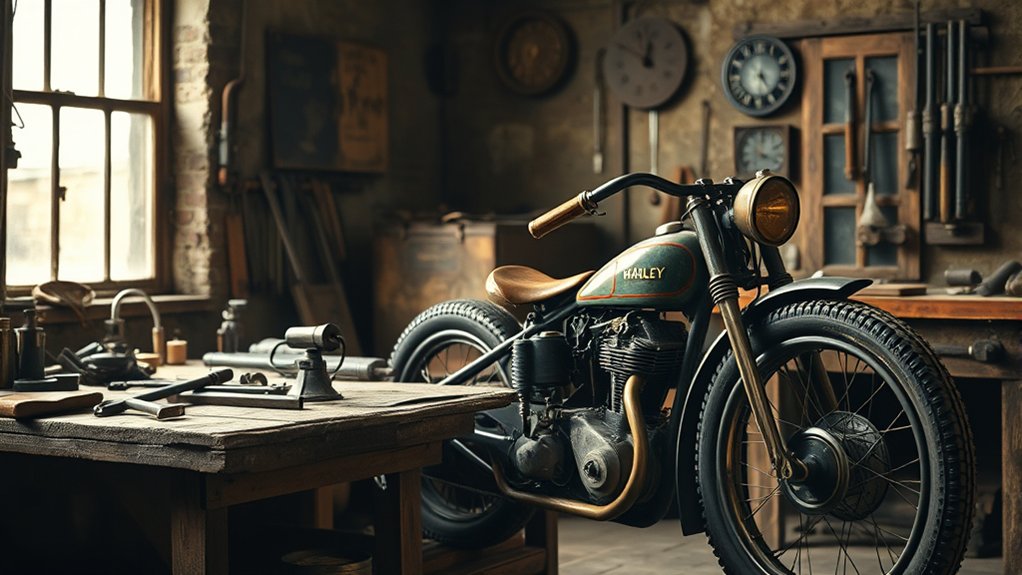
You’ll want to check out how Harley-Davidson’s early engine designs, like the V-Twin models and flathead engines, really set the stage for its reputation for power and reliability. These engines weren’t just powerful—they helped build trust among riders who needed something tough and dependable.
And then there’s the innovative Ful-Floteing Seat. This clever feature boosted rider comfort by adding adjustable suspension, making long rides a whole lot easier on the body. It’s a great example of how Harley was thinking about the rider’s experience, not just the machine.
Plus, don’t forget about their military motorcycles. These bikes played a crucial role in proving just how durable and high-performing Harley-Davidsons could be, especially under the harshest conditions. They weren’t just cool machines—they were battle-tested legends.
Early Engine Designs
How did Harley-Davidson establish its reputation for powerful and reliable motorcycles? It began with William Harley’s engineering expertise, which shaped the early engine designs. Inspired by French de Dion-Bouton motors, Harley developed the first internal combustion engine that laid the foundation for durability and performance.
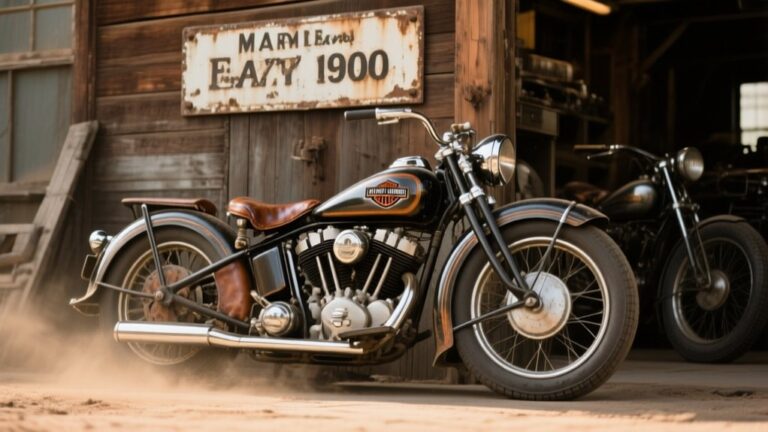
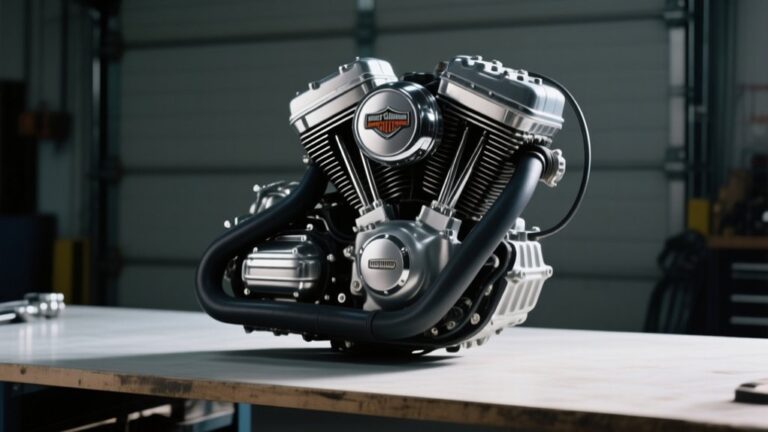
By 1909, the company perfected the twin-cylinder engine, a key innovation that defined Harley-Davidson’s identity and set it apart from competitors. These early engines were air-cooled and heavyweight, emphasizing ruggedness.
Later innovations, like the flathead V-Twin introduced in 1929, helped maintain performance and reliability during tough economic times.
Through these early engine advancements, Harley-Davidson built a legacy of dependable, powerful motorcycles that continue to influence its brand image today. It’s pretty impressive how those early designs still echo through the bikes we see now.
Signature Seat Innovation
Although engine performance was crucial, Harley-Davidson recognized early on that rider comfort played an essential role in motorcycle design. In 1912, they introduced the signature seat innovation, the patented Ful-Floteing Seat, which featured adjustable coil spring suspension. This design reduced rider fatigue by absorbing road shocks.
It also enhanced rider ergonomics, setting a new comfort standard. Plus, it distinguished Harley-Davidson from competitors with advanced suspension technology.
On top of that, it established a reputation for engineering excellence and rider-focused design. You can still see the legacy of this innovation today. The Ful-Floteing Seat remains an iconic symbol of Harley-Davidson’s commitment to comfort and pioneering motorcycle technology.
This early focus on rider experience helped define Harley-Davidson’s identity beyond just powerful engines.
Military Motorcycle Contributions
Building on its commitment to innovation, Harley-Davidson substantially contributed to military efforts during World War II by producing over 90,000 motorcycles, including the durable WLAs and WLCs. These models earned a reputation for ruggedness and reliable performance in harsh conditions.
Harley-Davidson also developed the XA in 1942-43, a flat-twin engine motorcycle inspired by the BMW R71, tailored for military needs.
After the war, the company gained the DKW RT 125 design through war reparations and produced it as the Model 125 from 1948 to 1966.
This extensive military motorcycle production not only supported wartime logistics but also solidified Harley-Davidson’s identity as a leader in durable, innovative motorcycles capable of handling demanding terrains. It really helped shape its legacy in the motorcycle industry.
How Harley and the Davidsons Built the Harley-Davidson Brand
What made the Harley-Davidson brand stand out from its inception was the combined effort of William S. Harley and the Davidson brothers. Together, the Harley-Davidson founders built a legacy based on collaboration and expertise. Here’s how they did it:
- William Harley engineered the early motorcycle engines, ensuring technical innovation.
- Arthur, Walter, and William Davidson handled sales, operations, and manufacturing, focusing on business growth.
- Their shared passion for motorcycle engineering and racing fueled continuous improvement.
- The brand name reflected their partnership, symbolizing the union of Harley’s engineering and the Davidsons’ management.
This teamwork laid a solid foundation for the Harley-Davidson brand’s reputation, emphasizing collective contributions rather than a single individual.
It really was a group effort that made the difference. Each founder brought something unique to the table, and together, they created something that lasted.
How Harley-Davidson Became an Iconic Brand Beyond Its Founders
How did Harley-Davidson transform from a small motorcycle manufacturer into an iconic symbol of American culture? The Harley-Davidson company achieved this through innovative designs, racing success, and a strong cultural identity tied to freedom and rebellion.
Harley-Davidson rose from humble beginnings to embody freedom, innovation, and rebellious American spirit.
You’ll see how the company’s focus on customization and models like the Fat Boy helped it stand out.
Strategic marketing and branding, including the creation of a loyal community and the Harley-Davidson Museum, expanded its global reach. The company adapted to market challenges by improving quality and embracing retro styling, which revived its reputation.
Its association with law enforcement, motorcycle clubs, and popular culture further cemented Harley-Davidson as more than a manufacturer.
It became a symbol of individuality and American spirit.
The ‘Hog’ Nickname and Its Link to Harley-Davidson Culture
Beyond its innovative designs and strong cultural identity, Harley-Davidson’s influence extends into the language and symbols embraced by its riders. The nickname “HOG” is a prime example of this cultural imprint. Here’s what you need to know:
The term “HOG” originated in the 1920s when riders humorously compared their motorcycles to pigs. Harley-Davidson owners and clubs adopted “HOG” as a symbol of strength, often incorporating pig imagery in logos.
In 1983, Harley-Davidson formalized the nickname by launching the Harley Owners Group (H.O.G.), promoting camaraderie and loyalty. Though partly folklore, “HOG” reflects the rugged, powerful image tied to Harley-Davidson’s American roots.
How Harley-Davidson’s Legacy Continues Without a Real “Harley
Although many assume Harley-Davidson refers to a single person, the name actually honors the combined efforts of William S. Harley and the Davidson brothers. Their legacy isn’t tied to an individual but to their shared vision and teamwork.
Today, you can see Harley-Davidson’s legacy alive through its brand identity, museum, and vibrant community. All of these celebrate the founders’ collective impact.
| Founder | Role | Contribution |
|---|---|---|
| William S. Harley | Chief Engineer | Motorcycle innovation |
| Arthur Davidson | Sales & Operations | Business management |
| Walter Davidson | Sales & Operations | Sales leadership |
| Harley-Davidson | Brand | Symbolizes collective legacy |
| Museum & Community | Legacy Preservation | Honors founders’ story |
You’ll find the Harley-Davidson legacy endures, even without a single “Harley.”
Myths About Harley-Davidson That Aren’t True
You might think Harley-Davidson refers to just one person, right? But actually, it’s about four childhood friends who came together to start the company.
A lot of people don’t realize this and end up giving credit to only one individual for the brand’s success. Once you know the real story, it’s clear that the name represents a team effort behind this iconic brand.
Founder Identity Clarifications
Who exactly founded Harley-Davidson? It wasn’t a single person named Harley Davidson but a group of four founders whose names combined to form the iconic brand. Here’s what you need to know:
William S. Harley was the chief engineer and key inventor behind the company’s early motorcycles.
Arthur Davidson, Walter Davidson, and William Davidson were the other three founders who partnered with Harley.
The brand name “Harley-Davidson” merges William Harley’s surname with the Davidson brothers’, reflecting their joint legacy.
There’s no historical record of an individual named Harley Davidson founding or leading the company alone.
Understanding this clears up the myth that Harley Davidson was one person. Instead, the brand represents the collective effort of its four founders, especially William Harley’s engineering expertise.
Common Harley-Davidson Misconceptions
Why do so many myths about Harley-Davidson persist? The company’s long history and iconic status have fueled misconceptions.
For instance, Harley-Davidson isn’t a single person but a motorcycle manufacturer founded in 1903 by four men: William S. Harley and the Davidson brothers.
You might hear that Harley bikes are unreliable, but the company has invested heavily in quality improvements over the years.
Some think Harley riders are only older adults, yet the company offers diverse models attracting all ages.
Another common myth is that Harley-Davidson motorcycles are unaffordable; however, the company provides various price points to suit different budgets.
Understanding these facts helps you appreciate Harley-Davidson’s legacy accurately, rooted in its founding team and enduring company innovation.
Frequently asked questions
What Models Are the Most Popular Harley-Davidson Motorcycles?
You’ll find the most popular Harley-Davidson motorcycles include the Fat Boy, known for its wide, muscular look since 1990. The Softail series combines classic style with modern suspension and sells well.
The Street series, launched in 2014, appeals to younger riders with its lightweight design.
The Road King remains a top pick for long-distance cruising.
The Dyna series, produced until 2017, was loved for its customizable performance features. It really stood out for those wanting to tweak their ride.
How Has Harley-Davidson Adapted to Electric Motorcycles?
Harley-Davidson has adapted to electric motorcycles by launching the LiveWire, their first electric model, in 2019. They’ve invested heavily, over $150 million, into electric technology and created dedicated divisions to innovate.
You’ll find advanced batteries offering strong performance and sustainability. They plan to integrate electric powertrains into current models and develop new ones.
Their goal is to attract younger, eco-conscious riders. This approach helps Harley stay relevant and competitive in the evolving motorcycle market.
It’s all about keeping up with the times while staying true to their roots.
What Is the Average Cost of a New Harley-Davidson Bike?
Imagine paying for a Harley like buying a spaceship in the 1960s! Today, you’ll find new Harley-Davidson motorcycles typically cost between $9,000 and $45,000.
Entry-level models start around $8,000 to $9,000, while touring bikes can exceed $40,000.
Popular models like the Fat Boy usually fall within $15,000 to $20,000.
Prices vary based on engine size, features, and optional accessories, so customization affects the final cost.
It really depends on what you want and how you want to deck out your ride.
Are There Harley-Davidson Clubs or Communities Worldwide?
Yes, you’ll find Harley-Davidson clubs and communities worldwide. The Harley Owners Group (H.O.G.), founded in 1983, connects hundreds of thousands of members globally. These clubs organize rides, rallies, charity events, and social gatherings, helping you bond with other enthusiasts.
Whether you’re in the US, UK, Australia, or Germany, you’ll discover local chapters that celebrate the Harley lifestyle and passion through customization events and group rides. It’s a great way to meet people who share your love for the bike and the culture around it.
What Maintenance Is Required for Harley-Davidson Motorcycles?
You’ll need regular oil changes every 2,500 to 5,000 miles to keep your Harley’s engine lubricated. Check and replace the air filter to maintain airflow and performance.
Inspect brake pads, fluid levels, and tire pressure frequently for safety.
Don’t forget to replace spark plugs every 10,000 to 20,000 miles.
Also, maintain the drive belt, clutch, and drive chain to guarantee smooth power transfer and avoid mechanical issues.
It might sound like a lot, but staying on top of these tasks will keep your ride running great.
Final Thought
You might expect Harley-Davidson to be named after one legendary lone rider, but surprise, it’s actually two real guys, William Harley and Arthur Davidson, who built the brand together.
Ironically, while there’s no single “Harley” person, their combined vision created a legacy bigger than any one individual.
So, the next time you hear myths about Harley-Davidson, remember the truth is even more interesting than the legends.