What Year Did Harley Start Fuel Injection On Road King
Harley-Davidson first introduced fuel injection on the Road King in 1996 with the FLHRI model, shifting from carburetors to a more precise electronic system. This early EFI used Magneti Marelli hardware, improving throttle response and fuel management.
By the late ’90s, EFI systems became standard, enhancing performance and emissions compliance. If you want to understand why this change mattered and how the EFI evolved over the years, there’s more to discover.
When Was Fuel Injection Introduced on the Harley Road King?
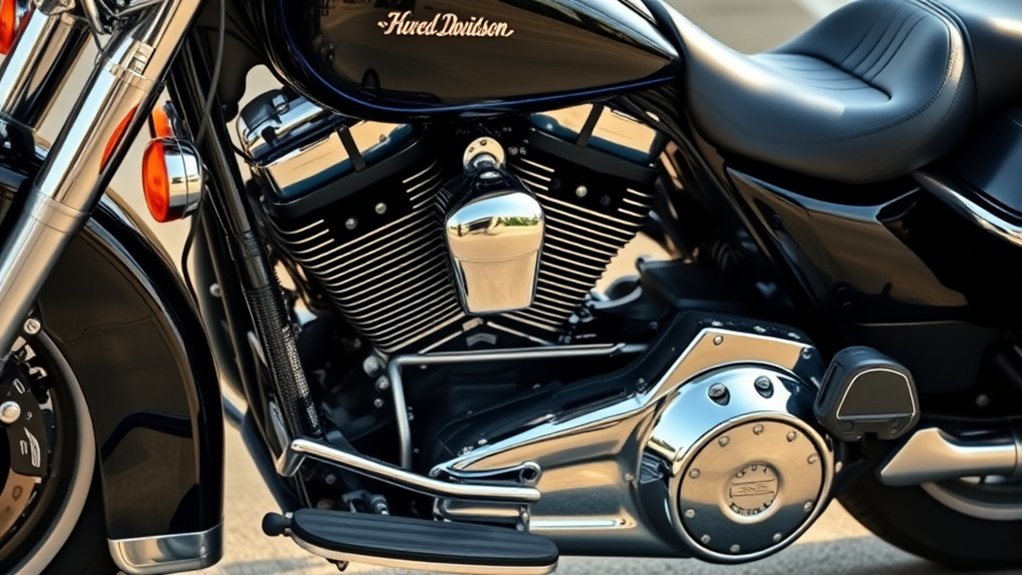
Although Harley-Davidson had relied on carburetors for years, they introduced fuel injection on the Road King in 1996 with the FLHRI model. That year marked the first model year to feature EFI hardware, specifically using Magneti Marelli systems.
Harley-Davidson debuted fuel injection on the 1996 Road King FLHRI using Magneti Marelli systems.
Before 1996, the Road King touring bike depended on a carburetor for fuel delivery, but the switch to fuel injection began a new era.
The 1996 FLHRI’s EFI system offered more precise fuel management, which quickly became standard on all Road King models by the late 1990s. This introduction of fuel injection represented a significant modernization for Harley-Davidson’s touring lineup.
If you’re looking closely, 1996 stands out as the pivotal model year when Harley-Davidson embraced EFI on the iconic Road King. It was a big step forward for the brand and set the stage for the technology we see on these bikes today.
Why Did Harley Switch From Carburetors to EFI on the Road King?
The introduction of fuel injection on the 1996 Road King marked more than just a hardware update. It reflected Harley-Davidson’s response to evolving industry demands. You’ll find that the switch from carburetors to EFI was mainly driven by stricter emissions regulations, which compelled Harley to improve fuel efficiency and reduce environmental impact.
EFI offers precise fuel metering, which enhances throttle response and delivers a smooth idle, even in changing environmental conditions where carburetors often struggled. As a rider, you benefit from improved engine performance and easier starting.
Plus, EFI boosts reliability by minimizing mechanical adjustments and allowing seamless integration with electronic diagnostics.
Differences Between Magneti Marelli and Delphi EFI Systems Explained
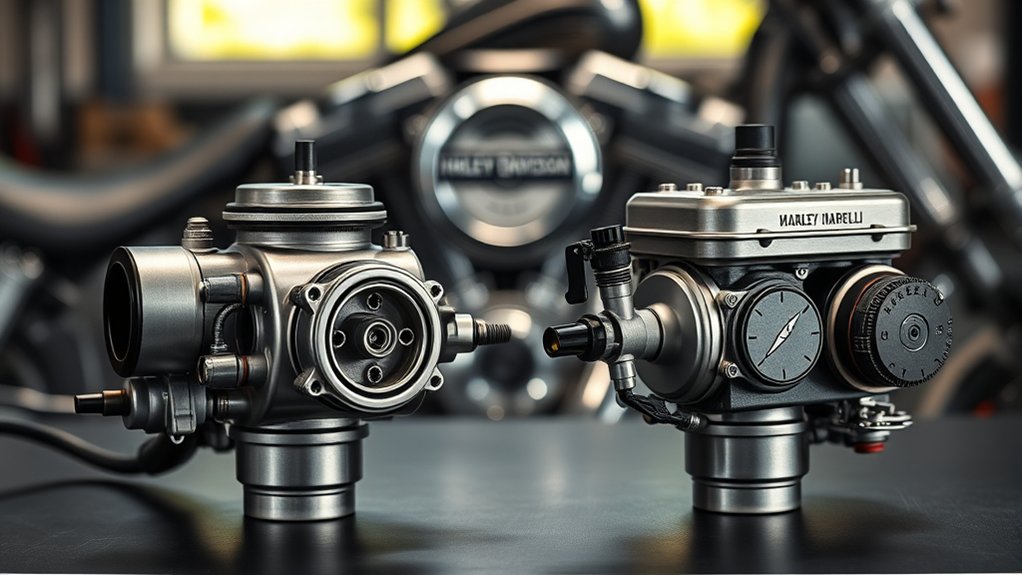
You’ll notice that the Magneti Marelli system uses a distinct ECU design and sensor setup compared to the later Delphi EFI hardware.
Delphi, on the other hand, brings some cool advancements like improved diagnostics, more accurate fuel metering, and better adaptability to changing conditions.
Magneti Marelli System Overview
How did Harley-Davidson’s early fuel injection systems shape the Road King’s performance? The Magneti Marelli EFI system, introduced in 1996, brought a microprocessor-controlled setup that used sensor inputs to optimize fuel injection. This boosted throttle response and reliability. Plus, it helped Harley meet tighter emissions standards.
You’ll find the system utilized proprietary components, which means it requires specific diagnostic tools for troubleshooting. That’s something to keep in mind if you’re working on these bikes.
| Feature | Magneti Marelli EFI System |
|---|---|
| Control | Microprocessor-controlled |
| Components | Proprietary hardware and software |
| Diagnostics | Requires specific diagnostic tools |
| Benefits | Precise fuel metering, improved emissions |
Delphi EFI Advancements
Although Harley-Davidson relied on Magneti Marelli EFI systems in the late ’90s, switching to Delphi EFI in 1999 brought notable improvements in reliability, fuel metering accuracy, and diagnostics. On the Road King, this changeover marked a significant leap in electronic fuel injection technology.
Delphi EFI featured a more advanced ECU that enhanced fuel delivery precision and expanded diagnostic capabilities. This made troubleshooting and tuning more efficient. You’ll notice improved cold start performance and throttle response thanks to these advancements.
Harley-Davidson’s move to Delphi EFI also helped meet stricter emissions standards while boosting overall system reliability. From 1999 onward, the Delphi EFI system set a new benchmark for fuel injection on the Road King. It combined better performance with maintainability that riders and technicians could trust.
Wiring And Diagnostics Differences
Understanding the wiring and diagnostic differences between Magneti Marelli and Delphi EFI systems helps you navigate maintenance and troubleshooting on your Road King more effectively.
Early Magneti Marelli EFI models featured a distinct wiring harness and diagnostic interface, with unique connectors and ECU mounting locations that differ from Delphi setups.
When Harley switched to Delphi EFI in 1999, the system introduced advanced sensors and improved reliability, alongside updated diagnostic connectors compatible with more sophisticated scan tools.
This evolution enhanced troubleshooting precision, as Delphi’s software support aligns with Harley’s Service Manual procedures.
Knowing these distinctions in wiring, ECU mounting, and diagnostic connectors lets you select the correct tools and techniques for sensor testing and fault diagnostics.
This ensures efficient EFI system maintenance on your Road King.
Key Changes EFI Brought to 1996-2006 FLHRI Road King Models

You’ll notice that EFI systems evolved quite a bit between 1996 and 2006. They shifted from Magneti Marelli to Delphi hardware, which really helped boost performance and reliability.
This upgrade made a noticeable difference in throttle response and fuel efficiency.
On top of that, maintenance became a lot more straightforward. And the diagnostic capabilities? They got way easier to access, helping you keep your Road King running smoothly without the hassle.
EFI System Evolution
When Harley-Davidson introduced fuel injection on the 1996 FLHRI Road King, it revolutionized how the bike managed fuel delivery and engine performance. The initial EFI system used Magneti Marelli hardware, marking a big shift from carburetors to precise electronic fuel injection.
This change helped the Road King meet stricter emissions standards while also improving throttle response and fuel economy.
From 1996 to 2006, the EFI system evolved even more. Harley-Davidson moved to Delphi hardware, which boosted diagnostics, wiring, and fuel delivery control. These upgrades made the engine more efficient and the ride smoother.
Overall, these improvements made the EFI system more reliable and better suited to keep up with changing regulations.
Knowing this evolution gives you a better appreciation for how Harley’s EFI advances kept the Road King performing at its best, even as emissions rules got tougher.
Performance and Reliability
Harley-Davidson’s shift to fuel injection on the 1996 FLHRI Road King brought significant improvements in both performance and reliability that riders quickly noticed. The EFI system replaced carburetors, enhancing engine response and consistency.
You’ll find these key benefits: improved cold-start reliability for easier rides in any weather, smoother throttle response that boosts overall performance, better fuel efficiency to help you save on gas, compliance with stricter emissions standards which reduces environmental impact, and enhanced engine reliability that minimizes breakdown risks.
From 1999, the Twin Cam 88 engine kept refining the EFI system, making the Road King even more dependable. This progression marked a pivotal step for Harley-Davidson, marrying classic design with modern fuel injection technology for a superior riding experience.
Maintenance and Diagnostics
How has the shift to fuel injection changed maintenance and diagnostics for the 1996-2006 FLHRI Road King? With Harley-Davidson’s move to EFI, you now rely on specialized diagnostic tools to read error codes and troubleshoot issues. It’s not like the simpler carburetor adjustments you used to make before.
The EFI system uses sensors and wiring that need careful maintenance to guarantee accurate fuel delivery and peak performance. Early models (1996-1998) used Magneti Marelli hardware, then later switched to Delphi. So, you’ve got to be aware of these system differences when you’re doing diagnostics.
Keeping sensors and wiring in good shape is essential; if you neglect them, you might face fuel delivery problems or get error codes popping up. Overall, fuel injection brings better precision but demands a more technical approach to maintenance on your Road King.
How to Identify FLHRI Road Kings by Their EFI Components
Although the FLHRI Road King shares many features with its carbureted predecessors, you can distinguish its EFI models by examining specific fuel injection components.
Harley-Davidson introduced EFI on the Road King in 1996, marking the FLHRI as the first EFI-equipped touring model.
To identify these EFI Road Kings, look for Magneti Marelli EFI components on 1996-1997 models, including unique wiring and ECU connectors.
From 1998 onward, Delphi EFI systems took over, noted for their distinctive ECU shape and wiring harness.
Also, check the FLHRI model code, which confirms factory-installed fuel injection.
Electronic fuel injection hardware replaces carburetors, making it easier to spot.
Finally, look for an ECU unit prominently mounted near the engine area.
These details guarantee accurate identification of Harley’s pioneering EFI Road Kings starting in 1996.
Common EFI Issues and How to Spot Them on Early Road Kings
When you own an early Road King with EFI, staying alert to specific symptoms can save you from costly repairs. Harley-Davidson’s early models, particularly from 1996 to 1998, used Magneti Marelli fuel injection systems that were prone to sensor failure and wiring connector corrosion.
Common EFI issues include faulty throttle position sensors, fuel pump malfunctions, and electrical faults.
If you notice rough idling, hard starting, or poor throttle response, start troubleshooting by checking diagnostic codes and inspecting sensor connections. Make sure the fuel pump operates correctly to avoid any performance drops.
Catching these signs early helps keep your Road King reliable.
Understanding these EFI quirks on early Road Kings helps you diagnose problems efficiently. That way, your Harley-Davidson runs smoothly and you avoid unexpected breakdowns.
Staying on top of these issues really pays off in the long run.
How EFI Affects Road King Performance and Ride Quality
Since Harley-Davidson introduced fuel injection (EFI) on the Road King in 1996, riders have noticed some real improvements in performance and ride quality. EFI replaced carburetors, giving you precise fuel metering that makes the engine respond better and throttle control smoother.
Harley-Davidson’s 1996 EFI upgrade on the Road King brought precise fuel control and smoother throttle response.
You’ll also get better cold starts and consistent power no matter the altitude or weather. EFI automatically adjusts the fuel-air mix, which means better efficiency and a smoother ride overall.
Here are some key benefits of EFI on the Road King:
- Enhanced engine response for quicker acceleration
- Smoother throttle progression
- Reliable cold starts in different temperatures
- Consistent power delivery in all conditions
- Improved ride quality and fuel efficiency
With EFI, Harley-Davidson really stepped up the Road King’s game, making your ride more enjoyable and dependable every time.
Maintenance and Restoration Tips for EFI on FLHRI Road Kings
Properly maintaining and restoring the EFI system on your FLHRI Road King guarantees consistent performance and longevity. Start by regularly checking for diagnostic codes using a Harley-Davidson diagnostic scanner to identify sensor faults or fuel system issues.
Clean and inspect critical sensors like the throttle position and oxygen sensors to guarantee accurate fuel injection management.
During restoration, verify the wiring harness’s integrity and replace any faulty sensors to avoid erratic engine behavior. Don’t overlook the fuel pump and regulator; maintaining these hardware components is vital for efficient fuel delivery and engine reliability.
Keep the fuel injectors clean and operational to prevent performance drops.
Following these maintenance steps preserves your Road King’s EFI system, assuring smooth throttle response and the best possible fuel efficiency on every ride. Taking these simple steps will keep your bike running strong and make each ride more enjoyable.
Frequently asked questions
Can EFI Be Retrofitted to Pre-2007 Road King Models?
Yes, you can retrofit EFI to pre-2007 Road King models, but it’s a complex process. You’ll need to replace the carburetor, intake manifolds, wiring harness, and ECU.
Aftermarket EFI kits are available, but installation requires proper tuning and calibration for performance and emissions.
To prevent issues, it’s best to consult a professional Harley-Davidson technician who can guarantee compatibility and proper installation. This way, you protect your bike’s value and reliability.
It’s definitely worth getting expert help to make sure everything runs smoothly.
What Tools Are Needed to Diagnose EFI Problems on a Road King?
Think of diagnosing EFI like being a doctor. You need the right tools to find the problem. You’ll want a Harley-compatible diagnostic scanner, a multimeter for checking sensor voltages and wiring, a fuel pressure gauge to verify proper fuel flow, and a vacuum gauge to detect intake leaks.
Don’t forget the service manual. It’s your map to sensor locations and wiring diagrams.
With these tools, you can efficiently pinpoint EFI issues on your Road King.
How Does EFI Impact Fuel Economy on Long Road King Rides?
EFI improves your Road King’s fuel economy on long rides by precisely adjusting the fuel mixture based on real-time conditions like altitude and temperature. This means your engine uses just the right amount of fuel, reducing waste and boosting efficiency.
You’ll notice more consistent performance and better mileage, especially during extended trips where carbureted models might struggle to adapt.
Are There Specific Fuel Types Recommended for EFI Road Kings?
You should use high-octane unleaded gasoline, typically 91 octane or higher, for your EFI Road King. This guarantees peak engine performance and helps avoid knocking or misfires.
Avoid leaded fuel since it can damage EFI components and the catalytic converter.
Always stick to Harley-Davidson’s fuel recommendations as outlined in your owner’s manual to maintain your bike’s efficiency and longevity.
Using the right fuel keeps your ride smooth and reliable. Just think of it as giving your bike the best fuel to keep it running strong.
What Warranty Coverage Applies to EFI Components on Road Kings?
Think of your EFI components as the heart of your Road King, pumping precision fuel into its veins. Harley-Davidson covers these parts under a 2-year limited warranty for new bikes, protecting you against manufacturing defects.
But if you neglect maintenance or tweak the system, that protection might vanish. Always check your specific warranty terms, especially for extended plans, to know exactly how your EFI system’s safeguarded on the open road.
Final Thought
Think of Harley’s switch to fuel injection on the Road King as upgrading from a trusty map to a GPS. Starting in 1996, EFI guided your ride with precision, replacing carburetors’ guesswork.
This change sharpened performance like tuning a finely crafted instrument, making every twist and turn smoother. Understanding these shifts helps you navigate maintenance and spot issues, ensuring your Road King rides as reliably as a well-charted journey on open roads.