How Much Does A Harley Weigh – Numbers to Know
A Harley-Davidson weighs anywhere from about 480 pounds for lightweight Sportster models up to nearly 1,200 pounds for trikes. Most cruisers and touring bikes fall between 650 and 950 pounds. The heavier models offer increased stability and comfort.
Dry weight excludes fluids, but curb weight, or wet weight, reflects the bike’s ready-to-ride condition and matters most for handling. Understanding how Harley weights vary helps you choose the right ride and improve your handling skills.
What’s the Average Weight of a Harley-Davidson Motorcycle?
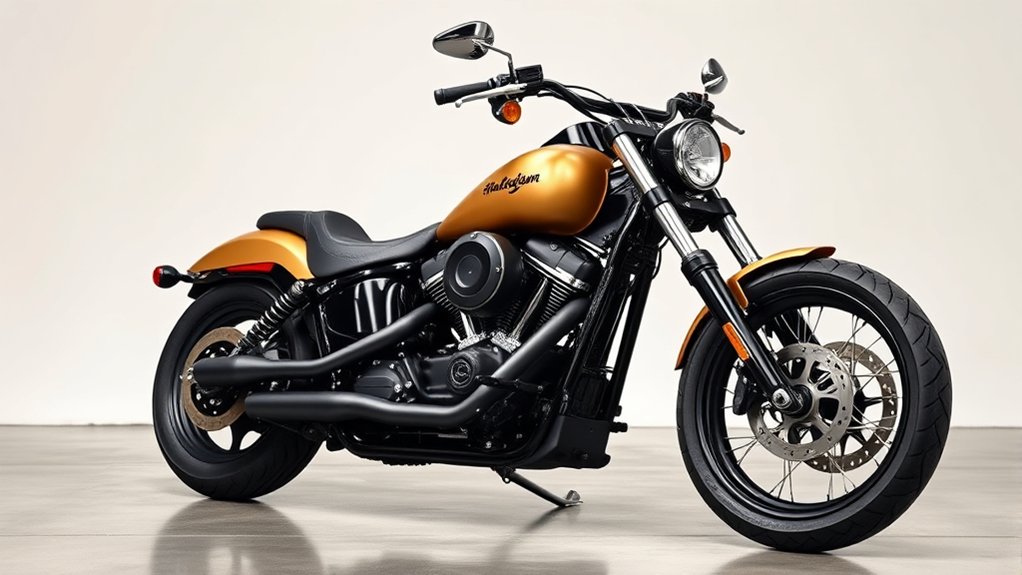
While Harley-Davidson motorcycles vary widely in size, their average weight typically falls between 450 and 950 pounds as of 2025.
Harley-Davidson motorcycles generally weigh between 450 and 950 pounds as of 2025.
You’ll find that Sportster models weigh around 480 to 520 pounds curb weight, making them more agile.
In contrast, Harley-Davidson Touring bikes are substantially heavier, usually ranging from 800 to 950 pounds curb weight. This extra weight enhances stability and rider comfort on long journeys.
Models like the Road King and Street Glide weigh approximately 807 and 820 pounds, respectively, reflecting their design focus on touring capabilities.
Keep in mind, curb weight can fluctuate based on model year and accessories, affecting handling characteristics.
Understanding these weight ranges helps you choose the right Harley-Davidson for your riding style and needs.
Dry Weight vs. Wet Weight: What’s the Difference?
Because motorcycle weight directly impacts handling and performance, understanding the difference between dry weight and wet weight is essential.
Dry weight refers to the Harley-Davidson motorcycle’s mass without fluids like fuel, oil, or coolant.
Wet weight, or curb weight, includes all necessary fluids and represents the bike’s actual ready-to-ride weight. Here’s what you need to know:
- Dry weight excludes all fluids, providing a baseline figure.
- Wet weight accounts for fuel, oil, and coolant, reflecting real-world conditions.
- Harley-Davidson motorcycles typically list wet weight for accuracy.
- The weight difference varies by model depending on fluid capacity.
Focusing on wet weight helps you better gauge handling and performance since it reflects the bike’s operational mass, not just an empty frame.
How Harley Weight Varies Across Model Families
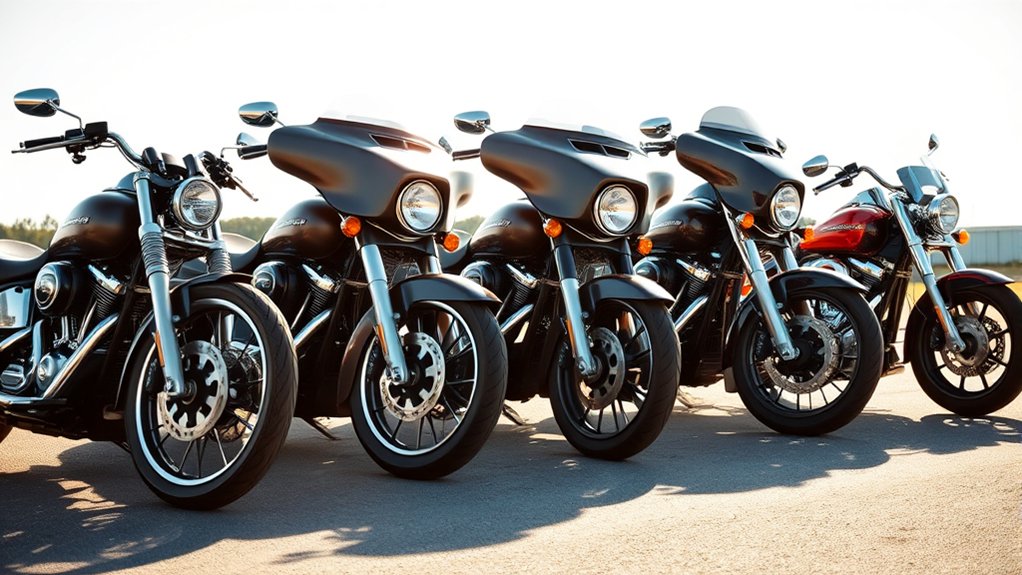
When choosing a Harley-Davidson, you’ll notice that weight varies considerably across model families, impacting handling and ride experience. Touring models are the heaviest, ranging from 800 to 950 pounds, with the Road Glide Limited near 932 pounds. These bikes are designed for long-distance comfort and stability.
Softail models weigh between 650 and 750 pounds, offering a nice balance of weight and ride quality.
Adventure and touring hybrids like the Pan America series fall around 530 to 560 pounds. They’re optimized for versatility both on and off-road.
These weight variations influence maneuverability, fuel efficiency, and rider fatigue. Understanding these differences helps you select a Harley-Davidson that matches your riding style and needs.
That way, you’ll get the best fit for control and comfort during your journeys.
Lightweight Harley-Davidson Sportster Models
Touring and Softail models bring substantial weight to the table, but if you’re after something lighter and more agile, Harley-Davidson’s Sportster lineup stands out.
These lightweight Sportster motorcycles offer a curb weight between 480 and 520 pounds, making them easier to handle.
For example, the Nightster weighs approximately 481 pounds, representing the lightweight end of the Sportster range. The Sportster S tips the scale at about 502 pounds, balancing power and manageability.
Typical Sportster models fall between 480 and 520 pounds curb weight.
This reduced weight really enhances maneuverability compared to heavier Harley models.
If you want a nimble ride or are a new rider, Sportster models deliver the lightweight performance you need without sacrificing classic Harley appeal.
Why Harley-Davidson Motorcycle Weight Matters for Riders
Although Harley-Davidson motorcycles vary widely in weight, understanding how this factor influences handling, comfort, and safety is essential for riders. The weight directly affects handling. Heavier models provide greater stability at high speeds, while lighter bikes offer more agility in tight turns.
You’ll notice heavier Harley-Davidson motorcycles absorb road vibrations better, which reduces fatigue on long rides. However, increased weight also means longer braking distances and requires more effort to stop quickly.
Proper weight distribution combined with overall bike weight impacts how you manage fatigue during extended trips or challenging terrain.
Harley-Davidson Touring Models: Why They’re Heavier
You’ll notice that Harley-Davidson touring models weigh between 800 and 950 pounds. That’s mainly because they come with larger engines, heavy-duty frames, and extra touring features.
All this extra weight actually helps with stability and smoothness when you’re out on those long rides.
But, of course, it can have an impact on how the bike handles. Once you understand these factors, you start to see how Harley-Davidson strikes a balance between comfort and control in these bikes.
Weight Factors Explained
Several key factors cause Harley-Davidson touring models to weigh between 800 and 950 pounds. These weight factors stem from design choices that prioritize durability, comfort, and highway stability. You’ll notice four main contributors:
First, larger engines provide ample power but add significant mass. Then, there are heavy-duty steel frames and reinforced components for structural strength. Touring-specific features like large fairings, saddlebags, and infotainment systems also add weight.
Comfort amenities such as plush seats and advanced electronics round out the list. This combination of heavier materials and additional equipment ensures stable highway performance and rider comfort over long distances.
While the added weight enhances straight-line stability, it demands more effort during maneuvers and slows handling responsiveness compared to lighter Harley models. Understanding these weight factors helps you anticipate the touring models’ behavior on the road.
Stability And Comfort Benefits
When you ride a Harley-Davidson touring model, the increased weight directly enhances stability and comfort, especially on highways. These bikes typically weigh between 800 and 950 pounds, which markedly improves stability at high speeds and in windy conditions.
The heavier mass comes from larger engines, advanced suspension systems, and extensive luggage capacity, all designed to support long-distance touring.
This added weight reduces vibrations and delivers a smoother ride, boosting comfort during extended journeys. You’ll notice better handling and a solid, planted feel that keeps the bike steady on varying road surfaces.
Ultimately, the substantial curb weight of touring models balances performance and rider comfort, making them ideal for those who prioritize stability and comfort on long rides.
Harley-Davidson Trike and Adventure Model Weights
You’ll find Harley-Davidson Trike models like the Freewheeler and Tri Glide Ultra weigh between 1,100 and 1,200 pounds. This hefty weight gives them great stability thanks to their low center of gravity.
On the other hand, Adventure models such as the Pan America 1250 and 1250 Special are much lighter, usually falling between 530 and 560 pounds.
When you compare these weights, it’s clear they reflect very different design priorities—trikes focus on stability and comfort, while adventure bikes emphasize agility and performance.
Trike Model Weight Range
Harley-Davidson trike models typically weigh over 1,100 pounds, with the Freewheeler at about 1,118 lbs (507 kg) and the Tri Glide Ultra reaching 1,204 lbs (546 kg). This trike weight reflects their curb weight, which is substantially higher than standard motorcycles.
When evaluating Harley-Davidson trikes, consider these key points:
- Freewheeler curb weight: approximately 1,118 lbs (507 kg)
- Tri Glide Ultra curb weight: about 1,204 lbs (546 kg)
- Increased weight enhances stability and cruising comfort
- Trikes’ weight demands careful handling compared to lighter bikes
Understanding these weights helps you appreciate the engineering behind Harley-Davidson trikes and their design focus on stability and long-distance riding comfort.
It’s pretty clear that the extra weight isn’t just a number—it plays a big role in how these bikes ride and feel on the road.
Adventure Model Specifications
Although trike models offer impressive stability with weights exceeding 1,100 pounds, the Adventure Models like the Pan America 1250 and Pan America 1250 Special focus on maintaining a lighter curb weight between 534 and 559 pounds.
The Harley-Davidson Pan America series balances power and weight, optimizing performance for both on-road and off-road conditions.
Weighing approximately 534 lbs (242 kg) for the Pan America 1250 and 559 lbs (254 kg) for the Special, these Adventure Models prioritize maneuverability and agility.
This weight range, between 530 and 560 lbs, supports versatility without compromising durability.
If you’re looking for a Harley-Davidson that offers a lighter footprint for adventure riding, the Pan America’s weight specifications make it a compelling choice within the Adventure Models lineup.
It’s all about finding that sweet spot between power and ease of handling.
Comparing Trike And Adventure
When comparing trike and adventure models, the difference in weight is striking. You’ll notice trikes are substantially heavier than adventure bikes, which impacts handling and performance.
Here’s a clear weight comparison to guide you:
- Harley-Davidson trikes weigh between 1,100 and 1,200 pounds (507–546 kg).
- The Freewheeler trike is on the lighter side at about 1,118 pounds (507 kg).
- Adventure bikes like the Pan America 1250 range from 530 to 560 pounds (242–254 kg).
- The Pan America 1250 Special weighs approximately 559 pounds (254 kg).
So, trikes weigh more than twice as much as adventure bikes.
Knowing this weight difference can really help you pick the right Harley for your riding style and needs.
Harley-Davidson Weight Compared to Other Brands
Since you’re comparing motorcycle weights, you’ll notice Harley-Davidson bikes often weigh more than many sportbike brands like Honda and Yamaha. They frequently exceed 700 lbs curb weight.
Harley-Davidson’s touring bikes typically fall within 800–950 lbs, placing them in a similar weight range as other heavyweight touring models from BMW and Indian.
In contrast, lighter brands like Kawasaki and Suzuki produce motorcycles weighing between 400–600 lbs, making Harley considerably heavier.
This weight difference reflects Harley’s focus on cruiser and touring bikes, which prioritize stability and long-distance comfort over agility.
When you do a weight comparison, Harley-Davidson stands out for its substantial mass, especially compared to sport-oriented or lighter motorcycles.
That weight really impacts the overall riding experience and purpose of the bike.
How Weight Affects Harley-Davidson Handling and Comfort
You’ll notice that a Harley’s weight directly affects how it handles. Heavier models tend to offer more stability, while lighter ones give you better agility.
This balance really changes how you control the bike depending on the riding conditions. When you get a good feel for these factors, it can make your ride more comfortable and much more enjoyable overall.
Handling Dynamics Explained
Although heavier Harley-Davidson models, like touring bikes over 800 lbs, offer enhanced stability and smoother rides on highways, their substantial weight can make maneuvering during low-speed or tight turns a bit tricky.
When handling these bikes, weight distribution plays a big role in how the motorcycle responds to your steering.
To get the best handling and stability, keep these points in mind:
- Maintain an upright posture to balance the bike’s weight effectively.
- Practice slow, controlled maneuvers to make up for reduced agility.
- Remember, lighter models like Sportsters around 500 lbs are easier to handle but don’t offer as much highway stability.
- Proper weight distribution really helps improve both handling response and overall control.
Comfort And Ride Quality
When you ride a heavier Harley-Davidson, like a Touring model weighing between 800 and 950 pounds, you get more ride comfort and stability, especially on long highway stretches. The extra weight helps reduce vibrations and gives you a more planted feel. This makes riding less tiring over time.
These bikes also have proper weight distribution and frame design, so they still handle well and inspire confidence. On the other hand, lighter models are more agile but don’t feel as stable on highways. Keeping your tire pressure right and practicing slow maneuvers can boost your ride quality and handling even more.
| Model Type | Weight (lbs) | Ride Comfort |
|---|---|---|
| Touring | 800–950 | High – stable, smooth |
| Softail | 650–700 | Moderate – balanced |
| Sportster | 500–550 | Lower – agile, less stable |
| Street | 500–600 | Agile, less planted |
Tips for Riding Heavy Harley-Davidson Motorcycles
Since heavy Harley-Davidson motorcycles demand careful control, maintaining an upright posture with your weight centered helps you balance more effectively. Proper weight distribution is essential for smooth handling and stability.
Maintaining an upright posture with centered weight is key to balancing heavy Harley-Davidson motorcycles smoothly and stably.
To master riding these bikes, follow these handling tips:
- Practice slow-speed maneuvers in a safe, open area to build confidence with the bike’s weight.
- Use smooth, deliberate throttle and brake inputs to avoid sudden shifts that can destabilize your ride.
- Regularly check tire pressure and suspension settings to optimize weight distribution and performance.
- Stay alert and frequently use mirrors to compensate for reduced maneuverability.
Taking it step by step like this makes riding a heavy Harley feel a lot more manageable. Just keep at it, and you’ll get the hang of it in no time!
Frequently asked questions
What Materials Are Used to Reduce Harley-Davidson Motorcycle Weight?
You’ll find Harley-Davidson uses lightweight materials like aluminum and magnesium alloys in engine components and frames to cut weight. They also incorporate carbon fiber for fairings and wheels, which keeps strength but reduces mass.
Titanium appears in exhaust systems and fasteners, balancing durability with lightness.
Furthermore, advanced composites and plastics are common for accessories and interior parts. All these materials help you enjoy better handling, acceleration, and fuel efficiency on your ride.
It’s all about making the bike lighter without losing what makes it tough and reliable.
How Does Harley-Davidson Weight Impact Fuel Efficiency?
Harley-Davidson’s weight directly impacts your fuel efficiency by increasing the energy needed to move the bike.
Heavier models, often above 800 lbs, consume more fuel because their larger engines and added mass demand more power.
If you ride a lighter Harley, like a Sportster, you’ll get better miles per gallon since less weight means less fuel burned.
Adding accessories or luggage further decreases your fuel economy by adding extra weight.
Are There Aftermarket Parts to Lighten Harley Motorcycles?
Yes, you can lighten your Harley with aftermarket parts like lightweight wheels, exhaust systems, and carbon fiber accessories. These components reduce curb weight, improving handling and acceleration.
You’ll also find lighter seats, handlebars, and fairings designed for performance gains. Just make sure you choose parts that maintain safety and structural integrity.
Some weight reduction methods might affect comfort or durability if not carefully selected and installed.
How Does Rider Weight Affect Harley-Davidson Handling?
Rider weight acts like the keel on a ship, stabilizing your Harley-Davidson. If you’re heavier, you’ll generally enjoy better stability on large, heavy models, especially at cruising speeds.
If you’re lighter, controlling those hefty bikes can feel like wrestling a stubborn bull, particularly at low speeds. Proper body positioning and weight distribution are essential to maintain control, reduce fatigue, and improve your handling precision on any Harley.
Does Harley-Davidson Offer Weight Customization Options?
Harley-Davidson doesn’t offer official weight customization options on their factory models. You can’t adjust the bike’s weight through Harley directly, but you can modify it yourself.
By adding or removing accessories like saddlebags or swapping stock parts for lighter aftermarket components, such as carbon fiber wheels, you can influence your Harley’s weight. These personal modifications help improve handling or performance.
This way, you get to control how heavy or light your bike feels on the road. It’s all about making the ride work best for you.
Final Thought
You might expect a Harley’s weight to slow you down, but that heft actually brings stability and comfort on the road. While lighter models offer nimbleness, heavier Harleys provide confidence during long rides and rough conditions.
Understanding these weight differences helps you choose the right bike that balances agility with endurance. Embrace the weight, not as a burden, but as an essential element shaping your riding experience and control.