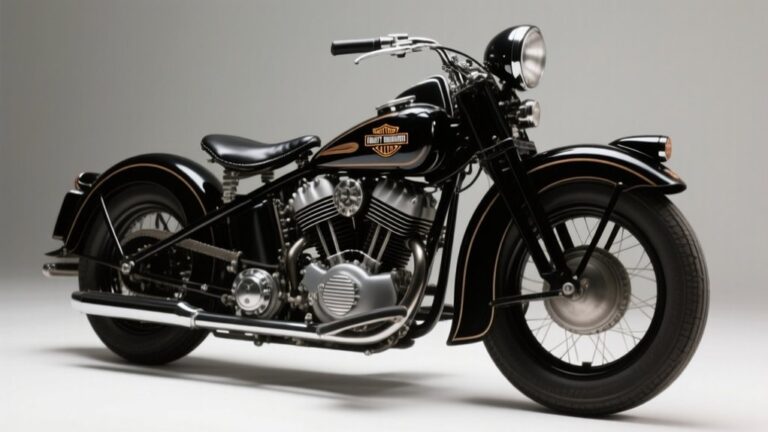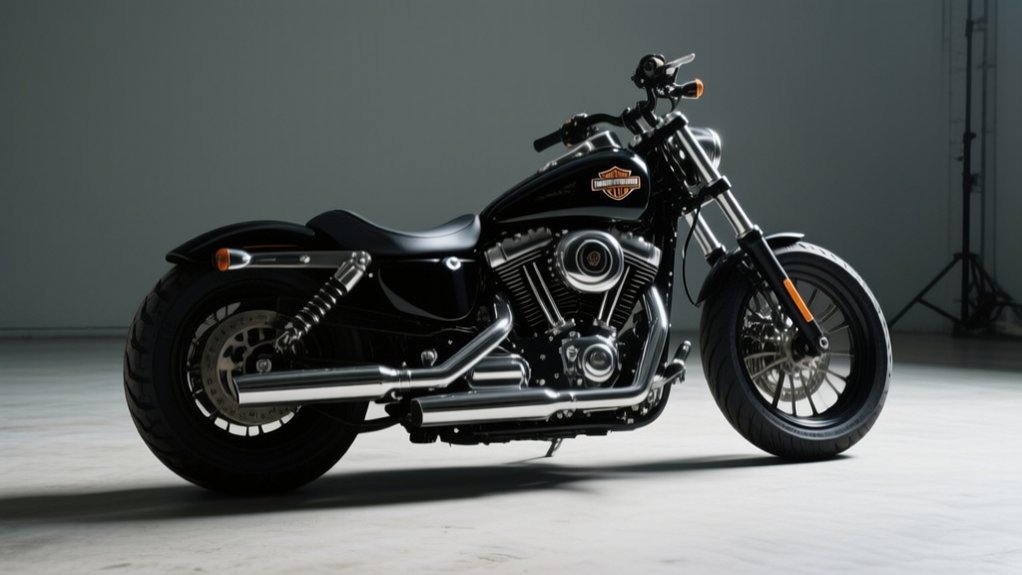
How Much Does A Harley Softail Weigh – By the Numbers
A Harley Softail typically weighs between 642 and 697 pounds, with the Softail Slim on the lighter end and the Heritage Classic 114 near the heavier side. Models with larger engines can tip the scales above 700 pounds. This weight difference affects handling, stability, and fuel efficiency.
Heavier bikes usually offer smoother rides, while lighter ones provide better agility. To really get a feel for how these weight variations impact your ride and model choice, it helps to consider a few key factors and trade-offs. Keep exploring, and you’ll find the right balance for your needs.
How Much Do Harley Softail Models Weigh?
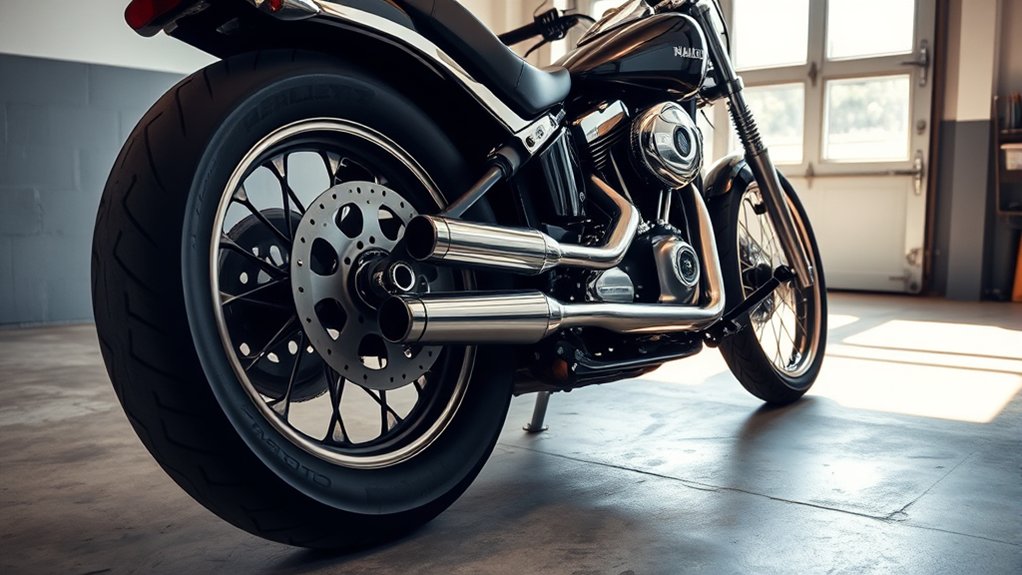
While Harley Softail models vary in weight, you can generally expect them to fall between 642 and 697 pounds. For instance, the Softail Slim weighs around 642 pounds, making it one of the lighter Harley-Davidson models.
On the other hand, the Heritage Classic 114 tips the scales at approximately 697 pounds, placing it among the heavier Softail options. These variations reflect differences in design and engine configurations within the Softail lineup.
Most 2018 Harley-Davidson Softail models stay within this range, although some with larger engines can exceed 700 pounds. Understanding the typical weight range helps you gauge handling and performance characteristics unique to each Softail model.
This makes it easier to choose one that fits your riding style and preferences.
Key Factors That Influence Harley Softail Weight
You’ll notice that engine size plays a big role in a Harley Softail’s weight. Bigger engines naturally add more mass to the bike.
Then, there are suspension parts like the Twin Sided Swing Arm and hydraulic disc brakes. These components also add quite a bit to the overall heft.
Engine Size Impact
How much does engine size affect the weight of a Harley Softail? The engine size plays a significant role in the overall weight of the motorcycle.
For instance, a Harley Softail Slim with a 1746cc engine weighs about 642 lbs, while models equipped with larger 1868cc engines can tip the scales at around 697 lbs.
This difference in displacement results in weight variations up to 12-13%, mainly due to extra engine components and advanced cooling systems in bigger engines like the Milwaukee-Eight 107 or 114.
When you consider engine size, you’re not just looking at power but also added mass that influences handling and performance.
Suspension And Components
Because suspension components directly affect a Harley Softail’s ride quality and handling, they also contribute considerably to its overall weight. The front suspension uses telescopic forks with 5.1 inches of travel, balancing weight and performance.
Meanwhile, the rear twin-sided swingarm plays a key role in weight distribution and adds to the bike’s curb weight of around 697 lbs. The materials and construction methods for these suspension components are chosen carefully to maximize strength without unnecessary weight gain.
Furthermore, the suspension setup, including factors like ground clearance and trail, impacts handling and dictates component size and material requirements.
How Harley Softail Weight Compares to Other Cruisers
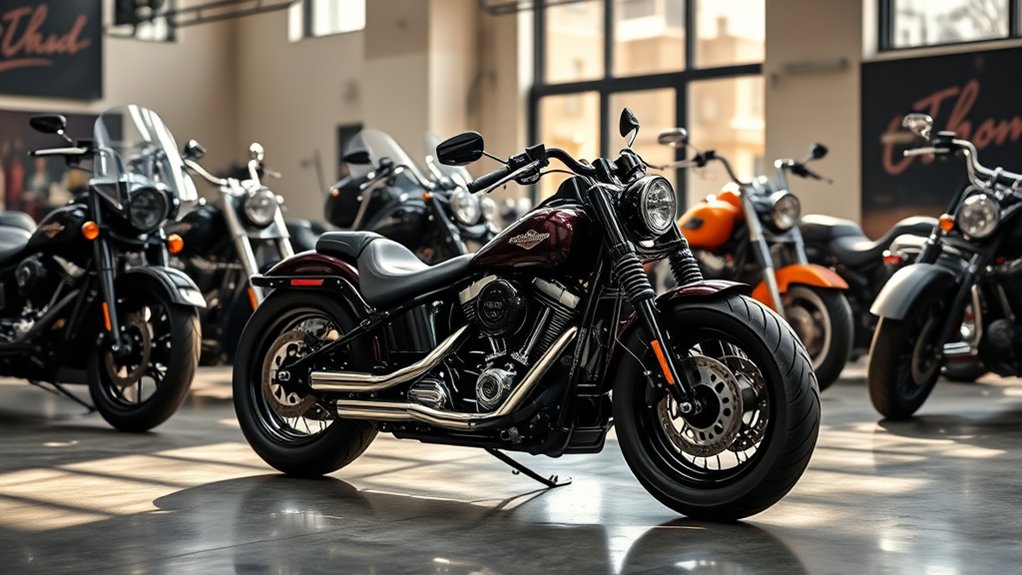
You’ll notice that Harley Softail models vary quite a bit in weight. For example, the Heritage Classic 114 is heavier than the Slim. This difference actually changes how they handle on the road.
Heavier bikes tend to feel more stable but aren’t quite as nimble.
When you compare them to other cruisers, Softails usually weigh more. That’s because they’re built with durability in mind, rather than trying to be as light as possible.
Weight Differences Among Models
Although Harley Softail models vary in weight, they generally fall between 642 and 697 pounds. Some variants, like the Heritage Classic 114, weigh around 642 lbs.
You’ll notice the Softail Slim is about 35 lbs lighter than earlier models, which improves maneuverability. Compared to other cruisers, Softails tend to be heavier. This impacts stability and ride feel.
| Model | Weight (lbs) | Weight Difference (lbs) |
|---|---|---|
| Heritage Classic 114 | 642 | Base |
| Softail Slim | 607 | -35 |
| Standard Softail | 650 | +8 |
| Heavier Cruiser A | 700 | +58 |
| Heavier Cruiser B | 720 | +78 |
This weight range affects each model’s cruiser dynamics distinctly. It’s something to keep in mind when comparing ride experiences.
Impact On Handling
When you compare the Harley Softail’s weight to other cruisers, its moderate 642-pound frame stands out for enhancing maneuverability and responsiveness. This balanced weight, lighter than many older Slim models, directly improves handling by allowing quicker direction changes and more agile control.
The Softail’s well-distributed weight and 4.7-inch ground clearance contribute to better stability and cornering performance, especially in tight turns. Unlike heavier cruisers, which can feel cumbersome, the Softail offers a more rider-friendly experience that suits both city streets and longer rides.
Its weight optimizes the balance between stability and nimbleness, making it easier for you to maintain confident control. Overall, the Softail’s weight and ground clearance profoundly impact handling, delivering a smooth, responsive ride.
Comparison With Competitors
While the Harley Softail carries a heavier curb weight of around 697 pounds, about 16% more than many other cruisers, this added mass stems from its larger engine and solid build.
When you look at cruiser weight comparison, you’ll find:
- The Harley Softail is roughly 55 pounds heavier than cruisers averaging 642 pounds.
- Competitors with similar features typically weigh between 640 and 660 pounds, making the Softail noticeably heavier.
- This increased curb weight improves stability at high speeds but may reduce maneuverability compared to lighter cruiser motorcycles.
Understanding this helps you weigh the trade-offs. The Harley Softail’s solid construction offers durability and smooth highway performance, but you might feel the difference in tight handling versus lighter cruisers.
How Harley Softail Weight Impacts Handling and Performance
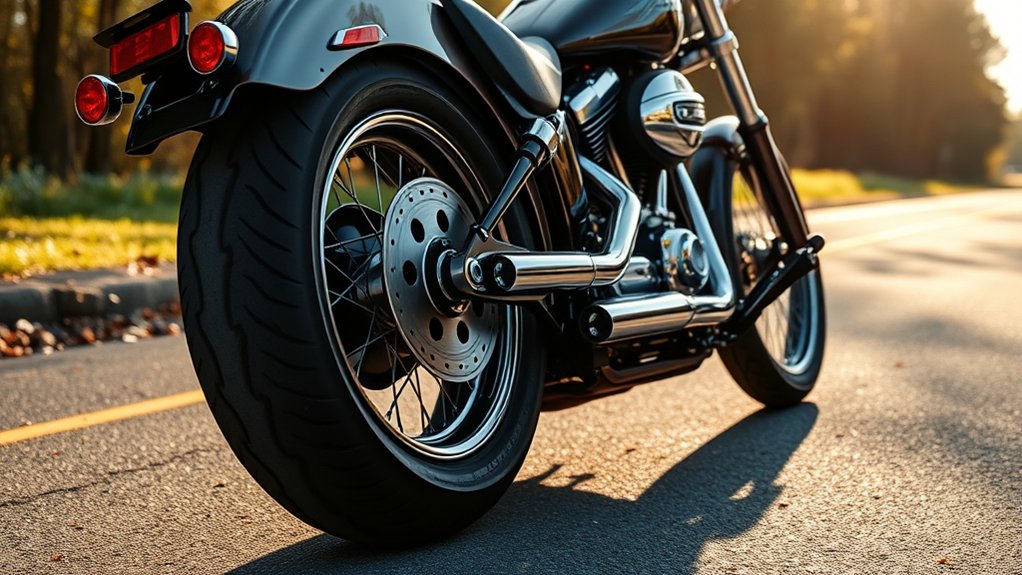
Because Harley Softail models vary considerably in weight, their handling and performance differ in key ways that riders should consider.
Heavier Softail bikes, like the 697 lbs Heritage Classic 114, offer greater stability and comfort by reducing vibrations on long rides. But they can feel less agile, especially in tight turns.
In contrast, lighter Softail variants near 642 lbs provide quicker acceleration and more responsive handling. This makes them ideal for urban environments where maneuverability matters.
However, the increased weight also affects braking, requiring longer stopping distances.
Understanding how weight influences these aspects lets you choose a Softail that matches your riding style. You’ll be able to balance stability, agility, and overall performance to fit your needs.
How Harley Softail Weight Affects Fuel Capacity and Range
The weight of your Harley Softail not only shapes how it handles on the road but also impacts fuel efficiency and range. Understanding this relationship helps you optimize your riding experience.
Most Harley Softail models maintain a standard 5-gallon fuel capacity, ensuring consistent fueling options regardless of weight variations. Heavier Softails, like the 697 lbs Heritage Classic 114, demand more energy to maintain speed, which can slightly reduce fuel efficiency and overall range.
Most Harley Softails feature a 5-gallon tank, but heavier models like the Heritage Classic 114 may slightly reduce fuel efficiency.
The added weight influences acceleration and handling, indirectly affecting how efficiently fuel is consumed during your rides. Balancing the Harley Softail’s weight with its fuel capacity helps you anticipate range outcomes.
While heavier models may slightly limit distance, the consistent 5-gallon tank supports long rides, making fuel capacity a stable factor amid weight differences.
Pros and Cons of Heavier vs. Lighter Softail Models
If you value stability at high speeds, heavier Softail models like the Heritage Classic 114, weighing around 697 lbs, can offer a more planted ride. Their added weight improves road contact and reduces vibrations, resulting in smoother handling on rough surfaces.
However, this weight can diminish maneuverability, making tight turns and low-speed control more challenging.
On the other hand, lighter Softail models, such as the Slim at approximately 642 lbs, excel in agility and quick acceleration. Their reduced weight makes handling easier, especially when parking or steering through urban environments.
Ultimately, the trade-off between weight and maneuverability in Softail models impacts your riding comfort and control. Choosing the right balance depends on whether you prioritize stability or nimble handling for your rides.
How to Choose the Right Harley Softail Model Based on Weight
When selecting a Harley Softail model, understanding how weight affects performance and comfort can guide you toward the best fit for your riding needs. Softail models differ considerably in weight, which influences handling and rider comfort.
Here’s how to choose based on weight:
- Opt for heavier Softail models like the Heritage Classic 114 (697 lbs) if you want stability on long rides and enhanced rider comfort over extended distances.
- Choose lighter models such as the Softail Slim (642 lbs) for improved handling, agility, and easier maneuverability. These are ideal for city riding or newer riders.
- Factor in your physical ability and typical riding environment to balance weight with rider comfort and control.
Frequently asked questions
What Tools Are Needed to Accurately Weigh a Harley Softail?
You’ll need a reliable digital or mechanical motorcycle scale to weigh your Harley Softail accurately.
Use portable wheel chocks or sturdy blocks to stabilize the bike and prevent movement.
Make sure the surface is level, like a concrete floor or garage pad, to avoid skewed readings.
A motorcycle lift with a built-in scale also works well.
Before weighing, fuel your bike fully and remove any accessories or luggage for a precise measurement.
This helps you get the most accurate weight possible.
How Does Rider Weight Affect the Softail’s Overall Performance?
Rider weight directly impacts your Harley Softail’s handling, suspension, and braking. If you’re heavier, you’ll notice reduced suspension comfort and slower acceleration. It can also make braking less responsive and affect stability, especially if weight distribution isn’t balanced.
While the Softail is designed for agility, extra weight can offset that advantage. So, adjusting your riding style and maintaining proper tire pressure helps keep performance ideal and safe.
It’s all about finding the right balance to enjoy the ride.
Are There Weight Differences Between New and Older Softail Models?
Yes, you’ll notice weight differences between new and older Softail models. Newer Softails tend to weigh more, often 35 to 100 pounds heavier, because of bigger engines and added features.
For example, the 2018 Heritage Classic 114 weighs around 697 pounds. Older Slim models are lighter by about 35 pounds.
This increase reflects advancements in technology and performance enhancements.
You’ll definitely feel the difference when riding newer models.
Can Aftermarket Parts Significantly Change a Softail’s Weight?
Yes, aftermarket parts can notably change your Softail’s weight. If you install heavy chrome or aluminum accessories, or larger exhausts and wheels, you’ll add several pounds.
On the other hand, choosing lightweight components like carbon fiber can reduce the overall weight, balancing out some added mass.
The effect depends on the materials and size of your modifications. So, you can tailor your bike’s weight based on the upgrades you select.
Does Softail Weight Influence Insurance Premiums or Costs?
Back in the days of knights and castles, weight wasn’t just about muscle—it was about risk.
Today, it’s the same with your Softail. Yes, your bike’s weight influences insurance premiums.
Heavier Softails often mean higher costs because insurers see them as riskier, with greater accident potential.
Lighter models can save you money since they’re easier to handle.
Final Thought
You might worry that a heavier Harley Softail will feel cumbersome, but the added weight actually enhances stability and comfort on long rides. While lighter models offer nimbleness, heavier Softails provide better road grip and smoother cruising.
Understanding how weight impacts handling and fuel range helps you pick a model that fits your riding style. Ultimately, choosing the right Softail means balancing weight with performance for a ride that feels just right.