Are Harley Sales Down – Myth or Fact
Harley-Davidson sales are indeed down, reflecting real market challenges rather than a myth. You’re seeing a 26% revenue drop in Q4 2025, driven mainly by global declines despite modest U.S. gains.
Shifting demographics and preferences hurt traditional cruiser models, while new offerings like LiveWire show some promise but haven’t fully offset declines. Harley’s adapting through product innovation, production cuts, and strategic shifts to regain momentum.
Take a closer look at these trends and how they’re shaping the brand’s future.
Why People Think Harley Sales Are Declining (And the Truth)
Although Harley-Davidson’s Q4 2025 revenue dropped by 26%, this decline doesn’t tell the whole story about its sales performance. You might think sales are plummeting, but in recent years, the picture has been more complex.
Global shipments have fallen, yet U.S. motorcycle sales showed a slight increase, which means the overall sales narrative isn’t uniformly negative.
Inventory surpluses and production cuts, often mistaken for weak demand, actually reflect strategic adjustments rather than pure sales decline.
The company’s recent financial losses and market conditions have fueled perceptions of decline, but some segments continue to grow.
Harley-Davidson Sales Trends Over Recent Years
Understanding the complex factors behind Harley-Davidson’s sales performance requires examining the trends over recent years. You’ll notice a significant decline in global motorcycle shipments, despite a slight uptick in U.S. sales.
Overall revenue decreased by 26% in Q4 2025, highlighting persistent challenges.
A 26% revenue drop in Q4 2025 underscores Harley-Davidson’s ongoing market challenges.
Harley’s strategic moves, like cutting production and reducing inventory, respond to these declines. While innovative models such as LiveWire saw a 7% sales increase, they haven’t offset broader downturns caused by market saturation, aging customers, and fierce competition.
- The thrill of iconic motorcycles fading amid shrinking shipments
- A 26% revenue drop that signals deeper struggles
- LiveWire’s modest growth offering a glimpse of hope
- Strategic cuts reflecting tough market realities
These trends clearly show Harley-Davidson’s sales are under real pressure.
How Market Trends and Demographics Impact Harley-Davidson Sales
You’ll notice that Harley-Davidson’s sales reflect shifting demographics. There’s a growing gap between aging riders and younger consumers, whose preferences are quite different.
While U.S. sales show a bit of growth, global motorcycle shipments are actually declining. This shift is definitely impacting the overall results.
Demographic Shifts Influence Demand
As younger generations show less interest in heavyweight cruisers, Harley-Davidson’s sales face pressure from shifting demographics. You’ll notice that the brand’s traditional lineup mainly appeals to older riders, which limits its reach among younger, urban consumers who prefer alternative transportation.
Despite Harley’s push to attract younger buyers with entry-level models, the overall market demand is declining as urbanization and lifestyle changes reshape preferences.
Consider these points: younger riders favor lighter, more versatile motorcycles over classic cruisers. Harley’s marketing still leans toward an older demographic. Plus, urban living reduces the practicality and appeal of large motorcycles.
Efforts to diversify the customer base have yet to show significant sales growth. Understanding these shifts helps explain why Harley-Davidson must adapt to maintain sales momentum.
Global Sales Versus U.S
How do Harley-Davidson’s sales trends differ between the U.S. and global markets? While U.S. sales slightly increased, global shipments dropped, signaling mixed performance. Aging core demographics restrain growth worldwide.
Q4 2025 revenue fell 26% year-over-year, mainly from global declines. Harley counters this by targeting new markets and younger riders with entry-level models and a diversified lineup.
| Market | Sales Trend | Strategic Focus |
|---|---|---|
| U.S. | Slight Increase | Retain core demographic |
| Global | Decline | Expand new markets, younger riders |
| Revenue Q4 2025 | 26% YoY Decline | Product diversification |
You’ll see these contrasting trends highlight the challenge Harley faces balancing traditional strength with global expansion efforts.
Emerging Rider Preferences
Harley-Davidson’s mixed sales performance reflects shifting rider preferences that shape the brand’s market position. You’ll notice that Harley’s current lineup focuses mainly on cruisers, baggers, and touring bikes. These may not resonate with younger riders who are looking for variety and advanced technology.
While Harley is developing entry-level motorcycles to capture new demographics, its marketing still leans toward an older audience. This limits the brand’s broader appeal.
Global shipment declines and inventory reductions highlight how evolving preferences impact sales.
You need to understand these trends if you want to grasp Harley’s challenges and strategies.
- Desire for performance-oriented, tech-savvy motorcycles is rising
- Current lineup seen as “one note” by emerging riders
- Efforts to attract new riders through entry-level models underway
- Marketing focus remains skewed toward aging demographic
Harley-Davidson Models Driving Sales Growth and Decline
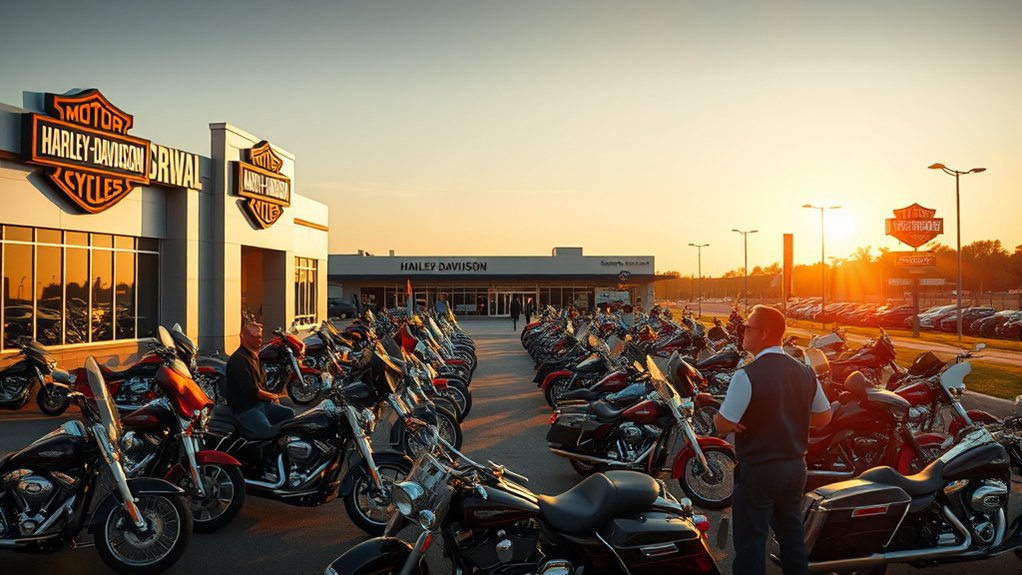
Although new models like the Pan America have broadened the lineup, overall sales dropped 26% in Q4 2025, reflecting ongoing struggles. You’ll notice Harley’s global shipments declined despite a slight rise in U.S. sales, indicating uneven regional performance.
The Pan America and other new entries have diversified offerings, but growth remains limited for most models. Traditional cruiser and touring bikes still struggle to attract younger, performance-focused riders, which dampens demand.
Harley’s push into entry-level motorcycles aims to revive sales, yet these models haven’t substantially offset declines in the core lineup. So, while some models drive modest growth, the overall sales picture shows persistent challenges tied to market preferences and the performance of Harley’s established range.
Key Factors Affecting Harley-Davidson’s Sales Today
While a slight increase in U.S. sales offers some optimism, Harley-Davidson’s global shipments fell in 2025, signaling broader market challenges. You’ll notice the company faced a 26% revenue drop in Q4 2025, reflecting persistent sales hurdles.
Despite a small U.S. sales boost, Harley-Davidson’s global shipments and revenue declined sharply in 2025.
The brand’s lineup currently appeals mostly to an aging audience, which limits growth potential. Production cuts show the company is trying to match supply with declining demand.
Key factors affecting sales today include:
- A narrow product range that fails to attract younger riders
- Shifting demographics that reduce Harley’s traditional market base
- Intensifying competition from diverse motorcycle brands
- Brand perception struggles limiting broader appeal
Understanding these factors helps you see why Harley’s sales figures reflect real challenges, not just myths.
What Harley-Davidson Is Doing to Turn Sales Around
You’ll notice Harley-Davidson is cutting production and reducing inventory to better match current demand and stabilize sales figures.
At the same time, they’re working on strengthening dealer relationships with targeted promotions and improved inventory management to boost performance.
On top of that, new model development—including entry-level bikes—is designed to expand their market and attract a more diverse group of riders.
Strategic Production Adjustments
Because Harley-Davidson recognizes the need to better align production with actual customer demand, it plans to limit motorcycle output to levels below current wholesale figures.
This strategic move mirrors KTM’s successful approach to handling excess inventory by adjusting production to stabilize the supply chain.
By doing so, Harley-Davidson aims to prevent overproduction, reduce surplus inventory, and better match market demand.
These efforts are critical in turning around sales performance.
You can appreciate the emotional impact of these adjustments:
- Renewed confidence in the brand’s long-term stability
- Assurance dealers won’t be burdened with excess stock
- Optimism for more balanced market supply and demand
- Encouragement that Harley-Davidson is responsive to market realities
Dealer Relationship Improvements
As Harley-Davidson tightens production to better match demand, it’s also enhancing dealer relationships through targeted support and promotional strategies. By limiting motorcycle production, Harley prevents excess inventory, mirroring KTM’s effective approach. This helps dealers avoid unsold stock.
This inventory control improves dealer profitability by aligning supply with actual customer demand. Furthermore, Harley is rolling out promotional campaigns designed to boost dealer confidence and sales performance.
The company’s initiatives focus on fostering long-term growth by addressing dealer concerns directly and providing measurable support. These efforts contribute to a more stable and responsive distribution network, which is critical for revitalizing sales.
Strengthening dealer partnerships stands as a key pillar in Harley-Davidson’s broader strategy to turn sales around efficiently and sustainably.
New Model Development
While Harley-Davidson has historically focused on cruisers and touring bikes, it’s now accelerating new model development to reverse sales declines. You’ll notice the company is introducing entry-level motorcycles aimed at younger riders, diversifying beyond its traditional lineup.
This strategy not only addresses an aging customer base but also aligns production with current market demand to reduce dealer inventory challenges.
Harley’s innovation efforts emphasize broader demographic appeal, which is critical amid financial pressures. Key initiatives include launching accessible, entry-level models to attract new riders and expanding beyond cruisers and touring bikes for variety.
They’re also implementing targeted promotions to stimulate sales and adjusting production to better match dealer inventory needs.
These moves aim to restore competitiveness and drive growth in a shifting market. It’s all about staying relevant and meeting new customer expectations while managing resources smartly.
Frequently asked questions
How Does Harley-Davidson’s Electric Motorcycle Lineup Compare to Competitors?
Harley-Davidson’s electric motorcycle lineup is more limited compared to competitors like Zero Motorcycles and Ducati. You’ll notice Harley focuses on premium pricing and traditional styling, leveraging its iconic brand to attract riders.
While competitors offer a broader range with diverse price points and tech features, Harley prioritizes heritage combined with electric innovation.
You can expect Harley to expand its lineup soon to better compete in performance, range, and technology.
What Role Does Harley-Davidson’s Global Presence Play in Its Sales?
Harley-Davidson’s global presence plays a critical role in shaping its sales performance. You’ll see that limited international market penetration and economic challenges abroad restrict overall volume growth.
While U.S. sales show modest gains, overseas declines weigh heavily on total shipments.
If you want to improve sales, expanding and strengthening dealer networks worldwide is essential. Harley’s reliance on North America limits its ability to capture broader market opportunities.
How Do Harley-Davidson Financing Options Affect Customer Purchases?
Harley-Davidson’s financing options directly impact your purchase decisions by lowering upfront costs and offering flexible payment plans. With low-interest rates and promotional deals, you’re more likely to commit to buying.
These options also expand access to customers with varied credit profiles, increasing affordability.
During uncertain economic times, financing eases hesitations, boosting sales volume.
In short, Harley’s financing makes owning a bike more achievable, influencing your buying behavior positively.
What Impact Do Harley-Davidson’s Brand Events Have on Loyalty?
Harley-Davidson’s brand events considerably boost your loyalty by creating strong emotional ties and a shared identity among riders. When you participate in rallies or gatherings, you engage directly with the brand and community.
Data shows this increases retention rates and positive perceptions.
These events also keep you excited about new models and innovations. That excitement reinforces your commitment and makes you more likely to stay connected with Harley-Davidson over time.
It’s all about keeping the passion alive and feeling part of something bigger.
How Has Harley-Davidson’s Marketing Strategy Evolved in Recent Years?
Harley-Davidson’s marketing strategy has shifted gears, targeting younger, diverse riders through digital campaigns and social media.
You’ll notice they’ve broadened their lineup with entry-level and performance bikes, aiming for wider appeal.
They’ve also ramped up collaborations and storytelling that highlight innovation and community, not just nostalgia.
By investing in experiential events and digital content, they actively build brand loyalty and connect globally with new customer segments.
This approach drives measurable engagement and growth.
It’s clear they’re focusing on more than just their legacy—they’re shaping the future of the brand.
Final Thought
You might think Harley sales are stuck in the past like a rotary phone, but the data tells a more nuanced story. While some segments show decline, others reveal growth driven by new models and shifting demographics. Market trends, competition, and evolving consumer preferences play key roles.
Harley’s proactive strategies suggest they’re adapting, not fading. So, it’s not a straightforward dip. It’s a complex, ongoing transformation you need to watch closely.