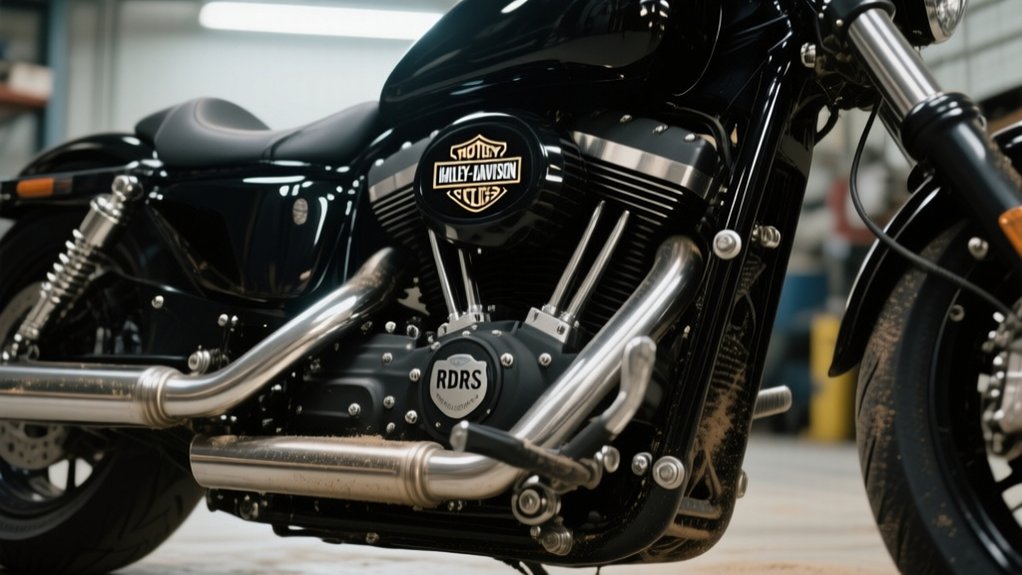
What Does Rdrs Mean On A Harley – A Closer Look
RDRS on a Harley stands for Reflex Defensive Rider System. It’s a smart safety suite that helps you maintain control by managing braking, traction, and stability, especially during cornering and tricky road conditions.
It adjusts brake pressure, controls wheel slip, and supports hill starts. This makes your ride safer and more confident. The system also monitors tire pressure and works closely with engine tuning to keep safety features intact.
Keep exploring to discover how RDRS enhances your Harley experience in detail.
Understanding RDRS and Its Importance on Harley
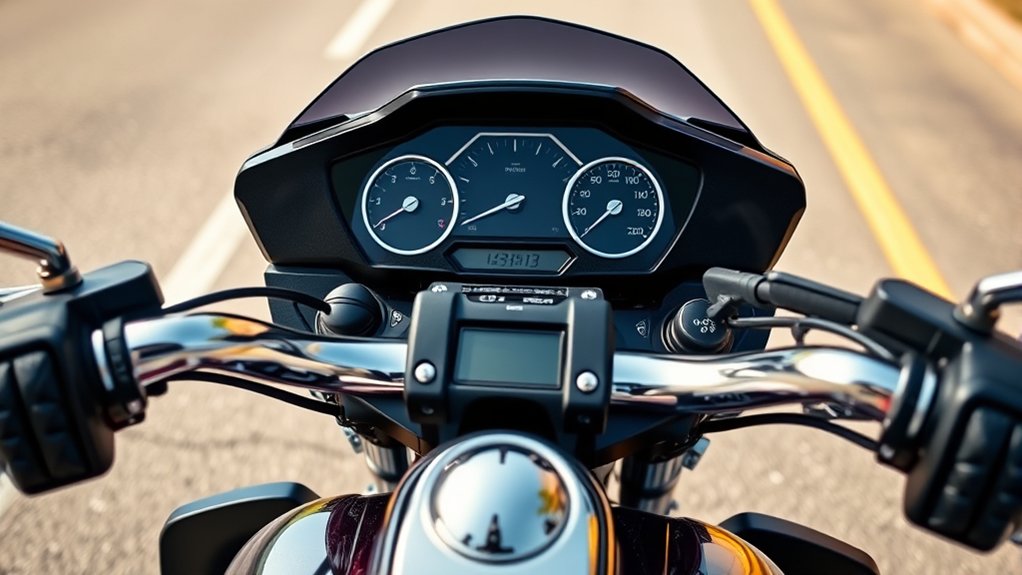
Although you might already be skilled on two wheels, Harley-Davidson’s Reflex Defensive Rider System (RDRS) boosts your confidence by enhancing safety whenever you ride. This advanced collection of rider assistance technologies improves motorcycle safety by managing engine torque and braking during acceleration, deceleration, and cornering.
The system’s traction control and cornering-enhanced braking work seamlessly with your bike’s electronic controls to maintain ideal tire grip and vehicle stability without overriding your input. Whether you’re steering through tight turns or sudden stops, RDRS supports you in maintaining control, reducing risks linked to loss of traction or stability.
Standard on select Harley models, this system elevates your ride confidence by helping you respond effectively to changing road conditions. It makes each ride safer and more secure, so you can focus on the road ahead.
Core RDRS Features: Braking, Traction, and Control Systems
RDRS enhances your riding experience by integrating advanced braking, traction, and control systems designed to keep you stable and confident on the road. Its Cornering-Enhanced Electronic Linked Braking (C-ELB) applies balanced braking to both wheels during cornering, boosting stability.
The Cornering-Enhanced Anti-Lock Braking System (C-ABS) prevents wheel lock by factoring in lean angle, ensuring controlled stops.
RDRS’s traction control, including Cornering Enhanced Traction Control (C-TCS), limits rear wheel slip during acceleration with modes tailored for standard and rain conditions.
The Drag-Torque Slip Control System (C-DSCS) reduces rear wheel slip during deceleration, especially on slippery surfaces.
Central to all this, the IMU continuously measures lean angle and lateral acceleration.
This allows the braking system and traction control to adjust interventions precisely, enhancing your overall safety and control.
How Cornering-Enhanced Systems Improve Motorcycle Control
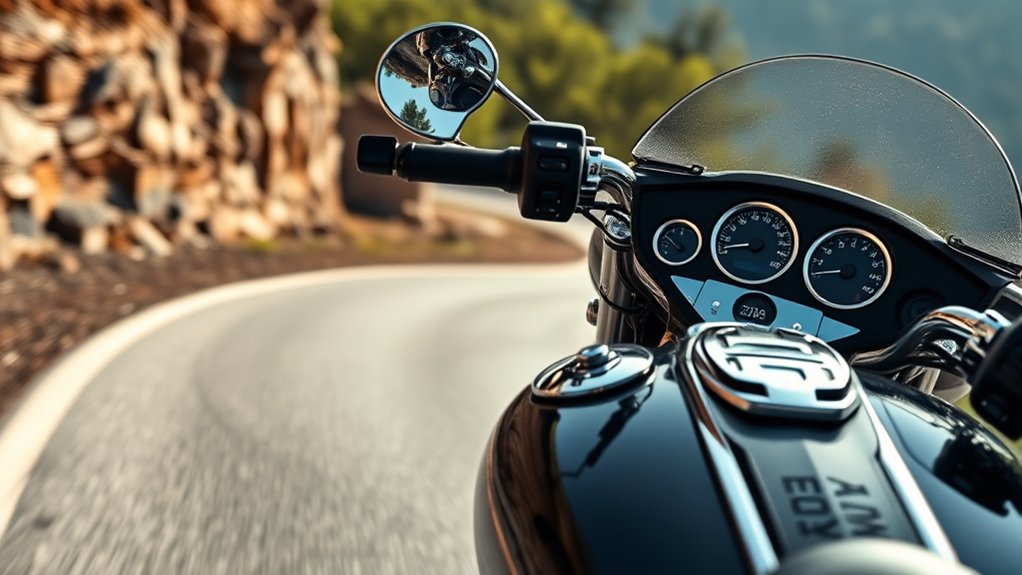
You’ll notice that cornering-enhanced systems use lean angle sensitivity to adjust braking and traction control exactly when you’re turning. This means the bike knows how much you’re leaning and can respond accordingly.
Balanced braking control makes sure both wheels share the load, so you keep your grip without losing any stopping power. It’s a smart way to manage traction during turns, helping you feel confident and stable on every curve.
Lean Angle Sensitivity
When you lean into a turn on a Harley equipped with RDRS, an onboard IMU continuously measures your lean angle and lateral acceleration to keep you stable. This lean angle sensitivity lets the system adjust in real time, enhancing your control during cornering.
The cornering-enhanced features optimize braking force and traction control based on how much your motorcycle leans.
Here’s what happens as you corner:
- The IMU tracks motorcycle lean and lateral acceleration
- Braking force adapts whether you’re upright or leaned
- Traction control prevents wheel slip on curves
- Stability improves through precise interventions
- Cornering-enhanced systems respond dynamically to road conditions
This smart feedback helps you corner with confidence, maintaining stability and control throughout every twist. It’s all about making sure you feel secure and in command, no matter how sharp the turn is.
Balanced Braking Control
Although cornering demands precise control, Balanced Braking Control takes the guesswork out of managing your Harley’s brakes during turns. The Cornering-Enhanced Electronic Linked Braking (C-ELB) system automatically adjusts brake pressure and brake distribution based on your lean angle, ensuring balanced braking that maintains stability throughout cornering.
By synchronizing front and rear brakes, C-ELB prevents front-end dive or rear-wheel lift, giving you smoother braking control. This system works seamlessly with other RDRS features to optimize motorcycle control, especially when leaned over.
With C-ELB, you gain confidence knowing your Harley responds predictably, enhancing safety and stability in every curve. Balanced braking through C-ELB transforms how you manage braking forces during cornering, making tight turns safer and more controlled.
Traction During Turns
Balanced braking control through C-ELB sets the stage for maintaining traction during turns by carefully managing brake pressure and distribution.
By using an IMU to measure lean angle and lateral forces, the cornering-enhanced system adjusts braking to keep you stable and in control. This means less wheel slip and optimized traction even in sharp cornering.
With cornering-enhanced systems, you experience simultaneous braking on both wheels for balanced control. The system adapts brake pressure based on lean angle to suit the situation. It also prevents wheel lock while maintaining lateral grip.
Real-time adjustments take into account traction patch changes, so you stay steady throughout the turn.
Plus, enhanced stability comes from precise cornering dynamics.
Together, these features help you maintain traction and stability, making each turn safer and more confident.
RDRS Traction and Slip Control Systems Explained
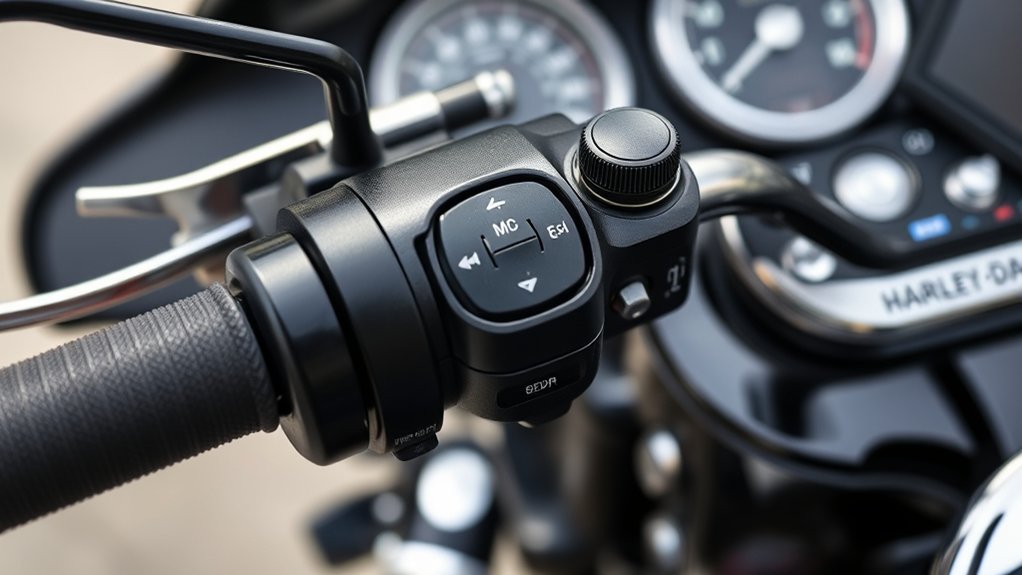
How do the RDRS traction and slip control systems keep your ride stable and secure? RDRS combines advanced traction control (C-TCS) and slip control (C-DSCS) to prevent rear-wheel slip during acceleration and deceleration.
C-TCS adjusts engine torque and offers Standard and Rain modes to optimize grip based on conditions. Meanwhile, C-DSCS reduces rear-wheel slip during braking by modulating engine torque relative to lean angle or lateral acceleration.
Both systems work seamlessly with the ABS braking system to maintain motorcycle stability without overriding your steering input.
By matching engine torque to available traction, RDRS enhances vehicle performance and rider confidence, especially on slippery or challenging roads.
Together, these controls create a safer, more stable riding experience without sacrificing your control over the bike.
How RDRS Vehicle Hold Control Helps on Hills
When you stop on a hill, RDRS Vehicle Hold Control automatically keeps the brakes engaged to prevent rollback. So, you don’t have to keep holding the brake lever to keep your bike steady.
The system only releases the brake pressure when you twist the throttle or shift gears. This way, you can feel confident riding on any incline.
Preventing Rollback On Inclines
Although starting on a hill can feel intimidating, RDRS Vehicle Hold Control (VHC) makes it easier by preventing your motorcycle from rolling backward. When you stop on inclines, VHC uses brake pressure to hold your bike steady, so you don’t have to keep the brake engaged manually. This hill start assist really boosts your motorcycle’s stability and confidence.
Here’s how it works: it activates with extra pressure on the front brake lever or rear pedal. Then, it maintains brake pressure to prevent rollback. It holds the bike until you engage the clutch or throttle.
The system automatically releases when you move forward, apply the brakes again, lower the side stand, or shift to neutral. This way, you can focus on smooth clutch and throttle control without worrying about rolling back.
RDRS’s Vehicle Hold Control is a smart, reliable way to conquer inclines safely. It’s designed to make your ride easier and more confident.
Automatic Brake Pressure Hold
Ever wondered how your motorcycle stays put on a steep hill without you holding the brake constantly? That’s where RDRS Vehicle Hold Control (VHC) shines. When you apply brake pressure at a stop, the system activates an automatic hold, maintaining that pressure to prevent rollback.
This hill start assist gives you better control and traction, especially in stop-and-go traffic or on steep slopes. VHC keeps the brakes engaged until you accelerate, pull the clutch, or shift into neutral.
If there’s no rider input for about five minutes, the system automatically releases brake pressure, indicated by a flashing light. While it’s not a parking brake replacement, this feature boosts your confidence by easing braking control during hill starts, helping you focus more on the ride than on holding the brake.
Tire Pressure Monitoring in RDRS: Keeping You Alert
Since maintaining proper tire pressure is essential for safety and performance, the Tire Pressure Monitoring System (TPMS) in RDRS keeps you informed by displaying real-time pressure readings directly on the Boom!™ Box GTS or odometer.
This tire monitoring system uses tire sensors to detect low tire pressure and instantly triggers a safety alert. That way, you can avoid dangerous situations before they happen.
With RDRS, you benefit from accurate tire pressure data shown clearly on your dashboard and early warnings to prevent tire blowouts.
It also helps improve fuel efficiency by keeping your tires inflated just right.
Plus, you get enhanced handling for safer, smoother rides. And it’s compatible with both original and accessory wheels, except in Japan.
How RDRS Impacts Aftermarket Engine Tuning
When you modify your Harley’s engine with aftermarket tuning, you need to guarantee RDRS remains fully functional to keep your ride safe and smooth. Improper calibration can disable key safety features like traction control and torque delivery management. This might lead to reduced engine performance or trigger diagnostic trouble codes.
To avoid this, rely on well-designed tunes such as Fuel Moto’s pre-configured Power Vision maps. These enhance performance without compromising RDRS functions. Disabling torque-based throttle control in your tuning can prevent RDRS from operating correctly and activate warning indicators.
Properly calibrated aftermarket engine tuning ensures RDRS continues supporting ABS, cornering enhancements, and other safety features. This helps maintain your Harley’s reliability and rider safety. Always prioritize calibration to keep your ride both powerful and secure.
Which Harley Models Come Standard or Optional With RDRS
Maintaining RDRS functionality is key to your Harley’s safety, but you might wonder which models come equipped with this technology right from the factory. For 2021 Harley-Davidson motorcycles, RDRS is either standard or optional depending on the model. This system enhances traction control, braking systems, and cornering safety.
RDRS boosts traction, braking, and cornering safety on select 2021 Harley-Davidson models, either standard or optional.
Here’s a quick look at where you’ll find RDRS on 2021 Harleys: it’s standard on LiveWire, CVO, Police motorcycles, and Trike models. It’s optional on all 2021 Touring models. You’ll also find it included as standard on Freewheeler® and Tri Glide® Ultra.
Availability depends on specific Harley-Davidson model configurations. The system is designed to boost rider confidence by improving control.
Knowing which Harley models come standard or optional with RDRS helps you make safer, informed choices. It’s good to know what you’re getting when you pick your ride.
What Riders Should Know About RDRS and Modifications
Although RDRS considerably boosts your Harley’s safety and control, modifying your bike requires careful attention to how these changes affect the system.
When you make modifications, especially to the engine or exhaust, improper engine tuning or incompatible changes can trigger system malfunctions.
RDRS relies on precise system calibration to maintain its safety features, including traction control and cornering-enhanced ABS.
Disabling torque-based throttle control or using non-RDRS tunes can impair these functions and reduce overall bike performance.
To keep your Harley-Davidson’s RDRS functioning at its best, consider specialized engine tuning solutions, like those from Fuel Moto, which support modified bikes without compromising the system.
Staying mindful of these factors ensures your bike remains safe, responsive, and reliable under all riding conditions.
Frequently asked questions
Can RDRS Be Temporarily Disabled During Specific Riding Conditions?
Yes, you can temporarily disable certain RDRS features like traction control or linked braking on some Harley models through the vehicle’s settings or infotainment menus.
However, not all features are designed for easy temporary shutdown, especially during specific riding conditions like off-road or track use.
It’s vital you check your owner’s manual or consult your dealer to understand exactly how and when to safely disable these systems without compromising safety.
That way, you’ll know what’s possible and what’s best to leave on while riding.
How Does RDRS Affect Fuel Efficiency on Harley Motorcycles?
Think of RDRS as the fuel-saving wizard in your Harley’s engine. It optimizes power delivery and controls wheel slip, so you use fuel more efficiently.
By smoothing throttle response and preventing unnecessary engine strain, it helps you get more miles per gallon.
When you properly tune RDRS, you’ll notice your bike runs cleaner and smoother. It can even push past 50 mpg on highway rides, saving you cash and reducing emissions.
Are There Any Smartphone Apps Compatible With Monitoring RDRS Data?
You won’t find any official Harley-Davidson apps that monitor RDRS data directly from your bike. While some third-party apps and Bluetooth OBD-II scanners offer limited info, they don’t provide detailed RDRS system insights.
To get complete data on traction control or cornering features, you’ll need specialized diagnostic tools or dealer software.
For most riders, relying on dealer diagnostics remains the best way to understand your RDRS performance fully.
What Maintenance Is Required to Keep RDRS Functioning Properly?
You need to regularly check tire pressure since uneven levels can mess with RDRS performance. Keep your brake components clean and in top shape because RDRS depends on precise brake operation. Make sure your sensors, like the IMU and wheel speed sensors, are inspected often for accuracy.
Update your motorcycle’s software to the latest firmware and stick to Harley’s recommended service schedule. Don’t skip authorized service centers for diagnostics and calibration checks. It’s really important to keep everything tuned up so RDRS works just right.
Does RDRS Influence Insurance Premiums for Harley Riders?
Imagine your Harley gliding smoothly through twists, with RDRS quietly adjusting your ride for safety.
Yes, RDRS can influence your insurance premiums. Because it lowers accident risk by enhancing control and stability, many insurers see it as a safety upgrade and may offer discounts.
However, this varies, so you should check with your provider.
Keeping RDRS maintained boosts its benefits and could keep your insurance costs down. It’s a smart move to stay on top of maintenance to get the most out of your system.
Final Thought
Now that you know how RDRS transforms your Harley’s braking, traction, and control, imagine the confidence it brings on every twist and hill. But there’s more beneath the surface. How will aftermarket tuning or modifications affect this sophisticated system?
Before you ride off, consider how RDRS isn’t just tech. It’s your silent partner in safety and performance. Ready to access its full potential on your next adventure?