Are Shinko Motorcycle Tires Good – The Truth
Yes—Shinko motorcycle tires are generally good if you want strong dry-road grip, quick turn-in, and a low purchase price. You’ll get solid everyday performance for commuting, cruising, and light sport riding, but wet confidence, high-speed stability, and tread life usually trail Metzeler and Bridgestone.
Rear wear can be fairly short, especially on heavier bikes or with hard throttle. If you want the full picture, the details get more specific from here.
Are Shinko Motorcycle Tires Good?
Yes—Shinko motorcycle tires are generally good if you want strong value without paying premium-brand prices.
You’ll get Shinko tires that usually cost about half as much as top-shelf alternatives, yet still deliver solid commuting and touring performance.
If you pick the SR777/777, you’ll notice tacky grip and confident cornering.
Still, don’t expect long rear mileage; 3,000–7,000 miles is typical.
Wet traction can vary, so don’t assume every batch behaves the same in rain.
Their dual-sport options handle hardpack, gravel, and light trails well, but they’re less convincing in mud, sand, or quick pavement shifts.
You also need proper mounting and correct pressure, with realistic expectations.
Some tires can show vibration or stability issues at speed, depending on the fit and setup.
Why Riders Choose Shinko Tires
Riders choose Shinko tires בעיקר for one reason: value. You usually get a price point that’s about half of what premium brands charge, so your cost per mile stays low for commuting and touring.
If you ride a 777 or 777HD, you’ll notice a tacky compound and a confident feel on clean, dry pavement. Shinko’s softer rubber can shorten rear tire life, often to 3,000–7,000 miles, though some riders report much more.
You may also accept occasional balancing quirks, mixed wet-grip feedback, and a softer sidewall. Still, the overall package makes sense.
For dual-sport use, models like the 244 Golden Boy and 216 series suit hardpack and gravel well in 70/30 or 80/20 setups.
How Shinko Tires Handle Corners
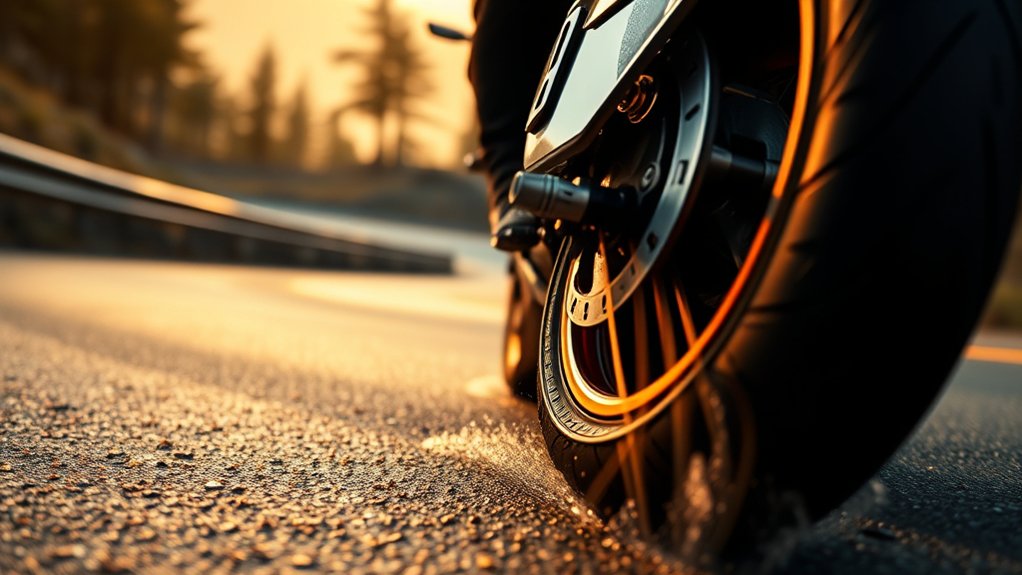
Shinko 777 and SR777 tires can feel surprisingly capable in corners. Their softer, tacky compound builds strong grip on clean asphalt, and it rewards aggressive lean angles after a short warm-up. You may notice sharper turn-in once they heat up. Still, correct mounting, balance, and pressure matter to keep the chassis settled.
| Trait | Cornering effect |
|---|---|
| Soft compound | Stronger grip |
| Warm-up | Better response |
| Proper pressure | More stability |
| Softer sidewall | Possible roll |
At about 36 psi front and 40 psi rear, the tire usually tracks more predictably at speed. The rear can wear faster, and some riders feel slight wander or roll when loading it hard. If you want confident street cornering, this tire delivers solid value, as long as you set it up right.
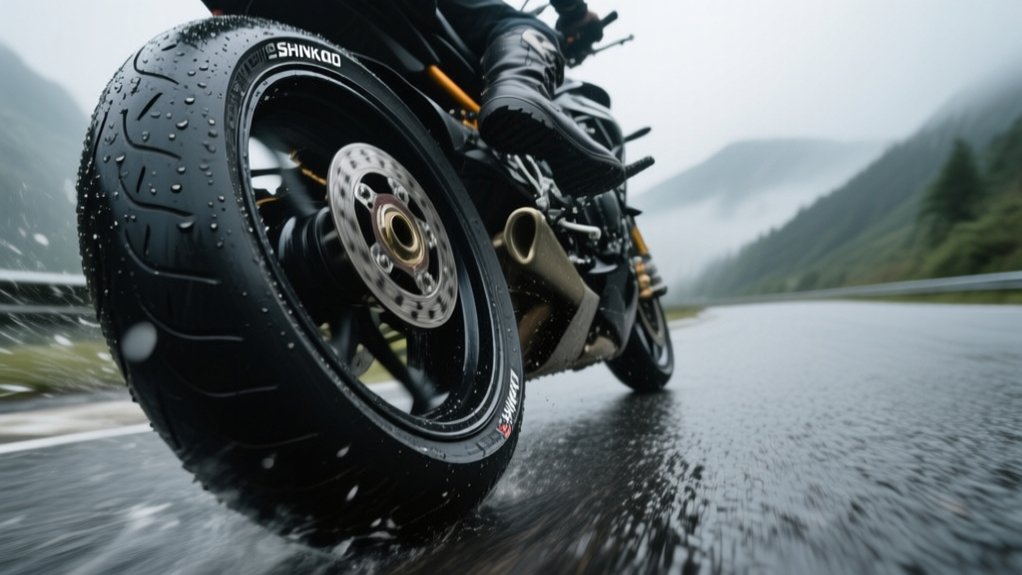
How Shinko Tires Perform in Rain?
In wet conditions, Shinko tire performance is mixed.
You shouldn’t expect the same consistency as a premium rain-focused tire.
Don’t expect premium-level consistency in the rain from a Shinko tire.
You may get solid wet traction on some models.
Especially if you ride a heavier bike that loads the tire effectively.
Other riders report the rear stepping out in rain.
Lighter machines can also feel vague during U-turns or low-speed maneuvers.
A short warm-up often helps.
The softer compound needs heat before it delivers its best grip.
You can also improve feel by running slightly lower rear pressure.
Try around 22–24 psi when unloaded, but that may trade away some stability.
Overall, treat Shinko’s rain behavior as model-dependent.
It’s acceptable for many riders, but not class-leading.
How Long Shinko Tires Really Last
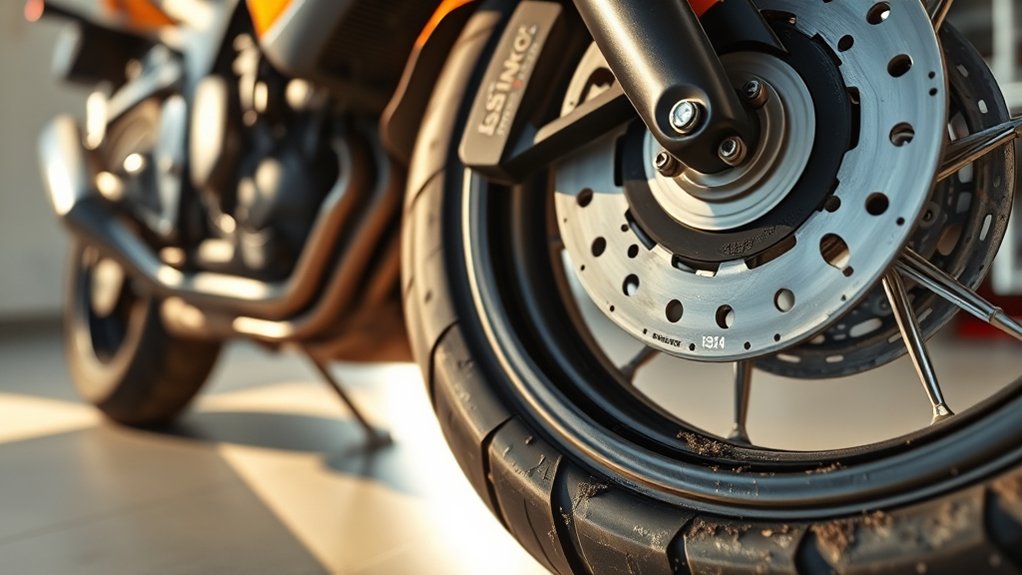
You can usually expect around 3,000 to 7,000 miles from a rear Shinko, while the front often lasts 7,000 to 10,000+ miles depending on your bike and how you ride.
Softer compounds like the SR777 tend to feel great for grip, but they’ll wear down faster than harder, more touring-focused options.
And honestly, mileage can swing a lot. Your results will depend on things like rider weight, how aggressively you use the throttle, your tire pressure, and the mix of riding you do (city stops vs. steady highway miles).
Real-World Mileage
Real-world Shinko tire mileage varies a lot. Rear tires typically land in the 3,000–7,000 mile range. Many riders see about 4,000–5,500 miles depending on the model and how hard they ride.
Your tire lifespan is usually shorter on the rear than on the front. Front Shinkos often reach 7,000–10,000+ miles.
Soft-compound models and heavier bikes can pull rear life down near 3,000 miles, and some riders report far more.
That spread doesn’t make the numbers meaningless. It shows how much Shinko mileage depends on real use. Even so, the lower purchase price keeps value strong, so you can still get solid cost-per-mile performance if you’re shopping for budget-friendly rubber.
Wear Factors
Shinko tire life depends heavily on how you ride and what you ride on. Your rear tire usually wears first, often lasting 3,000–7,000 miles. The front commonly reaches 7,000–10,000+ miles.
Soft compounds improve grip but shorten life, especially if you hammer the throttle or carry a heavy cruiser. Low pressure, poor tire maintenance, and aggressive cornering can cut rear mileage to 2,000–3,500 miles.
| Factor | Effect |
|---|---|
| Heavy load | Faster rear wear |
| Soft compound | Better grip, less mileage |
| Correct pressure | Longer service life |
If you commute smoothly, you may see 8,000–10,000+ miles. Shinko’s lower purchase price still gives solid value-per-mile when you track wear closely and replace tires on schedule.
Best Shinko Street Tire Models
For cruisers, the SR777 and SR777HD are the standout Shinko street tires. They combine a sticky compound with solid cornering grip, and on the SR777 you can get an optional reflective sidewall.
They usually won’t match premium brands for tread life. You get strong dry-road traction and acceptable wet grip, but expect a shorter lifespan than Michelins or Bridgestones.
If you want quieter highway manners and a planted feel on a budget, the SR734 fits well. Rear mileage often lands around 3,000 to 7,000 miles.
For faster street use, the 999 and similar sport-touring options improve stability. Still, you may need careful balancing to get the best results.
Best Shinko Tires for Cruisers and Customs
When you’re shopping for cruisers and customs, the SR777 and SR777HD are usually the Shinko tires riders point to first. Their tacky compound helps deliver confident cornering. It also gives a feel that’s close to premium cruiser options like the Michelin Commander II.
Shinko SR777 and SR777HD are popular cruiser picks, offering tacky grip and a feel close to Michelin Commander II.
You can expect strong dry grip and a planted profile. Pricing typically comes in around $110 per motorcycle tire. Rear tire life often lands between 3,000–7,000 miles.
Front tires usually last longer, often 7,000–10,000+ miles. Mileage will vary based on weight and throttle use. The line also offers whitewall and reflective sidewall versions.
That makes it easier to match classic styling and improve visibility. For best stability, mount them carefully and balance the wheels. Then run about 36 psi in the front and 40 psi in the rear.
Best Shinko Tires for Dual-Sport Riding
If you want a budget-friendly dual-sport tire, Shinko’s 244 Golden Boy and the 216 series are top picks for 70/30 to 80/20 on- and off-road riding. You’ll get solid grip on hardpack and gravel, plus enough tread bite for light dirt and commuting.
Choose the right tire size for your bike and load, since fit affects stability and wear. These tires aren’t ideal for deep mud, sand, or wet grass, where tread can pack up.
If you ride rocky trails hard, side knobs can shear off. Mileage varies a lot, from about 3,000 to 10,000+ miles, depending on pavement use, throttle control, and weight.
For mixed touring, they deliver strong price-per-mile value without premium wet traction or high-speed confidence.
How Shinko Compares With Metzeler and Bridgestone
Compared with Metzeler, Shinko usually costs less upfront and still gives you a solid dry-road feel. That said, you’ll typically give up some wet grip and tread life.
When you compare Shinko to Bridgestone, it can still be a smart choice if you’re focused on price-per-mile. However, you may notice less high-speed stability, softer sidewalls, and faster wear.
Shinko Vs Metzeler
Shinko sits in a different value bracket than Metzeler and Bridgestone. You’ll usually pay about half as much for a Shinko like the SR777 or 777HD. In return, you get strong initial grip and decent cornering confidence for the money.
That makes Shinko attractive if you want quick feedback and a low entry cost. Metzeler, though, gives you more consistent wet traction. It also offers firmer carcass support and better high-speed composure, so your bike feels calmer on the highway.
You’ll usually see longer tread life and more predictable wear from Metzeler as well. If you ride mostly commuting or casual touring, Shinko can make sense. If you want refinement, stability, and longevity, Metzeler is the stronger technical choice, even if it costs more upfront.
Shinko Vs Bridgestone
At the price point where Shinko usually competes, you’re getting a tire that delivers strong dry-road grip and good cornering feel for about half what Bridgestone or Metzeler typically costs. On dry pavement, Shinko’s 777 and SR777 lines feel planted, and they can rival much more expensive tires for casual sport and cruiser use.
Bridgestone still leads when you need wet-road confidence, high-speed stability, and consistent load handling. Its Battlax and touring lines use tighter tolerances, more predictable radial construction, and less wiggle under pressure.
If you ride a lighter bike, commute, or want confident cornering without paying premium money, Shinko makes sense. If you tour fast, ride heavy, or want the most stable all-weather performance, Bridgestone is the stronger technical choice.
Price Vs Performance
When you stack Shinko against Metzeler and Bridgestone, the value proposition is hard to ignore.
You’ll often pay about $100–$120 per tire instead of $180–$240, and that lower entry price brings strong initial grip and solid cornering feel for the money.
You get especially good traction from sticky compounds like the SR777.
Just know you should expect shorter tread life, often 3,000–7,000 miles depending on load, throttle, and road type.
On heavier bikes, you may notice more sidewall flex and a bit of high-speed wandering than with premium options.
Wet performance can also vary.
If you want the best grip-per-dollar for commuting or touring, Shinko makes sense.
If you prioritize longevity, stability, and consistent rain confidence, Metzeler or Bridgestone still win.
Frequently Asked Questions
Do Shinko Tires Need a Break-In Period?
Yes, you do need a break-in period.
New Shinko tires usually need about 50–200 miles to scrub off mold release and build full grip.
During the first 100–300 miles, you may notice slightly less cornering confidence.
Ride smoother and let the compound warm through a few heat cycles.
Check tire pressure, balance, and seating early, since proper setup can improve feel quickly.
It can also help eliminate vibrations.
Are Shinko Tires Noisy at Highway Speeds?
Yes, you’ll usually find Shinko tires pretty quiet at highway speeds.
For example, if you’re cruising at 75 mph on a properly balanced set with 36 psi front and 40 psi rear, you’ll likely hear only a low hum, not a howl.
You may notice vibration or shimmy on some batches, or if pressures are off.
Correct mounting and a short break-in usually reduce that quickly.
How Do Shinko Tires Handle Cold-Weather Riding?
You’ll notice Shinko tires feel firmer and need more warm-up in cold weather. Initial grip can be limited until they’re up to temperature.
If you ride gently for the first few miles, keep pressures within spec, and avoid aggressive lean angles, you’ll improve stability.
In cold rain, rear traction can break loose sooner than with premium tires. Slow down further and ride smoothly.
Proper balancing also helps reduce wandering and vague steering on chilly pavement.
Are Shinko Tires Easy to Mount at Home?
Yes, you can usually mount Shinko tires at home with standard tire irons, a rim protector, and proper lube.
You’ll find them similar to other motorcycle tires, though thicker sidewalls, like the 777 series, can fight you more.
You should also plan for extra balancing weights and use a balancer.
If you don’t have experience or tools, pay a shop to avoid wobble, bead damage, or unsafe installation.
Do Shinko Tires Work Well on Heavier Motorcycles?
Yes, you can run Shinko tires on heavier motorcycles. They can grip well, especially the 777/777HD on cruisers.
You’ll get decent cornering and wet-road confidence if you keep them balanced and aired to spec. However, expect faster rear wear and shorter life than premium tires.
You may also notice some wandering at speed. Check load and speed ratings carefully, since aggressive riding can chew through them quickly.
Conclusion
If you want solid performance without premium-brand prices, Shinko tires are a smart pick. You get dependable grip, decent wet-weather confidence, and strong value for the money.
Many riders report getting 8,000 to 12,000 miles from popular Shinko street tires. The exact mileage depends on riding style and bike setup.
They may not match Metzeler or Bridgestone at the absolute limit. But for everyday riding, Shinko usually offers more than enough tire for the price.