Do You Need A Motorcycle License For A Scooter – Fact Check
In Maryland, you don’t always need a motorcycle license for a scooter.
You do need the right credential for its class.
If the scooter fits moped rules, your valid Maryland driver’s license may be enough.
If you don’t have one, you may need a moped permit.
If it’s faster or larger and counts as a motorcycle, you’ll need a motorcycle license.
You may also need a Class M endorsement.
The details matter, and the next sections break them down.
Do You Need a Motorcycle License for a Scooter in Maryland?
In Maryland, you don’t need a separate motorcycle license to ride a scooter that qualifies as a moped or motor scooter if you already have a valid Maryland driver’s license.
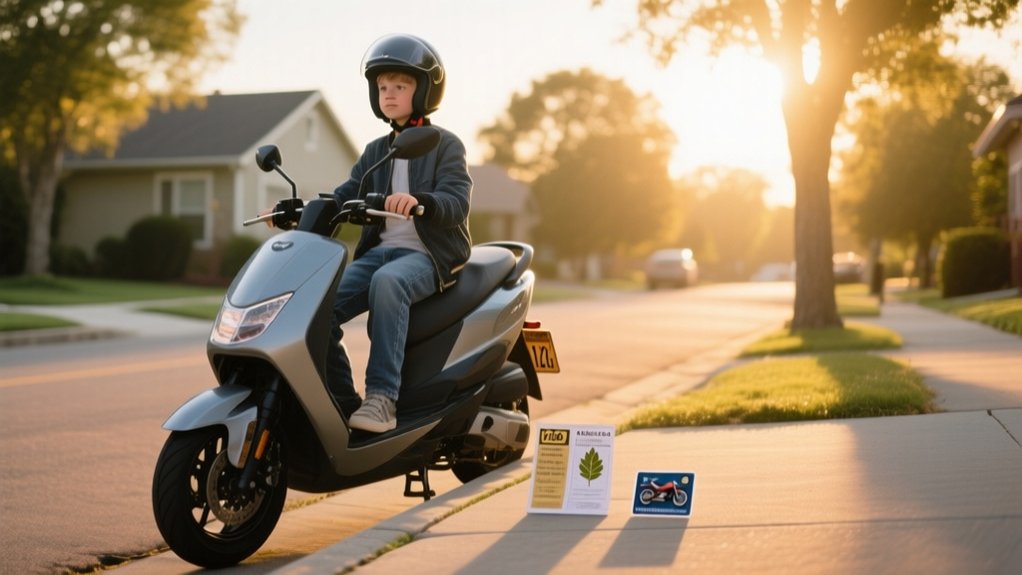
You still must meet the state’s age rule: you’re at least 16 years old to ride on public roads.
If you don’t have a valid Maryland driver’s license, you’ll need a separate moped permit to operate a qualifying scooter legally.
Make sure you title and register your moped or motor scooter in Maryland.
Also, show proof of the required minimum liability insurance at titling.
Ride only where it’s allowed.
Stay off expressways, controlled-access highways, and roads with posted speeds over 50 mph.
Safety and compliance go hand in hand.
What Counts as a Moped in Maryland?
In Maryland, your ride only counts as a moped if it has working pedals, it has two or three wheels, and its motor is limited to no more than 1.5 brake horsepower. If it’s gas-powered, the engine also has to be 50 cc or less.
Even if your scooter meets the state limits for size and speed, it’s still treated separately from a moped. That said, both mopeds and scooters must stay at or below 50 cc and 30 mph on level ground.
Before you ride, make sure you title the vehicle, carry proof of minimum liability insurance, and have the right license or permit.
Maryland Moped Definition
A moped in Maryland is a bicycle-style vehicle with working pedals.
It has two or three wheels, pedals that can actually propel it, and at least one wheel with a rim diameter over 14 inches.
If your moped’s motor stays within 1.5 brake horsepower, and a gasoline engine is 50 cc or less, it fits Maryland’s moped rules.
Don’t confuse it with a motor scooter, which Maryland treats as a separate class.
A motor scooter has a step-through frame, automatic transmission, and a seat for you.
Both moped and motor scooter use are limited to about 30 mph on level ground.
Before you ride, handle title and registration, and verify minimum liability insurance.
If you’re 16 or older, you’ll need a Maryland driver’s license, moped permit, or motorcycle license to operate it legally on public roads.
Engine Size Limits
Engine size is one of the main things that determines whether your ride counts as a moped in Maryland.
If your moped has pedals and two or three wheels, its motor must stay at 1.5 brake horsepower or less. A gas engine can’t exceed 50 cc.
A motor scooter has similar limits. It can go up to 2.7 brake horsepower, 50 cc or less if it uses internal combustion, and about 30 mph on level ground.
If your ride goes beyond those engine size or speed limits, Maryland treats it as a motorcycle.
Check the specs before you buy or ride, because classification affects safety rules and how you should use the vehicle on public roads.
Licensing And Registration
To ride a moped legally in Maryland, your vehicle must meet the state’s moped definition. It needs two or three wheels, working pedals, and a motor of no more than 1.5 brake horsepower. It also must reach 30 mph or less on level ground, or be 50 cc or less if gas-powered.
You must title and register your moped. When you title it, you’ll need proof of liability insurance, and you must keep insurance while you ride.
| Requirement | Maryland rule |
|---|---|
| Operator ID | moped permit, valid license, or motorcycle license |
| Age for permit | 16+ |
| Testing | knowledge test and vision screening |
| Insurance | minimum liability insurance required |
If your scooter is faster or more powerful than moped specs, don’t use a moped permit. You’ll need a motorcycle license instead. Always carry your documents.
When Does a Scooter Become a Motorcycle?
When a scooter crosses a state’s legal threshold, it stops being treated as a scooter or moped and becomes a motorcycle for licensing purposes.
You need to check your state’s vehicle classification rules, because engine displacement, speed capability, and power all matter.
In California, scooters over 150 cc are motorcycles.
In many states, a machine that can exceed about 25 to 35 mph on level ground also shifts into motorcycle status.
A step-through automatic scooter may stay a moped, but a straddle-seat model with manual shifting often won’t.
Electric scooters can trigger the same change if their motor output passes local watt or horsepower limits.
Always verify the exact code before you ride, because a license endorsement may be required.
Can You Ride a Scooter With a Maryland Driver’s License?
Yes, you can ride a scooter on Maryland public roads with a valid Maryland driver’s license, and you typically don’t need a separate moped permit.
You do need to be at least 16, though—and if your license is suspended, revoked, or canceled, you can’t legally operate the scooter.
Just make sure the scooter you’re riding fits Maryland’s moped rules, because the type of scooter can affect what requirements apply.
Maryland License Rules
If you already hold a valid Maryland driver’s license, you don’t need a separate moped permit to ride a qualifying scooter or moped on public roads.
Just make sure your vehicle fits Maryland’s moped limits, including engine size of ≤50 cc and a top speed of 30 mph.
You’ll also need proper registration and proof of insurance at titling. Follow these rules:
- Keep your driver’s license valid.
- Confirm the scooter meets Maryland’s moped definition.
- Complete titling, registration, and insurance requirements.
If you don’t have a valid driver’s license, you must get a Maryland moped permit at an MVA branch.
You also must be at least 16.
A permit or standard license doesn’t replace a motorcycle endorsement for faster or larger machines.
Scooter Type Matters
Whether you can ride a scooter with a Maryland driver’s license depends on how the scooter is classified.
If your scooter is a moped or motor scooter with a 50 cc engine and a top speed of 30 mph or less, you can ride it with a valid Maryland driver’s license. You won’t need a separate motorcycle license.
If your scooter exceeds 50 cc or can go faster than 30 mph, Maryland treats it as a motorcycle. In that case, you need a Class M endorsement or a motorcycle license to operate it legally.
Even with a Maryland driver’s license, you still must follow moped rules. That includes helmet and eye protection, and also titling, registration, and insurance at titling.
Always verify the scooter’s specs and MVA classification before you ride.
What Permit or Endorsement Do You Need?
What permit or endorsement you need depends on how your state classifies the scooter and how fast or powerful it is.
If it’s treated as a motorcycle by engine displacement or top speed, you’ll need a motorcycle license or endorsement.
If it’s a low-powered moped, your regular driver’s license may be enough.
You may also need a separate permit, depending on your state.
Check these points:
- Engine displacement or motor wattage
- Top speed and seat design
- State DMV classification and testing rules
Many states treat scooters, motor-driven cycles, and mopeds differently.
So don’t assume one rule fits all.
A vehicle that stays under your state’s limit may avoid M-class testing.
But a faster one usually won’t.
Always verify the exact legal category before you ride.
The right endorsement, registration, and insurance requirements can change with one specification.
Do Maryland Scooter Riders Need Helmets?
Yes—if you ride a scooter or moped on Maryland public roads, you need a DOT-compliant motorcycle helmet.
This helmet rule applies to both riders and passengers.
Also, you’re required to use approved eye protection, such as goggles, safety glasses, or a helmet visor.
If you don’t follow these scooter safety requirements, you can be cited and fined under Maryland traffic laws.
Maryland Helmet Law
In Maryland, you must wear a DOT-compliant motorcycle helmet whenever you ride a moped or motor scooter.
Your passenger must wear one too.
You also need approved eye protection, such as a windshield, goggles, safety glasses, or a helmet visor.
These Maryland rules apply whether you have a moped permit, driver’s license, or motorcycle license.
Stay compliant every ride:
- Put on a DOT-compliant helmet before starting.
- Add approved eye protection.
- Make sure your passenger is protected too.
If you skip the required helmet or eye protection, you can get cited and face penalties under Maryland traffic law.
For your safety and legal protection, never ride a moped or motor scooter without the required gear.
Age And Helmet Rules
Beyond helmet gear, Maryland also sets clear age and roadway rules for moped and motor scooter riders.
You must be at least 16 years old to operate a motor scooter or moped on public roads.
You also have to wear a DOT helmet every time you ride, and any passenger must wear one too.
Maryland requires eye protection as well, so use a windshield, goggles, safety glasses, or a helmet visor.
These rules apply only where you can legally ride.
You can’t operate a moped or motor scooter on roads with posted speed limits over 50 mph, and you can’t use expressways.
If you ride within those limits, keep your gear on, follow the age rule, and stay compliant every trip.
Scooter Safety Requirements
Maryland requires you to wear a DOT-compliant motorcycle helmet any time you ride a scooter or moped on public roads.
Your passenger must wear one too if your vehicle can legally carry a passenger.
You also need eye protection, such as a windshield, approved goggles, safety glasses, or a helmet visor.
If you’re 16 or older, you may operate legally, but you still must wear a helmet and protect your eyes.
Follow these safety rules every time you ride:
- Wear a motorcycle helmet that meets DOT standards.
- Use eye protection that covers or shields your eyes.
- Make sure any passengers are equipped and protected too.
Don’t use headsets that cover both ears.
Also avoid earplugs that block hearing.
Staying alert helps you ride safely and legally.
Do You Need to Register and Insure a Scooter?
Whether you need to register and insure a scooter depends on how your state classifies it. Many U.S. states require scooters above the motor-driven-cycle threshold—often over 50 cc to 150 cc—to be titled, registered with the DMV, and fitted with plates.
You should check your scooter’s engine displacement and see whether your state treats it as a motorcycle, moped, or motorized scooter. If it falls into the motorcycle category, you’ll usually need registration, license plates, and proof of insurance before riding.
Some states charge only a one-time or periodic fee for a moped or small scooter. A few also exempt certain micromobility devices from titling.
Even when insurance isn’t required, carrying liability coverage is still a smart move. Always verify the exact DMV rules before you ride.
What Rules Apply to 50 Cc Scooters?
A 50 cc scooter usually falls into a lighter licensing category, but the exact rules depend on your state. You may be able to ride it with a standard driver’s license, a moped permit, or another local endorsement.
Check these basics first:
Check these basics first: confirm your scooter’s classification, age requirements, and required paperwork before riding.
- Confirm whether your 50 cc scooter counts as a moped or motor-driven cycle.
- Verify age requirements, since many states set the minimum at 16.
- Complete registration, titling, and helmet steps before you ride.
Some states also require insurance or a separate permit, while others don’t. Don’t assume one state’s rule applies everywhere.
Displacement and licensing limits can change by jurisdiction, so read your DMV rules carefully.
Keep your documents with you, and wear a proper helmet every time you ride safely and legally.
What About Faster Scooters?
Once your scooter gets faster, licensing rules often change too. If your scooter’s engine displacement rises above your state’s cutoff, you may need a motorcycle license or endorsement.
Many states classify anything over 50 cc, and sometimes over 149 cc or 150 cc, as something more than a moped or scooter. Speed also matters. If the top speed exceeds about 30 to 35 mph, you may be treated as a motorcycle.
Electric scooters follow the same idea. If the motor outpaces typical moped limits or exceeds wattage thresholds, you may need registration and insurance. Don’t guess based on appearance alone. Check your DMV rules, since horsepower, speed, and displacement standards vary by state.
What Common Scooter Mistakes Lead to Tickets?
Scooter tickets often come from simple mistakes that blur the line between a moped and a motorcycle.
If your scooter’s engine displacement puts it into your state’s motorcycle category, you need the right motorcycle license. Otherwise, you risk citations.
Don’t skip these basics:
- Register and title the scooter when state law requires it.
- Wear a helmet, carry insurance proof, and meet any age requirement.
- Obey speed limits and avoid sidewalks or restricted highways.
You can also get fined for riding a model that exceeds class limits, such as 20–30 mph rules.
You can also face tickets for operating without required liability coverage.
Check your local laws before you ride.
A small oversight can lead to tickets, impoundment, or suspension.
Frequently Asked Questions
Can Passengers Ride on a Maryland Scooter?
Yes, you can carry a passenger on a Maryland scooter only if it’s built for two, with a passenger seat and footrests.
You must be at least 16, and you need a Maryland moped permit, driver’s license, or motorcycle license.
Both you and your passenger must wear DOT helmets and eye protection.
Don’t ride with a passenger on roads that ban mopeds or motor scooters.
Are Electric Scooters Treated the Same as Gas Scooters?
Not always. You’ll often find that electric scooters and gas scooters are treated differently.
Local laws usually let low-powered electric scooters ride like bicycles.
Meanwhile, gas scooters often require registration, and sometimes a motorcycle license.
The devil is in the details, so check your state and city rules before you ride. If your scooter exceeds speed or power limits, you’ll need the proper endorsement to stay legal and safe on the road.
Do Scooter Riders Need Eye Protection in Maryland?
Yes—you do need eye protection in Maryland when you ride a moped or motor scooter.
You must wear approved protection, like a windshield, goggles, safety glasses, or a helmet visor.
Your passenger must wear approved eye protection, too.
Make sure your gear meets state safety rules and fits with the required helmet.
If you ride without proper eye protection, you could be cited under Maryland law.
Double-check your setup before you go.
Can I Ride a Scooter at Night in Maryland?
Yes, you can ride a scooter at night in Maryland.
But the road gets dark, so you’ll want to prepare.
Make sure your scooter has proper registration and title.
Also use working headlights, taillights, and reflectors.
Wear a DOT-compliant helmet and approved eye protection.
Carry proof of registration and liability insurance, too.
Avoid expressways and roads over 50 mph.
Your scooter’s top speed can’t exceed 30 mph.
Where Can I Legally Park a Scooter in Maryland?
You can legally park your scooter on public streets and in on-street parking spaces where parking is allowed, as long as you follow local meter, permit, and time-limit rules.
You shouldn’t park on sidewalks unless a local ordinance permits it.
Avoid bike lanes, crosswalks, bus stops, fire hydrants, driveways, and curb cuts.
On private property, follow posted signs and use designated scooter spots when available.
Conclusion
Before you twist the throttle, make sure you know where your scooter fits under Maryland law. A small slip in classification can turn a simple ride into a costly ticket, or worse.
Check the engine size, licensing, registration, and insurance rules before you hit the road. When you ride with the right credentials, you keep your journey smooth and your focus on the open road, not the flashing lights in your mirror.