How Fast Does A 400cc Motorcycle Go – Here’s the Answer
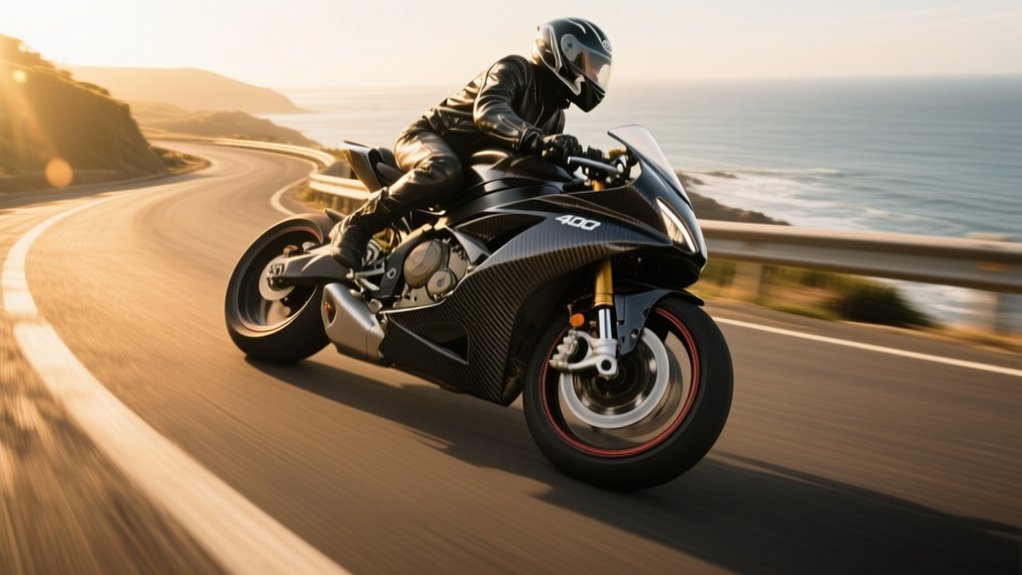
A 400cc motorcycle usually tops out around 135–170 km/h, or about 84–105 mph. The exact number depends on the bike’s power, gearing, and aerodynamics.
If you ride a faired sportbike, you’ll usually see a higher top speed than on an upright naked model. Wind, rider tuck, and engine tune can shift the result too.
Most 400cc bikes can cruise highways comfortably at 100–120 km/h. And the details behind that range get even more interesting.
How Fast Does a 400cc Motorcycle Go?
A typical 400cc motorcycle will usually top out between about 135 and 170 km/h (84 to 105 mph). The exact figure depends on the model and riding conditions.
A typical 400cc motorcycle usually tops out between about 135 and 170 km/h, depending on the model and conditions.
You’ll usually see a 400cc top speed in that range because most bikes in this class make roughly 40 to 50 hp. That power is enough for brisk highway use and strong acceleration, but it doesn’t always translate the same way on every machine.
Some higher-performance models, like the ZX-4RR, can go much faster. In practice, your real-world result can shift with wind drag, rider position, and gearing.
For example, a Bajaj Dominar 400 can reach about 170 km/h. A CFMoto 400NK is rated near 155 km/h.
What Limits a 400cc Bike’s Top Speed?
Your 400cc bike’s top speed mostly starts with engine power and how it’s tuned. Most models make around 40–50 hp, and that roughly sets the ceiling.
From there, things like aerodynamics, your riding position, and the bike’s weight determine how efficiently that power actually gets to the road. That’s why tucked sport bikes usually hit higher speeds than upright naked bikes.
Also, don’t forget the “mechanical” side of things—wind and air density matter, but so do gearing and the transmission ratios. Even small changes there can shift the final top-speed number by a noticeable amount.
Engine Power And Tuning
What limits a 400cc bike’s top speed is usually horsepower, not engine size alone. Most 400cc machines make roughly 40–50 hp, and that power output sets the ceiling for how fast they can overcome drag and keep accelerating.
You’ll also notice engine power delivery matters. A torque-biased single or twin gives punchier low- and midrange response. But it usually runs out of breath sooner than a high-revving inline-four.
That’s why bikes like the ZX-4RR can reach a higher top speed than a 400cc commuter. Final drive gearing matters too. Taller gearing can raise theoretical maximum speed, while shorter gearing gets you to redline sooner and caps top-end velocity.
In practice, tuning decides whether your bike feels stronger off the line or faster at the top end. Often, it can do both.
Aerodynamics, Weight, And Wind
Even when a 400cc engine has enough power on paper, aerodynamics usually decide its real top speed.
On a faired sportbike, you can cut wind drag enough to see 155–170 km/h, while an upright naked bike often stalls around 135–150 km/h.
Your body position matters too.
Tucking in lowers frontal area and can add several km/h, but sitting upright increases drag fast.
Weight matters less for peak speed.
Yet a heavier bike can take longer to reach its aero-limited top end.
- Sleek fairing = less wind drag
- Tuck in for lower frontal area
- Heavier bikes accelerate slower
- Headwinds and altitude can cut speed 10–20%
How Fast Are Popular 400cc Motorcycles?
Most popular 400cc motorcycles usually top out around 135–170 km/h (84–105 mph).
That said, your real-world speed can vary a lot depending on power output, gearing, aerodynamics, rider position, and even road and weather conditions.
You’ll often notice a gap between models. For example, the Kawasaki Ninja 400 can run into the high 100s km/h, and in ideal test conditions it sometimes goes even higher.
On the other hand, the ZX-4RR tends to feel stronger at the top end, because its 399cc inline-four gives it more pull for higher speeds.
Other popular options usually land somewhere in the middle. The Bajaj Dominar 400 often reaches close to 170 km/h, while the CFMoto 400NK is more commonly closer to 155 km/h.
Typical Top Speed Range
When you look at popular 400cc motorcycles in real-world conditions, you’ll usually see top speeds in the 135–170 km/h range (84–105 mph). The exact figure depends heavily on gearing, aerodynamics, rider position, weight, and weather.
That top speed isn’t fixed by displacement alone. Engine power and wind drag matter a lot.
A Ninja 400 often sits near the upper end. A Dominar 400 can reach about 170 km/h.
A CFMoto 400NK is rated around 155 km/h. Some 398–400cc bikes claim 145–170 km/h.
If you tuck in, you can gain a little more speed. Tall gearing or poor aerodynamics can shave several km/h off the run.
In practice, two similar 400s may feel very different.
Ninja 400 Vs ZX-4RR
Two of the most talked-about 400cc sportbikes, the Kawasaki Ninja 400 and ZX-4RR, show how much speed can vary within the same displacement class.
If you ride the Kawasaki Ninja 400, you’ll get about 47 hp from its 399 cc parallel twin. Real-world top speed usually lands around 140–160 km/h.
That makes it quick in the midrange and easy to use on the street.
The ZX-4RR, by contrast, uses a 399 cc inline-four and about 75 hp. You’ll feel stronger high-rpm pull and a much higher top speed potential.
Gearing, aerodynamics, rider weight, and road length still matter. If you want maximum top-end performance, the ZX-4RR has the clear advantage.
Other 400cc Models
Looking beyond the Ninja 400 and ZX-4RR, popular 400cc motorcycles show a wide spread in real-world speed.
Different bikes trade power, gearing, and drag for different top speed results.
- Bajaj Dominar 400: dyno-tested around 170 km/h and often settles there after brief 172 km/h spikes.
- CFMoto 400NK: about 155 km/h in real-world riding, with roughly 41 hp and ABS.
- Triumph Speed 400 and Scrambler 400X: claimed top speed is about 145 km/h from their 398 cc, 40 PS setup.
- Kawasaki Ninja 400: typically lands in the 135–170 km/h range, with rider-reported highs higher in ideal conditions.
If you want the quickest of these bikes, the ZX-4RR stands apart.
Most 400cc models, however, prioritize usable performance over absolute speed.
Ninja 400 Vs ZX-4RR Top Speed
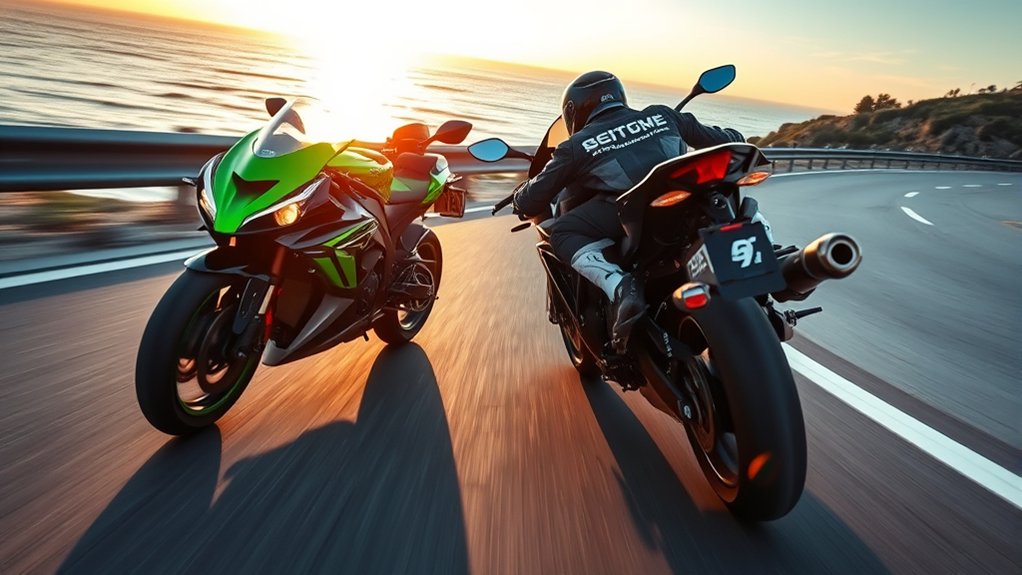
On the top-speed front, the Kawasaki Ninja 400 and ZX-4RR are in different classes even though they share the same 399cc displacement.
Despite sharing 399cc, the Ninja 400 and ZX-4RR live in very different top-speed classes.
The Kawasaki Ninja 400 has a 399cc parallel twin and about 47 hp. In real-world tests, it typically reaches around 135–170 km/h and is often comfortable for highway cruising.
The ZX-4RR uses a 399cc inline-four and roughly 75 hp. It pulls much harder at high rpm, with a clearly higher top speed.
Rider reports and videos often show 140+ mph claims for the ZX-4RR under ideal conditions. If you want approachable performance, the Ninja 400 works well. If you want a sharper top speed, the ZX-4RR has the advantage.
How Weight and Aerodynamics Affect Speed
When you compare 400cc bikes, a lighter machine usually accelerates harder and can reach a higher top speed. That’s mainly because it has a better power-to-weight ratio.
You’ll also hit aerodynamic drag as speed climbs. So, a streamlined fairing helps a bike send more of its horsepower into forward motion instead of fighting the air like an upright naked setup.
And if you tuck in behind the screen, you reduce your frontal area and drag even further—so on the same bike, you can often pick up a few km/h.
Lightweight Speed Advantage
A lighter 400cc motorcycle usually accelerates harder and can edge out a slightly higher top speed. Less mass means less inertia to overcome, plus lower rolling resistance. When you drop 20 kg, the power-to-weight ratio improves, so the same 40–47 hp feels stronger in real use.
You’ll feel it in launches and midrange pull. Better aerodynamic design can also add a few km/h. Your rider position matters too, since it changes frontal area and efficiency. At highway speed, drag tends to limit top-end more than weight does.
If you ride upright, you give up some speed. If you tuck in, you can gain a few km/h. Even then, a light bike’s advantage stays clear because it wastes less energy moving itself, so more of your engine’s output reaches the road.
Aerodynamic Drag Reduction
Once weight stops making a big difference at cruising speed, aerodynamics takes over as the main limit on 400cc top speed.
At high speed, aerodynamic drag rises fast, and wind drag demands most of your engine’s output.
If you ride a full-fairing sportbike, you can cut the drag coefficient enough to see 10–20% more top speed than on a naked machine with the same power.
Your rider position also matters.
Tucking in behind the screen trims frontal area and can add 5–15 km/h.
Even small changes, like streamlined mirrors or a cleaner tail, can yield 2–5% gains.
Since drag power climbs roughly with the cube of speed, a 40–50 hp 400cc bike usually tops out around 135–170 km/h.
Riding Position Effects
Your riding position can change a 400cc bike’s top speed more than rider weight alone. At expressway speeds, aerodynamic drag quickly becomes the dominant limit.
On a tucked sportbike, you cut frontal area and lower the drag coefficient. So you can often pick up 5–15 km/h versus sitting upright.
A naked posture increases wind resistance. On similar-power 400cc machines, you’ll usually lose 10–20% of top speed.
Lean forward reduces exposed chest area. Sitting straight raises drag fast.
Extra rider weight can trim several km/h. At 100–140 km/h, tuck matters most.
Small shifts in body position can move the point where drag takes over. That changes your effective top speed more than rider weight does.
How Gearing Changes Top Speed
Gearing changes top speed by changing how engine RPM maps to road speed. With a taller setup, the bike can go faster at the same RPM.
Your final drive gearing, like sprocket sizes, plays a big role too. Fewer rear teeth or more front teeth increases road speed for each RPM.
Transmission gear ratios matter as well. Taller top gears help you reach a higher top speed, but you’ll feel less punch in lower gears.
Bike makers usually aim for a compromise. Many 400cc bikes prioritize a usable midrange over absolute top speed.
A high-revving engine can benefit more from taller gearing if it can reach peak power RPM. But if you hit the limiter or run out of power, gearing alone won’t add much more.
How Rider Position and Conditions Matter
Rider posture can change a 400cc bike’s top speed more than many people expect. On a sportier faired model like a Ninja 400, tucking behind the fairing reduces drag and can add about 5–15 km/h compared with an upright position.
Your rider position matters because wind drag rises fast as speed climbs. A lower profile helps the engine reach a higher top speed.
Faired bikes usually beat naked bikes.
Cold, dense air can slightly help performance.
High altitude cuts power and speed.
Extra weight, headwinds, and poor airflow all reduce top speed.
If you carry a passenger or luggage, expect a few km/h loss. A strong headwind can hurt much more, while a tailwind or slipstream can briefly boost speed.
Can a 400cc Motorcycle Handle Expressways?
Yes—many 400cc motorcycles can handle expressways, especially if they’re in good mechanical condition and have the right rider setup.
You can usually cruise at 100–120 km/h on bikes like the Ninja 400, and some 400cc sport models will hold higher expressway speeds.
Your results depend on gearing, aerodynamics, and weight.
Full-fairing bikes cut wind drag better, while naked models feel more exposed and may work harder at sustained speed.
What matters most is stability, braking power, tires, and your protective gear.
If your bike’s serviced and your posture stays controlled, a 400cc can manage highway traffic well.
Still, check local rules first.
Don’t push beyond safe speed for traffic, weather, or road surface conditions.
Is a 400cc Bike Fast Enough for You?
A 400cc bike is fast enough for most riders if your goal is commuting, highway cruising, and occasional overtakes rather than outright speed. Most modern 400s make about 40–50 hp, so you’ll see a 400cc top speed around 135–170 km/h, which gives you enough margin for expressway use and passing.
Your experience depends on power-to-weight, aerodynamics, and rider position. Faired sport models often feel stronger at speed than upright nakeds.
- Commute-focused riding: yes
- Stable 60–80 km/h travel: yes
- Fast enough for overtakes: usually
- Best for sustained touring: compare weight and stability
Which 400cc Motorcycle Fits Your Riding Style?
Which 400cc motorcycle fits your riding style depends on how you ride most often.
If you want top-end speed and hard acceleration, sport models like the Kawasaki Ninja 400 or ZX-4RR are the better match.
If you mostly commute or tour, you’ll usually prefer torquey singles like the Bajaj Dominar 400.
They offer stronger low-end pull and relaxed highway cruising.
| Style | Best pick | Why |
|---|---|---|
| Sport | Ninja 400 / ZX-4RR | Higher top speed, sharper engine power |
| Commute | Dominar 400 | Strong low-end torque, steady cruising |
| Versatile | 400NK / Speed 400 | Better handling, comfort, ABS |
If you ride in traffic, choose a lightweight twin for quick handling and easy lane changes.
For better confidence at speed, pick a bike with strong aerodynamics and ABS.
Adventure-style 400s are great for mixed roads and light off-road use.
They balance comfort with the ability to handle rougher surfaces.
Frequently Asked Questions
Does a 400CC Motorcycle Need Premium Fuel?
Usually, you don’t need premium fuel in a 400cc motorcycle.
Most run fine on regular unleaded if that’s what your manual specifies.
Use higher octane only if your bike has a high-compression or performance-tuned engine.
Or if it knocks under load, you should consider premium.
Check the owner’s manual, since ethanol limits and fuel requirements vary.
Premium won’t add power in a bike designed for regular.
How Often Should a 400CC Bike Be Serviced?
You should service your 400cc bike every 6,000–8,000 km or 6–12 months, whichever comes first. That matches most riders’ oil and filter changes, which usually happen every 3,000–6,000 km.
At every service, inspect the chain, brakes, and tyres. Around 12,000–24,000 km, check the valve clearances as well.
Always follow your owner’s manual. Intervals can vary by model, engine design, and riding conditions.
Are 400CC Motorcycles Good for Beginners?
Yes, 400cc motorcycles can be great for beginners if you choose the right one. You’ll typically get around 40–50 hp, manageable weight, and enough torque for commuting without overwhelming speed.
You can learn clutch control, braking, and cornering more easily than on a larger bike. They’re still quick enough for highway use, so you won’t outgrow one too fast.
Pick a beginner-friendly model and ride conservatively.
What Insurance Costs Should I Expect for a 400CC Bike?
You should expect annual full-coverage insurance for a 400cc bike to run about $200–$1,200 USD. The exact cost depends on where you live and your profile.
In most cases, you’ll pay 20–50% more than for a 250cc. Insurers often price in higher theft and damage risk.
Your age, riding history, horsepower, and bike value matter most. Adding alarms, garage storage, and training discounts can lower costs.
Track use or tuning can raise premiums.
Can a 400CC Motorcycle Carry a Passenger Comfortably?
Yes, you can carry a passenger comfortably on many 400cc bikes, but it depends on the model and setup.
You’ll usually cruise fine at 60–100 km/h.
Acceleration and hill-climbing will drop about 10–25%.
Check seat space, suspension preload, and tire load ratings.
Sportbikes often feel tighter, while standards and cruisers usually offer more room and better long-ride comfort.
Conclusion
So, how fast does a 400cc motorcycle go? Fast enough to make your pulse spike and your speedometer feel like it’s trying to escape. Most 400cc bikes can hit around 110 to 130 mph, depending on tuning, weight, and aerodynamics.
You’ve got enough power for highways, overtakes, and spirited riding without stepping into insane territory. If you want a bike that’s quick, practical, and thrilling, a 400cc machine delivers serious performance.