Can You Buy A Motorcycle With A Credit Card – Find Out
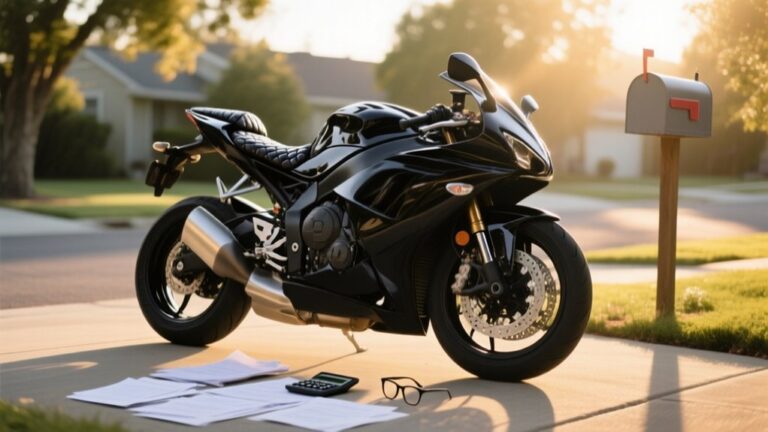
Yes, you can buy a motorcycle with a credit card if the dealer or private seller accepts it. Just keep in mind that fees, limits, and interest can make the purchase much more expensive.
You might benefit from rewards and card protections. However, merchant surcharges, cash-advance charges, and high APRs can quickly raise the total cost.
A 0% intro offer can help if you can pay off the balance before the promo ends. The details below will show you the safest and lowest-cost way to do it.
Can You Buy a Motorcycle With a Credit Card?
Yes, you can buy a motorcycle with a credit card, but it’s not always the most practical or affordable option.
Some dealers accept credit cards, while many private sellers don’t, or they restrict card use altogether.
Even if a seller agrees, they may add merchant fees.
And if the purchase is treated like a cash advance, your costs can rise right away.
Compare financing options carefully.
Credit card interest rates are usually far higher than motorcycle loan rates.
If you can pay the balance in full quickly, a credit card may offer rewards, purchase protection, and dispute rights.
A 0% promotional card can help, but only if you repay before the intro period ends.
How Buying a Motorcycle With a Credit Card Works
If you decide to put a motorcycle on a credit card, the process starts with whether the dealer or private seller accepts card payments. It also depends on any limits they impose.
Whether a dealer or private seller accepts card payments—and any limits they set—determines your options.
You may find a dealer willing to process the purchase, but they might cap the amount or add a merchant fee. That can increase your total cost.
If you buy a used bike, confirm the seller’s rules before you commit. This helps you avoid surprises later.
A credit card can simplify payment and give you chargeback rights if the vehicle isn’t delivered or is misrepresented. However, purchase rates often exceed motorcycle loan rates.
When a 0% Credit Card Transfer Helps
A 0% balance transfer can make sense when you can move the motorcycle charge onto a new card with a promotional rate and pay it off before that period ends.
If you have enough credit limit and a firm repayment plan, this option can work as short-term, interest-free financing.
Make sure the monthly payment fits your budget and that you know the payoff month before the promo expires.
A 0% balance transfer helps most when the transfer fee is low enough that it doesn’t erase your savings.
Compare the total cost with a personal loan or dealer financing before you proceed.
If you can’t clear the balance in time, the remaining debt can jump to a much higher APR, so discipline matters.
What Fees and Charges Should You Watch For?
Before you swipe your card, you need to understand the fees that can turn a motorcycle purchase into an expensive form of debt.
If you’re buying a new bike, compare all charges first, since hidden costs can erase any convenience.
Watch for:
- Cash advance fees of 3%–5%
- Immediate interest on private-sale transactions
- Purchase APRs far above motorcycle loan rates
- Merchant surcharges of 1%–3%
- Balance transfer fees that reduce 0% savings
A $10,000 balance at 20% APR can add over $2,000 in first-year interest if you don’t pay it down.
Also, a high balance can raise utilization and hurt your credit score. Confirm acceptance, total costs, and repayment terms before you commit.
Why Credit Card Cash Advances Are a Bad Idea
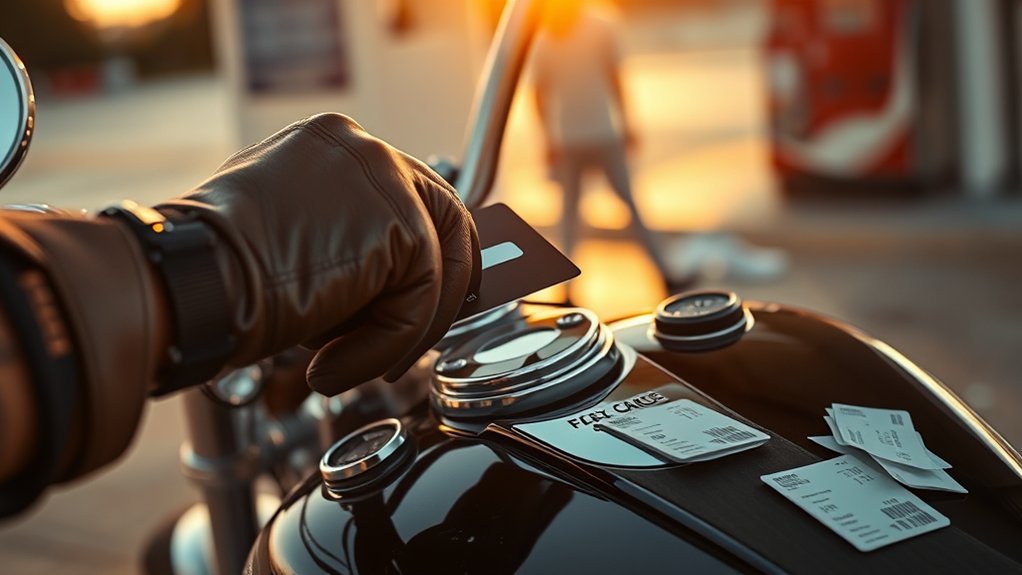
If you use a credit card cash advance to buy a motorcycle, you’ll usually run into immediate fees and high interest right away.
And because interest typically starts accruing from day one, that “quick cash” option can end up costing way more than it looks—especially if you can’t pay it off quickly.
In most cases, you’ll be better off with financing options that have clearer terms and lower overall costs.
That way, you can avoid the extra charges that come with cash advances and make the purchase more manageable.
Cash Advance Costs
Cash advances can make a motorcycle purchase far more expensive than they first appear. You’ll usually pay an upfront fee of 3%–5%, so a $5,000 withdrawal can add $150–$250 immediately.
Fees reduce your buying power fast. Interest starts right away. Rates often run 20%–30% APR.
No rewards or points apply. Separate balances can slow repayment.
If you don’t pay the balance quickly, costs climb further. Issuers often track cash advances separately and may set different minimum payments.
That structure can keep the debt hanging longer than expected. You should also consider that a larger balance can affect your credit profile and future borrowing terms.
For a motorcycle, a normal purchase method usually offers clearer pricing and better value than turning to a cash advance.
High Interest Risks
The cost of a motorcycle cash advance goes beyond the upfront fee. Interest typically starts the moment the transaction posts and often runs 5 to 10 percentage points above your card’s purchase rate.
You can see APRs above 25%, which makes the balance expensive fast. Unlike ordinary purchases, you usually won’t get a grace period, so interest compounds daily until you pay it off.
If your card issuer treats the transaction as cash-equivalent, the terms may be stricter and the charges steeper. On a $10,000 purchase, a 3% to 5% fee can add $300 to $500 immediately.
Also, using a large share of your credit can raise utilization sharply and hurt your score.
Better Financing Options
Instead of relying on a credit card cash advance, you’ll usually save money with a lower-cost financing option and more predictable terms. Consider these alternatives before you buy:
- Secured personal loans often offer lower APRs.
- Credit-union loans can beat card rates.
- Dealer or manufacturer finance deals may include promotions.
- Fixed monthly payments make budgeting easier.
- Lower balances can help protect your credit score.
Cash advances typically add 3%–5% fees and start interest immediately. They also lack a grace period.
Even 0% card offers can expire in 6–21 months and include transfer fees. Safer financing can reduce your total cost and limit credit utilization.
Compare rates, fees, and repayment terms before you commit. Then choose the option that keeps your purchase affordable.
How Credit Limits, APR, and Payments Add Up
You’ll want to double-check that your credit limit is high enough to cover the motorcycle’s full price, because a lot of cards just won’t.
And then you should compare the card’s APR with the monthly payment you can realistically afford—especially since carrying a bigger balance can push the total cost way past what you expected.
If you can’t pay it off quickly, or if you aren’t careful with any short-term promotional rate, the financing charges can add up fast.
Credit Limit Impact
Calculating the true cost of charging a motorcycle to a credit card starts with your available limit.
Many bikes run from about $5,000 to $20,000 and may exceed a single card’s purchase ceiling.
If your limit falls short, you’ll need multiple cards, issuer approval, or another payment method.
- Check your single-purchase cap before you shop.
- Verify whether the dealer accepts cards.
- Ask about any merchant surcharge.
- Estimate how much credit you’ll use.
- Protect your score by avoiding extreme utilization.
Using most of your limit can reduce future borrowing power.
It may also affect your credit profile.
Confirm the dealer’s policy first, then decide whether the convenience is worth the cost.
APR And Repayments
Even when your card limit covers the motorcycle’s price, the APR and repayment terms can make the purchase far more expensive than it looks on the sticker.
Most purchase APRs sit between 15% and 30%. So a £10,000 bike at 20% APR can add thousands in interest if you repay slowly.
If you make only the minimum payment, usually 1% to 3% of the balance, you’ll stretch the debt for years and pay much more overall.
A 0% offer can help, but you must clear the balance before the promo ends. Otherwise you’ll move to the standard APR and may face transfer fees.
Large charges also raise utilization, which can hurt your credit score. It can also limit your future borrowing options.
Compare Motorcycle Loans, PCP, HP, and Dealer Finance
When you compare motorcycle loans, PCP, HP, and dealer finance, the cheapest option depends on how much you can put down, how long you want to pay, and when you want full ownership.
Personal loans usually offer fixed rates, fixed terms, and immediate ownership, with unsecured borrowing often ranging from £1,000 to £30,000.
Personal loans usually offer fixed rates, fixed terms, and immediate ownership.
PCP can lower your monthly payment.
HP spreads the cost and then transfers ownership after the final instalment.
Dealer finance may make buying easier, but rates can be higher.
PCP and HP often require around a 10% deposit.
Check the APR, any balloon payment, mileage limits, and early repayment fees.
If your credit profile is strong, compare the total cost over the full term, not just the monthly figure, before you choose.
How to Choose the Safest Payment Method
If you’re weighing motorcycle loans, PCP, HP, or dealer finance, the next step is choosing the payment method that protects you best, not just the one with the lowest headline rate.
A credit card can help with rewards and chargeback protection.
But it’s usually the riskiest option because APRs often run 15% to 25% or more.
If you use one, choose a high-limit card with a 0% purchase or balance-transfer offer.
Then clear the balance before the promo ends to avoid steep interest and transfer fees.
Keep your utilization low, because a large balance can hurt your credit score.
For private sales, skip cash advances.
Use a bank loan or a dealer card payment instead.
Compare total interest, fees, and reward value before you decide.
Frequently Asked Questions
Can You Use a Credit Card Deposit for a Motorcycle?
Yes, you can use a credit card deposit for a motorcycle if the dealer allows it.
You may run into a cap on the deposit amount, and some dealers charge a processing fee.
Ask how they’ll code the charge. If it’s treated like a cash advance, you could face extra fees and higher interest.
Using a card can help protect you and support cash flow.
Just pay the balance quickly to avoid costly interest.
Do Motorcycle Dealers Charge Extra for Credit Card Payments?
Yes, you’ll often pay extra when you use a credit card at a motorcycle dealer.
Dealers commonly add a surcharge of about 1.5% to 3% to offset processing fees.
Sometimes, they charge a flat fee on larger transactions.
You should also check local laws, since some states limit or ban surcharges.
Ask whether they’ll waive the fee if you finance through them.
You can also ask if they waive it once you hit a certain payment threshold.
Can You Earn Rewards Buying a Motorcycle With a Card?
Yes, you can earn rewards when you buy a motorcycle with a card. Those points or cash back can add up quickly.
Before you swipe, check your card’s earnings rate, any welcome bonus, and protection benefits. Also, remember that carrying a balance means interest could wipe out your gains.
Finally, review any dealer fees or balance-transfer costs. If they’re high, they may outweigh the rewards, so calculate the total value first.
How Does a Credit Card Affect Motorcycle Insurance Costs?
A credit card usually doesn’t change your motorcycle insurance cost directly. Insurers price your policy based on your age, riding experience, bike value, engine size, and security.
However, if the purchase suggests a pricier bike, you’ll likely pay more for full coverage. Large balances or poor credit can also hurt quotes where insurers check credit data.
You should also confirm ownership details. Finance terms can affect what cover options are available.
Can You Dispute a Motorcycle Purchase Made by Card?
Yes, you can dispute a motorcycle purchase made by card, and you should act fast.
You’ll need evidence like your receipt, contract, messages, photos, and any police report.
If the bike was fraudulent, undelivered, or not as described, you can file a chargeback with your issuer.
Deadlines usually run 60–120 days.
You’ll often have stronger odds against a dealer than a private seller, so document everything carefully.
Conclusion
So, can you buy a motorcycle with a credit card? Yes—but the real question is whether you should. Once you weigh the fees, interest, credit limits, and hidden risks, the answer may shift fast.
A 0% transfer or dealer deal might look tempting. But one wrong move can cost more than the bike itself.
Before you decide, compare every option carefully. Because the cheapest choice today could become the most expensive tomorrow.