How Fast Does A 600cc Motorcycle Go – Overview
A 600cc sportbike usually tops out around 140 to 165 mph in ideal conditions. The fastest inline-four models can reach the upper end when you’re tucked in hard.
Your top speed depends mostly on aerodynamics, gearing, and engine pull near redline, not just displacement. An upright posture, wind, and street conditions can cut speed noticeably.
On a closed course, you’ll see the bike’s true potential. Here’s what really sets the ceiling.
Fastest 600cc Motorcycles Ranked

When you rank the fastest 600cc motorcycles, the top production sportbikes usually land between about 140 mph and 165 mph. The quickest inline-four machines from the R6, ZX-6R, and GSX-R600 families often show up near the top when you tuck in hard.
You’ll typically see the highest top speed numbers on bikes that combine strong gearing, low drag, and a tight riding position. A taller final drive, cleaner fairing, or ram air can help one bike reach several mph more than another.
Weight, tire choice, and your body position still matter, so horsepower alone doesn’t decide the order. The fastest 600s usually post their numbers on closed courses or controlled test runs, not public roads, where conditions vary and legality matters.
Typical 600cc Top Speeds
Typical 600cc sportbikes usually top out between about 140 mph and 165 mph in stock form on flat pavement with a tucked rider.
Typical 600cc sportbikes usually top out around 140–165 mph in stock form with a tucked rider.
If you ride a high-revving inline-four making 110–130+ hp, you’ll usually see the higher end of that range.
Milder or detuned models tend to sit closer to 140 mph.
Your bike top speed can also drop sharply on dirt-focused 600s and dual-sports, which often peak around 90–115 mph.
That’s usually due to gearing, tires, and drag.
Rider tuck, fairing shape, and stock sprocket ratios can shift results by several mph.
Treat published figures as approximate maximums, not guarantees.
Wind, slope, tire choice, and rider mass all affect what you’ll actually measure on the road.
What Limits 600cc Top Speed?
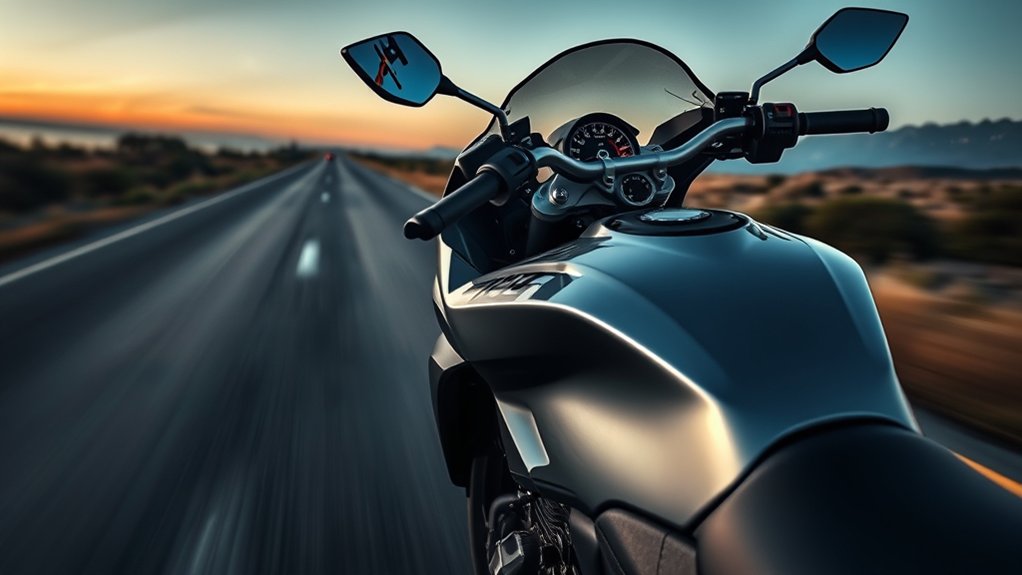
Your 600cc bike’s top speed is usually limited first by aerodynamic drag. As you go faster, drag rises quickly, and it becomes the main thing slowing you down once you’re past highway speeds.
After that, powerband and gearing really decide how high you can go. In practice, your engine has to keep pulling near redline in top gear to reach that theoretical maximum, and if it can’t, your top speed will stall out.
And don’t forget your riding position and body mass. A tucked, aerodynamic posture can cut drag and add a few mph, while extra resistance—from an upright position or extra load—can bring your top speed down.
Aerodynamics and Drag
Above roughly 80–100 mph, a 600cc bike’s top speed is limited more by aerodynamic drag than by engine output. Drag rises with the square of speed, and the power needed to overcome it rises with the cube.
Wind resistance becomes the dominant load, so your body position matters a lot. Tuck in, keep your elbows in, and use a full fairing to cut Cd and frontal area. That can add 5–10+ mph in real use.
Riding upright, adding luggage, or losing a windshield can sharply increase drag and reduce top speed. Ram-air and smooth bodywork can help a little by improving intake pressure, but the effect is modest.
Lower rolling resistance and less brake or accessory drag also help preserve speed.
Powerband and Gearing
Once aerodynamic drag starts dominating a 600cc bike’s top-end pull, the next limit is how well the engine’s powerband and gearing line up with road speed.
Your 600’s peak horsepower usually arrives around 11,000–15,000 rpm. So the gearbox and final drive must let the engine reach that range at maximum velocity.
Taller gearing, like a smaller rear sprocket or a larger front sprocket, raises theoretical top speed at redline. But it dulls acceleration and throttle response.
Shorter gearing does the opposite. It helps acceleration, but it can bring redline too soon.
Tire circumference and wheel size also change speed per rpm. Closely spaced ratios help you stay in the narrow powerband.
If top gear is too short, you’ll hit redline before peak power fully carries speed.
Rider Position and Weight
Even with the engine and gearing sorted, your body position can make or break a 600cc bike’s top speed. At high velocity, aerodynamic drag dominates.
Your riding position changes frontal area, and a tight tuck can lift top speed by 5–15% versus riding upright. That difference comes mostly from reduced drag.
| Factor | Effect |
|---|---|
| Tuck | Lower drag |
| Upright | Higher drag |
| Rider weight | Slower acceleration |
| Heavy gear | More drag |
A 10–15% heavier rider often needs more distance to reach terminal speed. Extra mass can also trim the peak slightly.
At speed, drag rises quickly, so a relaxed street posture can cost dozens of mph. Helmet shape, jacket flap, and suspension sag matter too.
On a 600cc bike, small aerodynamic gains often beat minor power mods.
Street Vs Track 600CC Top Speeds

On the street, your 600cc sportbike *might* be able to hit around 140–165 mph, but in real life, traffic, the law, and basic safety concerns usually keep you going well below that.
On a track, though, you get a big advantage from smoother pavement, more predictable conditions, and a proper tuck, so the bike can reach its top speed more consistently.
And it doesn’t stop there—body position really matters. A tight aerodynamic tuck can add a few mph, while riding more upright (or dealing with a headwind) can cut your speed noticeably.
Street Speed Limits
Street limits cap what a 600cc sportbike can actually use, no matter how much performance it has in reserve. On public roads, posted limits usually run 25–75 mph. So you can’t legally tap the bike’s full top speed, even if stock output sits around 140–165 mph.
- You’ll hit legal limits long before mechanical limits.
- Upright riding increases drag and trims speed.
- Wind, elevation, gearing, and tire health can change results by 5–10+ mph.
- Closed circuits let you test safely and legally.
That’s why street riding only samples a fraction of a 600’s capability. If you want real numbers, use a track. There, the bike can stretch out under controlled conditions and approach its true top-speed range without public-road risk.
Track Aerodynamic Advantage
At speed, aerodynamics become the deciding factor. A modern 600cc sportbike in a tucked, track-ready posture can commonly run 150–165 mph on a closed circuit, while the same bike on the street usually tops out around 140–155 mph.
You cut drag by shrinking frontal area, smoothing airflow, and letting race fairings work with a tighter rider tuck. Because drag rises with the square of speed, each small improvement can add 5–15+ mph to top speed.
On track, better pavement and higher allowable speeds also help ram-air and engine breathing make more power. Street riding rarely matches that setup, since traffic, wind, legal limits, and an upright scanning posture limit sustained speed.
The result is a clear track advantage. It comes mostly from gearing, aerodynamics, and rider position, not displacement alone.
Rider Tuck Effects
Rider position can make or break a 600cc’s top speed. Posture changes how much air you force through. On the street, an upright stance usually costs you 5–15 mph versus a true rider tuck.
At speed, drag climbs fast, so the gap grows quickly. On track, a full tuck—chin to tank, elbows in—can raise top speed by about 5–10%. It can help a 600cc pull 150–160 mph instead of 140–150 mph.
- A compact body cuts drag.
- A race helmet beats a blunt profile.
- Bigger riders lose several mph.
- Public roads limit the real gain.
Use the tuck on closed circuits. That’s where the aerodynamic benefit matters most, and safety isn’t compromised by traffic, lanes, or legal limits.
How Aerodynamics Affect Top Speed
Aerodynamics often determine how much of a 600cc bike’s horsepower actually reaches top speed. Drag rises roughly with the square of speed.
As you push past 75 mph, air resistance climbs fast. Near 150 mph, you need several times more power to keep accelerating.
Your bike’s CdA matters most. A full fairing and a tight tuck can cut drag enough to raise top speed by 5–10% or more.
A ram-air system can add a few extra mph. It does this by slightly pressurizing the intake at speed.
If you sit upright, you can lose 5–15+ mph versus a racer tuck. Tires, luggage, and road turbulence add drag and rolling resistance.
What 600cc Riders Should Expect
With aerodynamics setting the ceiling, what you can expect from a 600cc bike depends on the machine you’re riding and how you ride it.
On a modern 600cc sportbike, you can see top speeds around 140–165 mph in ideal conditions.
Modern 600cc sportbikes can reach 140–165 mph, but only in ideal conditions with a proper tuck.
But you’ll only reach them with a tight tuck and clean gearing.
- Sportbike setup favors higher speeds.
- Rider position changes drag fast.
- Street and dirt 600s usually stop near 85–115 mph.
- High-rpm power matters more than peak horsepower.
Your inline-four likely pulls hardest above 6,000–8,000 rpm, so acceleration and top speed demand commitment.
Road surface, wind, and maintenance all matter.
Treat these runs as track-only events, because public-road attempts raise legal and mechanical risk.
Frequently Asked Questions
Does Engine Tuning Increase a 600CC Motorcycle’s Top Speed?
Yes, engine tuning can increase your 600cc motorcycle’s top speed. By raising horsepower with porting, cams, higher compression, a big-bore kit, or an ECU remap, you give the bike more power at redline to push through aerodynamic drag.
You’ll usually see the best gains when you combine tuning with gearing changes and improved aerodynamics. But keep in mind, you’ll also increase heat, stress, and maintenance demands.
How Does Rider Weight Affect a 600CC Motorcycle’s Speed?
Rider weight affects your 600cc motorcycle’s speed because it adds mass the engine must move.
That usually means slower acceleration and possibly a few fewer mph at the top end.
If you’re 20–30 kg heavier, expect longer runs to reach top speed.
You may also see a slightly lower terminal speed.
Your riding position matters too.
A more upright posture increases drag, which can cost more speed than the extra weight alone.
Are 600CC Motorcycles Safe at Highway Speeds?
Yes, if you ride smart, 600cc motorcycles can be safe at highway speeds. You’ll need steady throttle control, proper following distance, and a tucked posture to cut drag.
Keep your tires warm, brakes serviced, and suspension set correctly. ABS and traction control help, but they don’t replace judgment.
Wear full armored gear and a DOT/ECE/Snell helmet. Save sustained high-speed runs for a track, not public roads, where hazards spike.
Does Altitude Change a 600CC Motorcycle’s Top Speed?
Yes—altitude changes your 600cc motorcycle’s top speed. As you climb, thinner air cuts naturally aspirated engines’ oxygen supply, dropping power about 3–4% per 1,000 feet.
So you’ll often see a 10–15 mph loss at 5,000 feet on a 165 mph sportbike. Ram-air helps somewhat, and lower drag offsets a little, but the net effect is still slower.
Supercharged or turbocharged bikes hold speed better.
How Much Does Tire Choice Affect 600CC Motorcycle Speed?
Tire choice can change your 600cc’s top speed by a few mph, not tens. You’ll gain the most from a sport or near-slick radial with the right hot pressure. It rolls easier, grips better, and keeps the bike stable at speed.
A larger rear diameter can nudge speed up. Soft, worn, or knobby tires drag it down. In practice, think subtle gains, not magic. Your rubber still matters.
Conclusion
So, how fast does a 600cc motorcycle go? You’ll usually see roughly 145 to 165 mph from a modern sportbike.
The exact number depends on gearing, aerodynamics, power delivery, and rider position. On the street, you won’t touch that ceiling.
On a track, you might. Think of a 600cc bike as a precision instrument, not a blunt weapon.
It rewards skill, discipline, and clean airflow more than raw displacement.