How Many Cc Is A Harley 883 – Here’s the Math
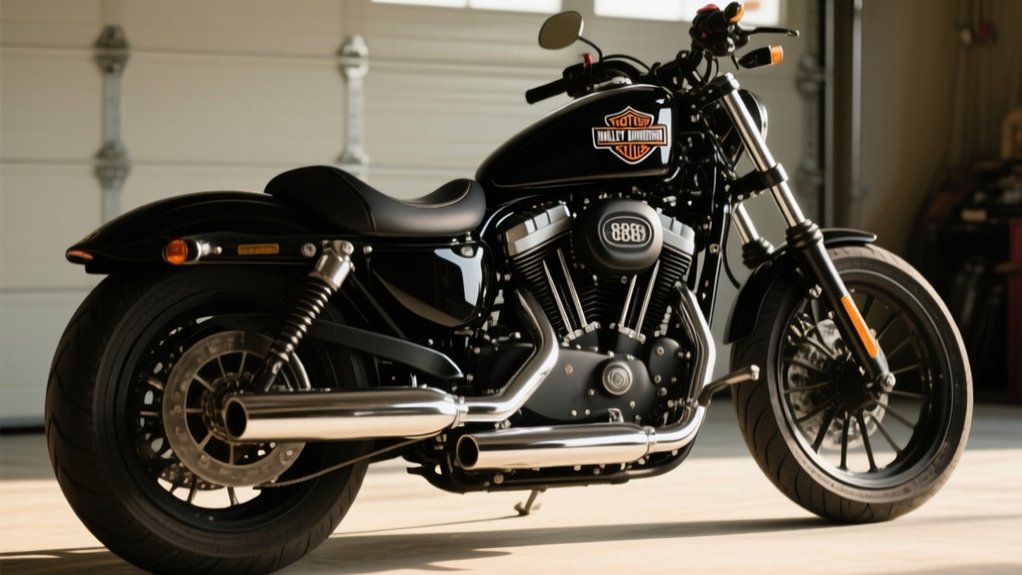
Your Harley 883 has an air-cooled Evolution V-twin engine with a displacement of exactly 883 cubic centimeters (cc). This measures the total volume the engine’s cylinders can move during a combustion cycle, which directly affects power and torque.
The 883cc engine delivers around 49 horsepower and balanced torque, offering smooth, manageable performance that’s ideal for varied riding. Its size strikes a practical balance between power and control.
Keep exploring to understand how this impacts your ride experience.
What Does “883cc” Really Mean for Your Harley?
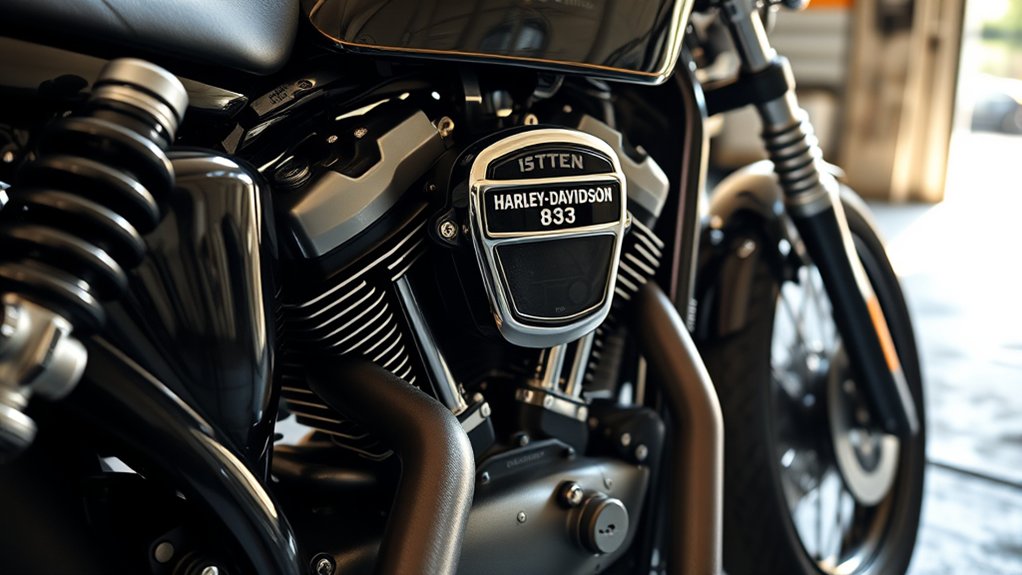
Although you might’ve seen “883cc” simply as a model number, it specifically refers to the engine’s total displacement. This means the volume of air-fuel mixture the cylinders can move during a complete cycle.
883cc isn’t just a model number—it represents the engine’s total air-fuel displacement per cycle.
In your Harley’s Evolution engine, displacement measures the combined volume of all cylinders, totaling 883 cubic centimeters, or about 53.9 cubic inches. This displacement basically shows the engine’s size and its ability to take in air and fuel. That directly relates to how much power the engine can produce.
The 883cc designation points to the engine’s capacity to process that volume each cycle. It sets a baseline for performance features like horsepower and torque.
Understanding displacement helps you get the basics of what makes your Harley 883’s engine tick, without getting into other performance factors.
Why Engine Displacement Matters for the Iron 883
You need to understand that the Iron 883’s engine displacement, measured at 883 cc, directly affects its power and torque output. This size basically determines how the bike performs under different conditions, especially when you’re accelerating or cruising down the road.
Knowing this helps you get a feel for how the engine size impacts your overall riding experience and what the bike is really capable of.
Engine Size Explained
When evaluating the Harley-Davidson Iron 883, understanding its engine displacement of 883 cubic centimeters (cc) is essential. This figure directly impacts the bike’s torque, power, and overall performance.
The engine size, converted from 53.9 cubic inches, defines how much air-fuel mixture the engine can combust. This influences the output characteristics. It’s a balance that makes the bike’s power delivery smooth and the ride enjoyable.
This displacement works well for both new and experienced riders. It offers a sweet spot between power and rideability that suits a variety of skill levels.
Key points about the Iron 883 engine size include:
- Engine displacement equals 883 cc, derived from 53.9 cubic inches
- Larger engine size produces more torque compared to smaller engines
- 883 cc provides classic Harley-Davidson power characteristics
- Engine size affects fuel combustion capacity and efficiency
- This displacement offers manageable power for versatile riding conditions
Understanding engine size helps you grasp the Iron 883’s core mechanical identity. It’s a neat way to get what makes this bike tick.
Impact On Performance
Three key factors illustrate why the 883 cc engine displacement matters for the Iron 883’s performance. First, displacement directly influences power output; an 883 cc engine strikes a balance between sufficient power and manageable control.
Second, this displacement generates notable torque, enhancing low-end pulling ability critical for smooth acceleration and effective cruising at highway speeds.
Third, the specific 883 cc size distinguishes the Iron 883 from Harley’s other models, tailoring its performance for riders who want a dependable, responsive engine without excessive complexity.
Understanding this displacement helps you appreciate how the Iron 883 delivers consistent performance, blending torque and power to optimize both city riding and open-road cruising. It’s ideal for beginners and experienced riders alike.
How the 883cc Engine Balances Power and Control
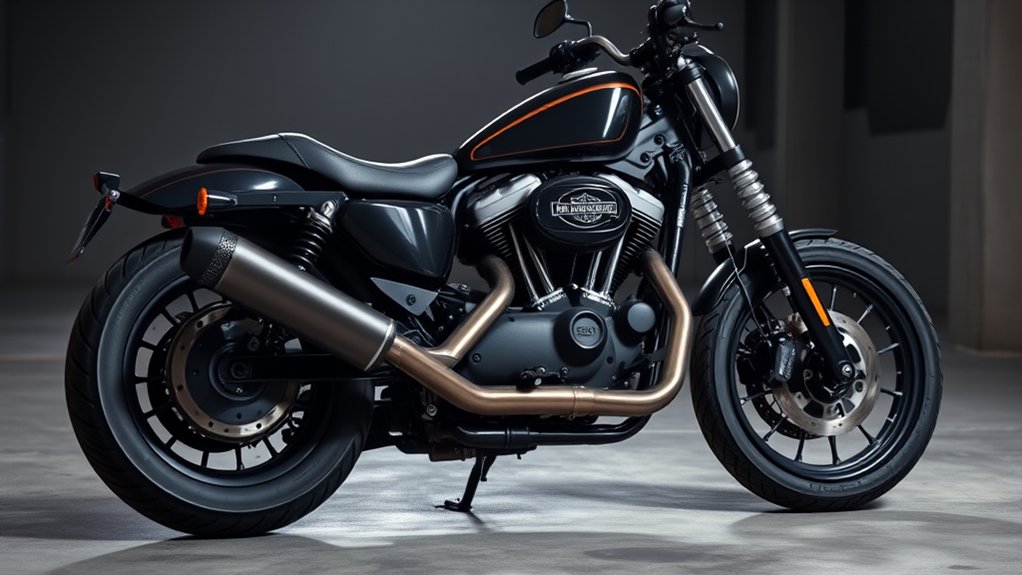
Although the Harley 883 engine measures exactly 883 cc, which is the same as 53.9 cubic inches, it expertly balances power and control to suit a variety of riders. This balance makes it ideal for both beginners and experienced riders who want reliable performance without losing manageability.
The engine delivers about 49 horsepower, giving you enough torque for confident handling at different speeds and conditions. Its smooth power delivery helps you maintain control and reduces rider fatigue, whether you’re commuting in the city or going on longer rides.
The 883cc displacement hits a sweet spot between performance and comfort, making it versatile and enjoyable for many riders.
- 883 cc displacement equates to 53.9 cubic inches
- Approximately 49 horsepower output
- Smooth and consistent power delivery
- Balanced torque for control and confidence
- Designed for both beginner and seasoned riders
What Riders Can Expect From the Harley Iron 883 Engine
You’ll feel the Iron 883’s 883cc air-cooled Evolution engine come to life with a perfect balance of 49 horsepower and 53.8 ft-lb of torque.
Thanks to its 3-inch bore and 3.8-inch stroke, it delivers power smoothly and responsively.
Plus, the electronic Sequential Port Fuel Injection ensures fuel is delivered efficiently, so your throttle response feels sharp and reliable.
All in all, this setup gives you a minimalist yet aggressive ride.
It’s built to perform consistently whether you’re navigating city streets or cruising down the highway.
Engine Specifications Overview
The Harley Iron 883 features a robust air-cooled Evolution® V-twin engine with a displacement of 883 cc (53.88 cubic inches). It delivers a practical balance of power and torque. This engine’s specifications overview reveals a design focused on efficiency and simplicity.
It’s ideal for riders seeking reliable performance within a minimalist aesthetic. Key engine specifications include bore and stroke dimensions of 3 inches by 3.8 inches. It also uses Electronic Sequential Port Fuel Injection (ESPFI) for precise fuel delivery.
You can expect approximately 49 horsepower output and a torque rating near 53.8 ft-lb. The air-cooled system enhances durability and reduces complexity. Understanding these specs helps you appreciate the engineering behind the Iron 883’s engine.
It ensures the bike meets expectations for everyday riding with a distinct Harley-Davidson character.
Performance And Riding Experience
When you ride the Harley Iron 883, its 883cc air-cooled Evolution engine delivers a balanced mix of power and control. It produces around 49 horsepower and 53.8 ft-lb of torque. This engine’s straightforward performance guarantees smooth throttle response, thanks to fuel injection.
You’ll find the moderate top speed ideal for urban commuting and short cruises. While the bike’s 562 lbs weight adds stability, it does demand a bit more effort during low-speed handling.
| Feature | Specification | Impact on Riding Experience |
|---|---|---|
| Engine Type | 883cc air-cooled Evolution | Reliable and simple performance |
| Horsepower | ~49 hp | Responsive acceleration |
| Torque | 53.8 ft-lb | Solid pulling power |
| Weight | ~562 lbs | Stable yet requires effort at low speeds |
| Fuel System | Fuel injection | Smooth throttle control |
Why the Iron 883 Uses an Air-Cooled 883cc Engine
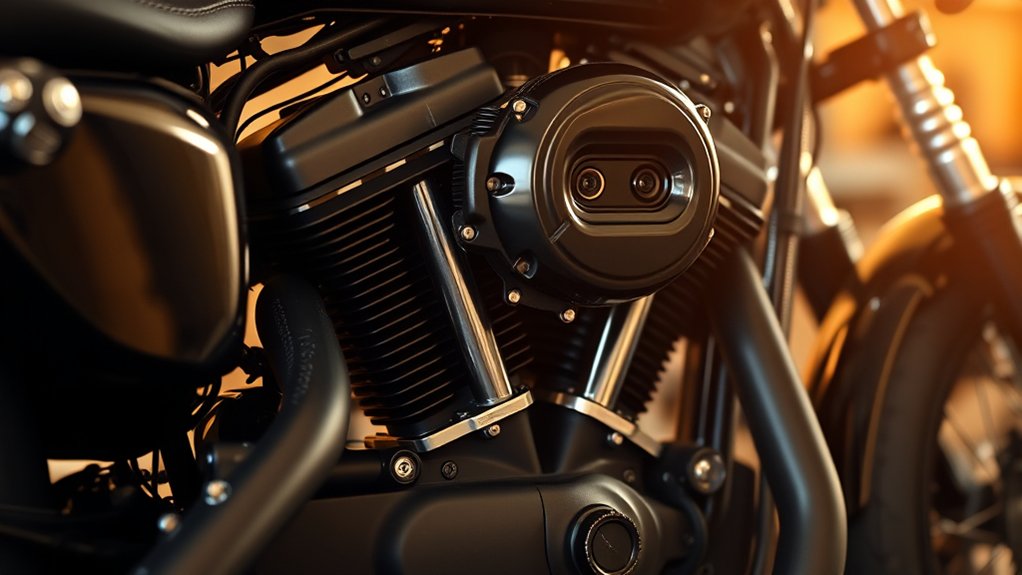
Because Harley-Davidson designed the Iron 883 with an air-cooled 883cc V-twin engine, it achieves a precise balance of power and simplicity. This air-cooled design guarantees efficient heat dissipation without the complexity of liquid cooling, keeping maintenance straightforward.
The 883cc displacement, achieved through a 3-inch bore and 3.8-inch stroke, provides manageable power ideal for entry-level riders.
The air-cooled Evolution engine is a hallmark of Harley’s commitment to classic performance and reliability.
Key reasons for using an air-cooled 883cc engine include:
- Reduced mechanical complexity
- Lighter overall engine weight
- Easier maintenance and servicing
- Enhanced reliability under varied conditions
- Classic Harley-Davidson engine sound and feel
You get a durable, practical engine that suits everyday riding needs.
Air-Cooled vs. Liquid-Cooled Engines: What’s the Difference?
You’ll notice air-cooled engines use fins and airflow to manage heat. This method works well at moderate speeds, but it can struggle when conditions get intense.
On the other hand, liquid-cooled engines circulate coolant to keep temperatures consistent. This helps them deliver higher performance and greater durability.
Knowing how these cooling systems work gives you a clearer picture of how they affect engine efficiency and reliability.
Cooling Mechanism Comparison
How exactly do air-cooled and liquid-cooled engines differ in managing heat? Air-cooled engines dissipate heat by directing airflow over finned surfaces, relying on ambient air to cool the engine. Liquid-cooled engines, however, circulate coolant through a radiator, offering more efficient and controlled cooling. This fundamental difference impacts maintenance, performance, and thermal management.
Consider these points about their cooling mechanisms: Air-cooled engines have simpler, lighter designs with fewer parts. Liquid cooling maintains consistent engine temperatures under various conditions.
Air cooling may struggle during prolonged high-speed rides. Liquid cooling supports higher compression ratios without overheating. Harley-Davidson’s Evolution engines use air cooling; newer Revolution Max engines employ liquid cooling.
Understanding these distinctions helps you appreciate Harley’s engineering choices in managing engine heat effectively.
Performance Impact Differences
When comparing air-cooled and liquid-cooled Harley engines, you’ll notice distinct differences in performance that come mainly from how they manage heat.
Air-cooled engines, like the Evolution 883, rely on airflow to keep things cool. But they’ve their limits at high RPMs, which can hold back peak performance.
On the other hand, liquid-cooled engines such as the Revolution Max keep temperatures steady. This allows for tighter tolerances and higher compression ratios. The result? Better power output, torque, and efficiency.
Plus, liquid cooling makes it possible to have bigger engines, often over 1,000 cc, which boosts performance even more. So if you’re into sustained high-speed riding or carrying heavier loads, liquid-cooled Harleys will give you a clear advantage.
Air-cooled engines can struggle with heat and don’t deliver as much power when things get tough.
How Fuel Injection Works on the Iron 883 Engine
Although traditional carburetors once dominated motorcycle fuel delivery, the Iron 883 engine employs Electronic Sequential Port Fuel Injection (ESPFI) for enhanced precision. This fuel injection system sprays a fine mist of fuel directly into each cylinder’s intake port, controlled by the engine’s electronic control unit (ECU).
The ECU continuously monitors sensors like throttle position and engine temperature to optimize the air-fuel mixture in real time. This guarantees smoother operation, efficient fuel use, and easier cold starts, all while meeting emissions standards.
It’s a smart setup that keeps the engine running clean and responsive in various conditions.
Key features of the Iron 883’s fuel injection system include:
- Precise fuel metering per cylinder
- Real-time adjustment via ECU
- Elimination of carburetors
- Enhanced cold-start performance
- Compliance with emissions regulations
Comparing 883cc to Other Harley-Davidson Engine Sizes
While the 883cc engine in the Harley-Davidson Iron 883 provides reliable performance and manageable power, it’s important to understand how it stacks up against other Harley engines. The 883cc engine displacement, equivalent to roughly 53.9 cubic inches, belongs to the Evolution V-twin lineup, known for solid mid-range output.
In comparison, models like the Sportster S feature a larger 1,252cc engine displacement, delivering considerably more power and torque. This jump in engine displacement directly affects acceleration and top-end performance, making the 883cc engine a more modest but efficient option.
Understanding these displacement differences helps you evaluate performance expectations across Harley’s range. That way, you can pick the right engine size for your riding needs without overestimating power or fuel consumption.
Why 883cc Makes the Iron 883 a Good Choice for Beginners
Why does the 883cc engine make the Harley Iron 883 ideal for beginners? The engine displacement of 883cc strikes a perfect balance, delivering enough power for everyday use without overwhelming new riders. This moderate engine size ensures manageable acceleration and control, which is essential for building confidence.
The 883cc engine balances power and control, making it perfect for new riders gaining confidence.
Key reasons include:
- Engine displacement of 883cc offers sufficient power for city riding and light touring.
- Lower engine capacity reduces overall bike weight, improving handling.
- Air-cooled, fuel-injected engine simplifies maintenance.
- Moderate displacement balances performance with rider control.
- The manageable engine size fosters safer, more predictable riding dynamics.
This combination makes the Iron 883 a practical, beginner-friendly motorcycle. It eases you into motorcycling with technical reliability and accessible power.
How the Iron 883’s 883cc Engine Fits Your Riding Style
Building on the Iron 883’s beginner-friendly nature, its 883cc air-cooled Evolution engine matches a wide range of riding styles by delivering balanced power and torque. This engine size offers a mid-level engine displacement that fits well within the cruiser market, providing enough performance for city rides without overwhelming beginners.
Its classic V-twin design ensures a smooth, responsive ride with practical fuel efficiency. You’ll find the 883cc engine ideal for daily commuting and relaxed highway cruising alike.
| Aspect | Specification | Benefit |
|---|---|---|
| Engine Size | 883cc (53.9 ci) | Balanced power output |
| Engine Type | Air-cooled Evolution | Reliable performance |
| Fuel Economy | ~51 mpg | Practical for long rides |
| Weight | 562 lbs | Stable ride dynamics |
| Market Position | Mid-displacement | Versatile ride options |
Frequently asked questions
What Is the Maintenance Schedule for the Harley-Davidson Iron 883?
You should change the oil every 1,500 miles or once a year, whichever comes first.
Inspect and replace spark plugs every 5,000 miles to keep the engine running smoothly.
Check and adjust the primary chain tension around every 10,000 miles to avoid wear.
Replace brake fluid every two years to maintain braking efficiency.
Regularly inspect tires, brakes, and drive belts every 5,000 to 10,000 miles for safety and reliability.
Keeping up with these checks will help your Iron 883 run great and keep you safe on the road.
How Much Does the Iron 883 Weigh?
The Harley-Davidson Iron 883 weighs approximately 545 pounds dry and about 564 pounds in running order with fluids and accessories.
You’ll notice this weight provides excellent stability at high speeds but can challenge you during low-speed handling or stops.
Its low seat height of 29.9 inches helps you manage the bike’s mass more confidently, especially if you’re newer to riding or maneuvering in tight spaces.
This makes it a great choice if you want something that feels stable yet still manageable.
What Is the Fuel Efficiency of the Harley Iron 883?
You’ll find the Harley Iron 883 delivers a respectable fuel efficiency of about 51 miles per gallon. Thanks to its advanced fuel injection system, it balances power and economy well.
With a 3.3-gallon tank, you can expect roughly 168 miles under ideal conditions.
However, real-world riding, especially aggressive throttle use or varied terrain, might reduce that range to around 100-115 miles per tank. So, keep that in mind when planning your rides.
It’s all about how you ride and the roads you take!
Are There Customization Options Available for the Iron 883?
Yes, you’ll find extensive customization options for the Iron 883. You can upgrade exhausts, handlebars, seats, and paint to suit your style. Harley-Davidson offers genuine parts designed specifically for this model to boost performance and aesthetics.
Plus, many shops provide tailored modifications, including LED lighting and engine covers. The bike’s minimalistic design makes swapping components straightforward.
This lets you create unique builds like bobbers or cafe racers efficiently.
What Safety Features Does the Iron 883 Include?
You’ll appreciate that the Iron 883 comes with ABS, cutting wheel lock risks during sudden stops by up to 37%. It also features traction control to minimize wheel spin on slick surfaces, enhancing stability.
The digital speedometer and warning lights keep you informed in real-time, while optional ride modes tailor engine response for safer handling.
Plus, its low seat height and balanced weight distribution boost your control and confidence on every ride.
Final Thought
You’ve seen how the 883cc engine is the heartbeat of the Iron 883, balancing power and control like a finely tuned symphony. This displacement isn’t just a number. It’s the precise measure that shapes your ride’s character, delivering enough punch without overwhelming.
Whether you’re carving corners or cruising steady, the 883cc engine fits your style with technical finesse. It makes every twist of the throttle a calculated dance between performance and ease.