How Much Does It Cost To Wrap A Motorcycle – Exact Amounts
You’ll typically pay between $300 and $2,000 to wrap your motorcycle, depending on size and design complexity. Partial or small wraps start near $300, while full, high-end wraps can exceed $2,000.
Labor, prep, removal, and specialty finishes add $200 to $800 or more. Materials vary from basic vinyl at $300 up to premium cast films costing $700 to $2,000.
Location and shop quality also influence price. Understanding these factors helps you budget accurately and choose wisely.
Motorcycle Wrap Prices: Typical Cost Ranges

Motorcycle wrap prices typically range widely based on coverage and quality, starting around $300 for small, partial wraps and exceeding $2,000 for full, high-end wraps that cover fairings and tanks.
Motorcycle wrap costs vary widely, starting at $300 for partial wraps and going over $2,000 for full, premium coverage.
If you’re aiming for an average full wrap on sport or cruiser bikes, expect costs between $800 and $1,500.
Specialty finishes like chrome, matte, or textured vinyl can add $200–$600 or more.
Labor plays a big role since removing and reinstalling parts or working on complex curves can increase costs markedly, often 30–60% of the total.
Local market rates and shop reputation also affect prices. Top-tier shops or those using premium vinyl typically charge 10–40% higher.
If you want a great job, choose carefully. I’ve never seen quality compromised when experts handle it.
How Size and Design Complexity Impact Costs
Because the size and complexity of your bike’s wrap directly affect material use and labor, costs can vary considerably.
Smaller bikes typically cost $300–$600 to wrap, while full-coverage large touring motorcycles range from $900 to $2,000 due to increased surface area and intricate bodywork.
Complex designs like multi-piece color changes, textured finishes, or custom graphics add $150–$800 in film and labor expenses.
Intricate elements such as vents and curves demand more heat-shrinking and template work, increasing labor by $200–$700.
These factors influence ride ergonomics by affecting how the wrap conforms to contours and controls.
High-quality films also enhance weather protection, preserving paint underneath.
Thoughtful design and durable materials not only safeguard your bike but also positively impact resale by maintaining its aesthetic and structural integrity over time.
Labor, Prep, and Removal Costs Explained
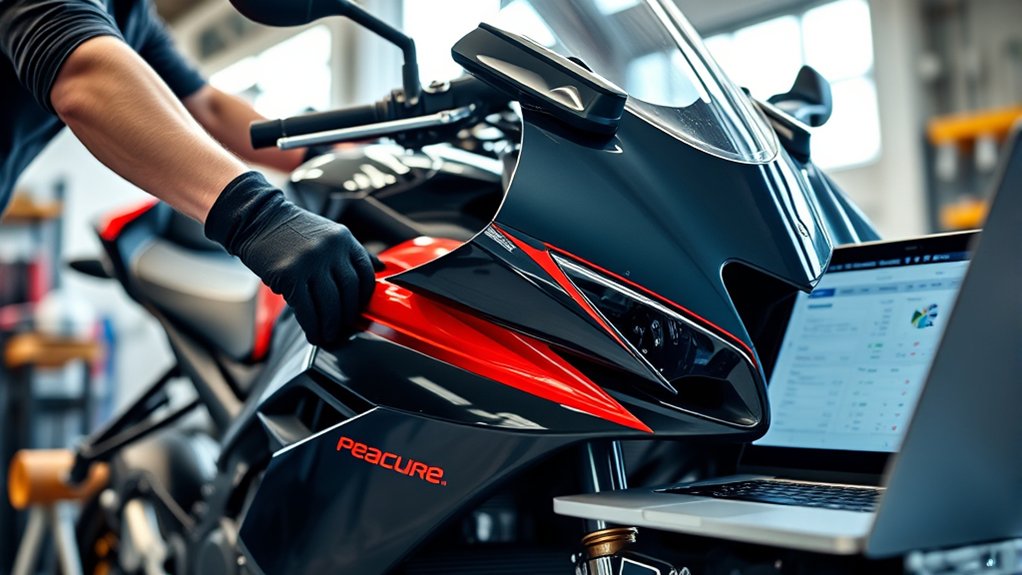
Costs associated with labor, preparation, and removal markedly influence the overall price of wrapping your bike.
Labor typically ranges from $200 to $600, depending on shop rates and bike complexity, with high-end shops charging $75 to $150 per hour.
Prep work, including washing and minor trim removal, adds $50 to $200, while extensive surface repairs or de-glossing can push costs above $300.
Removal expenses vary from $100 to $400 or more, especially if adhesive residue or paint damage mitigation is needed.
Complex designs increase labor by 25 to 75 percent, impacting total charges. Confirm if bundled labor rates cover removal and cleaning to avoid surprise fees.
Considering shop warranties is vital, as proper labor affects wrap lifespan.
Also, review insurance considerations since labor quality influences coverage claims related to wrap damage.
Comparing Motorcycle Vinyl Wraps and Premium Films
When choosing between vinyl wraps and premium films for your bike, you’ll find that basic vinyl typically ranges from $300 to $1,000. Premium cast films like 3M or Avery Supreme can cost $700 to $2,000 due to their enhanced durability and conformability.
The durability comparison favors premium films, offering 5–10 years of UV and chemical resistance versus 1–3 years for basic vinyl. Color accuracy and environmental resistance also improve with premium options, minimizing fading and peeling.
| Feature | Basic Vinyl Wrap | Premium Cast Film |
|---|---|---|
| Durability Comparison | 1–3 years | 5–10 years |
| Color Accuracy | Moderate | High |
| Environmental Resistance | Limited UV and chemical | Superior UV & chemical |
Custom Graphics and Multi-Piece Wrap Designs
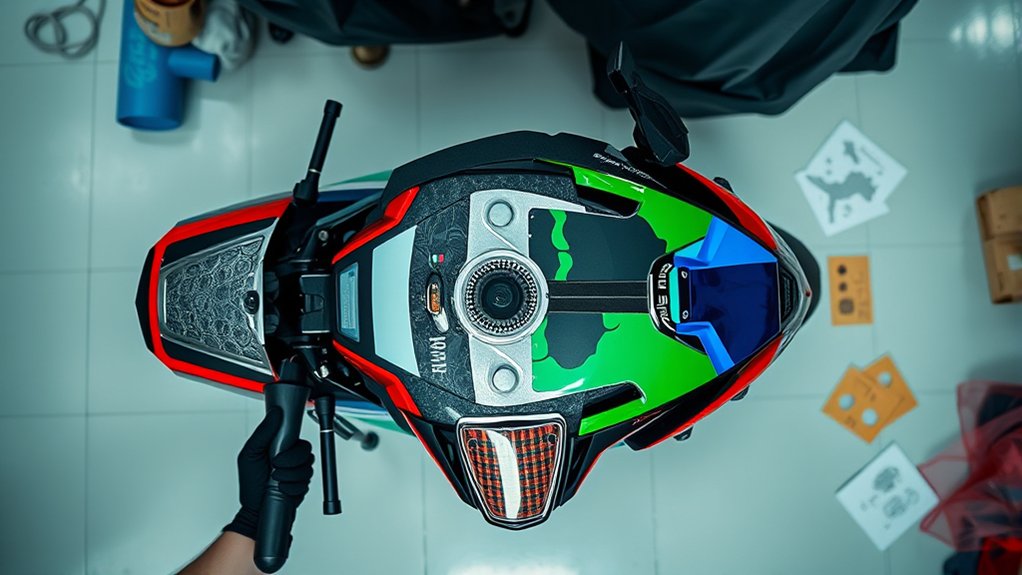
When you go with custom graphics and multi-piece wrap designs, keep in mind that the complexity of your design directly impacts both the labor time and overall cost.
The more intricate your design, the more time and effort it takes to get everything just right.
Also, choosing high-quality materials like premium cast vinyl or specialized films will definitely boost durability.
But, it’s good to know that these options can also increase your expenses.
Design Complexity Impact
Although a basic motorcycle wrap might seem straightforward, incorporating custom graphics and multi-piece designs markedly affects the overall cost and complexity.
Custom graphics leveraging color psychology to evoke specific emotions or complement ambient lighting increase design and printing expenses by 25–60%. This pushes costs from $500–$1,200 to $625–$1,920 or more.
Multi-piece wraps covering fairings, tank, fenders, and swingarm add $100–$400 due to precise seam alignment and tack and stretch installation techniques.
Complex 3D contours and finishes require specialized vinyl and longer installation, adding $150–$600.
If your design demands on-bike mockups or multiple revisions, expect $75–$350 in additional templating fees.
Ultimately, detailed wraps enable brand storytelling through vivid, multi-color art but elevate project costs to $1,000–$3,500 compared to simpler wraps.
Material Selection Choices
Material selection plays a critical role in determining both the cost and durability of your motorcycle wrap. Choosing premium cast vinyl like 3M 2080 enhances longevity to 7 to 10 years but increases upfront costs. Custom graphics and multi-piece designs add complexity, which impacts price and labor.
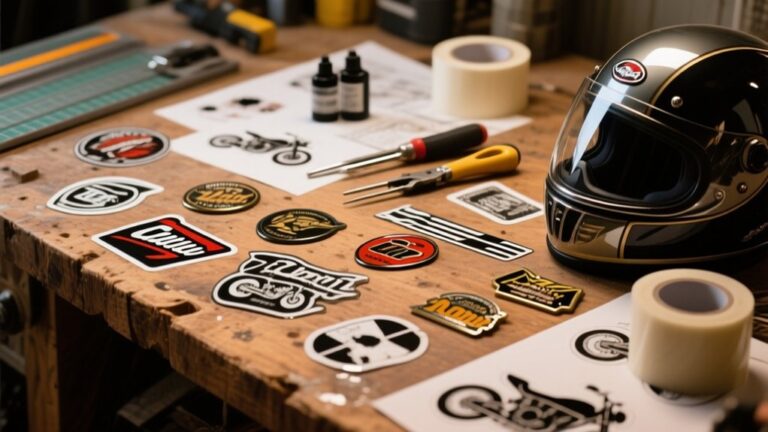
- Custom Graphics: Full-color digital prints with lamination leverage color psychology for bold statements but raise costs by $150 to $500 or more.
- Multi-Piece Wraps: Separate panels require precise seam matching, adding $100 to $400 in labor and extending installation time.
- Eco Options & Maintenance Tips: Opt for eco-friendly films with lower VOCs. Regular cleaning and avoiding abrasive materials preserve wrap integrity and color vibrancy.
Selecting materials strategically balances aesthetic goals, budget, and environmental impact for a durable, visually striking wrap.
How Location Affects Motorcycle Wrap Prices
Since location plays a pivotal role in pricing, you’ll find motorcycle wrap costs vary markedly across regions. Urban premiums in metropolitan areas like NYC or LA can increase prices by 20–40% due to elevated labor and overhead expenses.
Supplier proximity also matters. Shops near established vinyl suppliers, typically in urban centers, offer 10–15% lower material costs compared to remote locations that must order specialty films. Moreover, local demand and competition influence pricing, with competitive markets often featuring discounts.
You should also factor in travel surcharges if your location is rural or suburban, as shops may add $50–$150 in flat or hourly fees for travel or pickup logistics. Finally, state and local taxes or regulations can add another 5–10% to your final invoice, impacting your overall cost.
Tips to Get the Best Value on Your Motorcycle Wrap
Start by getting detailed quotes from at least three local wrap shops. This way, you can easily spot differences in cost and what each service includes.
It’s a good idea to prioritize high-quality cast vinyl materials, like 3M or Avery, since they offer better durability and long-term value. Also, make sure to check the installation timeline and ask for an itemized breakdown of costs. This helps you avoid any unexpected charges and ensures the project gets done efficiently.
Compare Multiple Quotes
When comparing quotes for your motorcycle wrap, make sure you request detailed estimates from at least three local shops.
Include vinyl wrap specialists, window-tinting services, and custom paint or PPF installers.
Provide identical project details and photos to guarantee apples-to-apples comparisons.
Focus on shop vetting by verifying each installer’s reputation, past work on your bike model, and materials used.
Also, confirm what the warranty covers and for how long, prioritizing shops offering clear, all-inclusive warranties.
Assess lead times and potential rush fees to factor total job duration and cost into your decision.
Request itemized quotes specifying labor hours, materials (e.g., 3M, Avery), prep work, and warranty terms.
This approach guarantees you get the best value without sacrificing quality or service reliability.
Prioritize Quality Materials
Select high-quality materials to guarantee your motorcycle wrap delivers lasting durability and a flawless finish. Opt for high grade films like 3M 2080 or Avery MPI 1105 cast vinyl, which conform better to curves and last 7–10 years, outlasting calendared alternatives.
For high-wear areas, insist on OEM-grade paint protection film or premium laminates with UV inhibitors to combat fading and scratching. Request warranty verification, ensuring coverage against lifting, bubbling, and color failure with documented material brands.
Don’t skip professional surface preparation. Degreasing and, if needed, single-stage paint correction plus expert heat-forming are critical to prevent premature peeling. Prioritizing these technical specifications maximizes your wrap’s lifespan and appearance, offering the best value for your investment.
Confirm Installation Timeline
Typically, confirming the installation timeline upfront helps you manage expectations and optimize scheduling for your motorcycle wrap. Installation usually takes 1 to 3 business days, depending on coverage. Verifying if the timeline includes surface prep or paint correction assures accuracy.
Also, inquire about weekend availability if you need flexible pickup or drop-off options. Confirming the timeline impacts warranty coverage since delays or rushed jobs may void guarantees.
To secure the best value, focus on:
- Requesting a detailed, written timeline with milestones like prep, install, and curing or inspection.
- Booking during off-peak weekdays to reduce wait time and labor costs.
- Selecting installers with stocked materials and experience to expedite quality work without compromising warranty coverage.
This approach guarantees clear communication and efficient project completion.
Frequently Asked Questions
How Long Does a Motorcycle Wrap Typically Last?
A motorcycle wrap typically lasts 5 to 7 years, but UV degradation and climate effects can shorten this lifespan.
If you store your bike indoors and avoid harsh weather, you’ll limit exposure to damaging elements, extending the wrap’s durability.
Proper surface prep and expert installation also help. Matte finishes may fade faster, especially in extreme climates.
Can I Wash My Motorcycle Normally After Wrapping?
You shouldn’t wash your wrapped motorcycle normally right after wrapping. Avoid pressure washing near edges and seams to prevent lifting.
Wait 48 to 72 hours before washing to let the adhesive cure fully. Use gentle, pH-neutral soap and spot cleaning with isopropyl alcohol only as recommended.
Limit sunlight exposure during drying to avoid heat damage. Hand wash carefully with a soft mitt, rinse thoroughly, and dry with a microfiber towel to protect the wrap.
Is a Motorcycle Wrap Removable Without Damaging the Paint?
Removing a motorcycle wrap is like peeling a sticker off glass.
If done right, it won’t harm your paint. You’ll want to use heat to soften the adhesive and peel slowly to avoid clearcoat damage.
Color removal is possible without harm, but adhesive residues can linger.
When in doubt, opt for professional removal. They use specialized solvents and tools to safely clear residues, minimizing paint risk and preserving your bike’s finish.
How Long Does the Wrapping Process Take From Start to Finish?
The total turnaround time for wrapping your motorcycle typically ranges from 4 to 10 hours, depending on complexity.
Prep steps like cleaning and de-greasing add 30 to 90 minutes.
Complex designs or textured films may extend this by 1 to 3 hours.
Post-install tasks, including curing and edge trimming, require another 30 to 60 minutes.
To avoid delays, coordinate rider scheduling well in advance to guarantee smooth workflow and timing.
Are There Specific Maintenance Tips for Preserving a Motorcycle Wrap?
You should follow a strict cleaning schedule, washing your wrapped motorcycle weekly with pH-neutral soap and a soft microfiber mitt to avoid damage.
For storage precautions, always park it in the shade and use a breathable cover to prevent moisture buildup and fading.
UV protection is essential. Premium cast vinyl lasts longer when shielded from direct sunlight.
Avoid high-pressure washing near edges and use vinyl-safe protectants after spot cleaning to maintain the wrap’s integrity.
Conclusion
Wrapping your motorcycle can vary widely in cost depending on size, design complexity, and location. You’ll also need to factor in labor, prep, and potential removal fees.
Premium films and custom graphics push prices higher but offer exceptional durability and style. So, how do you balance cost with quality to get the best value?
By understanding these variables, you can make an informed decision that protects your investment and enhances your ride’s look.