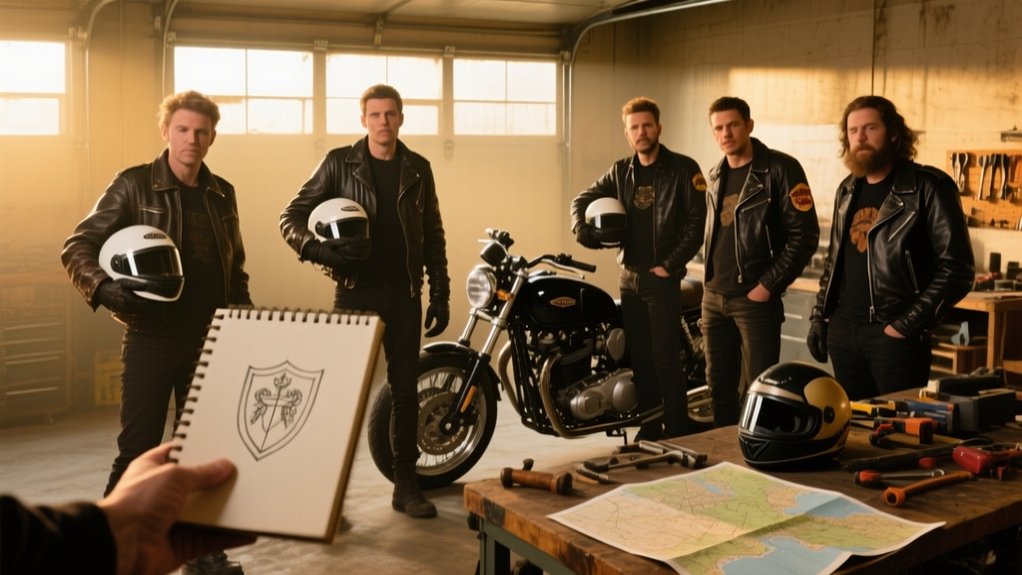
How To Start A Motorcycle Club – Made Easy
To start a motorcycle club, first define your purpose, riding style, and goals.
Then pick a clear name and set bylaws, dues, and officer roles.
Recruit a small core group of licensed, insured riders.
Use an application and a prospect period.
Require waivers, safety gear, and a code of conduct.
Plan your first rides with a lead and sweep.
Handle permits and insurance as you go.
Promote your club online to attract new members.
Keep showing up and refine the process to do it right.
What You Need to Join a Motorcycle Club?
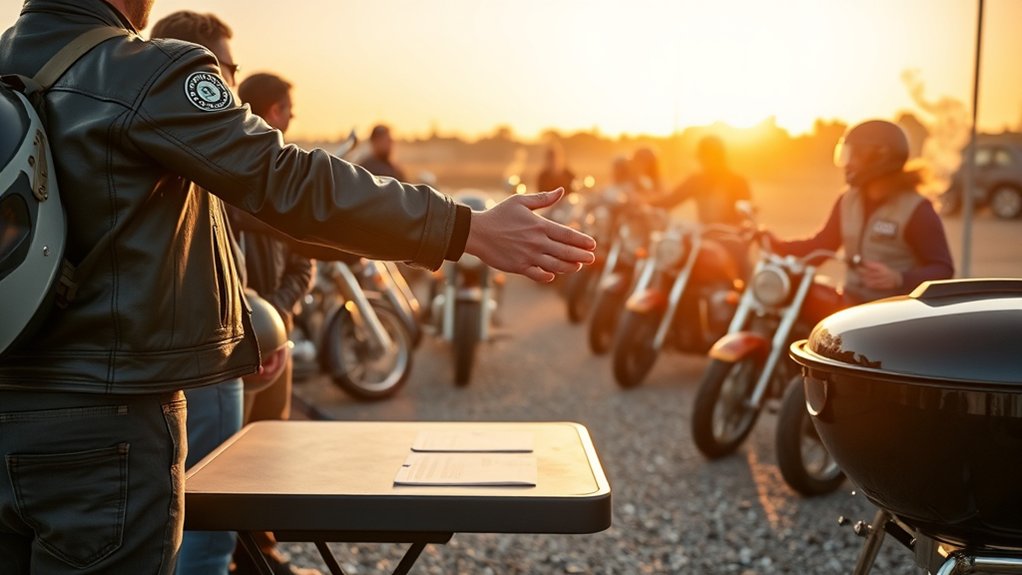
To join most motorcycle clubs, you’ll need more than enthusiasm.
You’ll need the right basics in place.
You’ll usually need a registered, insured motorcycle and a valid motorcycle endorsement on your license before a Motorcycle Club will consider you.
Many clubs also expect you to enter a probationary “prospect” period, often lasting 3–12 months.
During that time, you’ll show up, learn the rules, and prove you can handle group rides with respect and discipline.
You should also budget for dues, which may run from $20 to $100 a month.
Some clubs charge $50 to $300 a year instead.
Either way, expect to follow bylaws, wear required safety gear, and keep your behavior solid.
Some clubs ask for references or a member introduction.
They may also want you to participate in a charity ride too.
Choose the Club’s Purpose and Riding Style
You’ll want to define your club’s purpose first—whether that’s social cruising, touring, vintage bikes, or charity rides. When you’re clear about the mission, it’s much easier to keep members engaged.
After that, set your riding style so everyone knows what to expect. Spell out your typical pace, the distance you ride, and the kind of roads you prefer, so riders can quickly tell if they’re a good fit.
Once you’ve done that, choose your membership rules and club identity to match the purpose. That way, you’ll attract the right people and help the club feel cohesive.
Club Purpose
A clear purpose gives your motorcycle club direction. It also helps every member know what to expect. When you define why your club exists, it’s easier to attract the right people and plan events that fit.
Maybe you want casual social rides. You might prefer charity fundraising or vintage-bike restoration. Whatever you choose, there’s something for every group.
Put your purpose in writing. Then set membership rules, goals, and expectations around it. You should also decide whether you’ll welcome all makes or specialize.
If you specialize, be sure to require the right licenses, insurance, and safety gear. Keep your goals measurable, like monthly rides or yearly rallies. That way you can track attendance and feedback.
With a clear purpose, you’ll build a club that feels focused, organized, and worth joining.
Riding Style
Once you’ve defined your club’s purpose, lock in a riding style that matches it. Spell it out in the charter so prospective members know what to expect.
You can keep it casual with 20–50 mile local cruises. Build weekend sport-touring runs of 150–400 miles a day, or plan endurance adventures with multi-day off-pavement sections. State average pace, distance, and typical routes so riders know if they fit.
Set safety standards up front. Require a helmet, DOT gear, basic maintenance know-how, and the ability to ride in staggered formation.
Add a short ride-along or mentorship for newcomers. Assign a lead and sweep rider, use hand signals or Bluetooth, and brief everyone on route, stops, and emergency contacts.
Tailor rides to bikes and members.
Find Members and Leadership Roles

You’ll want to recruit a core group of about 10–20 riders from local bike meets, Facebook groups, and community rides. That way, your club has enough people to keep events running consistently.
Next, assign clear leadership roles—like president, vice president, secretary, treasurer, and a safety officer—and spell out the responsibilities in writing. It also helps to include term lengths, so everyone knows what they’re responsible for and for how long.
After that, set simple membership rules and hold a fair vote to elect your officers. When you do this from the start, you’ll end up with a bike club that runs smoothly right away.
Find Core Riders
Start by recruiting a core group of 6–12 committed riders.
Have them show up to at least 75% of the early meetups so your club has reliable leadership and voting quorum.
Use Facebook motorcycle groups, dealership bulletin boards, and weekend rides.
Look for dependable people with varied strengths, like vintage builds, touring, and sport riding.
Screen each rider with clear basics.
Ask for a valid motorcycle license, proof of insurance, and a recognized safety course like MSF.
Before you bring anyone into leadership, run simple vetting.
Use intro rides, a member reference, or a three-month probation to judge fit, skill, and attitude.
Keep the group tight, capable, and safety-focused from day one.
Assign Club Roles
With your core riders in place, give the club a clear structure. Name the key roles and write down what each person handles.
Start with President, Vice President, Secretary, Treasurer, and Safety/Run Coordinator. Recruit leaders from active members through a two-week nomination period, then hold a simple election with at least 30% of founding members present.
- Set one-year officer terms and limit each role to two consecutive terms.
- Make the Treasurer track dues, keep a reconciled bank account, and give monthly reports.
- Assign ride-leads for local, overnight, and charity rides. Require plans plus safety checklists 48 hours ahead.
- Pair new members with mentors for three supervised rides and a basic safety walkthrough.
Put your succession and recall rules in the bylaws. Everyone will then know the path forward.
Set the Rules, Name, and Membership Process
Before anyone patches in, set a clear constitution.
It should spell out who can join, how the club runs, and what members are expected to uphold.
Define full, prospect, and associate tiers.
Set requirements such as age 18+, a valid motorcycle license, and insurance.
Set a 3–6 month prospect period before voting rights.
Only after that period should members vote or hold full privileges.
Choose a distinctive name, then check business registries and social media.
Trademark it if you’ll sell patches or merch.
Use a simple application and require sponsors for each applicant.
Also require references or a background check.
Hold a formal initiation to confirm acceptance.
Make sure the process is clear and consistent for every applicant.
Put your rules in writing so everyone knows what’s expected.
Include safety gear, lane position, pace, and no soloing without approval.
Also cover dues, discipline, officers, election terms, and financial controls.
Keep the constitution specific and enforceable to avoid disputes later.
Plan Your First Rides and Meetups
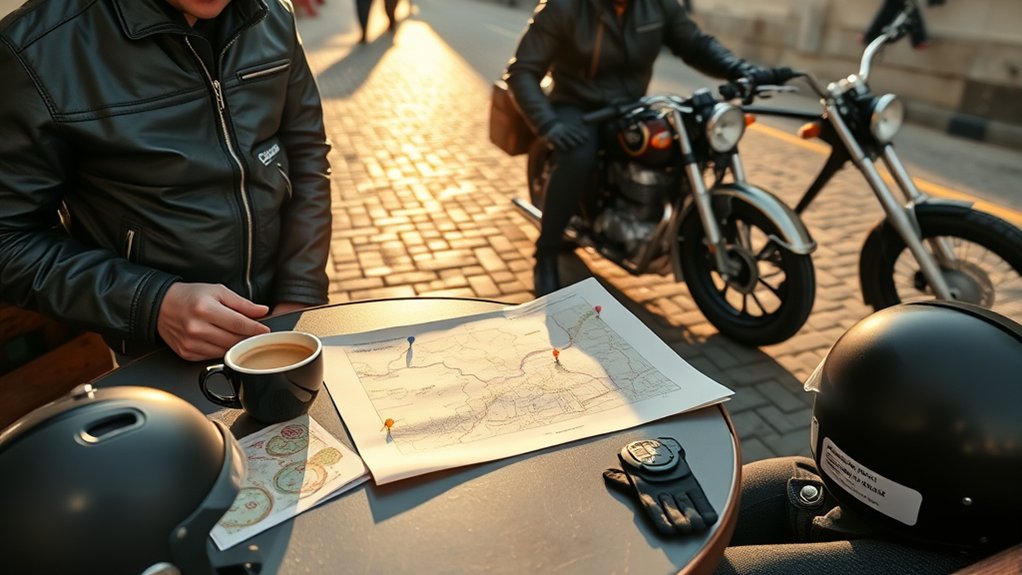
Kick off your club’s first ride with a simple, well-organized meetup at a familiar public spot, like a downtown café or a parking lot, on a weekend morning.
Pick a specific date and time, then leave 60–90 minutes for arrivals and introductions.
- Share the route 48 hours ahead.
- Map 20–60 miles with clear waypoints and ride time.
- Assign Lead, Sweep, and Communications/First Aid riders.
- Post rules, RSVP details, and a safe group limit.
Promote the event on Facebook or Instagram with meeting spot photos, route highlights, and a start time.
Confirm emergency contacts and insurance before departure, and brief everyone on helmet use, staggered formation, speed limits, and no lane-splitting.
Keep it organized, keep it moving, and you’ll build momentum fast.
Build a Welcoming Club Culture
Building a welcoming club culture starts with making every rider feel seen, informed, and included from day one.
Set up a small welcoming committee of 3–5 volunteers to greet new members within 48 hours.
Set up a small welcoming committee to greet new members within 48 hours and make them feel included.
Hand them a club packet, then introduce them at the next meeting.
Keep your code of conduct and safety policy clear and consistent.
Cover gear, signals, and ride roles, and have everyone acknowledge it.
Host monthly Meet & Ride events with easy, intermediate, and advanced route options.
That way, riders can join comfortably right away.
Give members real responsibility by rotating ride leads, workshop hosts, and charity coordinators.
This helps people feel invested and connected.
Offer quarterly maintenance clinics, guest speakers, and service rides.
Track attendance so you can improve what you offer and keep people engaged.
Promote Your Motorcycle Club Online
To grow your motorcycle club, show up where local riders already spend time online. Create active Facebook, Instagram, and Twitter profiles. Post at least three times a week with ride photos, member spotlights, and quick tips.
- Run targeted Facebook and Instagram ads.
- Keep a simple website or landing page.
- Host monthly public rides or meetups.
- Team up with local shops and instructors.
Start small with a $5 daily ad budget for two weeks. Then check what each click costs. Use your website to explain your mission, share event dates, and collect emails.
After every meetup, post strong photos and a short recap within 48 hours. When you partner with trusted local businesses, you widen your reach. You also give riders a reason to join.
Cover Safety, Legal, and Logo Permissions
Once your club starts drawing attention online, make sure it’s set up to operate safely and legally.
Check local laws, register as an LLC or nonprofit if you host organized events, and get any permits for rides or fundraisers.
Check local laws, register properly, and secure any permits before hosting rides or fundraisers.
Build a written safety policy that requires DOT-compliant helmets, eye protection, and at least six months of experience or 1,000 miles.
Include staggered formation, hand signals, and a pre-ride briefing.
Protect the club with liability insurance, and require waivers from non-members.
Collect emergency contacts and medical info for every rider.
Keep training logs and incident reports for at least three years.
Finally, control your logo with written permission rules, and if you use trademarked elements, register your design with the USPTO so you can protect your brand.
Frequently Asked Questions
How Do We Handle Disputes Between Members?
You handle disputes using a written process, not by letting tensions grow.
Start with informal mediation from a designated Membership Officer within 7 days.
If that fails, move to formal mediation with two neutral members.
If needed, use an impartial executive vote to decide next steps.
Keep everything confidential.
Prohibit retaliation and document outcomes clearly.
Set clear sanctions and appeal deadlines.
Train officers yearly to ensure fairness and consistency.
What Insurance Do Motorcycle Clubs Need?
You need general liability insurance first.
It covers bodily injury and property damage at club events, usually with $1 million to $5 million limits.
You should also get commercial auto or non-owned auto coverage.
This applies if members use personal bikes for club business.
For one-off rides, add event insurance.
It can help cover the specific event.
Consider D&O insurance for officers too.
It can protect leaders from certain legal claims.
Always check local rules and venue requirements.
Then compare quotes from multiple insurers or a broker.
How Can We Fund Club Activities and Events?
You can fund club activities by mixing dues, events, sponsors, and merch.
A single charity ride can raise $500 to $2,000, so host them often.
Charge monthly or yearly dues, then use accounting software to track everything.
Ask local shops and breweries for $250 to $2,000 in support.
Sell shirts, patches, and stickers.
Apply for grants to cover bigger events without draining members’ wallets.
Should We Create Bylaws Before the First Meeting?
Yes—you should draft bylaws before your first meeting.
You’ll set clear expectations for the club name, mission, membership, officers, dues, and voting, so you can avoid confusion later.
Keep them short, with quorum and majority rules, plus basics for finances and safety.
Then, make them amendable by notice and a two-thirds vote.
That way, you’ll start organized, build trust, and still leave room to grow.
How Do We Transition From a Club to an Official Chapter?
You’ll shift by formalizing your structure first. Then get approval from your national leadership.
File your bylaws and a chapter charter amendment. Define your boundaries, officer roles, dues, and meeting cadence.
Register the chapter, then secure an EIN, licenses, and insurance. Open a dual-signature bank account.
Set up your membership vetting process, agreement, and records. Once leadership approves everything, you can operate as an official chapter with confidence.
Conclusion
Starting a motorcycle club can feel like firing up an engine for the first time: a little nerve-wracking, but full of promise.
You’ve got the essentials now, purpose, people, rules, rides, and a strong club identity.
Keep it simple and stay organized.
Build a culture riders want to join.
If you lead with clarity and respect, your club won’t just grow.
It’ll roll forward with purpose, confidence, and lasting momentum.