What Is A Stage 3 Harley Upgrade – Quick Answer
A Stage 3 Harley upgrade boosts your bike’s engine by replacing core parts like camshafts, pistons, and cylinder heads. This upgrade increases horsepower and torque by 25-35%. It also adds a big bore kit to enhance displacement.
You’ll need precise ECM tuning to optimize fuel and ignition settings. Upgraded valve trains and cooling systems often support the added power, making your ride more responsive and robust. If you want to understand all the technical details and benefits, keep exploring for deeper insights.
What Is a Stage 3 Harley Upgrade?
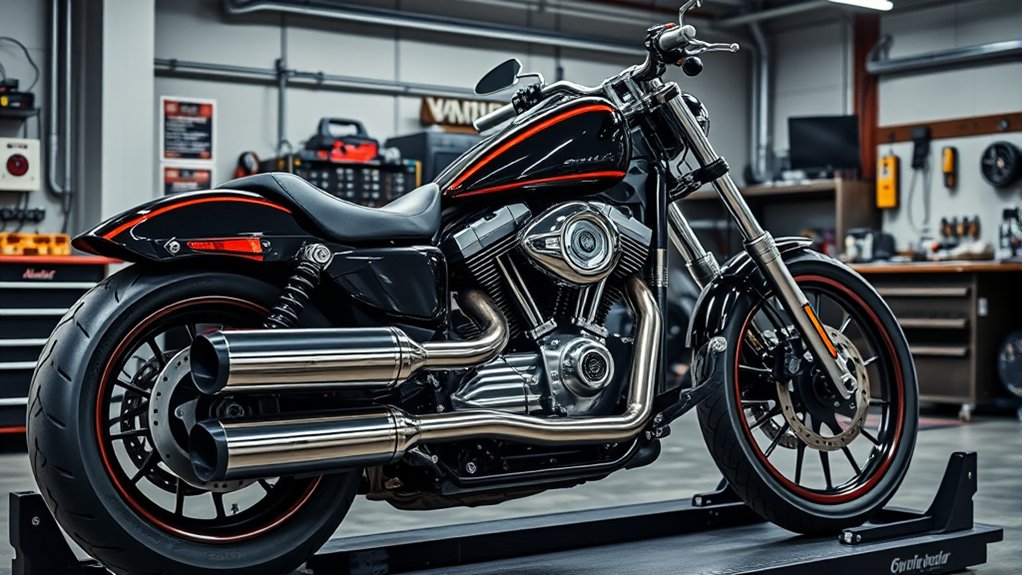
What exactly does a Stage 3 Harley upgrade involve? This upgrade focuses on internal engine modifications to markedly boost performance. You’ll install high-performance components like camshafts, pistons, and sometimes upgraded cylinder heads.
These parts increase horsepower and torque by 25-35% compared to stock engines. To handle greater power and higher RPMs, you’ll also replace pushrods, valves, and lifters with more robust versions.
After installing these components, professional tuning is essential to optimize engine timing and fuel delivery, ensuring the new parts work harmoniously.
This upgrade isn’t for casual riders; it’s designed for those seeking aggressive performance improvements and a more demanding riding experience. Ultimately, a Stage 3 Harley upgrade transforms your engine into a high-output powerhouse, maximizing both horsepower and overall performance.
Stage 2 vs. Stage 3 Upgrades: Key Differences
When you compare Stage 2 and Stage 3 upgrades, you’ll see that Stage 2 mainly focuses on camshaft and valve train improvements.
On the other hand, Stage 3 takes things a step further by adding a big bore kit to increase the engine’s displacement.
This difference really shows up in performance—Stage 3 delivers much higher horsepower and torque.
Knowing these key points makes it easier to pick the right upgrade based on your power goals and engine setup.
Camshaft Versus Bore Upgrade
Although both Stage 2 and Stage 3 upgrades boost your Harley’s performance, they target different engine components to do so. Stage 2 focuses on camshaft modifications, optimizing valve timing and lift to increase horsepower and torque within specific RPM ranges. This upgrade enhances airflow dynamics without altering engine displacement.
In contrast, a Stage 3 upgrade typically involves a bore increase through a big bore kit, expanding cylinder diameter and engine displacement. This substantial internal modification includes new pistons and cylinders, delivering a broader power boost beyond camshaft tuning alone.
When deciding between camshaft versus bore upgrades, consider that Stage 2 refines valve operation for targeted performance gains. Stage 3 increases engine size for overall power enhancement, offering a more significant performance jump but requiring deeper engine work.
Performance Gains Comparison
How do Stage 2 and Stage 3 upgrades compare in regard to performance gains?
Stage 2 upgrades focus on camshaft and valve train modifications to optimize horsepower and torque within the existing engine displacement. This approach improves performance gains primarily through better airflow and timing.
In contrast, Stage 3 upgrades go deeper by increasing engine displacement with big bore kits, high compression pistons, and extensive head work. For example, upgrading a 114 engine to Stage 3 can boost displacement to 122 cubic inches or more, delivering notably higher horsepower and torque.
The key difference lies in the scope. Stage 2 refines internal components for moderate gains, while Stage 3 enlarges engine size, resulting in considerably greater performance gains and power output.
Key Components in a Stage 3 Harley Upgrade
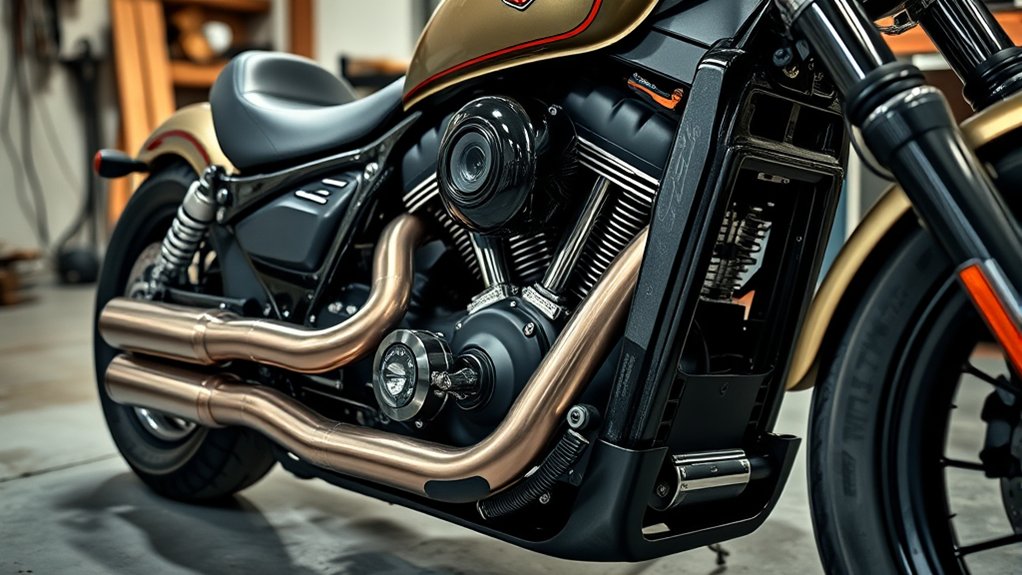
Since maximizing horsepower and torque requires more than simple bolt-ons, a Stage 3 Harley upgrade focuses on key internal engine components like high-performance camshafts, lifters, and pushrods. You’ll replace stock parts with high-lift or high-duration cams to optimize power delivery across targeted RPM ranges.
Internal engine modifications also include upgrading valve springs and installing high-compression pistons to support increased airflow and combustion pressure. These mechanical changes demand precise ECU tuning to fully realize performance gains and maintain engine reliability.
Furthermore, you may need to upgrade the clutch and cooling systems to handle the extra power generated. By focusing on these core components, you ensure your Harley’s engine operates efficiently and delivers consistent, enhanced performance under Stage 3 conditions.
How Tuning and ECM Calibration Boost Performance
When you upgrade your Harley with Stage 3 components, tuning and ECM calibration become essential to release their full potential. ECM calibration adjusts fuel mapping, ignition timing, and throttle response to optimize performance after modifications.
Proper tuning fine-tunes air-fuel ratios and ignition curves, making sure the engine runs efficiently while preventing lean or rich conditions that could cause damage. This precise adjustment maximizes horsepower and torque gains, especially with internal upgrades like camshafts and big bore kits.
Harley Davidson provides both manual (Pro Street Tuner) and automatic (Smart Tune PRO) ECM calibration options, so you can pick the method that works best for you.
Without accurate tuning and ECM calibration, you won’t fully realize the power and efficiency improvements of your Stage 3 upgrade. Trust me, taking the time to get this right really pays off in the long run.
Stage 3 Harley Parts, Costs, and Warranty
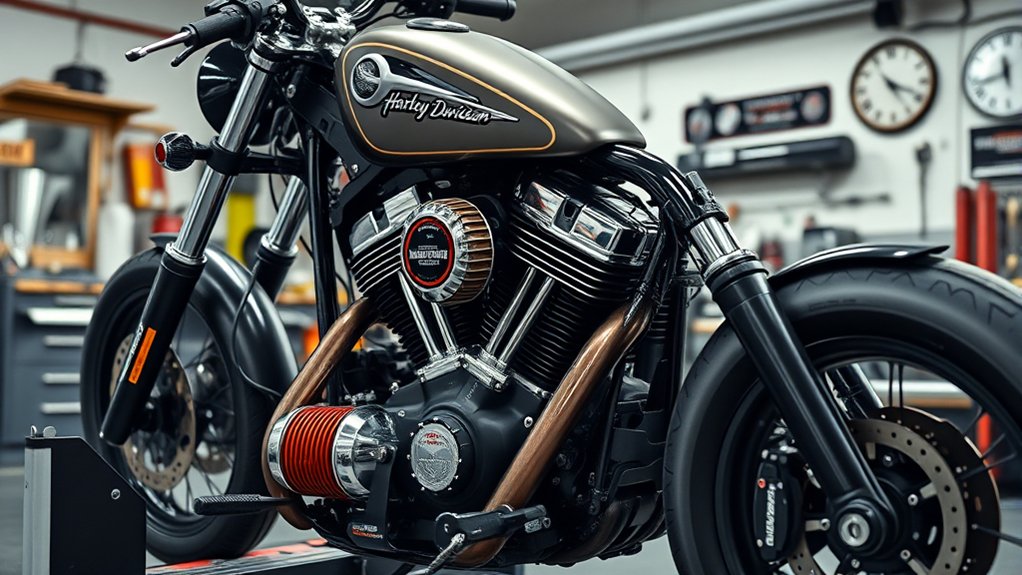
Although Stage 3 Harley upgrades demand a higher investment, typically between $2,000 and $4,000 including parts and professional installation, they deliver substantial horsepower and torque gains through internal engine modifications like high-performance camshafts, pistons, and valves.
When selecting stage 3 Harley parts, expect to include supporting components such as upgraded tuning, enhanced cooling systems, and possibly new cylinder heads to guarantee reliability and performance. The costs reflect both the complexity and quality of these internal upgrades.
Importantly, if you have the parts installed and tuned by authorized professionals, your motorcycle’s OEM warranty generally remains intact. This coverage provides peace of mind despite the extensive internal modifications.
Understanding these factors helps you make an informed decision about investing in a stage 3 Harley upgrade.
How Stage 3 Upgrades Improve Horsepower and Torque
When you upgrade to Stage 3, one of the big factors is the increased displacement. This allows more air and fuel mixture into the combustion chamber, which helps boost both horsepower and torque.
On top of that, you get enhanced internal components like high-performance camshafts and reinforced pistons. These parts work together to optimize combustion efficiency and make sure everything holds up under higher loads.
All these changes combined deliver noticeable gains in power and responsiveness throughout the entire rev range.
Increased Displacement Benefits
Because Stage 3 upgrades focus on increasing engine displacement through components like camshafts, pushrods, and higher compression pistons, you get a significant boost in horsepower and torque. These engine modifications typically enlarge displacement by 10-20%, which directly translates into substantial performance gains across the entire RPM range.
By optimizing combustion efficiency and airflow, Stage 3 builds deliver 25-35% more power compared to stock setups. This displacement increase allows your Harley to produce an additional 50 to over 100 horsepower, depending on tuning specifics.
The enhanced capacity not only improves peak power but also strengthens low-end torque, giving you sharper acceleration and more responsive throttle control. In short, increasing displacement via Stage 3 upgrades is a fundamental step to maximizing your bike’s engine output and overall riding performance.
Enhanced Internal Components
As you upgrade to Stage 3, high-performance internal components like camshafts, lifters, and pushrods play an essential role in boosting valve timing and lift. These high-performance camshafts optimize airflow and combustion efficiency, which directly increases horsepower and torque across the RPM range.
Alongside these, strengthened pistons and connecting rods handle the added power and pressure to prevent mechanical failure. Managing engine heat becomes critical since enhanced internal components generate more thermal stress.
Proper tuning ensures the engine runs efficiently without overheating or damage. By focusing on precise internal modifications, Stage 3 upgrades deliver substantial power gains and improved mid- to high-range performance.
This gives you a reliable and robust riding experience that really maximizes your Harley’s potential.
Is Stage 3 Right for Your Ride?
Three key factors will help you decide if a Stage 3 upgrade suits your Harley: your riding experience, performance expectations, and willingness to invest in additional maintenance.
Stage 3 delivers significant power gains through internal modifications like big bore kits and high compression pistons. But it also demands advanced tuning and possibly upgrades to cooling, drivetrain, and clutch systems.
| Factor | Consideration |
|---|---|
| Riding Experience | Best for experienced riders |
| Performance Goals | Expect 25-35% horsepower increase |
| Maintenance Needs | Requires frequent tuning |
| Additional Upgrades | Cooling, drivetrain, clutch |
| Suitability | Not ideal for beginners or casual |
If you want maximum performance and can handle the upkeep, Stage 3 is right for your ride. Otherwise, you might want to consider lower upgrade stages instead.
Frequently asked questions
How Long Does a Stage 3 Upgrade Installation Take?
A Stage 3 Harley upgrade installation typically takes between 8 to 16 hours, depending on the complexity and whether you’re modifying internal engine components.
If you’re skilled and have the right tools, you might complete it closer to 8 hours. But expect a full day at a dealership or shop to make certain of precise tuning and calibration.
Don’t forget to factor in extra time for parts delivery, engine disassembly, and thorough post-installation testing. It’s always better to plan for a bit more time than you think you’ll need.
That way, you won’t be rushed and can ensure everything is done right.
Can I Revert My Bike Back to Stock After a Stage 3 Upgrade?
About 70% of riders who upgrade to Stage 3 consider reverting their bike later. Yes, you can revert your bike back to stock, but it’s not always simple.
You’ll need to reinstall all the original components, including cams and pistons.
You’ll also have to recalibrate or reflash the ECU to factory settings.
Internal engine changes usually mean a lot of mechanical work. So, unless you’re skilled or have a trusted mechanic, fully reverting your bike can take a lot of time and be quite costly.
Will a Stage 3 Upgrade Affect My Fuel Economy?
Yes, a Stage 3 upgrade will affect your fuel economy.
While proper tuning can optimize the air-fuel mixture, the increased power and aggressive camshaft profiles typically reduce efficiency, especially at higher RPMs.
If you ride conservatively, you might see a slight improvement due to better combustion.
But heavy acceleration and sustained high RPMs, which are common with Stage 3 setups, usually cause noticeable fuel consumption increases.
Are There Specific Maintenance Requirements After a Stage 3 Upgrade?
Picture your engine running hotter and harder. After a Stage 3 upgrade, you’ll need to ramp up maintenance. Check oil and valve clearances more often, inspect pistons and camshafts for wear, and monitor fuel mixture closely to avoid damage.
Don’t skip regular cooling system inspections and compression tests. These keep your boosted engine reliable and performing at its best. Staying proactive ensures your Harley’s power doesn’t come at the cost of longevity.
Can Stage 3 Upgrades Be Installed on Older Harley Models?
Yes, you can install Stage 3 upgrades on older Harley models, but compatibility depends on your engine type and year.
You’ll likely need additional modifications or custom tuning to fit the parts properly. It’s essential to verify your engine’s compatibility first.
Talking to a Harley expert or mechanic can help you avoid issues and ensure a safe installation.
Don’t just assume every older model supports Stage 3 upgrades without some extra work. It’s always better to check first!
Final Thought
If you’re aiming to crank your Harley’s performance up a notch, a Stage 3 upgrade hits the nail on the head. By enhancing key components and fine-tuning the ECM, you’ll see noticeable gains in horsepower and torque.
Just remember, this level of modification might affect costs and warranty. So, weigh the benefits carefully before you pull the trigger and transform your ride into a true powerhouse.