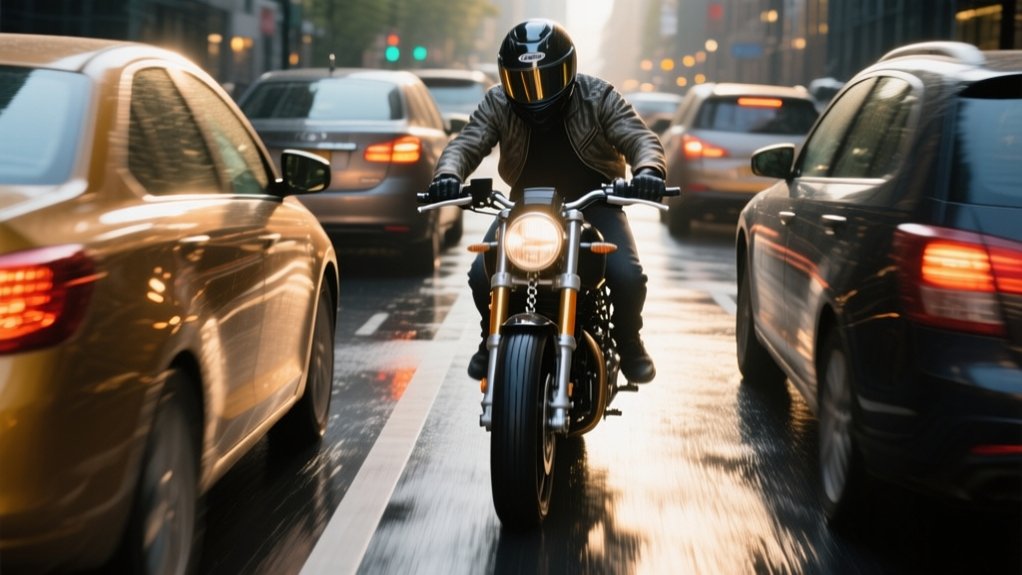
What Is Lane Splitting On A Motorcycle – Meaning & More
Lane splitting means riding your motorcycle between lanes of slow or stopped traffic, letting you pass congestion efficiently. It differs from lane filtering, which involves moving slowly between stationary cars, usually at very low speeds.
While laws vary, some places like California allow lane splitting under specific speed and safety guidelines. It helps reduce commute times and traffic congestion but requires caution to avoid hazards like sudden lane changes or open car doors.
You can explore how to do it safely and understand legal details next.
What Is Lane Splitting on a Motorcycle?
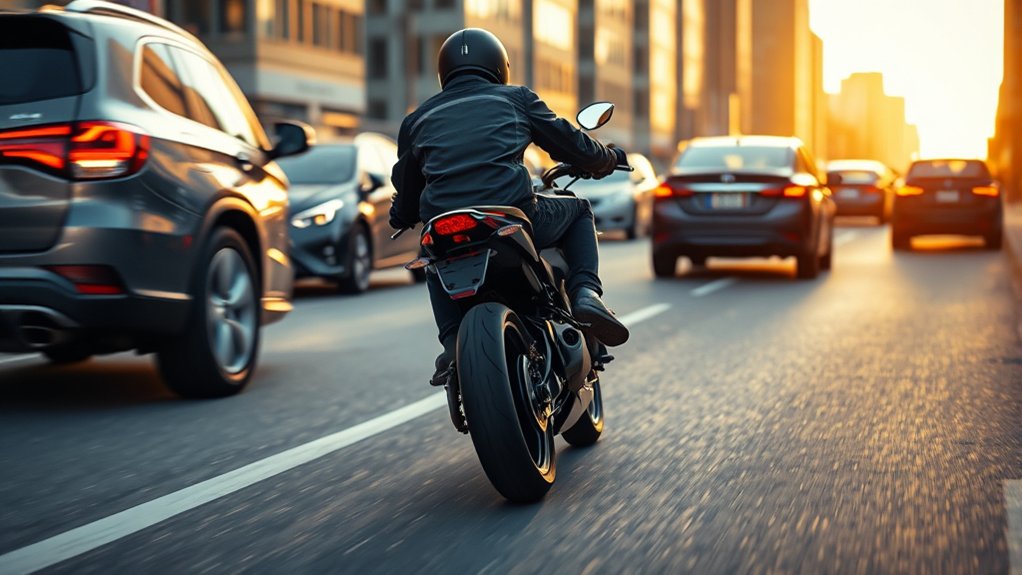
When you ride a motorcycle between lanes of traffic moving in the same direction, you’re lane splitting. This technique is often used to pass slow or stopped vehicles.
Lane splitting is distinct but related to lane filtering, which typically involves moving between stopped cars at intersections. For motorcycle safety, experts advise keeping your speed no more than 10 mph faster than surrounding traffic and staying alert to sudden lane changes, open doors, and large-vehicle blind spots.
Lane splitting differs from lane filtering and requires careful speed control and vigilance for safety hazards.
Avoid stopping beside a lead vehicle’s passenger side to reduce risks. Traffic laws on lane splitting vary widely. California formally legalizes it and provides clear guidelines through the California Highway Patrol, promoting safe practices.
Other states may allow limited filtering or prohibit these maneuvers altogether, so understanding local regulations is essential before you try lane splitting.
Lane Splitting vs. Lane Filtering: What’s the Difference?
Although lane splitting and lane filtering both involve maneuvering between vehicles, they serve different purposes and occur under distinct traffic conditions.
Lane splitting refers to riding between lanes of moving traffic, typically when the speed difference between you and surrounding vehicles is small, usually around 10 mph or less.
In contrast, lane filtering means moving forward between stopped traffic, such as at a red light or heavy congestion, often at very low speeds, typically limited by law to about 10–15 mph.
While many use the terms interchangeably, filtering is generally safer and legally permitted in more areas because it involves stopped traffic. This reduces risks associated with sudden lane changes.
Understanding these differences helps you navigate traffic safely and comply with relevant regulations where you ride.
Is Lane Splitting Legal Where You Ride?
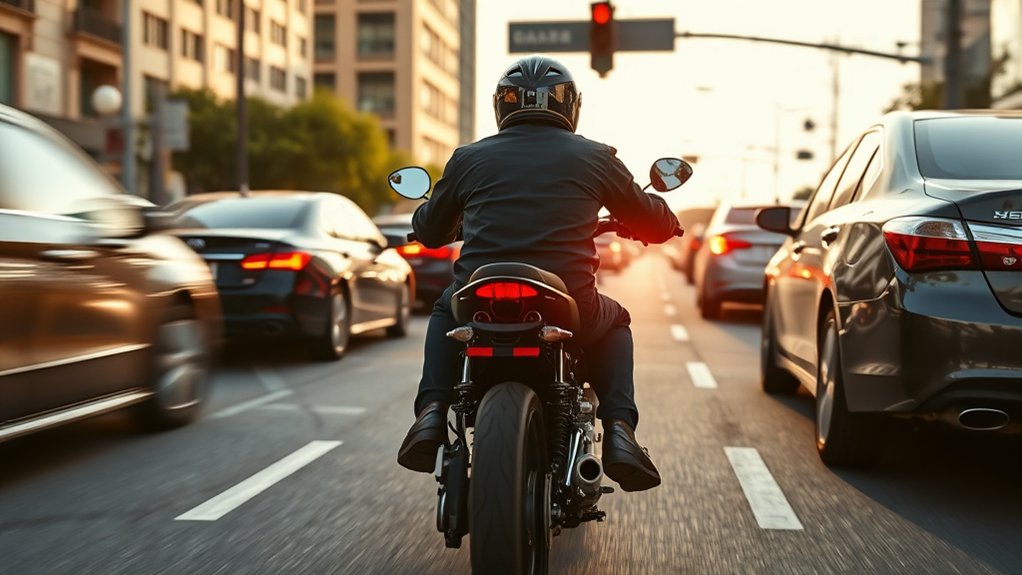
You should know that lane splitting laws can be pretty different depending on where you’re riding.
Some states allow it but only under strict conditions, while others don’t allow it at all.
Even in places where it’s legal, there are specific rules about how fast you can go, which lanes you can split in, and safety measures you need to follow.
Legal Status By Region
Since lane splitting laws vary markedly across regions, knowing the legal status where you ride is essential for compliance and safety.
In the U.S., California explicitly permits lane splitting under CHP guidance. States like Colorado and Utah allow limited filtering with speed differential limits around 10–15 mph. Many other states prohibit or leave it undefined.
Internationally, lane splitting is common and legally tolerated in numerous European and Asian cities. State laws often specify conditions such as passing on the left and maintaining safe speed differentials. Understanding these legal nuances helps you ride confidently and avoid liability issues.
Conditional Permissions Explained
When considering lane splitting legality, it’s crucial to recognize that permissions differ markedly across states, with many imposing strict conditions.
While California broadly authorizes lane splitting, other states like Colorado and Montana allow limited lane filtering only when traffic is stopped.
State law often restricts lane filtering to stopped traffic, prohibiting overtaking between moving lanes, which defines true lane splitting. These laws specify critical conditions: motorcycles must pass on the left, remain within a lane width safe for both vehicles, and maintain a speed differential typically capped at 10–15 mph, with Colorado limiting filtering speed to 15 mph.
Before attempting lane splitting or filtering, you must verify your local statutes, as definitions, permissible speeds, and enforcement vary and evolve. This ensures you ride legally and safely.
Enforcement And Liability Issues
Although lane splitting remains legal in select states, enforcement and liability issues complicate how it’s regulated and perceived.
Traffic laws differ widely, with states like California and Colorado allowing lane splitting under strict conditions, such as low speeds and only when traffic is stopped.
Enforcement challenges arise because proving safe speed differentials during lane splitting can be subjective, leading some agencies to favor guidelines over rigid speed limits. When crashes occur during lane splitting, liability often becomes a contentious issue in insurance claims, frequently placing fault on the rider.
To address this, states with permissive laws mandate public education and require agencies like Colorado’s CDOT to report crash data. Understanding these enforcement and liability nuances is essential if you ride where lane splitting is allowed.
Why Riders Choose Lane Splitting

You choose lane splitting because it saves you time by letting you skip past congested traffic and get to your destination faster.
On top of that, it helps reduce overall congestion, which makes traffic flow better for everyone.
And here’s the thing—lane splitting also boosts your safety by cutting down risks like rear-end collisions and giving you a better chance to avoid hazards.
Time Savings Benefits
Frequently, motorcyclists choose lane splitting because it greatly cuts commute times in congested traffic. By filtering between lanes of slow or stopped vehicles, you exploit unused roadway capacity, markedly reducing your commute time.
Studies show that even a modest shift toward lane splitting can cut overall commute times by up to 40%. To maximize commute time savings, you should maintain a safe speed differential, generally no more than 10–15 mph above traffic, and merge back into lanes when traffic starts moving.
This approach not only keeps your ride efficient but also minimizes risks and avoids negating time gains. While benefits depend on rider behavior and traffic mix, lane splitting remains a practical strategy to navigate congestion and reduce delays effectively.
Congestion Relief Impact
Often, riders choose lane splitting because it markedly eases congestion by using the gaps between vehicles that cars can’t occupy. By filtering through stop-and-go traffic, motorcycles free up lane space, increasing person-throughput per meter of road.
Studies show that a 10% shift to motorcycles using inter-vehicle space can reduce average commute times by about 40%, delivering significant congestion relief. In dense urban areas, lane splitting boosts the number of people moved within the same roadway footprint, outperforming cars confined to lanes.
However, practical limits exist due to safety constraints and regulations, which affect how much congestion relief filtering can provide. Still, when implemented legally and safely, lane splitting enhances traffic flow, easing bottlenecks and reducing overall delays in congested corridors.
Enhanced Rider Safety
Choosing to lane split offers riders a practical safety advantage by reducing the risk of rear-end collisions common in stop-and-go traffic. According to SafeTREC (2015), motorcyclists who lane split in heavy traffic face fewer rear-end strikes and are less likely to suffer serious injuries.
When you practice lane filtering, maintaining a low speed differential, typically around 10 mph above surrounding vehicles, is vital for safety. Staying between the left-most lanes and avoiding blind spots further enhances your visibility and control.
While major studies haven’t definitively proven causation, evidence suggests lane splitting lets you maneuver proactively to avoid hazards. Remember, lane splitting demands experience and caution; reckless speeds and aggressive passing increase crash risks and public backlash.
Following best practices guarantees lane splitting improves your safety on the road.
Common Risks of Lane Splitting and How to Avoid Them
Because lane splitting exposes you to unpredictable vehicle movements and tight spaces, understanding the common risks is essential to riding safely.
Sudden lane changes, door openings, or turns by other drivers require you to anticipate these actions and keep speed differentials low—ideally no more than 10–15 mph above traffic.
When lane filtering between stopped vehicles, you enter car door zones and blind spots, especially near buses or trucks. Maintain at least two feet lateral clearance and avoid passing on the passenger side to reduce risk.
Narrow lanes, poor road surfaces, and weather further limit safe maneuvering, so only split lanes wide enough for both your motorcycle and adjacent vehicles.
Safety Tips for Lane Splitting Riders
Understanding the risks of lane splitting helps you take practical steps to enhance your safety on the road.
Recognizing lane splitting risks empowers safer, smarter riding decisions on busy roads.
When lane filtering, keep your speed differential low, ideally no more than 10 to 15 mph faster than surrounding vehicles to avoid sudden conflicts.
Maintain at least two feet of lateral clearance from adjacent cars, use the left side of the lane when possible, and always have an escape route planned.
Constantly scan for hazards such as door zones, blind spots, and driver signals.
Cover your clutch and brakes, keep both hands ready, and avoid stopping beside a lead vehicle’s passenger side to minimize collision risks.
Re-enter the full lane promptly when traffic moves normally.
Always wear full protective gear, hold a valid motorcycle endorsement, and comply with your state’s legal limits for lane filtering to maximize safety.
How Lane Splitting Impacts Traffic Flow
When motorcycles split lanes, they use the unused space between vehicles. This lets more riders move through gaps without taking up a full lane. Lane splitting and filtering increase traffic flow by effectively raising roadway person-capacity.
Studies show that a 10% modal shift to motorcycles practicing lane splitting can cut average commute time by about 40% in congested conditions. By filtering to the front or between lanes, motorcycles reduce queue lengths and lower passenger-car-equivalents, boosting throughput on crowded roads.
Agent-based models calibrated with empirical data confirm that filtering improves overall traffic efficiency when riders overtake without blocking cars. However, jurisdictional speed limits on filtering affect how much these benefits matter.
Ultimately, lane splitting enhances traffic flow, shortens commute time, and maximizes throughput in dense urban environments.
What Drivers Need to Know About Lane Splitting
Although lane splitting can improve traffic flow, drivers need to stay alert and aware of motorcyclists moving between lanes in heavy or stopped traffic.
Stay alert for motorcyclists lane splitting through heavy or stopped traffic to ensure everyone’s safety.
Lane splitting involves riding between moving lanes, while lane filtering typically means moving slowly between stopped vehicles.
Legality varies widely: California explicitly allows lane splitting with guidelines, while some states permit limited lane filtering.
Many prohibit it or remain silent.
As a driver, you should always check mirrors and blind spots before changing lanes or opening doors to confirm motorcyclists have space.
Maintaining predictable lane position, signaling early, and exercising caution near intersections, large vehicles, and parked cars enhances safety.
Understanding these factors helps drivers coexist safely with riders practicing lane splitting or filtering where it’s legal.
Frequently Asked Questions
How Does Lane Splitting Affect Motorcycle Insurance Premiums?
Lane splitting can increase your insurance rates because insurers often associate this behavior with a higher frequency of claims. Depending on your insurer’s policies and your state’s stance, you might see a premium impact or even face denial of claims.
However, if you follow legal limits and ride safely, you could still maintain discount eligibility. It’s always a good idea to discuss lane splitting with your insurer to make sure your policy covers it and to avoid any unexpected premium hikes.
Can Lane Splitting Reduce Motorcycle Fuel Consumption?
Like a knife slicing through butter, lane splitting lets you glide between slow traffic, improving engine efficiency by reducing idle time.
You can optimize throttle modulation and braking patterns, minimizing wasted fuel.
Staying calm and maintaining a steady riding posture helps you harness slipstream effects, further cutting consumption.
In stop-and-go traffic, this method meaningfully lowers fuel use, but it’s less effective on free-flowing roads where lane splitting isn’t practical.
What Types of Motorcycles Are Best Suited for Lane Splitting?
You’ll find sport bikes and standard bikes best for lane splitting due to their slim profiles and better low-speed control.
Lightweight scooters excel here, thanks to their agility and narrow width.
Dual sporters offer versatility but need skill in tight spaces.
Cruiser adaptations generally aren’t ideal; you’ll struggle with their wide handlebars and bulk.
Choose bikes that balance maneuverability and control to navigate safely between lanes during traffic.
Are There Specific Motorcycle Gear Recommendations for Lane Splitting?
If you find yourself weaving through traffic, you’ll want high visibility jackets and slim profile helmets to stay seen and slip through gaps easily.
Anti abrasion suits protect you when space is tight, while grip enhancing gloves keep control sharp amid quick maneuvers.
Don’t forget impact absorbing boots for ankle support and crash protection. Together, these gear choices not only boost your safety but also make lane splitting smoother and more confident.
How Do Weather Conditions Impact Lane Splitting Safety?
Weather conditions directly impact lane splitting safety by reducing road friction and creating precipitation hazards that increase stopping distances.
Visibility limits from fog, rain, or low light make it harder for drivers to see you, raising collision risks.
Wind gusts can push your motorcycle unpredictably between lanes, challenging your control.
Temperature effects, like cold that hardens tires, further reduce traction.
You should avoid lane splitting in poor weather or proceed with extreme caution to stay safe.
Conclusion
Think of lane splitting like a river finding new paths through traffic’s rocky terrain. It’s efficient but demands respect and awareness.
As you navigate between cars, remember it’s not just about speed but safety and legality. Just like a skilled kayaker reads the currents, you must understand the rules and risks to flow smoothly.
Master lane splitting wisely, and you’ll help keep the roads safer and traffic moving more freely for everyone.