When Did Amf Own Harley Davidson – Here’s When
AMF owned Harley-Davidson from 1969 to 1981, a pivotal period when the brand faced declining sales, rising competition, and quality issues. AMF’s cost-cutting and diversification efforts kept Harley afloat but hurt its reputation through inconsistent manufacturing.
In 1981, Harley’s management bought the company back to restore quality and heritage, sparking a major turnaround. Understanding this timeline shows how these challenges shaped Harley’s eventual revival and long-term identity.
Why Harley-Davidson Needed AMF’s Help in 1969
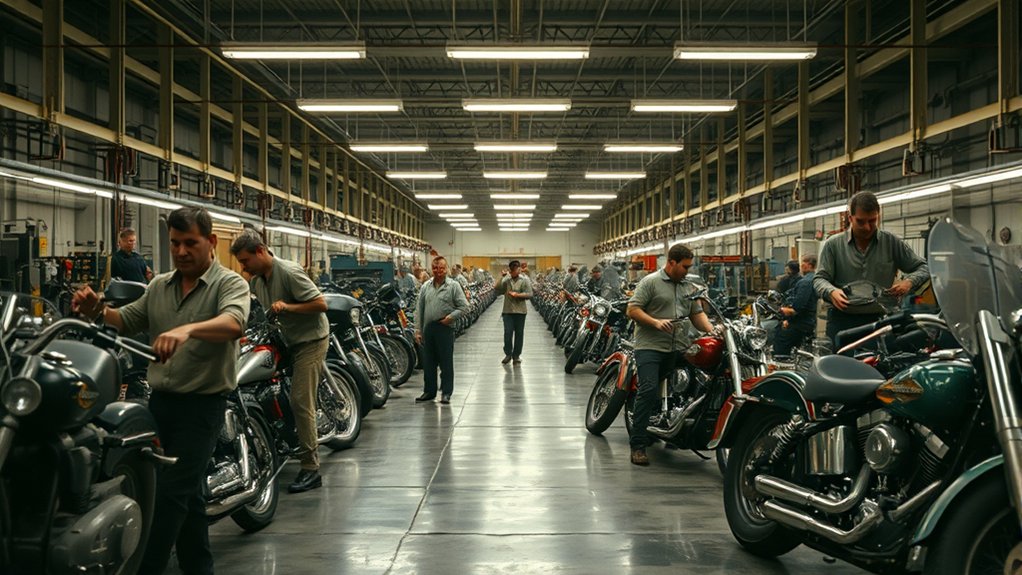
Although Harley-Davidson had long been a dominant name in motorcycles, by 1969 the company was struggling with declining sales and increasing competition that threatened its survival. You’d notice that outdated production methods and quality issues weakened Harley-Davidson’s market position, causing financial struggles that management couldn’t ignore.
To reverse this, the company sought modernization and external support to stabilize operations. In 1969, AMF, a major American sporting goods manufacturer, acquired Harley-Davidson. This acquisition aimed to leverage AMF’s resources and expertise to address Harley’s operational inefficiencies and revitalize the brand.
Without AMF’s intervention, Harley-Davidson risked losing its foothold in an evolving market. This made the 1969 takeover a critical turning point in the company’s history.
What Strategies Did AMF Use to Keep Harley-Davidson Afloat?
Since AMF took over Harley-Davidson in 1969, they employed a range of strategies to stabilize the struggling brand and keep it afloat amid fierce competition. Under AMF ownership, Harley-Davidson focused on diversification by entering markets like golf carts and snowmobiles. The goal was to boost revenue beyond just motorcycles.
They also continued producing and redesigning Italian-made Aermacchi motorcycles until 1978. These were branded to compete with foreign manufacturers. Cost-cutting measures were put in place to sustain operations during economic downturns.
Moreover, Harley introduced new motorcycle models to refresh its lineup and attract customers. This helped keep the brand relevant in a changing market.
| Strategy | Description | Purpose |
|---|---|---|
| Diversification | Golf carts, snowmobiles production | Generate additional revenue |
| Cost-cutting | Expense reduction initiatives | Maintain financial stability |
| Motorcycle models | Redesigned Aermacchi motorcycles | Compete with foreign brands |
What Were the Key Harley-Davidson Models During the AMF Years?
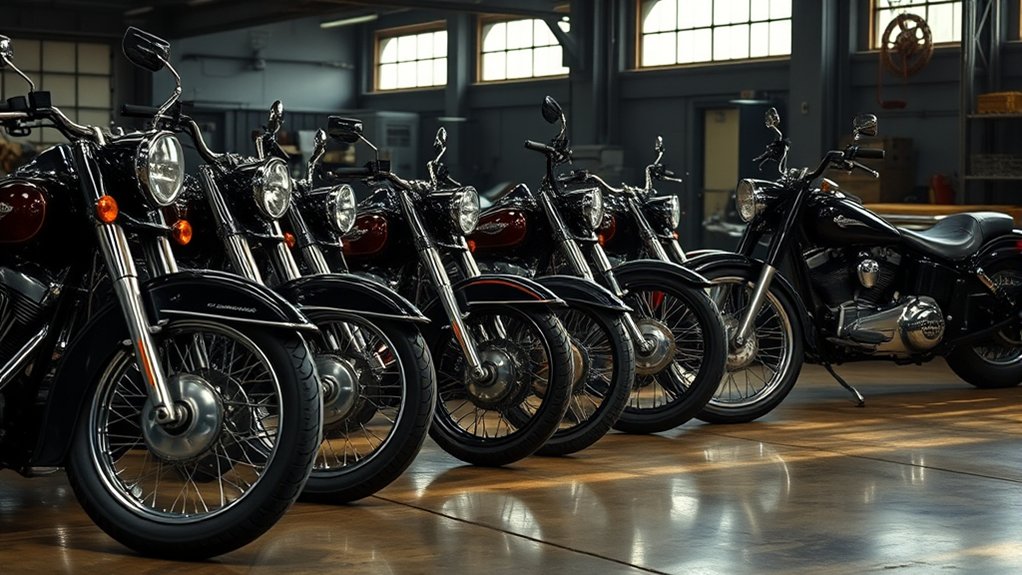
While AMF owned Harley-Davidson, the company introduced several key models that reflected both innovation and a response to market demands. The Harley-Davidson XR-750 stood out as a dominant racing bike from 1970 to 1980, earning acclaim in flat track racing.
You’ll also find the FXS Low Rider, launched in 1977, marked one of Harley’s earliest factory-custom cruisers, catering to riders seeking style and performance.
The XLCR café racer, introduced the same year, offered a unique 1000cc design, appealing to niche enthusiasts despite its brief production.
Furthermore, special editions like the Bicentennial Liberty and Confederate Editions showcased Harley’s cultural engagement under AMF ownership.
Together, these key models illustrate how Harley-Davidson balanced tradition with experimentation during the AMF years.
Why Did Harley-Davidson’s Quality and Reputation Decline Under AMF?
The innovative models introduced during AMF’s ownership couldn’t fully mask the growing issues with Harley-Davidson’s quality and reputation. Under AMF ownership, several factors drove the reputation decline:
Cost-cutting measures led to using cheaper materials and outsourcing production, which hurt Harley-Davidson quality. Manufacturing practices shifted toward mass production, causing inconsistent quality control and lower craftsmanship.
The move away from traditional Harley design alienated loyal riders, fueling rumors and complaints about reliability.
You’ll notice that these changes under AMF ownership caused more mechanical problems and diminished the brand’s image. Ultimately, the focus on quantity over quality damaged Harley’s standing among enthusiasts, making clear how these manufacturing and strategic decisions led to a notable decline during this period.
What Led to Harley-Davidson’s 1981 Management Buyout?
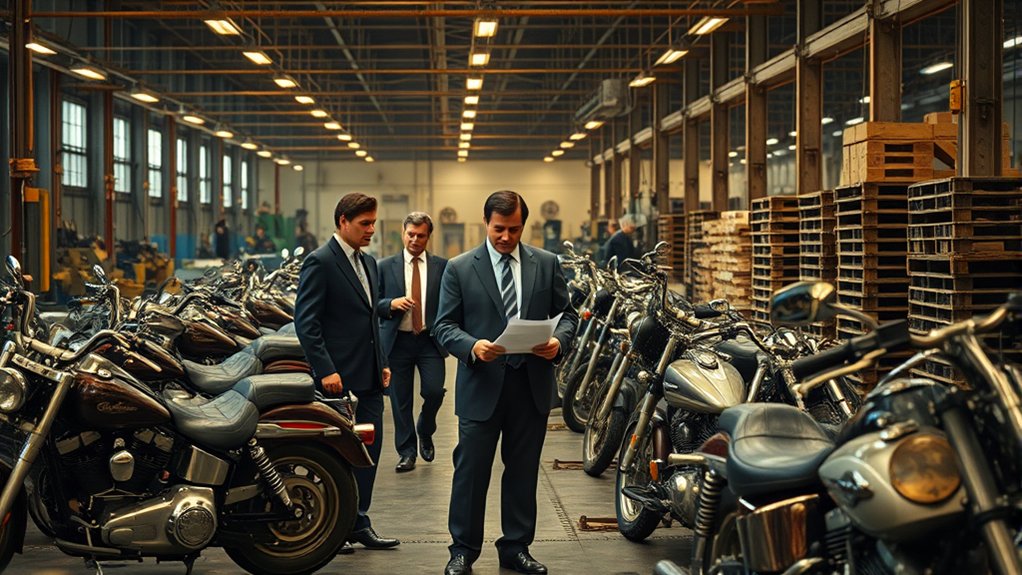
You’re looking at a company weighed down by financial struggles and mounting debt. It was having a hard time keeping up with fierce foreign competitors like Honda and Yamaha.
Because of these pressures, Harley-Davidson’s executives decided to take control themselves. Their goal? To reverse the decline through a management buyout in 1981.
But this move wasn’t just about ownership. It was a strategic effort to reclaim quality, brand identity, and market position.
Financial Struggles and Debt
Because Harley-Davidson faced declining sales and mounting debts by the late 1960s, AMF stepped in to purchase the company in 1969, aiming to stabilize its financial position.
However, the ownership change couldn’t fully address Harley’s deep financial difficulties. You’ll see three main factors worsening the situation:
- Aging motorcycle models and quality issues under AMF’s management led to customer dissatisfaction.
- Labor disputes and a tarnished brand reputation further accelerated declining sales.
- Mounting debts accumulated as the company struggled to modernize and compete effectively.
Rising Foreign Competition
Although Harley-Davidson had a loyal customer base, it couldn’t ignore the growing threat posed by Japanese manufacturers like Honda, Yamaha, and Kawasaki throughout the 1970s. These Japanese motorcycle manufacturers captured significant market share with affordable, reliable, and high-performance bikes. They really challenged Harley-Davidson’s dominance in North America.
Under AMF ownership, Harley struggled with outdated designs and quality issues. This made it harder to compete against the rising foreign competition. Plus, the economic recession in the late 1970s further strained Harley’s finances, which only accelerated its decline.
This mounting pressure from foreign competition, combined with internal challenges, forced Harley-Davidson’s management to take decisive action. So, in 1981, they bought the company back from AMF to regain control, revitalize the brand, and protect its market position against persistent foreign rivals.
Executive-Led Ownership Transition
When senior executives led by Vaughn Beals and Willie G. Davidson launched the 1981 management buyout, they aimed to reclaim Harley-Davidson from AMF ownership. You should understand these key factors that propelled their move:
First, declining quality and brand reputation during AMF ownership since 1969 threatened Harley-Davidson’s survival. They knew something had to change fast.
Next, there was an urgent need to restore independence and regain control over manufacturing and strategic decisions. Being in charge again was crucial.
Finally, the symbolic 900-mile journey from York, Pennsylvania, to Milwaukee showed just how committed they were to reclaiming control. It wasn’t just business—it was personal.
How Did Harley-Davidson Make a Comeback After AMF Ownership?
You’ll see, Harley-Davidson’s comeback really kicked off when senior executives bought back the company in 1981. They reclaimed control and independence, which was a huge turning point.
Right away, they focused on improving the quality of their motorcycles and brought the brand’s American heritage back into the spotlight. This shift in strategy paved the way for innovative new models and helped strengthen the bond with their loyal customers.
Executive Buyback Strategy
Because Harley-Davidson’s reputation suffered under AMF’s ownership, the company’s senior executives took decisive action in February 1981 by buying it back to restore independence and control.
This executive buyback was a bold move driven by Vaughn Beals, Willie G. Davidson, and others who invested millions of their own money. They even traveled 900 miles from York, PA, to Milwaukee to make it happen.
The company buyback aimed at restoring independence through regaining full operational control from AMF to refocus on core values. It also focused on reinvigorating the brand by emphasizing Harley-Davidson’s American heritage.
Plus, they launched innovative models that rebuilt customer trust and loyalty. This strategic buyback marked a turning point, allowing Harley-Davidson to shed the negative impacts of AMF ownership and reclaim its iconic status.
Quality Improvements Initiated
The executive buyback in 1981 set the stage for Harley-Davidson to overhaul its quality standards and regain consumer trust. You’ll notice they implemented stricter manufacturing standards and enhanced quality control processes to address earlier reliability issues.
Harley invested heavily in R&D, culminating in the development of the Evolution engine, which markedly improved performance and durability. Alongside this, they introduced new models like the Softail series, blending classic design with modern engineering improvements.
Their adoption of just-in-time inventory management further tightened quality control by reducing waste and ensuring superior components. These focused efforts on manufacturing and R&D helped Harley-Davidson reestablish its reputation for craftsmanship and reliability, which was vital for its comeback after AMF’s troubled ownership period.
Renewed Brand Focus
How exactly did Harley-Davidson rebound after AMF’s troubled tenure? The revitalization began when executives, including Willie G. Davidson, bought back the company to restore control and quality. Harley-Davidson sharpened its brand focus through a few key moves.
First, they emphasized craftsmanship and American-made quality to distance themselves from the AMF years’ reputation.
Then, they introduced the Softail series, which blended retro design with modern technology. This really appealed to riders who wanted motorcycles that felt nostalgic but were reliable.
They also launched strategic marketing campaigns that highlighted Harley-Davidson’s heritage and connected emotionally with customers. This approach helped reestablish consumer trust and gave the brand a fresh, revitalized image.
What Lasting Impact Did the AMF Years Have on Harley-Davidson?
Although AMF’s ownership introduced cost-cutting measures and extensive outsourcing that damaged Harley-Davidson’s reputation for quality, it also pushed the company to diversify its product line with snowmobiles, golf carts, and smaller bikes. This diversification expanded Harley-Davidson’s portfolio but came at the expense of motorcycle quality, leading to customer dissatisfaction.
Under AMF ownership, controversial models like the Confederate Edition and the XR-750 racing bike emerged, embedding themselves into Harley’s cultural brand legacy. You’ll see that the struggles during this era highlighted the critical importance of maintaining brand authenticity and quality craftsmanship.
These lessons deeply influenced Harley-Davidson’s identity, making the AMF years a complex chapter that ultimately shaped the company’s recognition of its core values and long-term commitment to excellence.
It’s clear that this period was tough, but it taught Harley a lot about what really matters.
How Did the AMF Era Shape Harley-Davidson’s Future?
Because AMF’s ownership exposed Harley-Davidson to significant quality and brand challenges, it forced the company to confront critical weaknesses that shaped its future direction. During the AMF era, you’d notice a marked quality decline due to cost-cutting and outsourcing, which hurt Harley-Davidson’s reputation.
AMF ownership revealed Harley-Davidson’s weaknesses, highlighting quality declines and brand challenges that shaped its future.
However, this period also spurred some important changes. For example, model development innovations like the XR-750 and FX Super Glide came about, influencing Harley’s design language. It was also a time when the company had a stark realization of the importance of brand identity and American craftsmanship.
All of this led to a company reinvention that culminated in the 1981 buyback, restoring focus on quality and independence. This challenging chapter under AMF ownership ultimately motivated Harley-Davidson to innovate and reinvent itself.
In the end, it ensured the brand’s survival and resurgence as a symbol of premium American motorcycles.
Frequently asked questions
Who Founded AMF and What Other Industries Were They Involved In?
You should know that AMF was founded by a group of entrepreneurs in 1900, originally focusing on recreational equipment like tennis rackets and bowling alleys.
Over time, they expanded into industrial machinery, golf carts, pinball machines, and amusement park rides.
This diverse involvement in manufacturing and recreational products helped AMF become a significant conglomerate. They leveraged their expertise across various industries to support acquisitions and business growth.
It’s pretty interesting how they managed to branch out so much from their original focus.
How Much Did AMF Pay to Acquire Harley-Davidson in 1969?
Imagine buying a classic car that’s seen better days. You’d pay less, knowing it needs work. AMF paid about $80 million to acquire Harley-Davidson in 1969, reflecting the brand’s declining sales and financial struggles.
This price showed both the risks and potential value AMF saw. By investing this amount, they aimed to steer Harley-Davidson back to stability and growth.
They hoped their resources could revive the iconic motorcycle maker.
Were There Any Notable Advertising Campaigns During the AMF Ownership?
Yes, you’ll find notable campaigns during AMF’s ownership that highlighted American pride and rugged individualism. They pushed the 1976 Bicentennial Liberty Edition, tapping into patriotic sentiment.
You’ll also see attempts to revive Harley’s rebellious image with slogans like “The Spirit of ’76.”
However, some campaigns, like the controversial 1977 Confederate Edition, sparked protests.
What Was the Employee Reaction to Amf’s Management Style?
You’d probably love AMF’s management style if you enjoyed job cuts and quality slips disguised as “efficiency.” Employees felt like cogs in a profit machine, with morale tanking alongside craftsmanship.
The impersonal, cost-driven approach sparked frustration and tension. Some stuck around, though, clinging to hope for Harley’s revival.
Did AMF Own Any Other Motorcycle Brands Besides Harley-Davidson?
No, AMF didn’t own any other motorcycle brands besides Harley-Davidson. Their motorcycle focus remained solely on Harley-Davidson during their ownership period.
While AMF diversified into recreational vehicles like golf carts and snowmobiles, they never expanded into acquiring or managing additional motorcycle manufacturers.
Final Thought
You’ve seen how AMF’s ownership was a double-edged sword for Harley-Davidson. It offered a lifeline in 1969 but also led to quality slips that hurt its reputation.
The 1981 management buyout was the turning point. It cut through the fog of decline like a sharp blade. This era shaped Harley’s resilience and taught hard lessons that fueled its comeback and future innovation.
AMF’s impact remains a vital chapter in Harley’s storied legacy.