How Long Does It Take To Get A Motorcycle License – Guide
You can get your California motorcycle license in just a few days if you’re 21 or older and complete a CHP-approved safety course. This course waives the DMV skills test.
Without the course or if you’re under 21, expect longer times. That’s because of mandatory permit holding periods, course availability, DMV appointment backlogs, and test scheduling.
Your timing depends on completing requirements and passing exams efficiently. Explore the full process and common hurdles to plan accordingly.
How Long Does It Take to Get a California Motorcycle License?

If you’re 21 or older, you can get your California motorcycle license in just a few days by completing the CHP-approved Basic Rider Course (CMSP) and passing the written and vision tests.
The CMSP Basic Rider Course takes about 15 hours and waives the DMV skills test, speeding up the process considerably.
After presenting your DL 389 completion certificate and paying the application fee, the DMV issues your motorcycle license promptly.
If you skip the CMSP course, you’ll need to schedule and pass the DMV skills test, which may take longer due to appointment availability.
For riders under 21, you must first complete the CMSP course, obtain a motorcycle instruction permit, and hold it for six months before upgrading to a full license.
The CMSP course is often faster and more convenient for all applicants.
Steps to Get a California Motorcycle License If You’re 21 or Older
If you’re 21 or older and want to get your California motorcycle license, the first step is to complete a CHP-approved safety course.
If you don’t want to take the course, you can get ready to pass the DMV skills test instead.
After that, you’ll need to pass the written knowledge exam along with a vision test at the DMV.
Once you’ve got your course completion certificate or you’ve passed the tests, head over to the DMV office.
There, you can submit your application and pay the required fee to get your license.
Complete Safety Course
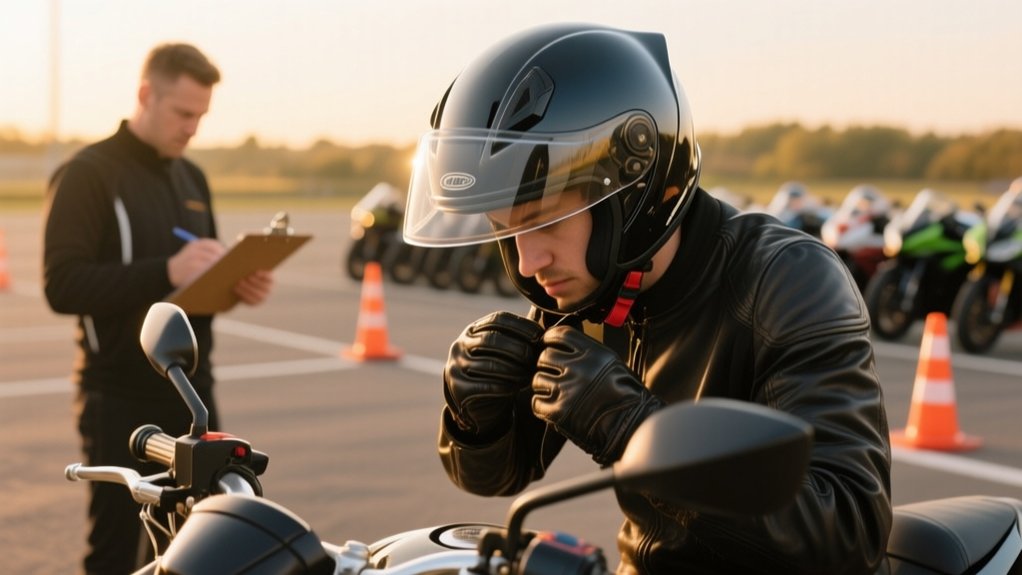
Completing the CHP-approved California Motorcyclist Safety Program (CMSP) Basic Rider Course is a key step toward getting your motorcycle license if you’re 21 or older. This motorcycle safety course combines about 15 hours of classroom instruction and on-cycle training.
After finishing, you’ll receive a DL 389 Certificate of Completion, which waives the DMV on-bike skills test, often speeding up your licensing process. With your DL 389, visit a California DMV office to take the written test, pass the vision exam, and pay the application fee, roughly $39.
Course fees typically range from $250 to $350 and may qualify you for insurance discounts. Many riders find completing this course helps them obtain their motorcycle license in just a few days, thanks to waived tests and faster paperwork processing.
Pass Written Test
Wondering how to pass the written test for your California motorcycle license if you’re 21 or older? You’ll need to take the DMV written motorcycle knowledge test, which requires an 80% passing score.
Before your DMV appointment, study the California Motorcycle Handbook thoroughly. Focus on traffic laws, right-of-way, safe riding techniques, protective gear, and hazard handling.
Bring your completed application (DL 44), valid ID, and Social Security number to the DMV. You must also pass the vision exam during the same visit.
The application fee is about $39, but check for any updates. You have up to three attempts to pass the written knowledge test within 12 months before reapplying.
Successfully passing both the written test and vision exam is essential to move forward in obtaining your motorcycle license.
Visit DMV Office
Head to the DMV office prepared with your completed DL 44 application, valid ID, Social Security number, and, if applicable, your DL 389 Certificate of Completion from the California Motorcyclist Safety Program (CMSP). If you have the Completion Certificate, you can skip the DMV motorcycle skills test.
At the DMV office, you’ll take the written motorcycle knowledge test, requiring an 80% passing score, and a vision exam.
After passing these, submit your DL 389 and pay the application fee, currently about $39.
If you didn’t complete CMSP, you’ll need to schedule a DMV appointment to pass the written, vision, and skills tests. Unlike DMV offices in Texas, California’s DMV office requires this specific process for motorcycle licensing, so bring all necessary documents to avoid delays.
Why Getting a California Motorcycle License Takes Longer If You’re Under 21
Because you’re under 21, California requires you to complete a CHP-approved Motorcycle Safety Program and hold your instruction permit for at least six months before upgrading to a full license. You must enroll in the Motorcyclist Safety Program Basic Rider Course, which demands about 15 hours of training and issues a DL 389 Completion Certificate upon successful completion.
Under 21? Complete a CHP-approved 15-hour safety course and hold your permit six months before a full license.
This course, combined with permit restrictions like no night riding, no freeways, and no passengers, limits your practice opportunities and extends the time needed to gain sufficient experience.
Plus, course availability and local waitlists can add days or weeks beyond the mandatory six-month motorcycle permit period.
Failing to present your Completion Certificate or required DMV documents can cause further delays. These factors collectively make the process longer if you’re under 21.
How a Motorcycle Safety Course Can Speed Up Your California License

Taking the CHP-approved Motorcycle Safety Course lets you skip the DMV skills test because they give you a DL 389 certificate once you finish.
So, all you have to do is pass the written and vision exams, which helps speed up the whole licensing process.
On top of that, completing the course might even qualify you for insurance discounts, which means you could save some money, not just time.
It’s a win-win!
Course Completion Benefits
Completing a motorcycle safety course offers a clear advantage in speeding up your California license process. By finishing the CHP-approved Motorcyclist Safety Program (CMSP) Basic Rider Course, you earn the DL 389 Certificate of Completion, which waives the DMV skills test.
If you’re 21 or older, this means you can skip the on-cycle riding exam entirely, streamlining your path to endorsement after passing the written test and vision exam.
While under-21 applicants still need a six-month learner’s permit, the course reduces testing requirements.
The CMSP typically costs $250–$350 and is faster and easier than scheduling a DMV skills test. Plus, completing the course may qualify you for insurance discounts, making it a smart investment that shortens your overall licensing timeline.
DMV Test Waiver
Signing up for and finishing the CHP-approved California Motorcyclist Safety Program (CMSP) Basic Rider Course can markedly speed up your path to a motorcycle license by waiving the DMV riding skills test. Once you complete the 15-hour course, you receive a DL 389 Certificate of Completion, which allows riders 21 and older to skip the DMV skills test when applying for their license.
You’ll still need to pass the written knowledge and vision exams, but the waiver often lets you get your license within days. If you’re under 21, you must hold a learner’s permit for six months despite completing the CMSP; the waiver only replaces the skills test, not the permit waiting period.
Bring your DL 389 and required ID to the DMV to use this benefit.
Insurance Discount Potential
Beyond waiving the DMV riding skills test, the California Motorcyclist Safety Program (CMSP) Basic RiderCourse also offers financial benefits by qualifying you for insurance discounts. When you complete this Motorcycle Training, you receive a DL 389 Certificate of Completion, which many insurers recognize to reduce premiums. Bringing this certificate to your insurance provider can secure valuable savings.
Key points to remember:
- Insurance discounts vary but often provide multi-year premium reductions.
- Course costs ($250–$350) may be partly offset by these discounts.
- Keep your DL 389 Certificate of Completion and proof of licensing to claim benefits.
Completing the CMSP course not only speeds up your license process but also helps you get insured faster and more affordably in California.
What to Expect When Taking the California DMV Written and Skills Tests

When you take the California DMV written and skills tests, you’ll need to demonstrate knowledge of traffic laws, safe riding techniques, and proper handling of emergency situations.
The California DMV written test covers right-of-way, protective gear, and emergency responses; you must score at least 80% to pass.
If you’re 21 or older and completed the CMSP Basic Rider Course (DL 389), the DMV waives the on-cycle skills test, but you still must pass the written test and a vision exam.
Without CMSP completion, the on-cycle skills test evaluates your pre-ride inspection, slow-speed maneuvers, gear shifting, correct lane tracking, and emergency stops.
You get three attempts to pass the written test within 12 months before reapplying. Prepare thoroughly to succeed efficiently.
Documents You Need to Bring to the DMV for Your California License
A completed DL 44 application is essential to start your motorcycle license process at the California DMV.
Along with this, you’ll need to bring your current California driver license or acceptable proof of identity if you don’t have one.
If you’ve completed a CHP-approved Motorcycle Safety Course, the Certificate of Completion (DL 389) lets you waive the riding test.
Also, be prepared to present your Social Security number and proof of lawful presence if you’re not a U.S. citizen.
Make sure to bring:
- Valid California driver license or acceptable proof of identity
- Certificate of Completion (DL 389) if applicable
- Payment for application fees and any required documents for minors
These documents guarantee a smooth process toward obtaining your California motorcycle license.
Common Delays When Getting Your California Motorcycle License
Finding your way through the process of obtaining your California motorcycle license can involve several common delays that might extend your timeline. Waiting for course completion, especially the CMSP Basic RiderCourse, often adds 1–4+ weeks due to limited seats.
If you’re under 21, the 6-month permit holding period is mandatory. DMV appointment backlogs and scarce skills test slots can also delay progress. Failing tests or missing documentation means rescheduling, which further prolongs your wait.
| Delay Factor | Typical Wait Time | Impact |
|---|---|---|
| Course Completion | 1–4+ weeks | Scheduling delays |
| Learner’s Permit | 6 months (if <21) | Mandatory waiting period |
| DMV Appointment | Several weeks to months | Test and processing delays |
| Test Failures | Days to weeks | Rescheduling required |
| Documentation Issues | Unpredictable | Appointment rescheduling |
Frequently Asked Questions
Can I Use My Out-Of-State Motorcycle License in California?
You can’t rely on your out-of-state motorcycle license indefinitely in California. Temporary reciprocity allows limited use, but you must get a California license within 10 days of establishing residency.
The DMV requires license verification, vision, and written tests unless you hold a California-approved safety course certificate. Out-of-state endorsements don’t automatically transfer, so you’ll need to meet California’s requirements promptly.
This way, you can ride legally and avoid penalties.
Are There Different License Types for Motorcycles in California?
Like choosing the right tool for a job, California offers two motorcycle license types.
The M1 endorsement lets you ride any two-wheel motorcycle or motor driven cycle, while the M2 endorsement is limited to motorized bicycles, mopeds, and motorized scooters.
You’ll need the M1 for standard motorcycles, but the M2 covers smaller, less powerful vehicles.
Knowing which endorsement suits your ride helps you stay legal and safe on the road.
What Is the Cost of Obtaining a Motorcycle License in California?
You’ll face a fees breakdown starting with a $39 DMV application fee.
Training through the CMSP course costs around $250 to $350 but offers skills test waivers and potential training discounts.
Choosing the DMV skills test might save upfront fees but could lead to extra costs like bike rentals or retakes.
Don’t forget renewal costs, which are separate and periodic.
Always verify current fees and discount options before you start.
Can I Ride a Motorcycle With a Learner’s Permit Alone?
Yes, you can ride alone with a learner’s permit, but you must follow strict helmet laws and passenger restrictions.
No passengers are allowed.
Nighttime riding is also prohibited until you get your full license.
If you’re under 21 in California, you’ll need to hold the permit for six months and stick to these rules.
Always carry your permit and proof of insurance to avoid fines or suspension.
Stay safe and ride responsibly.
Is Motorcycle Insurance Required to Get a California Motorcycle License?
No, you don’t need insurance proof to get a California motorcycle license. The DMV focuses on your identity, residency, and passing tests or providing a CMSP certificate.
However, when you ride, you must carry liability minimums insurance or meet financial responsibility laws. If you don’t own a bike, nonowner policies can cover you.
Conclusion
Getting your California motorcycle license takes patience, preparation, and persistence. You’ll study the handbook, pass the written test, complete the safety course, and ace the skills exam.
You’ll gather your documents, schedule your appointments, and face potential delays with confidence. By following each step carefully and staying committed, you’ll ride legally and safely.
Remember, every moment spent preparing is a moment earned on the open road. Ready, steady, ride.