When Was Kawasaki Founded – A Quick History
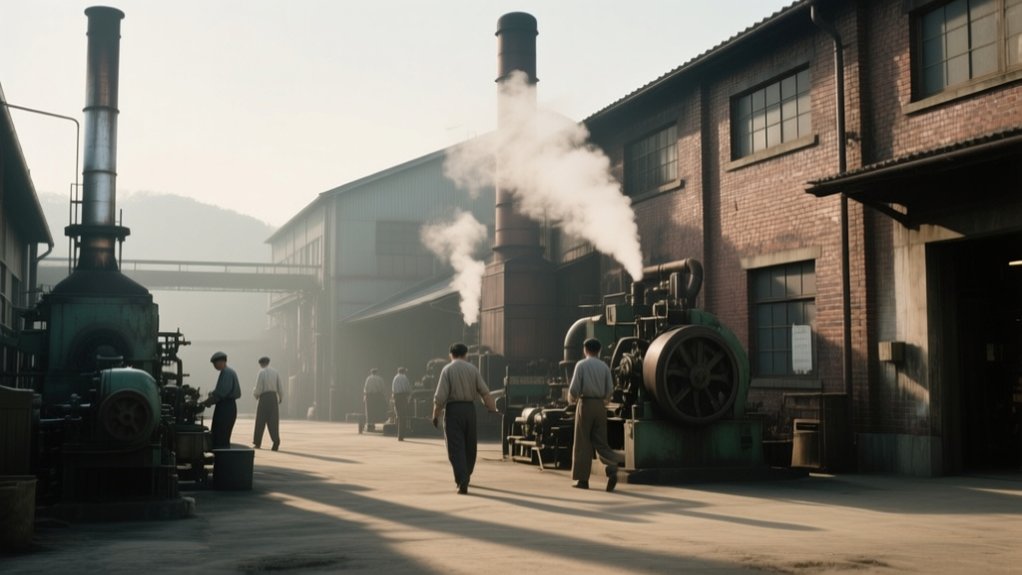
Kawasaki was founded in 1878 by Shozo Kawasaki in Tokyo, starting out as a shipbuilding company focused on ocean-going steel vessels. It moved its headquarters to Hyogo in 1886. From there, it rapidly expanded into locomotives, aircraft, and vehicles throughout the early 20th century.
During World War II, Kawasaki played a critical role in military aircraft production. After the war, the company didn’t slow down. Instead, it grew into a global heavy industry leader through innovation and strategic mergers.
Keep exploring to see how Kawasaki transformed into a multinational powerhouse. It’s quite a story!
Founding of Kawasaki: When and Where It Began
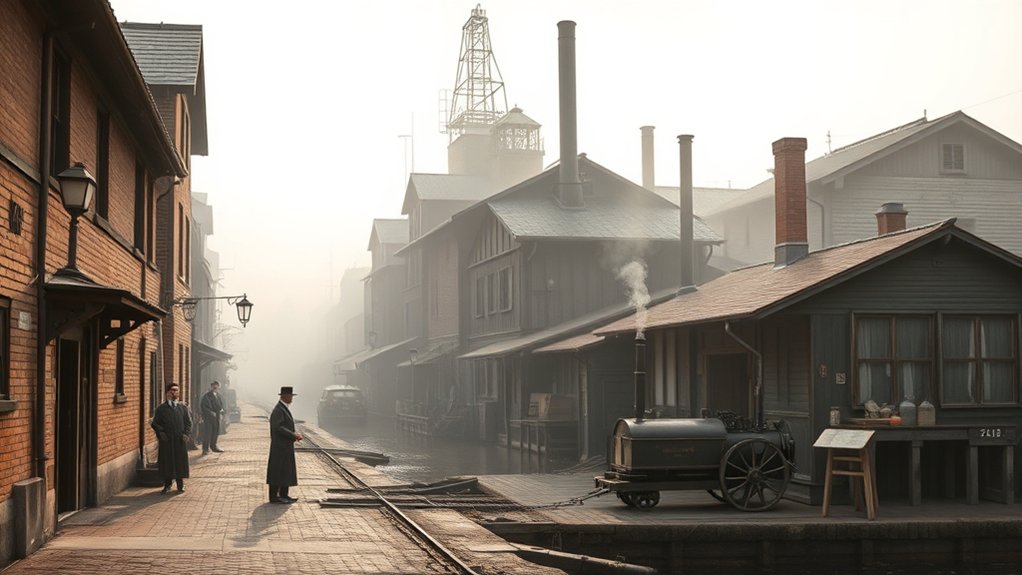
Although Kawasaki started as a shipbuilding business, its founding in 1878 by Shozo Kawasaki in Tokyo marked the beginning of a company that would soon diversify into various industries. You’ll find that Kawasaki was founded during Japan’s rapid industrialization, focusing initially on constructing ocean-going ships.
In 1886, the company relocated its headquarters to Hyogo and established Kawasaki Dockyard Co., Ltd. This move played a critical role in expanding its shipbuilding capabilities.
From these roots, Kawasaki’s history reflects a purposeful diversification into railroads, automotive parts, and aircraft manufacturing. It adapted to Japan’s evolving industrial needs over time.
Understanding Kawasaki’s origins helps you appreciate how its early foundation in shipbuilding set the stage for the broad industrial presence it holds today.
Founder and Motivation Behind Kawasaki
Because Shozo Kawasaki recognized the urgent need to modernize Japan’s marine industry in the late 19th century, he founded Kawasaki in 1878 with a clear vision: to build ocean-going steel ships that would strengthen Japan’s transportation infrastructure. His motivation extended beyond shipbuilding. He aimed to propel Japan’s industrial manufacturing and foster industrial growth.
This focus on modernization positioned Kawasaki as a pivotal force in advancing Japan’s heavy industries. You see, Kawasaki’s foundation reflects a commitment to Japan’s industrial future.
| Aspect | Impact |
|---|---|
| Shozo Kawasaki | Visionary founder |
| 1878 | Year Kawasaki was established |
| Marine Industry | Core focus for innovation |
| Steel Ships | Symbol of modernization |
| Transportation Infrastructure | Backbone of Japan’s growth |
Kawasaki’s Origins in Shipbuilding
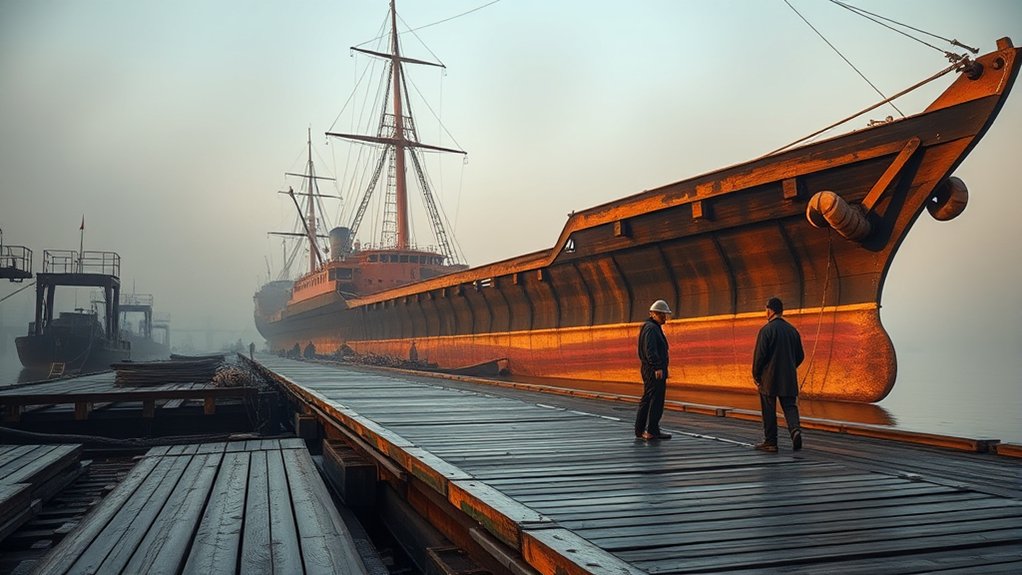
You’ll find that Kawasaki’s roots go all the way back to 1878, when Shozo Kawasaki started the company as a shipbuilder in Japan. At first, they focused on building ocean-going steel ships and quickly made a name for themselves.
In fact, by 1886, they’d moved their shipyard from Tokyo to Hyogo to grow their operations even more. This early start in shipbuilding really laid the groundwork for Kawasaki’s future growth into different industrial areas.
Founding and Early Years
How did Kawasaki transform from a single shipbuilding workshop into a pioneering industrial company? You start with Shōzō Kawasaki’s founding of the company in 1878, focusing on shipbuilding in Japan. In its early years, the company concentrated on constructing ocean-going vessels, quickly establishing a reputation for quality and innovation.
By 1886, Kawasaki moved its headquarters from Tokyo to Hyogo, becoming Kawasaki Dockyard Co., Ltd. This was a strategic step that supported industrial expansion.
A major milestone came in 1890, when Kawasaki built Japan’s first steel ship, showcasing its advanced capabilities in shipbuilding.
This achievement marked a turning point in company history, setting the foundation for diversification into other heavy industries. Understanding these early years really highlights Kawasaki’s role in Japan’s industrial growth and its commitment to innovation.
Transition to Shipbuilding
Shōzō Kawasaki’s initial focus on shipbuilding set the stage for the company’s growth and innovation in Japan’s maritime industry. Founded in 1878, Kawasaki specialized in constructing ocean-going steel ships, fueling the shipbuilding industry. By relocating its shipyard to Hyogo in 1886, Kawasaki established Kawasaki Dockyard, which became central to Japan’s maritime industry.
This move strengthened Kawasaki’s role as a shipbuilder and laid the groundwork for its future industrial manufacturing ventures.
| Year Founded | Location | Focus Area |
|---|---|---|
| 1878 | Japan (Kobe) | Steel ships |
| 1886 | Hyogo | Kawasaki Dockyard |
| 1950s | Japan | Largest shipbuilder |
| Post-1950s | Japan | Industrial manufacturing |
You see, Kawasaki’s origins in shipbuilding firmly anchored its influence in Japan’s maritime industry.
Early Expansion Into Locomotives and Aircraft
Although Kawasaki began as a shipbuilding company, it quickly expanded its expertise into locomotive manufacturing by 1911. This marked its first step beyond maritime engineering.
Kawasaki’s journey beyond shipbuilding began with locomotive manufacturing in 1911, marking a key diversification milestone.
You’ll find that this early expansion showcased Kawasaki’s ability to diversify into heavy-duty vehicles, including trucks and buses during the 1930s.
By 1918, Kawasaki entered the aircraft industry by founding the Kawasaki Aircraft Company, which was a pivotal move.
You’ll appreciate how Kawasaki Aircraft focused on producing aluminum aircraft by 1922, enhancing Japan’s aviation capabilities.
Their aircraft collaboration progressed steadily, reflecting Kawasaki’s commitment to innovation.
Kawasaki’s Role During World War II
When World War II escalated, Kawasaki Heavy Industries became a central figure in Japan’s military aircraft production, manufacturing key models like the Ki-61 fighter. You’ll find that Kawasaki considerably expanded its aerospace division during WWII, producing not only fighters but also bombers and reconnaissance aircraft to support Japan’s wartime efforts.
The company didn’t stop at assembling planes; it also manufactured essential aircraft components, engines, and related military equipment. This all-encompassing aircraft manufacturing placed Kawasaki at the heart of Japan’s military-industrial complex.
Their facilities were heavily involved in aircraft production, making them a crucial contributor to the nation’s military aviation capabilities throughout the conflict. By focusing on military aircraft and component production, Kawasaki played a pivotal role in Japan’s WWII aerospace sector.
How Kawasaki Expanded After World War II
How did Kawasaki manage to transform itself after the devastation of World War II? In the post-World War II era, Kawasaki resumed shipbuilding and pursued diversification across industrial sectors, including aerospace and transportation.
Kawasaki rebuilt post-WWII by resuming shipbuilding and expanding into aerospace and transportation industries.
You’d see Kawasaki Steel’s establishment in 1950 as a key move driving industrial expansion. It really strengthened their steel production capabilities. The company also advanced military aircraft technology, having developed the Ki-61 fighter during the war.
Later, they adapted that expertise toward other manufacturing areas. Kawasaki created distinct companies for shipbuilding, rolling stock, and aircraft, which reinforced its industrial footprint.
By the 1960s, Kawasaki had grown into a major manufacturer of trains, ships, and aircraft.
This growth set the stage for its motorcycle manufacturing ventures. This strategic diversification is a pivotal chapter in Kawasaki history. It really highlights their resilience and innovation.
Kawasaki’s Entry Into Motorcycle Manufacturing
Kawasaki’s expansion into motorcycle manufacturing built on its established expertise in heavy industry and engineering. By 1953, Kawasaki developed motorcycle engines, leading to its first complete motorcycle, the Meihatsu, in 1954.
The merger with Meguro Manufacturing in 1963 formed Kawasaki Motorcycle Co., Ltd, solidifying its role as a Japanese motorcycle producer. In 1974, Kawasaki opened its first motorcycle factory in Lincoln, Nebraska, marking a significant milestone in the U.S. motorcycle industry.
| Year | Event |
|---|---|
| 1954 | Produced first motorcycle, Meihatsu |
| 1963 | Merged with Meguro Manufacturing |
| 1974 | Opened motorcycle factory in Lincoln |
You can see how Kawasaki’s strategic moves positioned it as a key player in motorcycle manufacturing worldwide.
Major Milestones in Kawasaki’s Industrial Growth
Although it started as a shipbuilding company in 1878, the firm rapidly expanded its expertise to various industrial sectors, including locomotives, aircraft, and railway systems.
Founded by Shozo Kawasaki, the company’s move to Hyogo in 1886 marked a key milestone in its industrial growth.
Kawasaki diversified into locomotive production and aircraft manufacturing, establishing its Aircraft Department in 1918 and producing Japan’s first aircraft.
By the 1950s, it became Japan’s largest shipbuilder, reflecting significant industrial diversification.
The 1969 merger of Kawasaki Dockyard, Rolling Stock, and Aircraft departments formed Kawasaki Heavy Industries, consolidating its industrial growth and shaping the company history.
These milestones highlight Kawasaki’s evolution from shipbuilding roots into a multifaceted heavy industry leader.
How Kawasaki Became a Global Heavy Industry Leader
When you look at Kawasaki’s journey from a shipbuilding firm to a global heavy industry leader, you’ll see how strategic diversification played a crucial role. Founded in 1878 by Shōzō Kawasaki, the company initially focused on shipbuilding, constructing ocean-going vessels that set a strong industrial foundation.
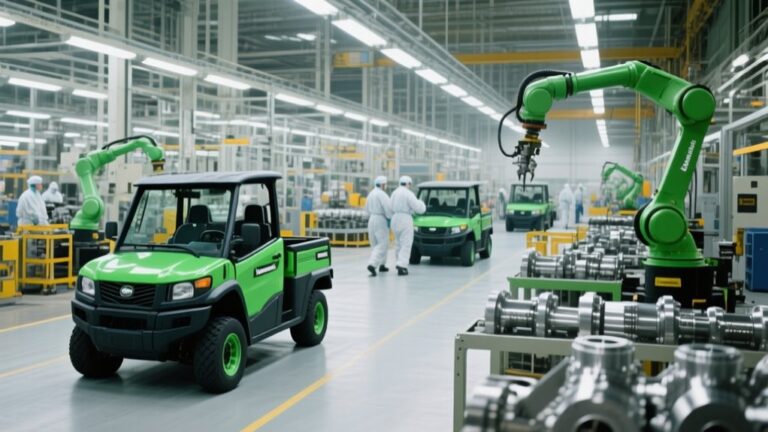
Over the 20th century, Kawasaki expanded its expertise into aerospace, transportation, and industrial equipment, becoming a true industrial conglomerate. Strategic expansion included establishing manufacturing plants in the U.S. and China, transforming Kawasaki into a multinational enterprise.
Continuous innovation in shipbuilding, aerospace, and heavy industry propelled Kawasaki’s reputation worldwide. This diversification and commitment to technological advancement allowed Kawasaki to evolve from its founding roots into a key player shaping global heavy industry markets.
Frequently asked questions
What Are Kawasaki’s Most Popular Motorcycle Models Today?
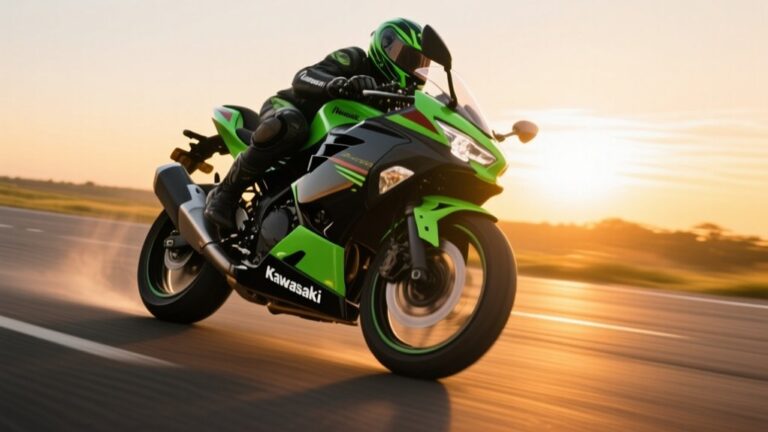
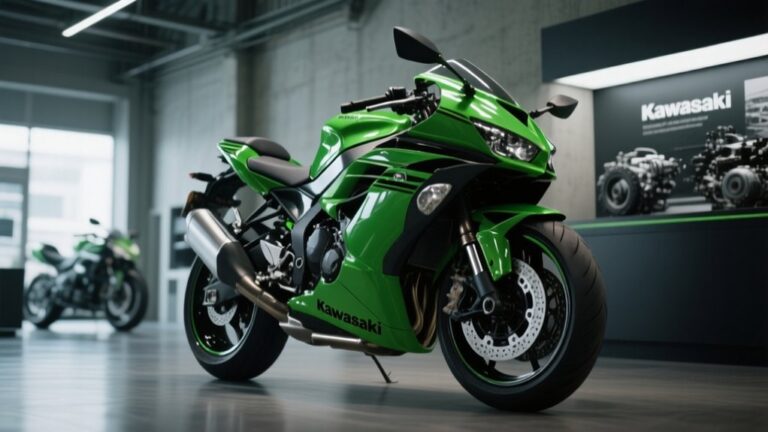
Kawasaki’s most popular models today include the Ninja ZX-10R, known for its racing performance. You’ll also find the Z650 and Z900 favored for their naked styling and urban versatility.
If motocross is your thing, the KX250 and KX450 are top choices.
For cruisers, the Vulcan series, especially the Vulcan S, offers comfort and customization.
Don’t forget the Ninja H2 and H2R; they’re famous for supercharged power and incredible speed. These models really show what Kawasaki can do across different riding styles.
How Does Kawasaki Ensure Environmental Sustainability in Manufacturing?
Kawasaki tackles environmental sustainability in manufacturing like a well-oiled machine. You’ll find advanced pollution control measures such as flue gas desulfurization and denitration to minimize emissions.
They recycle waste heat from refuse incinerators and integrate eco-friendly processes, including waste recycling systems.
Kawasaki also invests in renewable energy tech and fusion energy research, ensuring their industrial plants reduce environmental impact while promoting sustainable energy solutions. It’s all about making their operations cleaner and greener without slowing down.
What Innovations Has Kawasaki Introduced in Watercraft Technology?
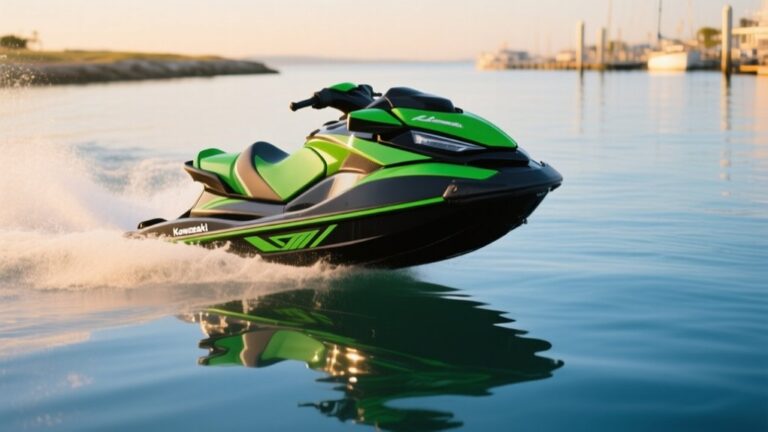
Kawasaki has revolutionized watercraft technology by introducing stand-up models in 1973, designed for better maneuverability. You’ll find their Jet Ski line evolved from 400 cc two-stroke engines to efficient four-stroke engines, enhancing performance and fuel economy.
They also offer high-powered sit-down models with up to 300 horsepower, integrating advanced speed and handling tech. Kawasaki’s continuous innovation keeps pushing personal watercraft’s limits, giving you a thrilling yet reliable ride.
Where Are Kawasaki’s Main Manufacturing Plants Located Worldwide?
You’ll find Kawasaki’s main manufacturing plants in Japan, especially in Kobe and Sakaide. They operate shipyards and engineering facilities there.
They also have significant production sites in the U.S., like their plant in Lincoln, Nebraska.
In China, Kawasaki runs joint ventures such as NACKS and DACKS.
Europe hosts assembly and production facilities in the UK, Germany, and the Netherlands.
Meanwhile, regional offices and plants serve markets in Thailand, South Korea, and Brazil.
What Sponsorships or Partnerships Is Kawasaki Involved in Currently?
You’ll find Kawasaki actively sponsoring racing teams like the Kawasaki Racing Team in the Superbike World Championship and the Monster Energy Kawasaki team in MotoGP.
They back major events such as the Isle of Man TT and FIM Motocross World Championship.
Kawasaki also partners with automotive and industrial firms for tech development and marketing.
They support youth and amateur racing programs to grow grassroots motorcycle sports worldwide.
It’s all about keeping the passion for motorcycling alive and pushing the limits in both competition and innovation.
Final Thought
You’ve seen how Kawasaki’s journey began modestly in 1896, quietly building ships before sailing into new industries. Its evolution wasn’t just growth; it was a steady transformation, adapting through challenges and global shifts.
Today, Kawasaki stands as a subtle powerhouse in heavy industry and innovation. Understanding this history helps you appreciate how persistence and versatility turned a humble start into a global leader you might take for granted.