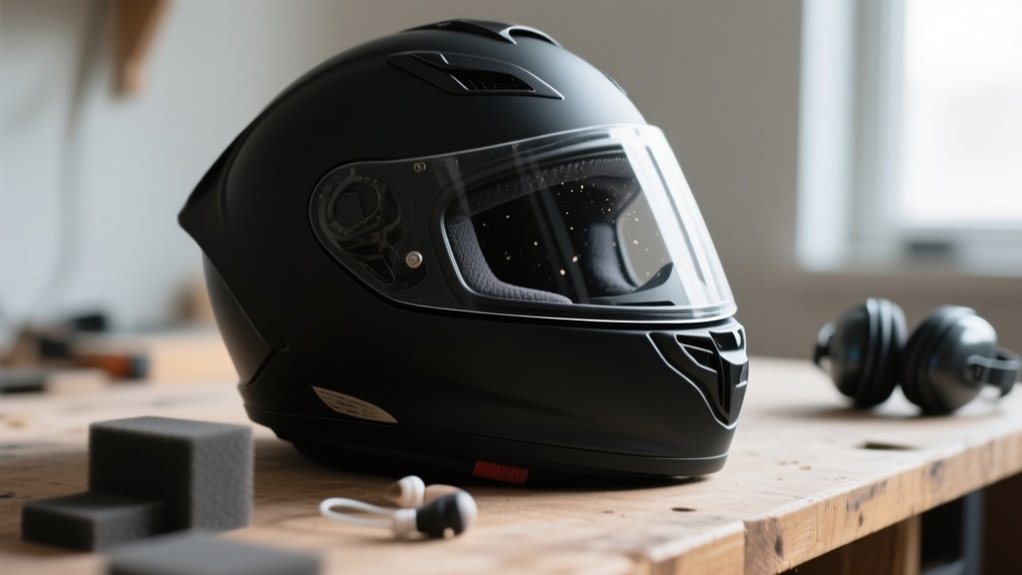
What Is The Quietest Motorcycle Helmet – The Full Story
The quietest motorcycle helmet is the one that fits snugly, seals cleanly, and manages airflow with an aerodynamic shell.
You’ll usually get the best results from a full-face or quiet modular design.
Look for multi-density EPS, acoustic foam, and low-vibration construction.
Keep vents closed when you don’t need them, and add earplugs for a bigger noise drop.
There’s more to choosing, testing, and tuning one well.
What Makes the Quietest Motorcycle Helmet?
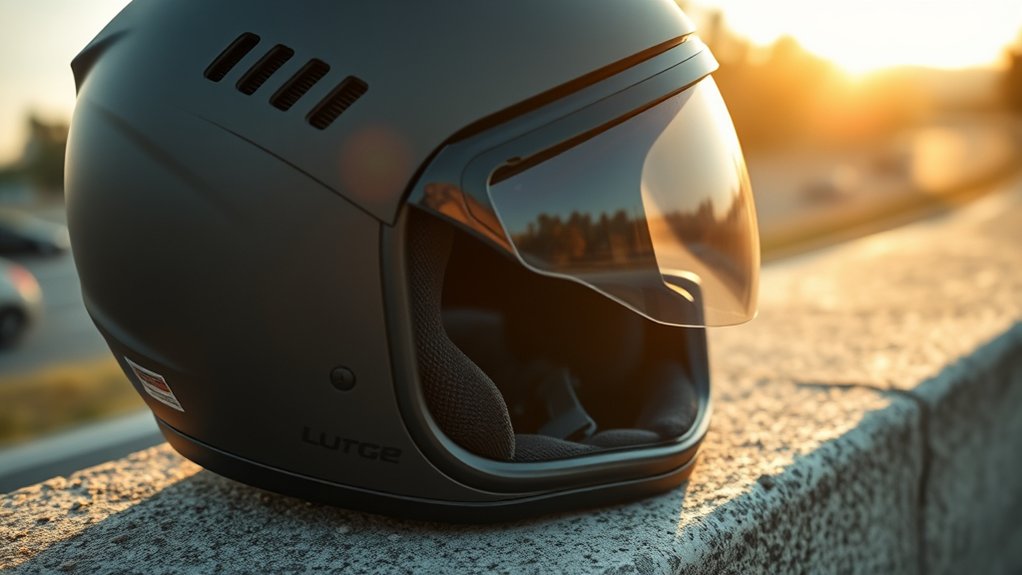
What makes the quietest motorcycle helmet is a combination of tight aerodynamic shaping and strong noise control at the points where air usually gets in.
Quietest motorcycle helmets combine streamlined aerodynamics with sealed edges to keep wind noise out.
You benefit most when aerodynamic design uses CFD-optimized shell contours and a smooth forehead profile that cuts turbulence at speed.
Inside, a multi-density EPS liner with viscoelastic inserts and noise-damping liners helps absorb sound without sacrificing impact performance.
At the edges, a snug neck roll, a well-fitted chin curtain, and a sealed shield with a silicone gasket block airflow that would otherwise rush in.
Vent ports should close securely and avoid resonant cavities. Open vents can add inlet noise.
When all these parts fit properly, you get a helmet that stays calm, stable, and measurably quieter.
Why Helmet Noise Matters on Long Rides
When you’re on long highway rides, helmet noise can build up fast. Over time, that unsafe level of sound can increase your risk of hearing damage, so quieter helmet designs—and earplugs—really matter.
And it’s not just your ears. Wind turbulence can also raise fatigue and make it harder to stay focused, which affects how alert you can be and, ultimately, how safely you ride. A helmet that lowers interior noise helps with GPS clarity, intercom communication, and overall comfort—especially when you also get a good fit and use solid wind protection.
Hearing Protection Benefits
Because highway wind noise inside a helmet can sit around 85–100 dB at 60–75 mph, long rides may expose your ears to levels that contribute to noise-induced hearing loss.
You protect your hearing by choosing a quiet shell, acoustic liners, and a helmet with tight seals around the visor, neck roll, and cheek pads.
Motorcycle-specific earplugs add another layer of defense. They usually cut harmful frequencies by 15–25 dB while keeping traffic cues readable.
When you combine lower wind noise with a good fit, you preserve clarity for GPS prompts and intercom voice without blasting your ears.
Keep seals intact, set your windshield correctly, and ride in a tucked posture when needed.
These small changes reduce cumulative exposure and help protect your hearing over years of riding.
Fatigue Reduction Matters
Quieting helmet noise doesn’t just protect your hearing. It also helps you stay sharper on long rides. At highway speed, wind roar often sits above 85–90 dB, and that constant load makes you work harder to process every mile.
You’ll feel it as rising stress and slower reactions. You may also get tired shoulders and neck muscles as you tense up or talk over the sound. A quieter ride reduces noise-related effort, so you waste less energy fighting the helmet.
It also keeps GPS prompts and intercom calls clearer. That cuts distraction and decision fatigue. If you choose a well-sealed, acoustic-lined helmet and add earplugs, you can often lower perceived noise by 10–20 dB.
That reduction helps you ride longer with less fatigue. It also lowers the risk of hearing damage.
Better Focus And Comfort
On long highway rides, constant helmet wind noise can sit around 80–95 dB.
That doesn’t just wear on your ears. It chips away at your focus, reaction time, and overall comfort.
You need a quieter helmet because it helps reduce wind roar and keeps you mentally fresh.
- Less auditory masking means GPS prompts, traffic cues, and rider-to-rider comms stay clearer.
- Lower noise cuts fatigue, so you’re less likely to get headaches, neck strain, and vigilance drops.
- A snug shell, EPS liners, and neck rolls can trim several decibels from the interior.
Add filtered earplugs, and you protect your hearing without losing situational awareness.
When you calm the noise, you ride smoother, react faster, and last longer.
How Fit and Seals Cut Wind Noise
You’ll cut wind noise most effectively when the helmet fits snugly. Even a small 2–3 mm gap at the temples, forehead, or neck can create turbulence at highway speeds.
A tight lower-face seal also makes a big difference—firm cheek pads and a dense neck roll help block airflow from below. And don’t forget the visor: when it’s seated correctly with solid gasket contact, it helps stop that whistling along the shield edge.
Finally, try to keep the fit consistent as you move your head. If your adjustable liner is set properly and your seals are intact, the helmet is less likely to open new leak paths and start getting louder.
Snug Fit Matters
A snug helmet fit is one of the simplest ways to cut wind noise. It closes off the small gaps at the temples, forehead, and neck where turbulent air sneaks in.
When you choose proper sizing, your helmet should fit snugly and securely without pressure points. That matters because a few millimeters of extra space can let noise build fast.
- Use cheek pads and neck rolls with denser foam to improve contact and damp vibration.
- Pick removable form-fitting liners that keep their shape and preserve the intended seal.
- Check head shape, too; round, intermediate, or long oval shells fit differently and affect leakage.
You’ll get quieter airflow, better comfort, and a helmet you’ll actually wear consistently on every ride.
Seal Gaps Away
Once you’ve got the right fit, seal every gap that lets wind sneak in and build noise. You want a snug fit that touches your forehead, temples, and cheek pads without pressure points. Even 2–3 mm gaps can trigger turbulent airflow.
Check the visor seal for uniform contact all the way around. Edge leaks often whistle at 60+ mph, so this matters. A dense neck roll and a clean brow gasket block the main entry paths and can cut highway noise by several decibels.
Well-shaped cheek pads and molded liners close channels around your jaw and ears. That improves attenuation from wind and traffic. Inspect seals regularly, clean the gasket, and replace worn parts so the helmet keeps its quiet performance over time.
Shell Shape, Vents, and Visor Noise
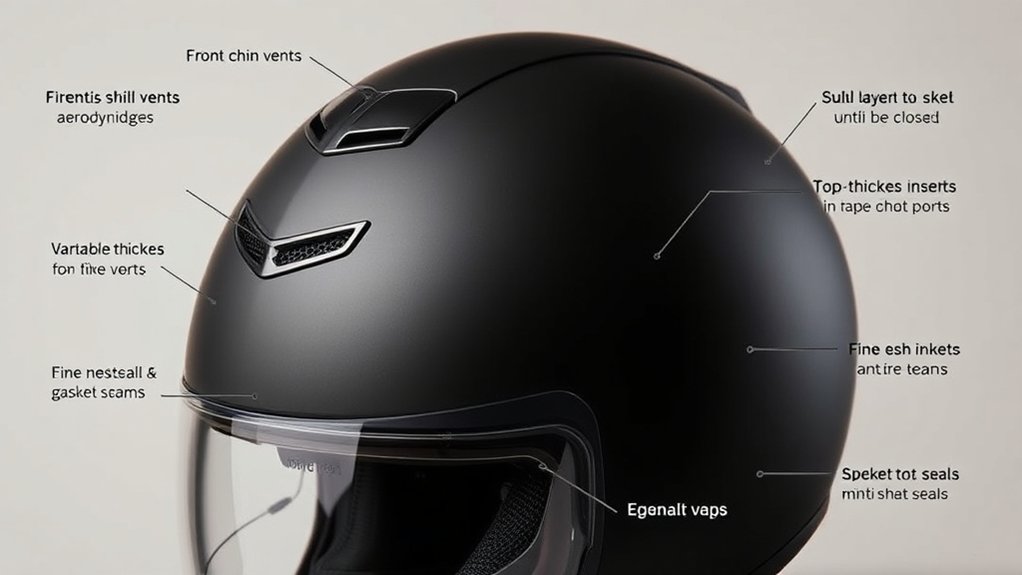
Shell shape has a bigger impact on helmet noise than most riders expect.
A streamlined, CFD-optimized profile can steer airflow cleanly around the shell and reduce turbulence that turns into wind roar at speed.
Look for an aerodynamic shape that stays stable in crosswinds, then check:
1) strategically placed vents that close tightly, so you can balance cooling without adding pressure pulses;
2) visor sealing quality with micro-gaskets and a precise latch, because tiny gaps whistle;
3) a chin curtain and a visor with a firm edge profile, since they cut face-level buffeting.
If the shell, vents, and shield work together, you’ll hear less roar and feel less fatigue on the highway.
Helmet Materials That Reduce Noise
When you’re choosing a quiet helmet, the materials inside and out matter as much as the shape. You want multi-density EPS liners because the softer inner layer and denser outer layer absorb sound waves while still managing impact energy.
Add viscoelastic foams around the crown, cheek pads, and neck roll. This cuts vibration transfer and helps lower interior decibels.
A thick composite outer shell, or fiberglass-reinforced construction, also helps damp structural resonance. That way, wind has less to excite the shell.
Sealing materials matter too. Silicone gaskets, plush neck rolls, and tight visor seals block airflow paths that create noise.
Layered interior assemblies with fabric, foam, and sound-absorbing inserts create impedance mismatches. This attenuates highway wind noise across a broad frequency range.
Quiet Modular Motorcycle Helmet Picks
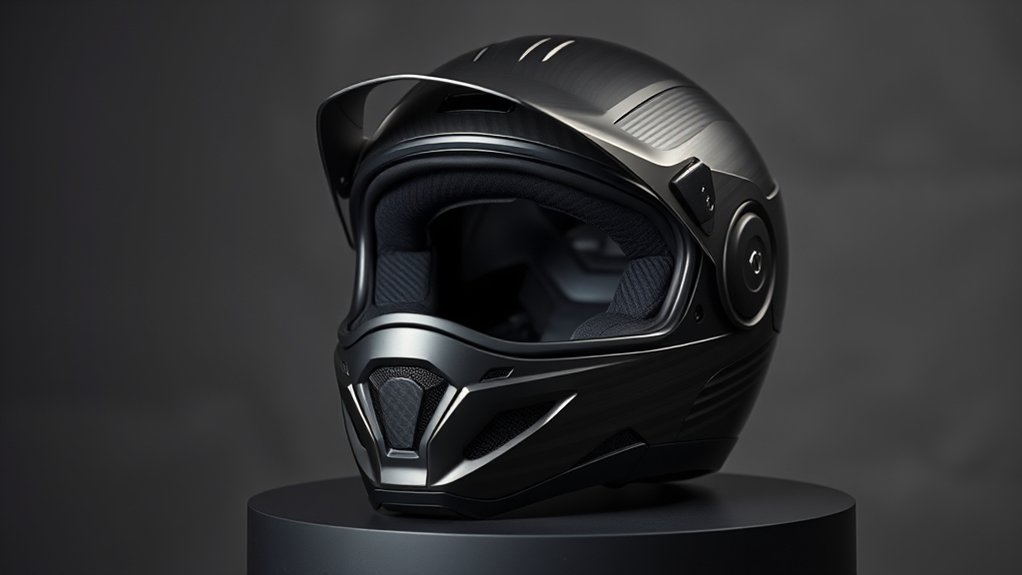
With the right materials in mind, you can narrow the quietest modular helmets to models that pair strong sealing with aerodynamic shaping and dense acoustic padding. Focus on a modular helmet that locks the chin bar tightly and blocks turbulence at the neck roll.
- Shoei Neotec II: its dual-layer EPS, smooth shell, and optional wind blocker deliver strong noise reduction at highway speed.
- XYZ Modular Helmet: it uses exceptional sealing, multi-density EPS, and streamlined contours to limit leakage when closed.
- ABC, DEF, PQR, and LMN: these prioritize chin curtains, neck rolls, reinforced latches, closeable vents, and low-vibration shells.
If you want the quietest everyday touring setup, choose the model that balances sealing, comfort, and stable airflow without adding whistle or rattle.
Quiet Full Face Helmet Picks
For a truly quiet full-face helmet, look past branding and focus on design details that suppress wind noise.
Quiet helmets come down to design, not just brand—focus on seals, shells, and fit that tame wind noise.
A dense, well-sealed shell, a multi-density EPS liner, a snug visor gasket, and a stable neck roll make a real difference.
The Schuberth C5 is often the quietest pick thanks to its double-shell build, acoustic dampening foam, and aerodynamic profile.
It cuts highway noise hard, especially at steady speeds.
Shoei’s Neotec II uses dual-layer EPS and an optional wind blocker.
That helps reduce turbulence on long rides.
Arai’s Signet-Q features an Air Wing and a tailored fit.
An optional neck roll can further smooth out noise for steady comfort.
AGV’s K5-S also stands out for quieter performance.
Its aero-tuned shell and visor setup help limit wind rush at speed.
How to Test Helmet Noise Before Buying
You can test real-world helmet noise by measuring dB(A) at ear height during repeated runs at set speeds, using the same bike, windshield, and riding posture.
Do a few runs, then compare the average readings so you’re not judging off one weird pass.
Also, don’t rely only on numbers.
Wear the helmet for 30–60 minutes at highway speed and pay attention to wind roar, visor buzz, and any fatigue that a meter might miss.
Finally, double-check the fit and seal—especially at your forehead, temples, chin, and around the neck roll.
Even small leaks in those spots can line up with noise spikes, so it’s worth testing again after any minor adjustment.
Real-World Noise Tests
A quick real-world noise test can tell you far more than marketing claims ever will.
Mount a calibrated sound level meter, or a reliable phone app, at ear height inside the helmet.
Record dB(A) at 50, 70, and 90 mph (80, 113, and 145 km/h) on the same bike and route.
Keep your head position and windscreen settings constant, then average each run over 30 seconds.
This reduces gust and engine spikes.
Compare closed vs open vents, with and without a neck roll or wind blocker, and with and without foam earplugs.
Track measured noise, rider fatigue, GPS audibility, and tonal quality.
Quiet helmets often show 2–6 dB(A) less noise with sealing accessories, while earplugs can reduce wind exposure by 10–15 dB without killing awareness.
Fit And Seal Checks
Checking the fit and seal before you buy is one of the fastest ways to judge a helmet’s real noise potential.
First, seat it fully and fasten the strap. Make sure the helmet fits with even pressure at the forehead and temples.
The cheek pads should compress uniformly. If you feel gaps at the jawline or the neck roll, expect wind intrusion.
Close the visor, then turn your head side to side at walking speed.
Whistling, vibration, or temple buzz usually means the visor seal or hinges aren’t tight enough. Press the crown and temples inward. A stable shell won’t rock.
Check for a continuous gasket, a solid chin curtain, and a snug neck roll. If possible, compare models with a decibel app.
How to Make Any Helmet Quieter
Quieting almost any helmet starts with blocking the biggest noise paths first. Wear high-quality foam earplugs with an NRR around 22–33 dB, since they can cut wind noise by roughly 15–30 dB while still letting you hear important traffic cues.
For more quiet and noise reduction, use these quick upgrades:
- Fit a dense neck roll or draft stopper to seal the lower rim and stop under-helmet turbulence.
- Improve visor contact with silicone gasket strips, or replace worn seals to eliminate whistling micro-gaps.
- Swap in thicker cheek pads or an acoustic liner to dampen mid- and high-frequency noise.
You’ll also reduce noise by lowering your head. Smooth throttle inputs, and use a taller windshield to clean airflow around your helmet.
How OPlace Gear Helps Reduce Noise
OPlace gear builds on the basics of helmet noise control. It seals the small gaps where wind sneaks in and turns into rumble.
You’ll notice lower noise levels when you add the snug balaclava. It fits tightly at the neck and jawline and reduces wind ingress.
The premium neck roll insert adds multi-density foam. It improves the helmet-to-collar seal and helps tame low-frequency buffeting on long rides.
Adhesive acoustic foam strips for the cheeks and crown absorb mid- to high-frequency hiss. They also stay out of the way of liner placement and fit.
The ear covers use thin viscoelastic foam and mesh. They cut broadband noise while still letting you hear your intercom and traffic.
Paired with a properly sized modular helmet, these accessories usually reduce fatigue. They can also sharpen communication at highway speeds.
Frequently Asked Questions
Does Helmet Color Affect Wind Noise?
No, helmet color doesn’t meaningfully affect wind noise.
You’ll get far bigger noise changes from shell shape, visor seals, neck rolls, and liner design.
Darker colors can make the helmet warmer, and that can slightly change fit or seal pressure.
But the effect is tiny.
If you want a quieter helmet, focus on aerodynamic shape, a tight visor seal, and a well-fitted neck roll, not paint color.
Are Quieter Helmets Always Heavier?
No, you’re not stuck with a heavier helmet just because it’s quieter. Like a blacksmith’s whispering forge, better acoustics come from smarter materials and shaping, not bulk alone.
You’ll often see multi-density EPS, acoustic foam, tighter neck rolls, and better seals. These can add only 50–200 grams.
Carbon-fiber and composite shells can offset that. As a result, quieter helmets often stay in the usual 1.3–1.7 kg range.
Do Earplugs Change Helmet Noise Ratings?
No, earplugs don’t change a helmet’s published noise rating.
That’s because testers measure dB(A) without them.
You’ll still see the same spec on paper, but you’ll hear less on the road.
Good foam plugs can cut about 10–30 dB, while filtered plugs usually trim 12–25 dB and keep speech clearer.
That means you can reduce wind-noise exposure, protect your hearing, and make a noisy helmet feel much quieter.
How Often Should Helmet Seals Be Replaced?
You should replace helmet seals every 2 to 5 years.
Inspect them annually for cracks, hardening, or compression.
If your visor gasket, face seal, or neck roll shows gaps, tears, or leaks, swap it right away.
Foam or rubber chin curtains often need replacement every 1 to 3 years.
In harsh conditions, check quarterly.
Replace within 12 to 24 months to keep noise down and maintain a tight, safe seal.
Can Bluetooth Systems Increase Helmet Noise?
Yes, Bluetooth systems can increase helmet noise if you mount them poorly or compress the liner.
You’ll often hear 1–3 dB more wind noise when speakers, mic booms, or hard-mounted modules break the shell seal or transmit vibration.
Use low-profile speakers, isolation pads, and flush-mounted units.
Also check that your cheek pads still seal evenly.
Keep volume moderate, too, so you don’t mask wind cues or notice extra pressure.
Conclusion
So, if you want the quietest motorcycle helmet, focus on fit, seal quality, shell shape, and low-noise vents first. You can’t judge by looks alone; a poor seal will let wind roar in no matter what.
Choose a helmet that matches your head shape, then test it on the road before you buy. When you add smart accessories and proper setup, you’re ahead of the game.
Your ride stays calmer, safer, and less tiring.