Can You Get Your Nc Motorcycle Permit Online – Find Out
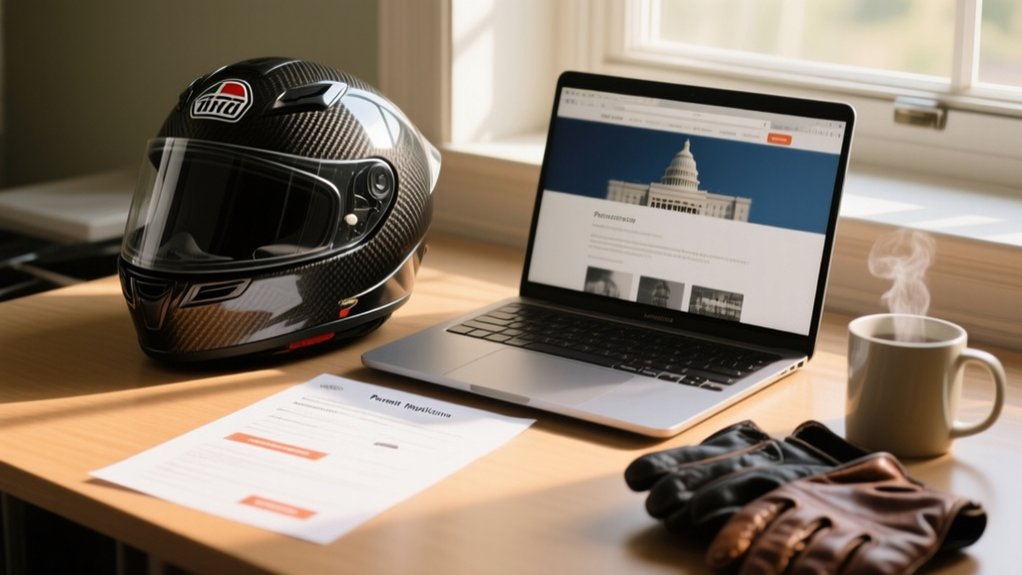
No, you can’t get an NC motorcycle permit online.
You have to apply in person at an NCDMV office.
At the office, you’ll take the motorcycle knowledge test, the traffic signs test, and a vision screening.
You’ll also need to bring the required ID and residency documents.
If you’re under 18, a parent or guardian must sign.
The permit fee is about $21.50.
Approved rider courses don’t waive the written test.
Keep going to see exactly how the process works.
Can You Get Your NC Motorcycle Permit Online?
No, you can’t get your NC motorcycle permit online.
The written knowledge test must be taken in person at a North Carolina DMV office.
You can study online using the NC Motorcycle Handbook and practice tests.
But you still need to visit the DMV for the formal exam and vision screening.
If you want an NC DMV motorcycle permit, bring your required ID and residency documents.
Pay the fee and schedule an appointment when possible, since some offices require one.
Completing a Motorcycle Safety Foundation or NC MSEP rider course may waive the on-cycle skills test.
However, it won’t replace the in-person written knowledge test.
Plan ahead, review the handbook, and go prepared to pass on your first visit.
Who Can Apply for a Motorcycle Permit in North Carolina?
You can apply for a North Carolina motorcycle learner’s permit if you’re at least 16 and you either already have a valid NC driver’s license or you meet the state’s ID and residency requirements.
If you’re under 18, you’ll also need a parent or guardian to sign your application. Plus, you’ll have to complete the required motorcycle safety course before you can get your full endorsement.
To get started, you’ll need to visit an NC DMV office, pass the motorcycle knowledge and traffic sign tests, and complete a vision screening.
Eligibility Requirements
To apply for a North Carolina motorcycle learner’s permit, you must be at least 16 years old.
Bring the required documents showing your identity, date of birth, Social Security number, legal presence or citizenship, and North Carolina residency.
You can apply only if you meet these basic requirements.
If you’re under 18, you must also have a parent or guardian’s signature and already hold a North Carolina driver’s license or full provisional license.
Every applicant must pass the written motorcycle knowledge test, the traffic signs test, and a vision screening at the DMV.
If you’re under 18, you’ll also need to complete an approved motorcycle safety course to qualify for the full endorsement after your permit period.
Permit Application Steps
Start by confirming you meet North Carolina’s permit requirements.
You must be at least 16 and already hold a North Carolina driver’s license or full provisional license.
If you’re under 18, you’ll also need a parent or guardian’s signature.
Then gather proof of your name, date of birth, Social Security number, legal presence, and North Carolina residency.
Schedule an NCDMV visit online.
You can’t get a North Carolina motorcycle permit entirely online.
At the office, you’ll complete a vision screening.
You’ll also take the written knowledge test and the traffic sign test.
You need 20 correct answers on the 25-question exam.
Then pay the DMV motorcycle permit fee, about $21.50.
Your permit lasts 12 months, with one possible 6-month renewal.
If you’re under 18, complete a motorcycle safety course before you can earn the full endorsement.
What the NC Motorcycle Permit Test Covers
The NC motorcycle permit knowledge test includes 25 multiple-choice questions from the North Carolina Motorcyclists Handbook.
You’ll need at least 20 correct answers to pass.
Your NC motorcycle permit exam checks the motorcycle knowledge test topics below.
| Topic | What you need to know | Why it matters |
|---|---|---|
| Controls | Starting, stopping, and handling | Keeps you in control |
| Gear | Helmet and protective gear rules | Reduces injury risk |
| Riding | Safe riding practices | Helps you stay stable |
| Signs | Road signs and traffic laws | Prevents violations |
| Hazards | Spotting danger early | Supports safer decisions |
Study the motorcycle handbook carefully.
Focus on road signs, lane use, and the ban on lane splitting.
You must also complete vision screening.
Bring the required ID as well.
If you’re under 18, you’ll later need a safety course for endorsement.
How the DMV Motorcycle Test Works
You’ll take a 25-question, multiple-choice motorcycle knowledge test on a computer at a North Carolina DMV office, and you need at least 20 correct answers to pass.
You can’t take this test online, so you’ll need to visit the DMV in person. Before you start, you’ll also go through a vision screening and pay the required permit fee.
The questions are pulled from the North Carolina Motorcyclist’s Handbook, and they cover things like motorcycle operation, traffic laws, road signs, safety gear, and hazard recognition.
Test Format And Scoring
At the DMV, you’ll take a 25-question multiple-choice motorcycle knowledge test in person.
You must answer at least 20 questions correctly to pass.
The exam follows the North Carolina Motorcyclists Handbook.
It checks your knowledge of traffic laws, road signs, safe riding techniques, and hazard recognition.
Because the test uses an 80% passing score, every question matters.
You can’t take this motorcycle knowledge test online.
You’ll get your pass or fail result at the DMV after the computer-based exam.
To earn your motorcycle learner’s permit, you also need to pass a vision screening.
Even if you finish an approved Basic Rider Course, you still must pass this written test.
Your learner’s permit is valid 12 months.
In-Person DMV Requirements
If you’re applying for a North Carolina motorcycle permit, plan to do the DMV part in person. The knowledge test isn’t available online.
At the North Carolina DMV, you’ll present required ID and prove your name, date of birth, Social Security number, legal presence, and residency. Then you’ll complete a vision screening.
After that, you’ll pay the $21.50 fee. Next, you’ll take the computer-based written knowledge test at the office.
The motorcycle learner’s permit test includes 25 multiple-choice questions. You need 20 correct answers to pass.
If you’ve finished an approved MSF or NC MSEP Basic Rider Course, you may waive the on-cycle skills test. However, you still must meet these in-person requirements and pass the written test before the DMV issues your permit.
Written Test Study Areas
For the NC motorcycle written test, focus your study on what the DMV actually covers: motorcycle controls and operation, protective gear, safe riding techniques, hazard recognition, road signs, and North Carolina traffic laws. This includes lane use, lane-splitting restrictions, and equipment requirements.
The NC DMV Motorcycle exam has 25 multiple-choice questions from the handbook. You need 20 correct answers to pass.
Review written knowledge on starting, stopping, following distance, cornering, and DOT-approved helmets. Read the North Carolina Motorcyclists Handbook, then use practice tests, flashcards, and mock exams to learn the wording and manage your time.
If you’re under 18, you’ll also need an approved Motorcycle Safety Course or Basic Rider Course before you can earn the endorsement after the Motorcycle Permit Test.
Where to Take the Motorcycle Permit Exam
You must take the North Carolina motorcycle permit written exam in person at an NCDMV driver license office. It can’t be completed online.
To get your motorcycle permit, schedule the DMV knowledge test through the NCDMV website or visit a location that accepts walk-ins. Not every office offers motorcycle testing, so confirm availability before you go.
The computerized knowledge test is given at select North Carolina DMV sites. Some offices allow appointments or same-day service.
If you also need an on-cycle skills test, you’ll take it at select driver license offices on Tuesdays, Wednesdays, or Thursdays, weather permitting. Bring your NC driver license, required ID, and the motorcycle for inspection if you’re testing on the bike.
What You Need to Apply at 16
At 16, you can apply for a North Carolina motorcycle learner’s permit only if you already hold a North Carolina driver’s license or full provisional license.
At 16, you may apply for a North Carolina motorcycle learner’s permit only if you already have a full provisional or driver’s license.
You must be at least 16 years old. If you’re under 18, a parent or legal guardian’s signature is required on your application.
Bring the required documentation. You’ll need proof of your name, date of birth, Social Security number, legal presence or citizenship, and North Carolina residency.
You also must pass the written motorcycle knowledge and traffic signs tests, plus a vision screening, before you can receive the permit.
Be ready to pay the $21.50 fee at the licensing office. If issued, your permit stays valid for 12 months and can usually be renewed once for six more months.
How to Study for the NC Motorcycle Permit Test
Start with the official North Carolina Motorcyclists Handbook.
The 25-question knowledge test comes directly from it.
Read it closely, then reread the parts on signs, helmet rules, equipment requirements, and safe riding laws.
Pay special attention to what NC requires.
In North Carolina, you should know DOT-approved helmets, required lights and mirrors, horn distance, and no lane splitting.
Then use practice tests to check your progress.
Use them as study tools, not shortcuts.
Aim for 20 correct answers out of 25 to build confidence before you apply for your motorcycle permit.
Make flashcards for weak topics.
Review every miss until you feel solid.
If you can, enroll in a Motorcycle Safety Education Program.
It can strengthen your skills and may waive the motorcycle skills test.
Practice Tests That Match the DMV Format
Practice tests that mirror the NC DMV format can give you a realistic preview of the motorcycle permit exam. You’ll see 25 multiple-choice questions, with a passing score of at least 20 correct answers.
Use a practice test that reflects the North Carolina Motorcyclists Handbook. That way, you study the same topics: basic operations, traffic laws, hazard recognition, and state-specific rules.
Focus on questions about road signs, protective gear, and motorcycle safety. These areas often trip up applicants, so extra practice can really help.
Choose timed mock exams with instant feedback and score tracking. This helps you build pace and improve retention.
Repeat the question sets until you consistently score 100% before you attempt the NC motorcycle permit test. Then, verify every answer against official DMV guidance, since wording can be tricky and rules can change before you earn your motorcycle endorsement.
What Happens After You Pass the Written Test
Once you pass the 25-question motorcycle knowledge test by answering at least 20 correctly, the DMV issues you a motorcycle learner’s permit valid for 12 months.
With the permit, you can practice, but you can’t carry passengers. Riding out of state is usually limited too.
If you’re under 18, you’ll also need a parent or guardian signature. You must complete an approved motorcycle safety course before you can move forward.
A permit may be renewed once for another 6 months if needed. When you’re ready for your motorcycle endorsement, you must either pass the DMV on-cycle skills test or present an MSF or NC MSEP waiver from your course.
That certificate can waive the riding test and speed up licensing.
Frequently Asked Questions
How Much Does the NC Motorcycle Permit Cost?
The NC motorcycle permit costs $21.50 for the permit itself.
You’ll also need to budget for any extra DMV fees if you apply for an endorsement or license later.
If you’re under 18, you may also pay motorcycle safety course fees.
These often run about $200.
If you use a Basic Rider Course waiver, you’ll still owe the written test and endorsement fees.
Always verify current prices with the NC DMV.
How Long Is the Motorcycle Permit Valid?
Your North Carolina motorcycle permit is valid for 12 months from the date you get it.
You can renew it once for another 6 months, so you may keep it for up to 18 months total.
If you’re under 18, you must hold it for 12 months before applying for a full endorsement.
If it expires, you’ll need to retake the written knowledge test to get a new permit.
Can You Retake the Test if You Fail?
Yes, you can retake the NC motorcycle knowledge test if you fail.
You’ll need to do it in person at a DMV office.
Your standard fee usually covers up to three attempts.
If needed, you may also have another vision screening first.
If you fail more than that, you’ll likely pay again and reschedule.
Study the Motorcycle Handbook and practice tests to aim for at least 20 out of 25.
Do You Need an Appointment for the DMV Exam?
Yes, you usually do need an appointment for the DMV exam.
It’s the smartest way to secure your spot.
You can sometimes walk in, but many NC offices require or strongly recommend booking online first.
For on-cycle skills tests, you must schedule ahead.
Bring your ID, any waiver certificate, and arrive early.
Following the appointment system helps you avoid delays and keeps your visit running smoothly.
What Documents Are Required for the Permit Application?
You need proof of identity and date of birth.
Bring a certified birth certificate or a valid U.S. passport.
Bring your Social Security number card, or another acceptable SSN document.
You’ll also need two documents that show North Carolina residency.
Acceptable examples include a utility bill, bank statement, lease, or official mail.
If you’re not a U.S. citizen, bring proof of legal presence.
If you’re under 18, bring your NC license and get a parent’s signature.
Conclusion
Once you pass the written test, you’re one step closer to feeling the rumble of freedom on North Carolina roads.
With your motorcycle permit in hand, you can start building real riding confidence, one mile at a time.
Keep studying the rules, practice safe habits, and stay alert every time you ride.
The path ahead opens up fast, and with the right preparation, you’ll be ready to chase it with confidence and control.