How Much Is My Motorcycle Worth – Quick Answer
Your motorcycle’s worth is usually its private-party market value. It depends on make, model, year, mileage, condition, and local demand.
Clean bikes with strong service history often bring 20% to 40% more than rough examples. High mileage, damage, or weak modifications can lower value quickly.
Check both Kelley Blue Book and J.D. Power for a price range. Then adjust for upgrades, wear items, and seasonality.
A few local price comparisons can help you see where the real price sits.
How Much Is My Motorcycle Worth?

Your motorcycle’s worth comes down to its market value, which is usually estimated as a private-party price. This is based on the make, model, year, mileage, and condition.
Motorcycle value is usually based on private-party market price, shaped by make, model, year, mileage, and condition.
You can treat that figure as a baseline, then adjust it for condition, odometer reading, accessories, and maintenance history. A bike in excellent shape can command more than one marked fair or poor.
Every 10,000 miles can trim value by roughly 10% to 20%. Recent service records, hard saddlebags, and performance upgrades may add several hundred dollars or more.
Local demand and seasonality also affect price. If you want a quick answer, use Whats My Motorcycle tools, KBB, or J.D. Power with your ZIP code.
With years of experience, dealers often compare sources before setting an asking price.
Compare KBB and J.D. Power Values
Kelley Blue Book and J.D. Power won’t always show the same motorcycle value.
They use different data and methods, so compare both before pricing your bike.
1. KBB leans on recent sales, auction results, and market trends.
It updates frequently and reflects seasonality and local demand.
2. J.D. Power, through NADA, uses transaction data plus dealer input.
It provides suggested retail, average condition, and excessive wear-and-tear values.
3. KBB asks for make, model, year, and optional features.
J.D. Power adds ZIP code and equipment customization.
When you reconcile the estimates, use your bike’s condition, mileage, and aftermarket upgrades.
That helps you decide which number fits your negotiation strategy best.
What Changes Motorcycle Value Most

After comparing KBB and J.D. Power, you’ll see that condition usually changes motorcycle value most. A clean, mechanically sound bike can bring 20% to 40% more than a rough example of the same year and model.
Mileage comes next. Under 10,000 miles usually supports a stronger price, while 25,000+ miles can push values down sharply.
Model desirability also matters. Popular bikes from brands with strong followings tend to hold value better than niche models.
Market timing affects your result too. Spring and summer listings often sell for more than off-season ads.
Finally, documented service history and period-correct presentation can improve buyer confidence. That confidence can strengthen the asking price.
How Upgrades, Damage, and Mileage Change Value
Upgrades, damage, and mileage can shift motorcycle value just as much as model year or condition.
Upgrades, damage, and mileage can affect motorcycle value as much as age or condition.
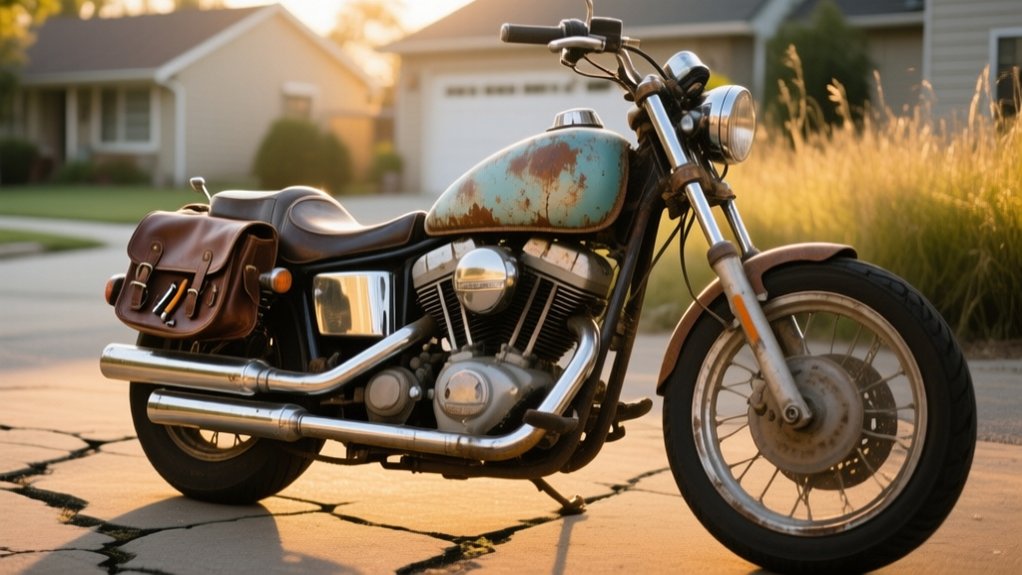
If you’ve added desirable, documented upgrades like an exhaust, suspension, or custom paint, you may see a 5%–15% premium, but poor-quality mods rarely help.
- Clean, factory-quality upgrades can raise demand.
- Frame or accident damage can cut value 10%–30%.
- Salvage titles and high mileage reduce it further, often sharply.
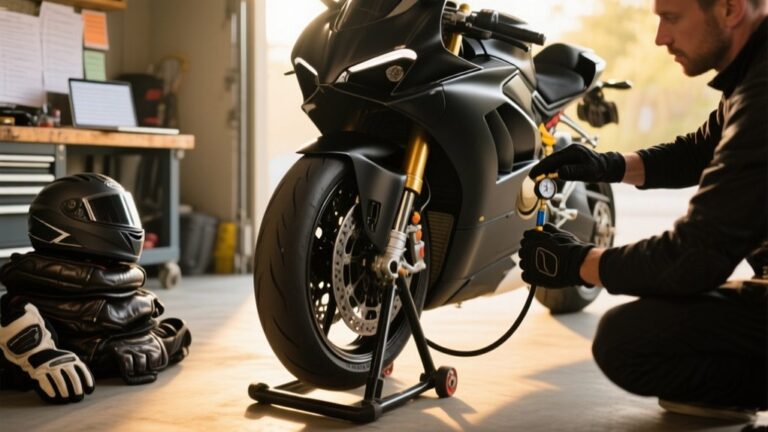
You should also account for wear items buyers inspect closely: compression, clutch slip, valves, tires, and chain or sprockets.
When these need service, value often drops by the repair cost, commonly $500–$2,000.
Above typical annual mileage, each extra 5,000–10,000 miles usually lowers value more.
Rare, desirable bikes can resist these losses better than common models.
Use Your Value Estimate to Negotiate Price
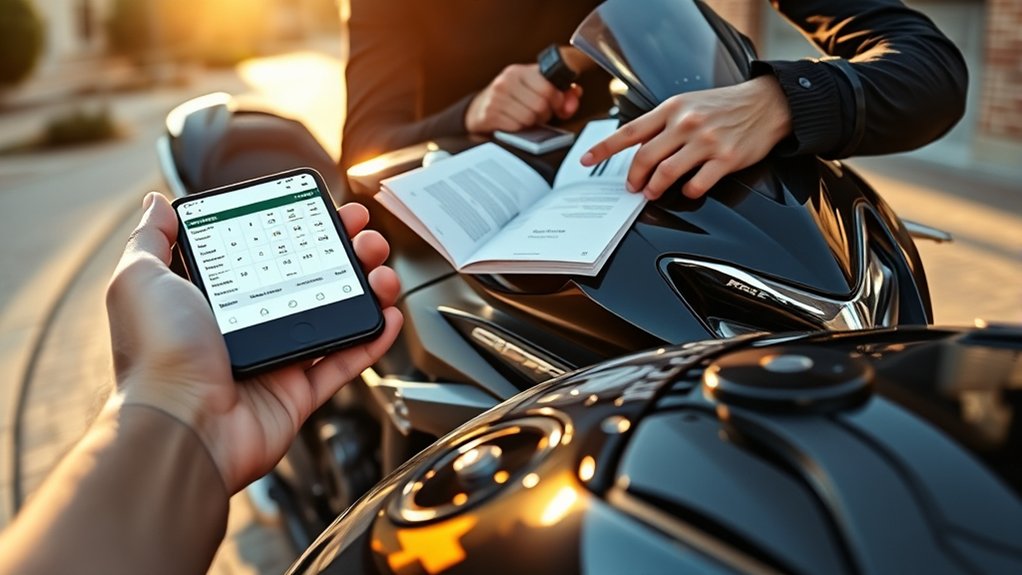
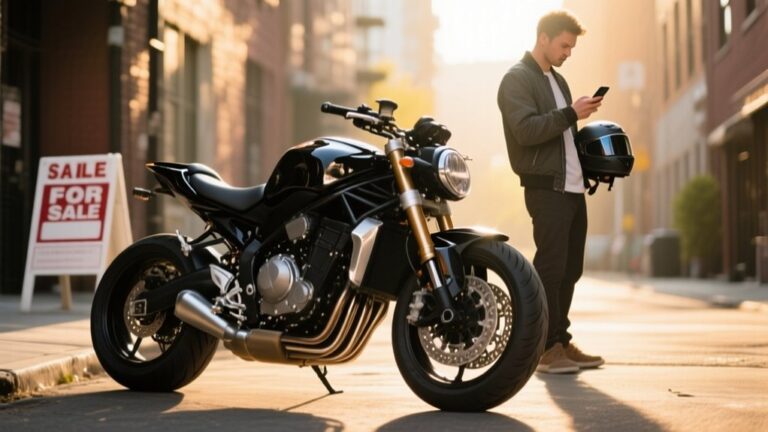
Once you’ve got a solid value estimate, use it as your negotiating anchor. Start with Blue Book data from Kelley Blue Book or J.D. Power/NADA. Those figures show private-party, trade-in, and retail ranges.
Then support your number with 3–5 recent local listings. Use the same make, model, year, mileage, and condition.
If your bike has service records or upgrades, quantify their effect. Minor improvements may add a few hundred dollars, while damage can reduce value sharply.
When an insurer or dealer offers less, cite multiple valuation sources. Include recent auction or sale prices to justify a higher payout or trade-in credit.
Set a firm minimum based on the average private-party value. Subtract realistic reconditioning costs, and walk away if the offer stays below that floor.
Frequently Asked Questions
How Often Do Motorcycle Values Change?
Motorcycle values can change weekly, monthly, or even within days, depending on market conditions.
You’ll usually see guide updates from sources like Kelley Blue Book or J.D. Power every week or month.
But local supply, demand, mileage, condition, and season can shift your bike’s worth faster.
Spring and summer often raise prices, while winter can lower them.
Major sales data and new models can move values quickly too.
Are Custom Paint Jobs Included in Valuation?
Yes. Custom paint jobs can count in your motorcycle’s valuation, but they’re a mixed bag.
They can lift the price if the work is professional, OEM-style, or period-correct, especially on rare bikes.
If the paint is too personal or looks amateur, it can narrow your buyer pool and reduce offers.
Appraisers usually treat it as an aftermarket modification, so you’ll need documentation to justify any premium.
Does Location Affect Motorcycle Worth?
Yes—your location can materially affect your motorcycle’s worth. You’ll usually get more in urban areas and warm-weather states, where demand stays higher year-round.
Valuation tools often adjust prices by ZIP code to reflect local market conditions. If your bike is popular in your region, you may see a premium. If supply is high or buyers are scarce, you’ll likely get less.
Shipping, taxes, and fees also shape buyer offers.
Should I Value Accessories Separately?
Yes—you should value accessories separately.
Picture chrome, leather, and carbon fiber catching the light; those parts can shift value, but only if buyers want them.
List each accessory with make, model, purchase date, condition, and receipt price.
Exhausts, saddlebags, windscreens, and seats may add value when they’re reputable and well installed.
Cosmetic or niche mods often add little, or even hurt resale.
Itemize everything for accuracy.
Can Seasonal Demand Raise My Bike’s Price?
Yes, seasonal demand can raise your bike’s price. You’ll often see a 5% to 15% higher private-sale value in spring and summer. That’s when more buyers shop and inventory turns faster.
Sport bikes and cruisers usually benefit most. The bump can be smaller in warmer states. If you ride a Harley-Davidson or Ducati, you may notice it more.
List in-season and compare local sold prices. Present your bike clean, serviced, and ready to ride.
Conclusion
So, how much is your motorcycle worth? The answer sits where market data, condition, mileage, and demand meet, like spokes in one wheel. Use KBB and J.D. Power as your compass, then adjust for upgrades, damage, and wear.
A clean, well-kept bike usually rides higher in value, while heavy miles or visible flaws pull it down. With a solid estimate, you can negotiate with confidence and keep the deal on track.