How Many Volts Is A Harley Battery – Quick Answer
A fully charged Harley battery typically measures between 12.6 and 12.8 volts at rest. This indicates it’s healthy and ready to power your bike. When you start the engine, expect a temporary drop to around 9.5 to 10.5 volts because of the high current draw.
While the bike is running, the voltage should stabilize between 13.5 and 14.5 volts. This confirms the charging system is working properly. If you want to understand how voltage changes affect battery health and maintenance, there’s more detailed information ahead.
What Voltage Does a Harley Battery Normally Have?
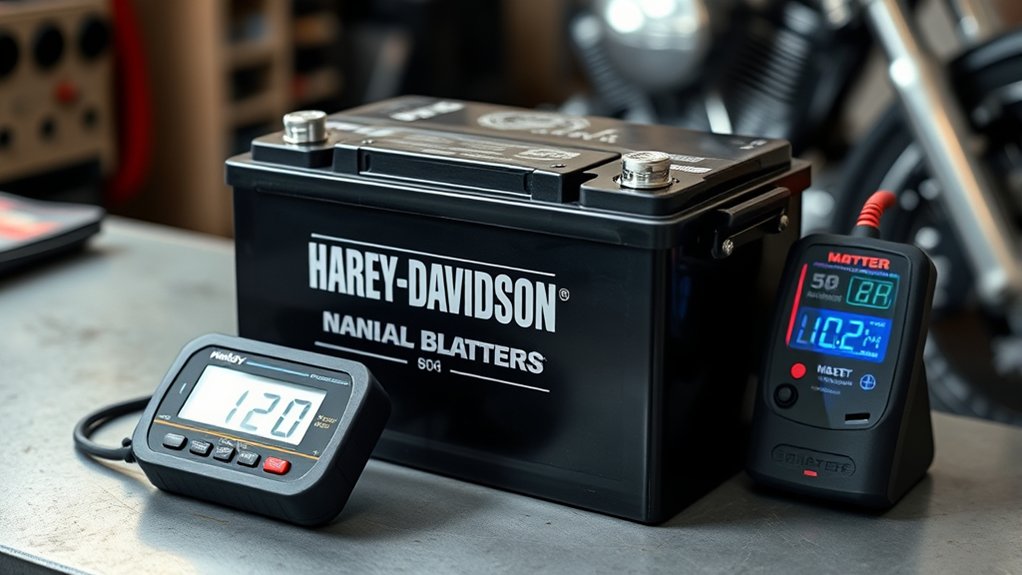
Although the voltage of a Harley battery varies with operating conditions, you can expect a fully charged AGM battery to measure about 12.6 to 12.8 volts at rest. This resting voltage indicates the battery is fully charged and healthy.
A fully charged AGM Harley battery typically reads 12.6 to 12.8 volts at rest, indicating good health.
When the engine runs, the voltage typically rises to 13.5 to 14.5 volts, showing the charging system is functioning correctly.
During engine start, the voltage may temporarily drop to around 9.5 to 10.5 volts due to the high current draw.
If your Harley-Davidson battery’s resting voltage falls below 12.4 volts, it suggests partial discharge or potential battery failure.
Maintaining approximately 12.6 volts when the motorcycle is off guarantees your battery remains properly charged and ready for reliable performance.
How Battery Cell Makeup Affects Harley Battery Voltage
Your Harley battery’s total voltage comes from its six lead-acid cells. Each cell produces about 2.1 volts when it’s fully charged. So, when you add up the output from all six cells, you get around 12.6 volts—that’s what you want for a healthy battery.
It’s a good idea to keep an eye on the voltage of each individual cell. That way, you can spot any problems early on before they start messing with the overall battery performance.
Lead-Acid Cell Voltage
Because each lead-acid cell in a Harley battery produces about 2.1 volts, the total voltage sums to approximately 12.6 volts when all six cells are fully charged and balanced. The voltage of each cell at full charge directly impacts the battery’s overall performance.
When resting, each lead-acid cell stabilizes near 2.1 volts, but during charging or use, voltage per cell can temporarily increase. You should monitor individual cell voltages because any imbalance causes fluctuations, which reduces battery life.
Visualize the battery’s internal voltage structure: six lead-acid cells connected in series, each contributing about 2.1 volts at full charge. Balanced cells maintain consistent voltage for maximum output.
Understanding cell voltage helps you ensure your Harley battery stays healthy and reliable. It’s a simple way to keep your bike running smoothly.
Total Battery Voltage
The total voltage of a Harley-Davidson battery depends directly on the makeup of its internal cells. Each lead-acid cell produces about 2.1 volts. Since a typical Harley battery contains 6 cells, the total voltage at a fully charged battery state is around 12.6 volts.
This voltage reading reflects the cell composition and overall health of the battery. A voltage above 12.6 volts when the battery is off may indicate overcharging or cell issues. Monitoring individual cell voltages helps verify accurate total voltage and battery performance.
| Cell Number | Voltage per Cell (V) | Cumulative Voltage (V) |
|---|---|---|
| 1 | 2.1 | 2.1 |
| 2 | 2.1 | 4.2 |
| 3 | 2.1 | 6.3 |
| 4 | 2.1 | 8.4 |
| 5 | 2.1 | 10.5 |
Why Harley Battery Voltage Is Always Around 12 Volts

When you check a Harley battery at rest, you’ll notice it holds a voltage close to 12 volts, typically between 12.6 and 12.8 volts if fully charged. This consistent battery voltage comes from the Harley-Davidson battery’s lead-acid or AGM chemistry and its design to keep a stable charge.
A Harley battery at rest shows a steady 12.6 to 12.8 volts when fully charged, thanks to its chemistry and design.
A voltage around 12 volts means the battery is in good shape and the charging system is working properly. Picture this: a fully charged battery resting at 12.7 volts, ready for use.
The charging system keeps the voltage steady during idle times. Voltage readings only drop when the battery is under load, then bounce back quickly.
This steady voltage helps make sure your Harley’s electrical system performs reliably and lasts longer.
How Harley Battery Voltage Changes When You Start the Engine
Although your Harley battery rests at around 12.6 volts when fully charged, you’ll notice its voltage drops to between 9.5 and 10.5 volts as the engine cranks. This voltage drop happens because the starter motor demands a high current during engine startup, temporarily drawing significant power from the battery.
If the voltage drops below 9.4 volts consistently during startup, it usually means the Harley battery may be weak or failing. A brief voltage drop like this is normal for a healthy, fully charged battery, but if the drop is excessive, it can signal reduced capacity.
Keeping an eye on these voltage changes when you start the engine helps you figure out your battery’s health. It also makes sure your bike performs reliably when you need it most.
What Voltage Should You See While the Harley Engine Runs?

When your Harley engine is running, you should see a voltage between 13.5 and 14.5 volts. This range shows that the charging system is doing its job and keeping the battery topped up.
If you notice the voltage is outside of this range, it could mean there’s an issue with the regulator or the battery’s overall health.
Running Voltage Range
How much voltage should you expect to see while your Harley engine is running? The ideal voltage range lies between 13.5 and 14.5 volts. This range confirms your charging system is operating correctly and maintaining battery health during engine running. Monitoring this voltage range helps you detect potential issues early.
- Below 13.5 volts: May indicate a weak alternator or charging system failure, risking battery drain.
- Between 13.5 and 14.5 volts: Shows proper charging system function and healthy battery condition.
- Above 14.5 volts: Signals overcharging, which can damage the battery and electrical components.
Keeping your Harley’s running voltage within this range ensures reliable performance and prolongs battery life. It’s a simple check that can save you from bigger problems down the road.
Charging System Output
Since the Harley-Davidson charging system must maintain a voltage between 13.5V and 14.5V at highway cruising RPM, you should regularly check this output to confirm proper battery charging.
When the engine runs at cruising speeds, the alternator generates voltage that the regulator controls to keep it within this ideal range.
If your voltage reading falls below 13.5V consistently, it signals a weak or failing charging system requiring inspection.
At idle, slight dips below 13.5V are normal but should recover quickly as RPMs rise.
Conversely, voltages exceeding 14.5V indicate possible overcharging, which can risk battery damage.
Monitoring the charging system’s voltage ensures the alternator and regulator function correctly.
This helps maintain battery health and reliable electrical performance during your rides.
How to Test Your Harley Battery Voltage Accurately
Accurately testing your Harley battery voltage requires using a digital multimeter set to DC volts while the motorcycle is off and has rested for at least 15 minutes. This resting voltage gives you a true indication of the battery’s health.
To measure voltage correctly, start by setting your multimeter to DC volts. Then, connect the red probe to the positive battery terminal and the black probe to the negative terminal.
Finally, record the voltage reading displayed on the multimeter.
A healthy Harley battery usually shows between 12.6 and 13.2 volts at rest. If your reading is below 12.4 volts, the battery might be discharged or failing.
Make sure the motorcycle has been off long enough to avoid surface charge, which can mess with voltage results.
This method helps you get an accurate voltage measurement so you can diagnose your battery’s condition with confidence.
What Low Voltage Means for Your Harley Battery’s Health
Now that you know how to measure your Harley battery’s voltage correctly, understanding what low voltage readings mean can help you figure out its condition better. A healthy battery’s resting voltage should be around 12.6 volts.
If your battery’s resting voltage drops below 12.0 volts, it means the battery is deeply discharged and can’t hold a charge reliably anymore. Consistently low resting voltage readings often mean sulfation is happening. This is when lead sulfate crystals form inside the battery, reducing its capacity and overall health.
Also, if the voltage falls below 9.4 volts during startup, it’s a sign the battery might be failing. Keeping an eye on these voltage levels regularly helps you catch deep discharge or sulfation early.
That way, you can take care of maintenance or replace the battery in time to keep your Harley’s electrical system running smoothly.
Why Charging Voltage Matters for Harley Batteries
Why does the charging voltage matter so much for your Harley battery’s health? Maintaining the correct charging voltage is crucial to preserving your Harley-Davidson battery’s lifespan and performance.
Proper charging within voltage guidelines, typically 13.5V to 14.5V for AGM batteries, prevents damage and ensures full capacity. Charging voltage outside this range can cause serious issues.
Maintaining 13.5V to 14.5V charging voltage protects your AGM battery and ensures optimal performance.
- Overcharging above 14.7V risks electrolyte loss, which damages the battery internally.
- Undercharging below 13.5V leads to sulfation, reducing capacity and efficiency.
- Voltage inconsistencies might signal faulty chargers or poor connections, causing incomplete charging.
Keeping an eye on voltage means your battery stays healthier longer and performs better on every ride. So, it’s definitely worth paying attention to!
How to Safely Charge a Harley Battery Without Damage
To safely charge your Harley battery, it’s best to use a smart charger. These chargers keep the voltage steady between 13.8V and 14.4V and limit the current to around 1-2 amps.
This way, you avoid overheating and help preserve the battery’s life, which is especially important if you have an AGM or lead-acid battery.
Using a smart charger also means you get precise voltage control, so there’s less risk of damaging your battery while it’s charging.
It’s a simple step that goes a long way in keeping your Harley’s battery healthy and ready to go.
Optimal Charging Voltage
Although charging a Harley battery might seem straightforward, maintaining the voltage between 13.5V and 14.5V is essential to avoid damage. The ideal charging voltage ensures efficient energy transfer without risking overcharging.
Overcharging can cause electrolyte loss and permanent harm.
To achieve this, use a smart charger with built-in voltage regulation that automatically adjusts to stay within safe limits.
When charging, focus on these key points:
- Monitor the voltage to prevent exceeding 14.5V.
- Employ a smart charger that controls voltage precisely.
- Avoid prolonged charging above 14.7V to prevent overcharging.
Recommended Charging Amperage
Maintaining the correct charging voltage is only part of protecting your Harley battery. Controlling the charging amperage plays a significant role as well. The recommended charging amperage typically ranges from 1 to 3 amps.
Charging at 1-2 amps is ideal for safely charging a motorcycle battery without risking damage, especially during long-term storage. Avoid chargers with amp ratings above 3 amps, as high current can overheat and degrade the battery.
| Charger Amp Rating | Usage | Battery Impact |
|---|---|---|
| 1-2 Amps | Slow charge/storage | Conducive battery health |
| 3 Amps | Standard charge | Safe if monitored |
| >3 Amps | High-current charge | Risk of overheating |
Always verify your Harley’s specs to select the proper charger amp rating. It’s worth taking a moment to double-check before plugging in.
Smart Charger Benefits
When you use a smart charger, you protect your Harley battery by preventing overcharging through automatic shut-off features. This guarantees voltage regulation stays within safe limits, typically below 14.7 volts, which is vital for maintaining your AGM battery’s integrity.
The smart charger’s microprocessor manages multi-stage charging: bulk, absorption, and float modes. This enhances battery health while minimizing heat buildup and electrolyte dehydration.
To safely charge your Harley battery without damage, follow these key steps:
- Connect the charger using the correct voltage and amperage settings recommended by Harley or the battery manufacturer.
- Rely on automatic shut-off to stop charging once the battery reaches full capacity.
- Use the charger’s multi-stage process to maintain an ideal charge and extend battery life.
This approach maximizes efficiency and helps keep your battery in great shape for the long run.
When Should You Replace Your Harley Battery Based on Voltage?
If your Harley battery’s resting voltage drops below 12.4 volts, it’s a clear sign you should consider replacing it. The battery may no longer hold an adequate charge.
A resting voltage under 12.0 volts typically means the battery is dead or severely discharged and needs immediate replacement.
When starting, the voltage shouldn’t fall below 9.4 volts. Readings below this indicate the Harley battery can’t deliver sufficient power and should be replaced.
While running, the voltage should measure between 13.5 and 14.5 volts. Consistent deviations suggest battery or charging system issues.
It’s a good idea to regularly check your battery voltage with a multimeter. This helps you detect when it’s discharged and approaching the end of its service life.
Doing so ensures peak performance and reliability.
Frequently asked questions
Can I Use a Motorcycle Battery Charger for My Harley Battery?
Yes, you can use a motorcycle battery charger for your Harley battery, as long as it’s designed for 12-volt AGM batteries.
Make sure the charger delivers low amperage (1-3 amps) and has AGM-compatible settings to prevent overcharging or damaging the battery.
Avoid automotive chargers with high current output.
Always verify your Harley battery’s specifications and follow the manufacturer’s guidelines to guarantee safe and efficient charging.
It’s better to be cautious and protect your battery in the long run.
How Often Should I Check My Harley Battery Voltage During Storage?
You don’t need to check your Harley battery voltage every minute unless you enjoy the thrill of living dangerously.
Ideally, you should measure it every 2 to 4 weeks during storage to catch any slow drains before they become problems.
If you want extra peace of mind, weekly checks work too.
Using a maintenance charger keeps voltage steady above 12.6 volts, ensuring your battery stays healthy and ready for your next ride.
What Are the Signs of a Completely Dead Harley Battery?
You’ll know your Harley battery is completely dead if its resting voltage drops below 12.0 volts, often near or under 11.5 volts.
When you try starting the bike, expect no engine turnover or very slow cranking.
If the voltage falls below 9.4 volts during startup, that means the battery is severely discharged.
Persistent low voltage and starting difficulties usually mean it won’t hold a charge anymore.
At that point, it needs replacement to avoid further electrical issues.
It’s best not to wait too long once you notice these signs.
Does Temperature Affect Harley Battery Voltage Readings?
You can think of your Harley battery like a mood ring; its voltage shifts with temperature. Yes, temperature definitely affects your battery’s voltage readings.
Cold weather can drop the voltage by about 0.5 to 1 volt, making a fully charged battery read around 12.4 volts instead of closer to 12.6 volts at room temperature.
Warm temperatures might raise voltage readings but risk overcharging and damage. Always monitor voltage in varying conditions to keep your battery healthy.
It’s a simple step that can save you from unexpected battery problems down the road.
Can a Harley Battery Voltage Drop if the Bike Is Not Used Frequently?
Yes, your Harley battery voltage will drop if you don’t use the bike frequently. Even when it’s off, parasitic loads and self-discharge cause about a 1% daily voltage loss.
Without maintenance charging, the voltage can fall below 12.0 volts within weeks. This puts your battery at risk of deep discharge and potential damage.
To keep your battery healthy, regularly connect a maintenance charger during storage. This helps it retain ideal voltage and performance when you’re ready to ride again.
Final Thought
Now that you know a Harley battery hovers around 12 volts and fluctuates during starts and runs, the real question is, are your readings telling you it’s time for a change? Low voltage can silently signal impending failure, risking your ride’s reliability.
Don’t wait for a dead battery to leave you stranded. Monitor those volts closely, charge correctly, and replace promptly. Your Harley’s heart depends on it.