Does Harley Own Indian – The Truth
You might think Harley-Davidson owns Indian Motorcycle because both are iconic American brands, but they’re completely separate. Indian is owned by Polaris Inc., which revived it in 2011 and operates independently with its own manufacturing facilities.
Harley has stayed independent since 1903, with distinct models and strategies. Understanding this clears up common misconceptions. It also shows key differences in ownership, production, and market positioning that set these rivals apart.
Who Actually Owns Indian Motorcycle Today?
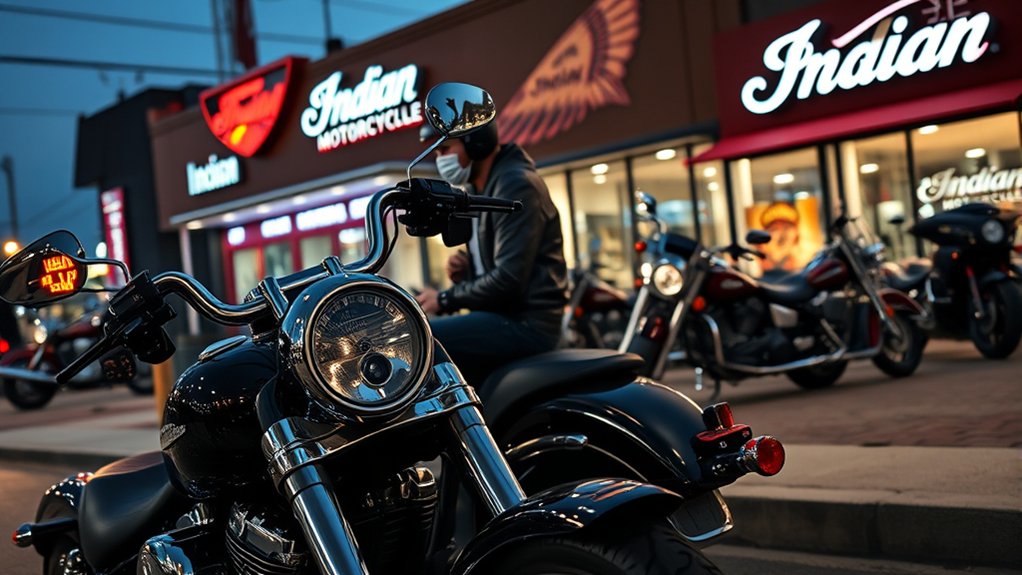
Although Indian Motorcycle has changed hands multiple times over the years, you should know that Polaris Inc. currently owns the brand. Polaris acquired Indian Motorcycle in 2011, marking a pivotal point in the brand’s revival.
Polaris Inc. acquired Indian Motorcycle in 2011, sparking a crucial revival for the iconic brand.
Since then, Polaris has managed Indian Motorcycle as a dedicated division, focusing on re-establishing its presence in the American motorcycle market.
You’ll find Indian Motorcycle’s manufacturing operations primarily centered in Spirit Lake, Iowa, which shows Polaris’s commitment to domestic production.
This ownership has provided the stability and resources Indian needed to regain its competitive edge.
Despite past uncertainties, the current ownership structure is clear. Polaris holds full control and is steering Indian Motorcycle’s ongoing development and success in the powersports industry.
Indian Motorcycle’s Ownership History
You’ll notice that Indian Motorcycle’s ownership has changed quite a bit since it was founded back in 1901.
A big moment came in 2011 when Polaris Inc. took over.
Then, in 2013, Polaris gave the brand a fresh start by mixing its rich history with new technology to bring it back into the spotlight.
Knowing this timeline really helps you see how these ownership changes played a key role in shaping where Indian stands today, especially compared to Harley-Davidson.
Ownership Timeline Overview
How has Indian Motorcycle’s ownership evolved since its founding? Indian Motorcycle, established in 1901, actually predates Harley-Davidson by two years. That makes it one of the true pioneers in American motorcycling.
The original company ran into trouble and declared bankruptcy in 1953, which brought production to a halt. Things changed dramatically when Polaris Inc. stepped in and acquired Indian Motorcycle in 2011. They revived the brand and started production again in 2013.
Under Polaris, Indian Motorcycle operated as a subsidiary, gaining fresh investment and resources to grow. Then, in early 2026, ownership shifted once more. Indian Motorcycle became a standalone entity, now controlled by Carolwood LP, separating from Polaris Inc.
Looking back, Indian Motorcycle’s ownership has seen big changes—from its early independent days to bankruptcy, then corporate stewardship. It’s quite different from Harley-Davidson, which has never owned Indian Motorcycle.
Polaris Acquisition Impact
What transformed Indian Motorcycle’s trajectory starting in 2011 was Polaris Inc.’s acquisition. This move injected essential capital, manufacturing expertise, and a strategic vision focused on innovation.
The acquisition shifted Indian’s ownership, enabling it to expand its lineup and challenge Harley-Davidson more directly. Polaris operates Indian as a subsidiary, preserving its distinct American heritage while modernizing design and technology.
| Aspect | Impact |
|---|---|
| Ownership | Polaris Inc. acquired Indian in 2011 |
| Investment | Increased capital and manufacturing expertise |
| Product Lineup | Expanded to compete with Harley-Davidson |
| Brand Identity | Maintained distinct American heritage |
Thanks to Polaris, Indian Motorcycle transformed from a struggling brand into a competitive heavyweight cruiser, separate from Harley-Davidson ownership. It’s quite the comeback story.
How Polaris Revived Indian as a Separate Brand
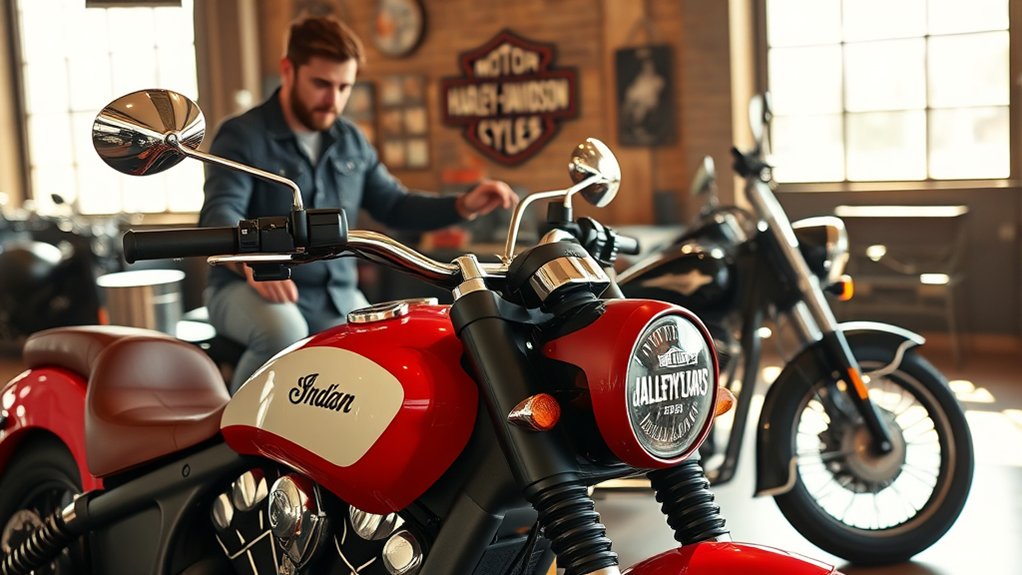
When Polaris acquired Indian back in 2011, their main goal was to relaunch it as its own standalone brand by 2013. They put a lot of effort and investment into creating modern designs that still paid tribute to Indian’s rich heritage.
Fast forward to early 2026, and Polaris made Indian fully independent by setting it up as a separate business entity with its own distinct operations in Spirit Lake, Iowa.
This strategic move really put Indian in a strong position to go head-to-head with Harley-Davidson, especially in the heavyweight cruiser and touring bike markets.
Polaris Acquisition Impact
Although Indian Motorcycle faced significant challenges before 2011, Polaris’s acquisition marked a turning point that revived the brand as a distinct force in the American motorcycle industry. Polaris injected vital investment into Indian Motorcycle, enabling the development of advanced models blending traditional styling with modern engineering.
By 2013, the new Indian lineup re-established its presence in the heavyweight cruiser and touring segments, directly challenging Harley-Davidson’s dominance. This move intensified the brand rivalry, positioning Indian as a competitive alternative rather than just a struggling legacy name.
Polaris’s strategic focus on innovation and heritage helped Indian expand globally, reshaping the motorcycle industry landscape. The acquisition didn’t just save Indian; it empowered the brand to grow independently and clearly distinguish itself from Harley-Davidson’s narrative.
Brand Independence Established
Since Polaris acquired Indian Motorcycle in 2011, it has steadily worked to reestablish Indian as a distinct brand. This effort culminated in its official revival as a standalone entity by 2013. Polaris’s strategic focus on brand independence allowed Indian Motorcycle to develop unique marketing, dealer networks, and product lines separate from Polaris’s other powersports brands.
This revival positioned Indian as a direct competitor to Harley-Davidson in the heavyweight cruiser market. By 2026, Indian became a fully independent business unit within Polaris, reinforcing its separate brand identity.
| Year | Milestone | Impact |
|---|---|---|
| 2011 | Polaris acquires Indian | Foundation for revival |
| 2013 | Indian revived as standalone | Brand independence begins |
| 2025 | Plan for dedicated business unit | Clear separation from Polaris |
| 2026 | Business unit finalized | Indian vs Harley-Davidson |
Modern Design Revival
Polaris didn’t just reestablish Indian’s brand independence. They crafted a modern design revival that honored its heritage while pushing technological boundaries.
In 2013, Polaris launched Indian Motorcycle’s modern revival, blending traditional styling with contemporary technology.
They established Indian as a standalone brand, distinct from Harley-Davidson, emphasizing its unique heritage.
Polaris introduced powerful engines like the Thunderstroke to support heavyweight cruiser and touring models. This boosted performance without sacrificing legacy.
Investment in advanced manufacturing facilities in Spirit Lake, Iowa, ensured high-quality production aligned with today’s market demands.
This strategic approach allowed Indian to compete effectively with Harley-Davidson by combining historic design cues with modern innovation.
Common Misconceptions About Indian and Harley-Davidson Ownership
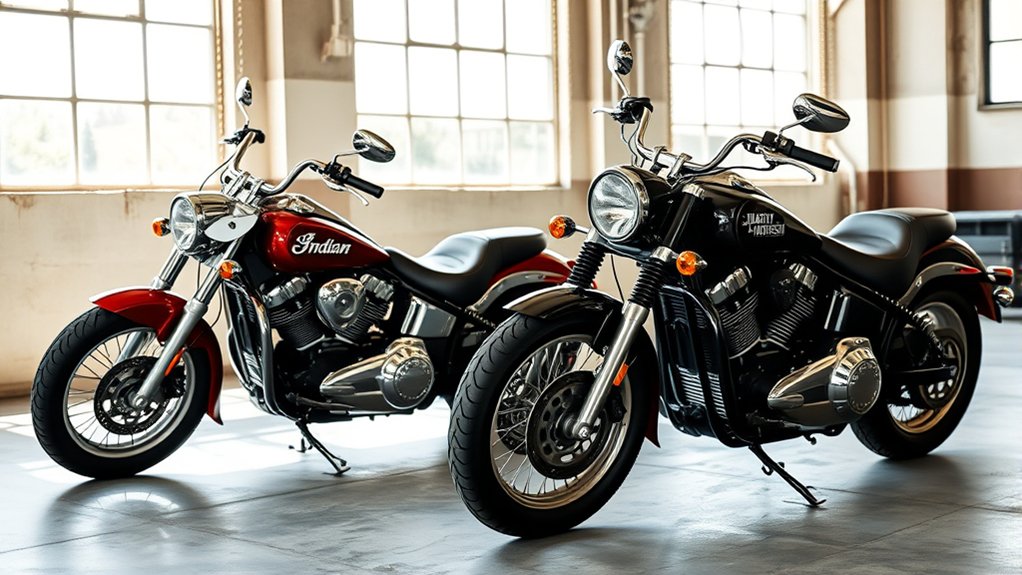
Many people mistakenly think Harley-Davidson owns Indian Motorcycle because both are iconic American brands, but they’ve always been separate companies.
Indian Motorcycle, with a history predating Harley-Davidson, is owned by Polaris, not Harley-Davidson. Polaris, an American company, acquired Indian in 2011 and maintains full ownership, while Harley-Davidson remains independent.
This misconception comes from their shared American heritage and presence in the heavyweight motorcycle market, but their ownership structures have never overlapped.
Polaris has no stake in Harley-Davidson, and Harley has never owned Indian.
Understanding these clear corporate distinctions helps you avoid confusion about the brands’ identities and ownership.
Recognizing that Indian Motorcycle and Harley-Davidson operate under different companies clarifies the reality behind their relationship and clears up common misunderstandings about American motorcycle brand ownership.
Differences Between Indian Motorcycle and Harley-Davidson Models
Although both Indian Motorcycle and Harley-Davidson cater to cruiser and touring enthusiasts, their model lineups showcase distinct design philosophies and engineering choices.
Indian Motorcycle focuses on classic cruisers like the Chief and Scout, featuring large-displacement Thunderstroke engines that blend tradition with modern performance.
Harley-Davidson’s lineup emphasizes ruggedness with models such as the Softail and Sportster, powered by varied V-twin Milwaukee Eight engine configurations.
For touring, Indian’s Challenger rivals Harley’s Electra Glide, both offering heavyweight comfort.
When it comes to customization options, Harley-Davidson provides a broader range of aftermarket accessories, allowing you more personal expression.
Indian’s customization tends to be more streamlined, appealing to riders who prefer factory-tuned aesthetics.
Understanding these differences helps you choose a motorcycle that aligns with your preferences in style, performance, and personalization.
Where Are Indian Motorcycles Manufactured Today?
Indian Motorcycles are manufactured primarily in Spirit Lake, Iowa, where Polaris Inc. oversees their production. The engines come from a nearby facility in Osceola, Wisconsin, supporting a largely American manufacturing footprint.
Polaris Inc. operates modern, technologically advanced plants to maintain high-quality standards throughout the process.
While Indian Motorcycles promote their “American-made” identity, some components like lighting and electronics are sourced from U.S. suppliers or imported internationally. This mix of sourcing has sparked some debate about how much of the manufacturing is truly domestic.
Still, Polaris Inc.’s control over the core manufacturing in Spirit Lake, Iowa, ensures that Indian Motorcycles remain closely tied to American production. They put a strong emphasis on quality and precision in their assembly, which keeps the brand connected to its roots.
What Makes Indian Motorcycle Unique in the Market?
Because Indian Motorcycle blends over a century of heritage with cutting-edge technology, it stands out distinctly in today’s market. You’ll notice its unique appeal lies in combining classic styling with modern performance, exemplified by iconic models like the Scout and Chief.
Indian Motorcycle uniquely blends over a century of heritage with modern performance and classic styling.
Indian’s emphasis on American craftsmanship resonates strongly with patriotic consumers who value “Made in America” authenticity.
The brand’s Thunderstroke engine powers heavyweight cruisers and touring bikes, delivering reliability and distinctive performance.
Its deep roots in American motorcycle culture, including a history of military service and racing, further reinforce its reputation for durability and legacy.
When you choose Indian, you’re investing in a motorcycle that honors tradition while embracing innovation, carving a distinct place in the premium segment.
Why Harley-Davidson Isn’t Connected to Indian Motorcycle
Understanding Indian Motorcycle’s unique identity means recognizing it operates independently from other major brands. You should know Harley-Davidson isn’t connected to Indian Motorcycle in ownership or corporate structure.
Indian Motorcycle runs under Polaris Inc., a different American powersports company. Meanwhile, Harley-Davidson has stayed independent since it was founded back in 1903. Their relationship is really about brand rivalry and historical competition, not shared ownership.
Here are some points to clear things up:
- Indian Motorcycle is owned by Polaris Inc., not Harley-Davidson
- Harley-Davidson has no corporate or ownership ties to Indian
- Both brands have their own management and strategic goals
- Their rivalry comes from competing histories, not business connections
Frequently asked questions
Do Indian and Harley-Davidson Share Motorcycle Designs?
No, Indian and Harley-Davidson don’t share motorcycle designs. You’ll find that each brand sticks to its unique design philosophy.
Indian leans toward vintage-inspired, streamlined styles, while Harley focuses on cruisers and touring aesthetics.
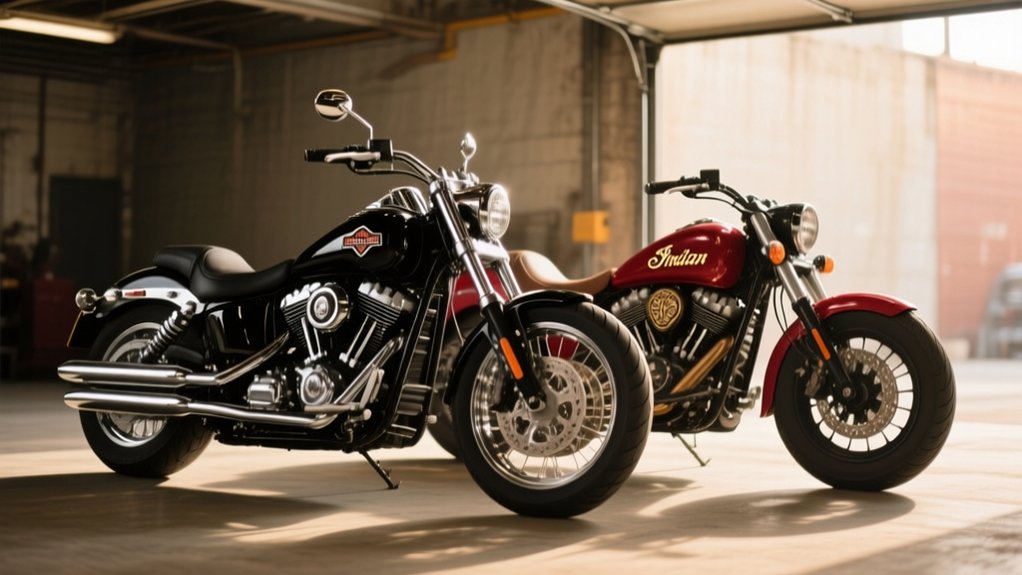
Even if some Indian models resemble Harley cruisers, they’re independently designed. Both companies maintain separate innovation paths and proprietary designs.
Can I Use Harley-Davidson Parts on an Indian Motorcycle?
You generally can’t use Harley-Davidson parts on an Indian motorcycle because their designs and mounting points differ markedly.
While some aftermarket parts might fit both brands, they aren’t official and could compromise your bike’s performance and safety.
Using non-approved parts may also void your warranty.
To keep your Indian motorcycle running smoothly and reliably, it’s best to stick with manufacturer-approved components designed specifically for it.
Are Indian and Harley-Davidson Motorcycles Priced Similarly?
If you’re hunting for a bargain, you’ll find Indian and Harley-Davidson prices playing a game of “Who’s Slightly Pricier?”
Indian bikes often edge out Harley’s models by a bit, thanks to their premium flair.
Both brands hit similar numbers around $22,000 for touring bikes.
But Harley throws in more affordable entry-level options.
So, your wallet won’t be shocked either way.
It’s a close race with just a tiny price tag tug-of-war.
Do Indian and Harley-Davidson Have Joint Marketing Campaigns?
No, Indian and Harley-Davidson don’t have joint marketing campaigns. You’ll find that both brands maintain distinct identities, focusing on their own heritage and loyal audiences.
While they might appear together at industry events, those instances aren’t true joint campaigns.
Instead, they compete head to head, each promoting their motorcycles independently.
Which Brand Has Better Resale Value, Indian or Harley-Davidson?
Think of Harley-Davidson as the seasoned oak tree, standing tall and steady through decades, while Indian is like a young sapling growing in its shadow. You’ll find Harley holds better resale value because its vast reputation and dealer network keep demand high.
Indian bikes tend to depreciate faster due to their niche appeal. So, if you want stronger resale returns, Harley-Davidson is the safer and more reliable investment.
Final Thought
You might think Harley-Davidson and Indian Motorcycle share more than just American roots, but they ride separate roads. Polaris steers Indian with a distinct vision, keeping its legacy alive and unique. Understanding this split clears the fog around their ownership and identity.
So, when you see Indian’s bold lines and heritage, remember it’s not Harley’s shadow but its own roaring thunder in the motorcycle world, crafted with precision and pride.