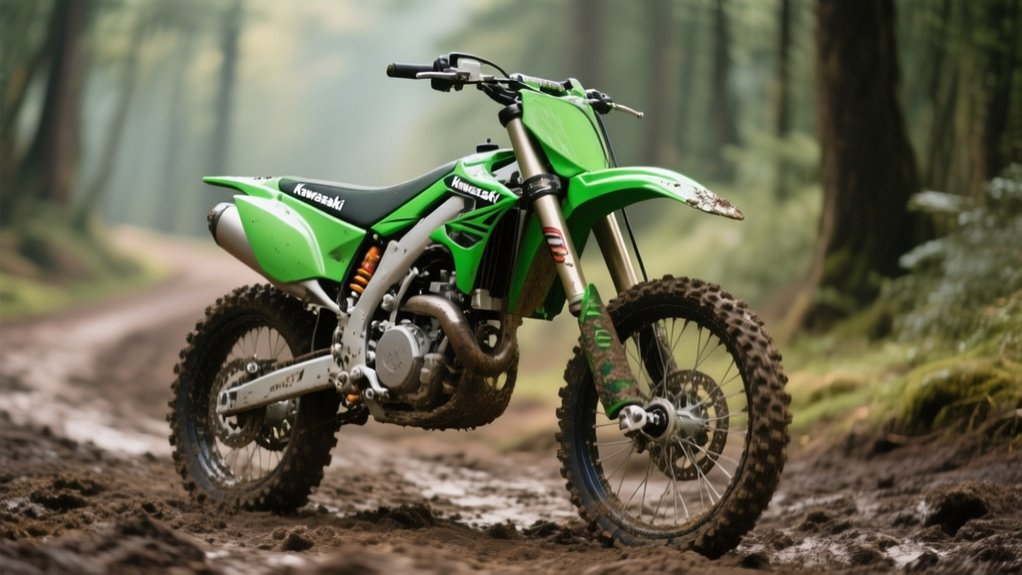
Are Kawasaki Dirt Bikes Good – Yes or No?
Yes, Kawasaki dirt bikes are a solid choice, especially if you’re just starting out. They offer manageable engine sizes, low seat heights, and lightweight frames that make learning easier and safer.
Their reliable engines and durable build stand up to consistent use, giving you confidence on the trails. However, if you advance, you might find them limited for aggressive riding or technical courses.
Keep exploring to understand how these bikes stack up and when upgrading makes sense.
Why Kawasaki Dirt Bikes Are Great for Beginners
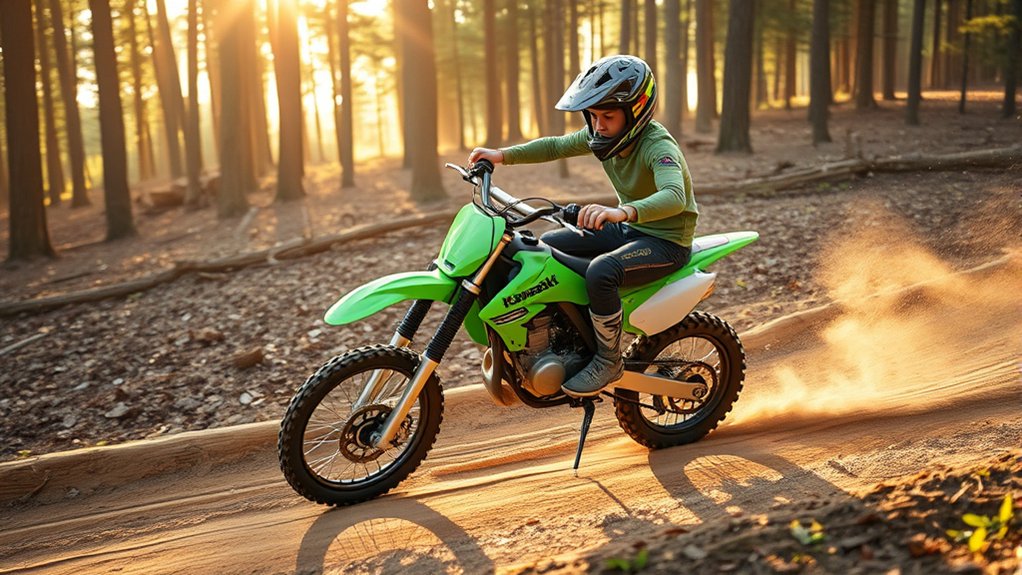
While starting out in dirt biking can be challenging, Kawasaki dirt bikes like the KLX110R and KLX140R make it easier by offering manageable engine sizes and low seat heights tailored for beginners. These Kawasaki KLX models are lightweight and provide user-friendly handling, helping you build confidence quickly.
They come equipped with electric start systems, alongside kick backup, ensuring you can get going with minimal hassle.
Kawasaki’s range includes multiple size options, including taller “L” versions, so you can find the right fit as you grow or improve your skills. Designed specifically as beginner bikes, they focus on ease of use and reliability.
This means you spend more time riding and less on maintenance, making them ideal choices for new riders.
Kawasaki’s Reputation for Reliability and Durability
You’ll find Kawasaki dirt bikes come with engines that are known for lasting a long time and handling tough conditions without breaking down. Plus, their frames are built using sturdy construction techniques, so they can take a beating from rough rides and impacts.
All of this means you get a bike that’s reliable and tough, staying strong and durable ride after ride.
Proven Engine Longevity
Because Kawasaki designs its dirt bike engines with high-quality materials and race-tested engineering, you can expect exceptional reliability and durability. Their proven designs, especially seen in the KX and KLX series, demonstrate impressive engine durability, even under harsh riding conditions.
These engines maintain long-term performance by resisting wear and tear, which is critical for riders who log thousands of miles. Kawasaki’s commitment to using robust materials and adhering to strict engineering standards guarantees that their engines deliver consistent power and dependability season after season.
User reports and extensive reviews consistently highlight Kawasaki’s engines as some of the most durable in the dirt bike industry. When you choose Kawasaki, you’re investing in an engine built to endure rigorous use without compromising performance.
Durable Frame Construction
Kawasaki’s commitment to durability goes beyond their engines to the very frames that support them. You’ll find Kawasaki dirt bikes feature a durable frame designed to endure harsh off-road conditions. Models like the KX and KLX use high-quality materials that resist bending and cracking, which means they deliver long-lasting performance.
| Feature | Description |
|---|---|
| Frame Material | High-grade alloys for strength and flexibility |
| Welds | Reinforced for enhanced durability |
| Coatings | Corrosion-resistant to withstand elements |
| Testing | Rigorous engineering to maintain frame integrity |
With such robust construction, Kawasaki dirt bikes stay reliable during intense riding and racing. It’s no wonder they’ve earned a reputation for durability.
What Kawasaki Beginner Dirt Bikes Can’t Do
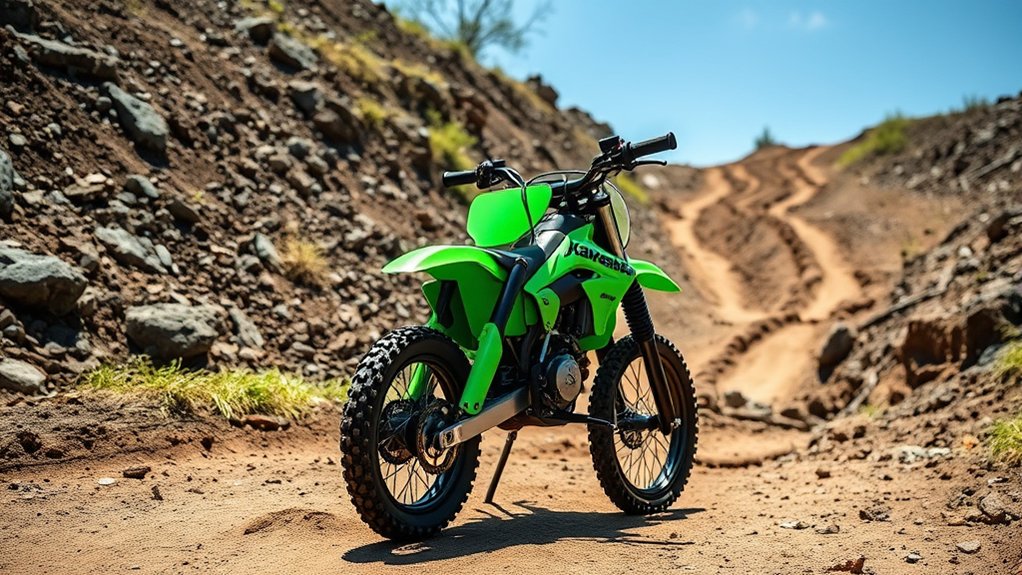
Although Kawasaki beginner dirt bikes like the KLX140 offer a solid introduction to off-road riding, they don’t deliver the high-speed performance or advanced handling you’ll need for technical trails or competitive racing.
These models lack the powerful engines required to tackle demanding terrain or maintain speed in rigorous off-road conditions. Their suspension systems and frame designs aren’t optimized for the agility or responsiveness expected in technical or competitive off-road riding.
They also tend to be heavier, which reduces maneuverability for experienced riders who want quick, precise control. Plus, they don’t include the advanced racing features you’ll find in higher-end models, so they’re not really suited for professional-level racing.
If you’re looking to push your limits beyond basic trail riding, these beginner bikes probably won’t meet the performance and handling demands of more serious off-road challenges.
Comparing Kawasaki Dirt Bikes to Other Brands
When you compare Kawasaki dirt bikes to other brands, you’ll see they strike a nice balance between power and reliable engineering.
Take their KX series, for example — it’s built to deliver aggressive power that’s perfect for racing.
On the other hand, the KLX series is more about user-friendly maintenance and durability, making it a solid choice if you want something that’s easy to care for.
Knowing these differences really helps when you’re trying to pick a bike that fits both your riding style and how much upkeep you’re comfortable with.
Power and Performance
How does Kawasaki compare to other dirt bike brands regarding power and performance? Kawasaki dirt bikes, particularly the KX series, deliver aggressive power delivery tailored for competitive motocross. Their engineers design high-torque engines combined with advanced suspension systems, enhancing performance across varied terrains.
If you’re a new rider, the KLX series offers manageable power that’s beginner-friendly without sacrificing reliability.
Compared to Honda, Kawasaki bikes often feel slightly more powerful and responsive, making them appealing to experienced riders seeking sharper handling.
Kawasaki’s top-tier models compete closely with brands like Honda and KTM, engineered for both durability and high performance in professional racing.
Reliability and Maintenance
Since reliability plays a crucial role in choosing a dirt bike, Kawasaki stands out with its durable construction and dependable performance. Their KX and KLX series showcase impressive durability, requiring minimal maintenance even after heavy use.
You’ll find Kawasaki dirt bikes often match or exceed the longevity of Honda models, thanks to robust engineering and quality materials. Modern features like fuel injection and electric start simplify maintenance and enhance overall dependability.
Beginner models such as the KLX110R and KLX140R are especially low-maintenance, making them ideal for new riders.
Compared to other brands, Kawasaki offers competitive pricing paired with straightforward design, ensuring you get a reliable bike without complex upkeep.
If you prioritize durability and easy maintenance, Kawasaki dirt bikes remain a solid choice.
What Parents and Riders Say About Kawasaki Bikes
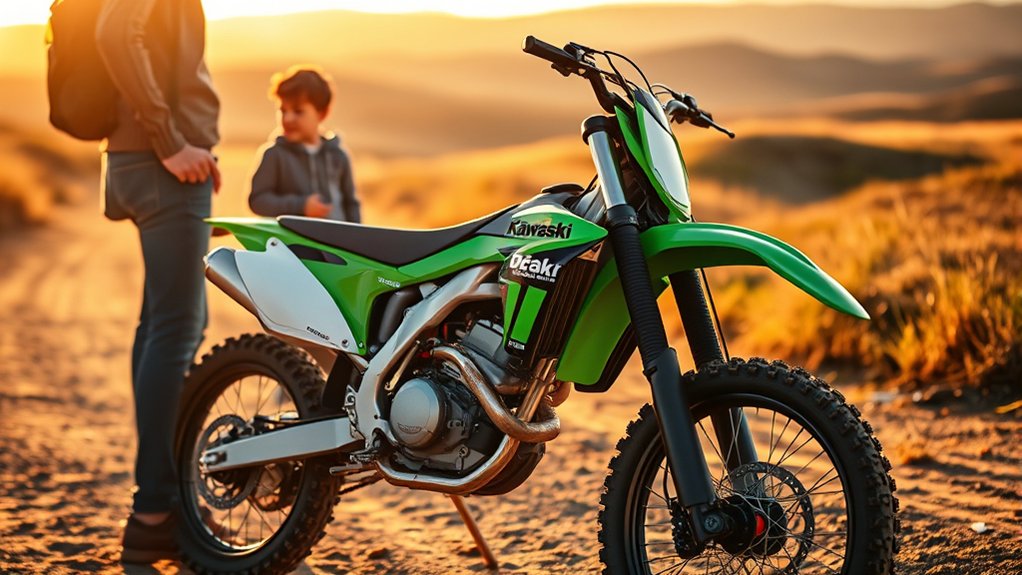
Although opinions vary, many parents and riders agree that Kawasaki dirt bikes offer reliable performance and ease of handling. This makes them well-suited for beginners. Kawasaki’s commitment to durable construction and consistent power delivery helps build confidence for new riders.
Parents often highlight smaller models like the KLX140 as perfect for teaching basic skills without overwhelming beginner riders. While some find Kawasaki bikes slightly heavier, most consider them manageable. Riders also appreciate the minimal maintenance needed, which adds to long-term satisfaction and affordability.
| Aspect | Parent Feedback | Rider Feedback |
|---|---|---|
| Reliable Performance | Highly praised | Consistent power delivery |
| Ease of Handling | Ideal for beginners | Confidence-building |
| Maintenance | Minimal required | Cost-effective |
How Kawasaki KLX Dirt Bikes Help You Learn to Ride
When you’re learning to ride, Kawasaki KLX dirt bikes provide a perfect balance of manageable engine sizes and user-friendly features designed to build your skills progressively. Models like the 110cc and 140cc offer beginner-friendly throttle control and power delivery, which helps you develop confidence without feeling overwhelmed.
Their lightweight frames and electric start enable you to focus on balance and coordination from the start. Adjustable seat heights let you find a comfortable fit, enhancing control during early rides.
The bikes’ simple construction encourages you to practice clutch operation, shifting, and braking in a low-pressure setting.
When to Upgrade From a Kawasaki KLX Dirt Bike
As your riding skills advance and you find the Kawasaki KLX no longer matches your power or handling needs, it’s time to think about an upgrade. When you outgrow the bike’s size, weight, or performance on more technical trails, switching to a model like the Kawasaki KX or KX-F series can provide better handling and suspension suited for advanced riding.
If you’re looking for increased speed, durability, or advanced electronics for competitive motocross or enduro events, upgrading becomes essential. A lighter, more agile bike will enhance your control and reduce fatigue on demanding terrain.
Ultimately, recognizing when your KLX limits your progress helps you choose the right upgrade. This way, your bike keeps up with your evolving skills and riding ambitions.
Frequently asked questions
What Maintenance Is Required for Kawasaki Dirt Bikes?
You need to perform regular maintenance on Kawasaki dirt bikes to keep them running smoothly. Change the oil and clean or replace the air filter often. Check and lubricate the chain, inspect brake pads, and monitor tire pressure and tread wear for safety.
Don’t forget to inspect spark plugs and cooling systems regularly. Also, tighten bolts and suspension parts periodically to guarantee everything stays secure and performs well during your rides. Keeping up with these tasks will help your bike last longer and ride better every time.
Are Kawasaki Dirt Bikes Suitable for Trail Riding?
Think of Kawasaki dirt bikes as reliable steeds built to conquer rugged trails. You’ll find their durable engines and suspension systems expertly handle rough terrain, giving you confidence on every ride.
With options tailored to your height, these bikes fit comfortably, boosting control.
Kawasaki’s sturdy design guarantees you face rocky paths and uneven ground without hesitation.
Can Kawasaki Dirt Bikes Be Used for Motocross Racing?
Yes, you can definitely use Kawasaki dirt bikes for motocross racing. Their KX series, like the KX450 and KX250, are built specifically for high-performance motocross.
You’ll benefit from lightweight frames, advanced suspension, and racing-specific features like quick-shift transmissions and aggressive power delivery.
Just remember, these bikes need regular maintenance and tuning to keep them performing at their peak during demanding races and challenging track conditions.
Taking good care of them ensures you get the most out of your ride every time.
What Is the Average Fuel Efficiency of Kawasaki Dirt Bikes?
Think of fuel efficiency as your bike’s heartbeat. It keeps you going longer on every ride.
Kawasaki dirt bikes average between 35 and 100 miles per gallon, depending on the model.
Smaller bikes like the KLX110R hit the higher end, around 70 to 100 mpg.
Meanwhile, powerful models like the KX250 run closer to 35 to 50 mpg.
Your riding style and terrain also affect mileage.
So, maintaining your bike well helps maximize efficiency on any trail.
It’s all about keeping things running smoothly to get the most out of every gallon.
Do Kawasaki Dirt Bikes Come With Warranty Coverage?
Yes, Kawasaki dirt bikes come with warranty coverage. You’ll typically get a limited factory warranty that varies by model and region. It covers manufacturing defects and certain parts for a period usually between 6 months and 2 years.
Coverage often includes the engine, frame, and electrical components but excludes damage from accidents or rider errors. To keep your warranty valid, you’ll need regular maintenance at authorized dealerships.
Final Thought
If you’re starting your dirt bike journey, Kawasaki dirt bikes are like a sturdy bridge. They’re reliable and built to last, guiding you safely through those first rides. While they might not have every high-end feature, they offer a solid foundation that other brands can’t easily match.
Listening to riders and parents, you’ll see Kawasaki’s KLX models really help you master the basics. When you’re ready, upgrading is just a natural next step on your riding path.